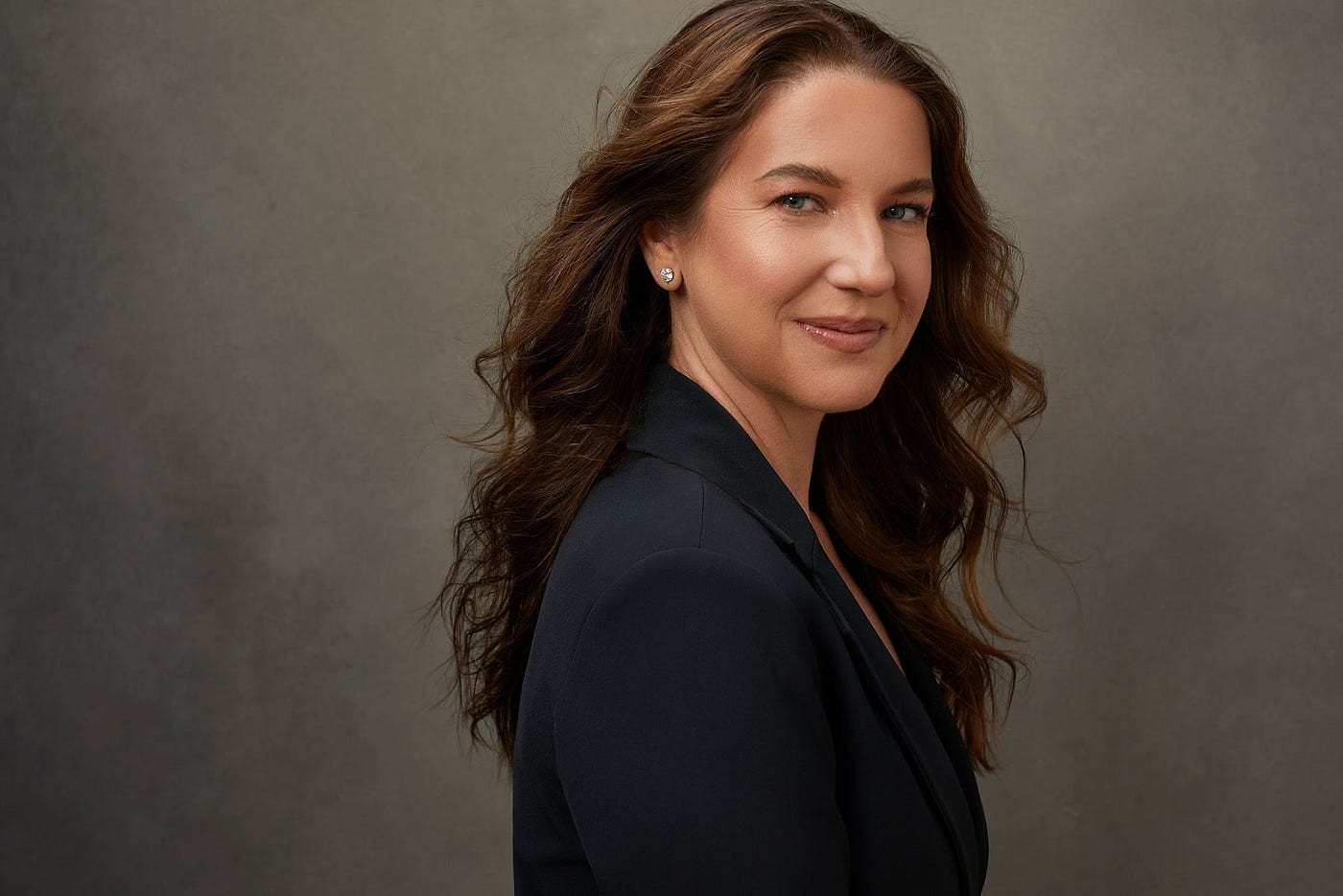
Everyone asked what I was going to do after law school, and I would say, “I’m going to be an actor. Isn’t that what everyone goes to law school for?” Instead of being an actor, I ended up on the other side of the camera, producing.
I had the pleasure to talk to Independence Hall. Independence is a filmmaker, advocate, attorney, actor and mother. She is an alum of the American Film Institute where she studied producing. Her law degree is from Southern Methodist University. Her legal practice focused on post-conviction relief for the wrongfully convicted. Independence believes the power of film is in the medium’s potential for alchemy. Her first feature, About him & her, which she both produced and co-wrote, premiered at the Newport Beach Film festival. Post-festival run with many nominations and awards it can now be viewed on Prime Video. Through her production company, Twenty-one Grams of Light she is in development on a wide range of projects from a wrongful conviction documentary and feature narrative to a female-driven dark comedy.
Thank you so much for joining us Independence. Our readers would love to learn about your origin story. Can you share with us a story of your childhood and how you grew up?
Sure. I was born in Detroit, Michigan, but we moved to Dallas, Texas when I was around two. So, I don’t have many memories of Detroit, but I’m really proud that I was born there. I love that piece of my history. I grew up in Dallas, went to an all-girls school for 14 years, and then went to SMU, which is a college in Dallas. I transferred to Webster in Austria after falling in love with the country while visiting my parents working there. We actually didn’t really overlap — I moved there when they moved back to the States. I met an Austrian man, fell in love, got married, and lived there for seven years. We had two beautiful babies, and I’m so grateful that they’re both Austrian and American. I think that’s the best of both worlds, really cool. They have two good passports: EU and American.
We eventually moved back to Dallas and ended up consciously uncoupling. We’re great friends; he’s remarried and has a new baby. I always say I’m the honorary godmother because that baby wouldn’t exist if we hadn’t consciously uncoupled. He’s lovely, his new wife is lovely, and their kids are lovely. While still married I went to law school at SMU. Everyone asked what I was going to do after law school, and I would say, “I’m going to be an actor. Isn’t that what everyone goes to law school for?” Instead of being an actor, I ended up on the other side of the camera, producing. However, I still put myself in everything, so there’ll be a little Easter egg of me in at least a small part of everything I make. That’s the plan.
I started a nonprofit in Dallas to work on wrongful convictions, and that’s what my law practice focused on — post-conviction relief for the wrongfully convicted. I hope to bring that together with my film work, as I’m currently working on a script for a feature that will meld my two worlds of film and that aspect of the law.
You probably have so many interesting stories from both of your worlds. Can you share with us one or two of the most interesting stories from your career?
Oh, goodness. Specific stories… There’s a wrongful conviction case that really got me involved with wrongful convictions. I was actually at SMU working on an MBA, and I like to say I have half an MBA. I completed the hard part — all the core classes they make you take. I was walking through the quad one day, and there was a stake in the ground announcing that Kerry Max Cook was coming to speak about his book, Chasing Justice. Kerry Max Cook was on death row in Texas for 22 years. I went to hear him speak, and when he spoke, he said he’d never advocated for anybody else’s innocence except for Benjamine Spencer’s, and his mom was in the back. So, I went to speak to his mom, Lucille, and fell madly in love with her and their whole family.
At that point, Ben was bench warranted to Dallas County for an actual innocence hearing. He’d been in for around 25 years, and so I got to meet him at the county jail. I ended up visiting him once a week while he was there. He was there for three years but ended up getting sent back, which was heartbreaking. It felt like he was on the verge of getting out, and then everything went in reverse. He spent another ten years in prison. I wasn’t his attorney, but he inspired me to go to law school in the first place, and he just got out two years ago in March. That was something I prayed for and advocated for so long. You try to have faith, but 34 years is a very long time, and it’s just amazing to see him now. He says he feels like no time has passed since he was out, but he went in at 22. Life is very different when you come out 34 years later. Ben has been and continues to be family.
Do you have a story from your alter ego as a filmmaker?
I’ve toyed with the idea of writing a book, but then I think maybe my personal story is boring, and who would want to read a book about that? However, there are some lessons and things that pop up in your first feature that they might not teach you in film school, which could be interesting for people to know. For example, an agency threatened to sue me as a power move. A Union rep threatened to shut down our set in a moment when payroll was one day late due to an oversight. I was like, “Wait, wait, wait!” There was even one actor who had their payroll in escrow with their agency — very aggressive people carrying around a lot of power and weight for a little indie filmmaker just trying to make a movie and really trying to do everything the right way. It wasn’t very helpful.
I think I had a bipolar location owner who was hot and cold every day. It was a location that the director of photography really wanted, and it was beautiful, but it was a lot to deal with on the producer side to secure that. There’s just a lot that happens in the background that you try to keep away from the director so that they can create their vision.
It’s been said that sometimes our mistakes can be our greatest teachers. Do you have a story about a mistake that you made when you were first starting and the lesson that you learned from it?
Well, some may say I’m a contrarian, and I grew up with a father who’s an entrepreneur and a contrarian. Also, being a Leo, I’m quite stubborn. Ideally, other people would make mistakes, and I would learn from them without having to repeat them. Unfortunately, that’s not always the case. We always think we’re the exception to the rule. People told me not to invest my own money in my films and to cast as many big names as possible. Since this was our first feature, I really bet on myself, using a lot of my savings. We do have one known name in our film, but the lead actress is not a well-known name; she doesn’t even have social media. However, she’s incredibly talented. I gave myself a chance as a first-time feature producer, and it was the director’s first feature, the DP’s first feature, our two editors’ first feature, the first AD’s first feature, and the lead actress’s first lead in a feature as well. We gave everyone a chance, and that turned out really well. But it was going against all the conventional wisdom of how to make a film, which was quite a learning experience.
Is there a person who made a profound impact on your life? And if yes, can you please share a story about that person?
Yes, I have a few personal heroes. I had a unique opportunity to get to know Justice Ginsburg when I was in law school. It’s really crazy. I did a summer class in Vienna, and she would spend her summer vacation from court traveling and teaching at different law schools. She came to Vienna, and it was a small class with Austrian and American law students — only about 20 of us. Part of our experience was going to museums with her, having lunch with her, and hearing her speak before the Constitutional Court in Vienna. That was really impactful.
We kept in touch, and when I passed the bar, I asked her if she would swear me in, as you need a judge to do so. She was very gracious and kind and said yes. I was sworn in by her in her chambers, which made me feel a weight about my responsibility. I felt a little guilt when I stopped full-time wrongful conviction work and went into film, as if I was somehow letting her down. But I hope, in the long arc of life, that’s not the case. I want to make films that have a big impact on the criminal justice system and social justice and do her honor.
Let’s pretend that you are the queen of Hollywood. What changes are you happy about seeing in the industry over the past few years? And what changes would you implement moving forward?
I am confused about the business model of the industry at the moment. It feels like a giant Ponzi scheme, even at the highest studio levels. There needs to be a paradigm shift, and I’m not sure what it is, but I’m working on trying to conjure up what that looks like.
To explain what I’m talking about, the deals for independent films have gotten really condensed and compressed. The old model of making money on a minimum guarantee doesn’t work anymore. There’s a lot of risk, especially when you make a movie without huge names, and the deals being offered are not sustainable.
Regarding the streaming services, there’s a question of how to quantify the value of content and how to split up the subscription fees among writers and other creatives. It’s a huge, gigantic math problem that doesn’t add up for me personally. We’re seeing streamers going towards advertising as a way to quantify value, but it’s still a mess.
Even for films, platforms like Tubi require commercial breaks, which is not fun to watch as an audience. When you edit the film, you have to consider these breaks without ruining the emotional flow of the movie.
So, what I would change is the financial model of the industry. I’m not sure what it looks like yet, but I’m still working on it.
Do you think we could ever go back to where ticket sales would cover the cost of the movie, or has that horse already left the barn?
I think the horse is fully out of the barn, but I hope it comes back in some form because there’s something special about the energy of being in an audience. For example, I have a friend who watched Triangle of Sadness in a packed theater in New York and had the best experience because of the energy from people around them, laughing at the jokes. It’s like a solitary but communal experience at the same time. I watched it in LA, and with only five people in the theater, it was a different vibe but still a great film.
I hope the communal aspect and watching something on the big screen never dies. No matter how good our home theaters get, it will probably never be quite like going to the theater sharing an experience with people we don’t know. So, I don’t think that’s dead.
You have a tremendous amount of impressive work, Independence. Can you share with our readers the exciting projects that you’re working on now and what you look to be releasing in the near future?
Sure. I’m working on producing a feature for a first-time feature female director, Lindsay Stidham, called Bits and Pieces. It’s about two women looking to make a change in life who head out on a road trip, and an unexpected member joins them, blowing their lives up in the best way possible. I’m also working on a narrative feature script that I’m writing, and we’ll see what happens with who’s attached to direct. It’s about Richard Miles’ story, a wrongful conviction case out of Texas based on a true story. We’re working on that together.
Would you like to talk about “About him and her”? Tell us why we should be excited about it, why we should all watch it, and why we should all support your work.
Oh, thank you! “About him and her” is set in 1989, which I think is a really fun time period to go back to. It’s when two landlines accidentally cross, allowing people to hear each other’s conversations. In this case, two strangers connect and, instead of hanging up, they continue the conversation, both going through something in life and needing a connection.
I think in this day and age, we’re hyper-connected but on a superficial level with all these social media platforms. It’s all a very curated view of life that’s not real and true, so depth is lacking. To be able to connect with another human being on a deep level is something that we can all relate to and desire as humans.
This is a signature question that we ask in all of our interviews. Based on your experience, can you share with the readers the five things you need to create a highly successful career as a filmmaker?
- Perseverance is definitely number one. I had a screenwriting professor at AFI say that it takes 10 years to make it in the industry. If you’ve stuck around for 10 years, you will make it, but people often fall off before that. It gets frustrating after six or seven years.
- It’s a tough business, but rewarding. People have said to me, “If you can do something else, do something else.” It’s not very encouraging, but the industry is a tough gig, and it’s super rewarding.
- Be true to yourself.
- Know yourself in order to be true to yourself.
- It’s really easy to get lost in the noise of this business and industry. There are a lot of strange people, but I’m convinced that there is a way to make it in this industry with good people doing good things. That’s the goal you want to aim for.
- I am going to sneak a bonus number six. Meditation. Meditation helps with all of the above.
Just to follow up on what you said before, it seems like you’re determined to make a difference through film. You believe that film is a powerful medium to shape our hearts and minds. While a cynic might argue that people watch movies without them making a difference, can you point to an example that truly made an impact? For instance, a movie that made a difference for a particular cause, like criminal justice reform?
I sat in the theater and watched Jojo Rabbit, which had some controversy surrounding it. People wondered how you could make a comedy around such a serious topic. I prayed that one day I could make a film as perfect as that one, from the writing and directing to the acting and everything else. I think films can be like an acorn in a pond, creating a small ripple that leads to change. Watching content allows us to step into someone else’s shoes and develop empathy for other people and their situations.
Richard and I are writing his story, and he really likes Shawshank Redemption as a film. For someone who’s been in prison to say that it’s an impactful film means they did a good job in helping people have empathy and understand what that situation might feel like. It’s all about what connects us as human beings. We’re more similar than different. Everyone wants to be loved and wants their kids to be safe and have opportunities to grow up. So, for me, it’s about spreading empathy through various stories, whether they’re comedies, dramas, or documentaries.
I once heard a podcast where film critics said a movie was too didactic, too preachy, and its message was too on-the-nose. Apparently, being too preachy can be a problem. So, how do you thread the needle of sending a message without having people resist it because it’s too overt?
I think it’s a challenge we all face in the entertainment industry, trying to balance commercial success with artistic expression. To avoid being preachy, you have to make your work entertaining — like Mary Poppins says, “a spoonful of sugar helps the medicine go down.” I don’t enjoy preachy content either. The idea is to make it so entertaining that people don’t realize they’re being presented with a message. Moreover, my intended message may not be what someone else takes away from it. That’s the nature of art. When you stand in front of a painting, some artists won’t tell you what it meant to them because it’s up to you to bring your life experiences to the piece and interpret its meaning for yourself.
That’s great, like poetry, where everyone can take away a different interpretation. It’s fascinating; I never thought about that. You’re saying the trick is to make it maybe ambiguous enough or to make it textured and layered enough that different people can take out different things and there are various aspects to it. It’s not just a one-dimensional message.
For sure. This might sound a bit “woo-woo,” but since I’m in LA, I’ll embrace it for a moment. I do feel like there’s an invisible hand in production on every film, or at least every film I’ve been on, whether that’s God, the universe, or something else. It becomes more than the sum of its parts and transcends into something greater. I think that’s part of the human soul, to be creative, and I hope that everyone viewing it feels what they need to feel in that moment and takes away what they’re meant to from it.
Because of the work you’ve done, you’re a person of enormous influence. If you could spread an idea or inspire a movement that would bring the most amount of good to the most amount of people, what would that be? You never know what your idea can inspire.
I guess it might sound cliché, but I would say kindness. I’m not perfect, and I do get annoyed when someone cuts me off on the freeway, for example. But I think if we all have empathy and understand that the person who cut me off might be having a bad day, I can wish them well and hope their day gets better. I believe we’re all more alike than we are different, and we should honor the humanity in all of us. That comes through kindness.
How can the readers continue to follow your work? How can they support your work?
You can find me on Instagram @Independence_Hall. I share both my professional and personal updates there, so you can see what I’m up to.
Wonderful! This has been such a pleasure. You’re extremely thoughtful, and it’s a pleasure to meet you. I wish you continued blessings and success, and I hope we can do this again when you have another exciting project.
Thank you! I appreciate the time and your thoughtful questions.