I volunteered to write a few pieces for people who needed advertising copy and business letters and the like.
Some writers and authors have a knack for using language that can really move people. Some writers and authors have been able to influence millions with their words alone. What does it take to become an effective and successful author or writer? In this interview series, called “5 Things You Need To Be A Successful Author or Writer” we are talking to successful authors and writers who can share lessons from their experiences. As part of this series, I had the pleasure of interviewing Helene Kiser.
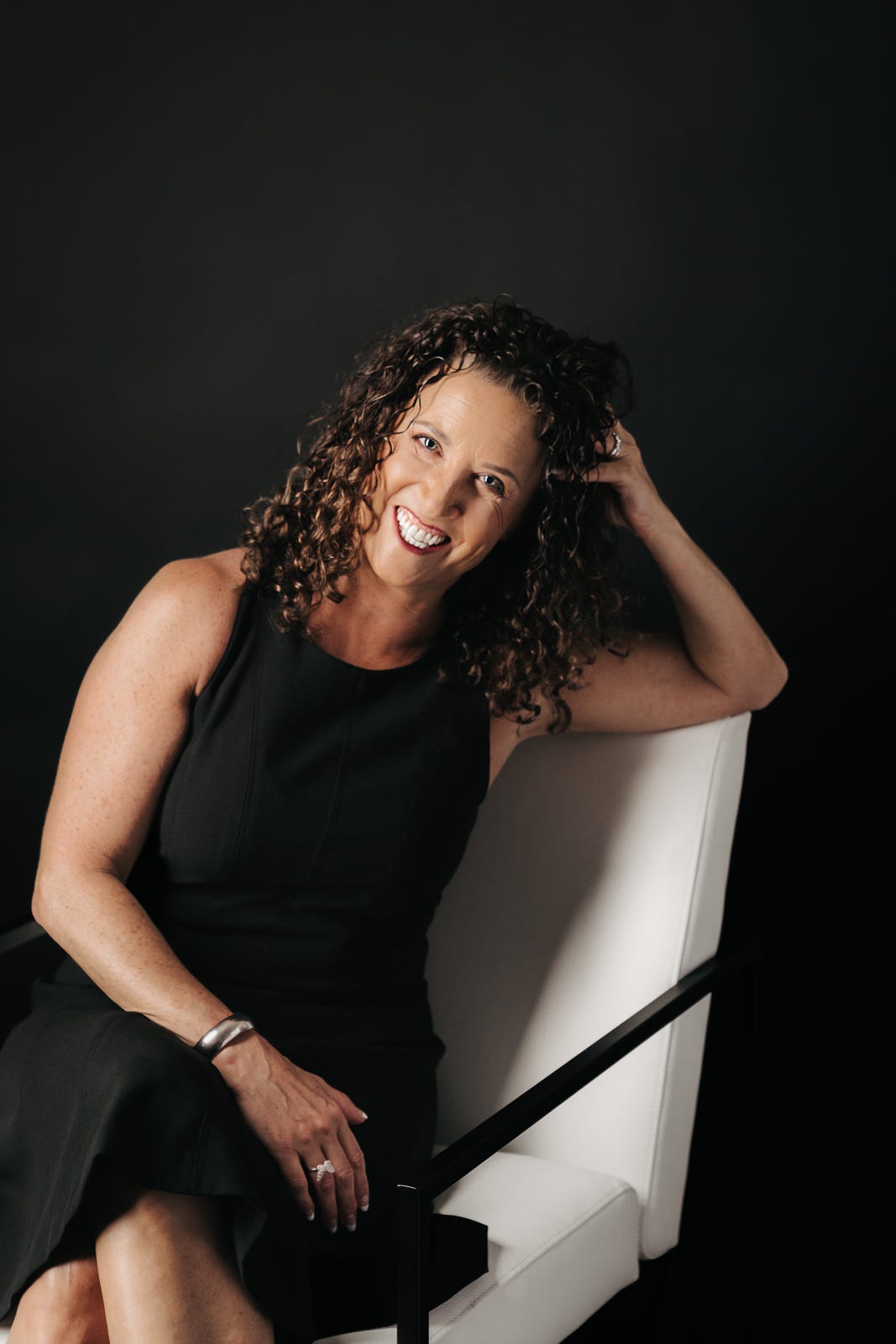
Helene Kiser is the author of Topography and is currently working on her second book. Her writing has appeared in dozens of big-name commercial outlets and literary journals, regional magazines, trade/university publications, broadsides, anthologies, and reference publications. Writers who want to learn to self-edit like a pro can sign up for her free weekly Editorial Notes newsletter at www.helenekiser.com.
Thank you so much for joining us in this interview series! Before we dive in, our readers would love to “get to know you” a bit better. Can you tell us a bit about your ‘backstory’ and how you got started?
Certainly! My parents were older when I was born — their bonus baby! — and my siblings went to college not long after. So I spent a lot of time by myself when I was growing up. At bedtime, I’d sit in my mother’s lap in the rocking chair that had been made especially to fit her grandfather. It’s a huge, beautiful walnut chair, and it still sits in my parents’ living room. She’d read to me, first picture books like Wanda Gag’s Millions of Cats and Joan M. Lexau’s Olaf Reads (I still own both!) before graduating to longer, more complicated books like the original Oz series. I taught myself how to read before I was in kindergarten and started writing and illustrating my own stories not long after that. I’m sure they were terrible, at least as far as anyone other than my mother was concerned. But I can’t remember a time when I didn’t think of myself as a writer.
Because I listened to language — the sounds of words, the rhythms of sentences, the images — from as far back as I can remember, I grasped the concept intuitively that word choice was a creative process. Animal enthusiasts may disagree with me (and I’m an animal lover myself), but language, or at least written language, is what separates us from anything else on earth. We can express everything on the continuum from the most mundane “buy bananas, milk and bread” to the deepest hopes, fears, and dreams within us through writing if we have the vocabulary.
Can you share the most interesting story that occurred to you in the course of your career?
When I was in my first year of graduate school for writing (I turned down admission to law school and PhD programs, much to my father’s dismay —how in the world was I going to find a job?), the Nobel Prize-winning poet and writer Derek Walcott came for a brief visiting residence. He hadn’t been awarded the Nobel Prize yet — that would come a year or two later — but my entire cohort within the English department was nevertheless completely awe-struck by this giant of a writer in our midst. The writing students had been asked to submit a piece in advance for Walcott to consider for his masterclass and workshop. Much to my joy and terror, he’d chosen mine. I can’t remember now what it was about, but I know it ended with the two characters lying on the highway laughing after a barn burned.
At any rate, the masterclass consisted entirely of Walcott reading my piece out loud and giving pointed commentary on it — an object lesson of sorts —with specific mention of what worked and what needed strengthening. Most importantly, he explained the why: why was this image strong, why was this line awkwardly phrased. The experience was excruciating at the time; I am uncomfortable in crowds and dislike being the center of attention. I was grateful I’d worn dark colors that day so my profuse sweating was (I hoped) undetectable, though I could see my heart pumping under my shirt. But once it was over, I became profoundly grateful and completely humbled. I perhaps learned as much or more in that 45 minutes as I did in the years of my program, I suppose because it was the first time I’d had that much personally relevant feedback and criticism on my specific voice and intentions. He was direct and clear about both the positives and the areas for improvements and, as I said, the explanation of why each was the case.
I’m a stronger writer AND a better teacher and mentor to others because of his model of careful attention and clarity. He took me aside afterwards and urged me to keep writing. Of course, I would have anyway, but that vote of confidence from someone who had no skin in the game meant everything.
What was the biggest challenge you faced in your journey to becoming a writer? How did you overcome it? Can you share a story about that that other aspiring writers can learn from?
Like so many challenges that feel like obstacles while you’re up against them, my biggest challenge turned out to be the catalyst for my success.
I’m fortunate in that I had the opportunity to complete graduate degree programs with excellent teachers and award-winning writers in multiple genres. But the other side of the coin is that the experience did not train me to expect anything other than the literary life. Fitzgerald and the like gallivanting around Paris while penning literary treasures still taught in schools today. That wasn’t the reality of the situation, or at least it wasn’t my reality.
I graduated and, much as my father had worried, had few job prospects. It’s different today in the age of information, but back then, not too many “real” jobs for writers seemed to exist outside New York. Moving there was impossible because of my family situation. So, I waited tables, worked adjacent jobs at ad agencies, taught at community colleges. I hustled decades before there was such a thing as hustle culture. Little by little, I started trying to create employment for myself. I volunteered to write a few pieces for people who needed advertising copy and business letters and the like. They referred me to others with similar needs, and I started charging for my services. I worked hard, taught myself the craft of this more commercial communication, used what I knew. Then more referrals came in. No matter what kind of writing anyone asked me to do, I took it on and gave it everything I had.
Little by little, I built up my client list, areas of expertise, and professional portfolio until I had more work than I could reasonably handle alone. I brought on occasional partners, learned even more techniques, and kept going. Meanwhile, in the early mornings, late evenings, and weekends, I wrote my own creative work — poetry, essays, articles. It was exhilarating and exhausting.
These days, I’m choosier about projects I take on. I realized at some point that I have a finite amount of creative energy, and I want to retain more of it for my own projects, such as the book I’m currently writing and the essays I publish regularly. The client projects that excite me are mission-driven, whether that’s an organizational mission or an individual one. I love to work with institutional clients who want to use their influence and expertise to make some small part of the world a little better. But I also love working with entrepreneurs who hunger to greatly impact their own clients. And of course, my first love is creative writers, for whom I offer several one-on-one editorial services and coaching. They call me the “writing sherpa.”
It has been said that our mistakes can be our greatest teachers. Can you share a story about the funniest mistake you made when you were first starting? Can you tell us what lesson you learned from that?
When I first started to pitch article ideas to general magazines, I had a huge learning curve. Other than my client work, the writing I was doing was more suited to the literary journals I regularly published in. Those journals don’t consider pieces on spec; they need to see the complete piece. So, the initial step of pitching an idea was way outside my comfort zone, let alone everything else that.
An acquaintance of mine forwarded me an email that had been sent to her email from the personal email of an editor she’d worked with before. The editor was looking for certain story pitches around a theme, and that theme was most definitely in my wheelhouse. So, I sent a pitch to her personal email. I realized my mistake almost immediately, but the key word here is almost.
I quickly sent the same pitch to the editor’s work email, first apologizing for using her personal email in my original submission. Sounds good, right? Nope. I somehow sent that second email right to her personal email again.
At this point, I almost said to heck with it, I guess I’ll just delete my entire email server and crawl in this hole over here. But I gathered my courage and sent a third email, this time to the work email address.
The good news? The editor assigned me the story. The bad news? I hadn’t deleted the personal email out of my contacts. So, again, without double checking before clicking “send,” I sent yet another email to her personal address.
I felt like the biggest doofus on the planet.
Two lessons here. First, quadruple check your work! Second, you’re human. You’ll make mistakes. Apologize sincerely — and proactively — when it’s necessary to do so. But don’t dwell on it. Hardly anything is truly life-altering. Things have a way of working themselves out.
In your opinion, were you a “natural born writer” or did you develop that aptitude later on? Can you explain what you mean?
Both. I had both a natural ability for and facility with language. Luckily, I also had the passion for it! Not everyone who possesses innate talent also possesses the dedicated interest needed to pursue their craft. And vice versa — not everyone who wants to be successful in a certain area can achieve greatness, however they define it for themselves. But that doesn’t mean they can’t enjoy the task as a hobby.
The example that always occurs to me is F. Murray Abraham’s portrayal of Antonio Solieri to Tom Hulce’s Mozart in the movie Amadeus. Solieri was a competent musician and composer, perhaps better than competent. But he bristles at the undisciplined Mozart, whose legendary talent far surpasses what Solieri could ever hope to achieve. Instead of being content with his above-average skill and reasonable public regard, or even just enjoying the music of a true master, Solieri is driven to madness by jealousy and hatred.
Not that I’m comparing myself to Mozart-level skill! Goodness, no. But while being a professional writer requires a certain degree of talent, just as being a professional musician or professional basketball player or professional brain surgeon does, writing competently and well is a skill that anyone can learn and everyone can improve. Can I hold my own with Harry Connick or Michael Jordan? Are you kidding? But I play a little music and know how to shoot a basketball. Do I rival Shakespeare? Or, in more modern terms, Joan Didion? Absolutely not, but I do get better at writing every day.
This is in no small part because I write something every day, whether or not “I feel like it.” We spend a lot of time as individuals talking about our priorities, but if you want to know the truth, observe what you actually spend your time doing. If your priority is to improve your skill, develop your craft, understand more than you did yesterday, then you have to write regularly. Some of it will be garbage, but think of it like working your muscles at the gym.
What are some of the most interesting or exciting projects you are working on now?
I have a client project that I’m really excited about, a complete overhaul of a solopreneur’s content suite, but I’m unfortunately not at liberty to talk about that one just yet.
However, I’m about 80% finished with a draft of my memoir manuscript. It’s an unusual book, about my experience during the very brief five months between my husband’s surprise terminal diagnosis and death. The manuscript is a combination of regular chapters; short flash pieces; and letter, text message, and journal excerpts (my late husband was also a writer). It’s fractured, I suppose, or at least fragmented, but not in a way that leaves anything out. The spoiler is given away from the start — my husband dies. But in that process of his dying, what did it mean to live a good life? To have a good marriage right up to the end? I’m a slow and methodical writer. And the subject is traumatic to confront at times, which makes the process even slower. But it’s coming along nicely! I hope to begin editing in the new year.
My free weekly newsletter Editorial Notes goes out every Wednesday to my large email list of writers. The content varies every week, but I share examples and actionable tips for better self-editing (which is really about better writing!) Readers send in questions which I answer in the newsletter, and I share funny photos of grammatical faux pas as well. I love the engagement in this community, and it gives me an outlet for writing about craft, something I’m musing on constantly.
And, of course, I have multiple articles and essays in progress. (All of which were pitched via the proper channels!) Several, but not all, touch on memoir-adjacent themes of grief and loss. I wouldn’t say that grief is my favorite subject, but I certainly have a lot of experience with it. I’ve met so many wonderful people who have reached out to me after each article publishes. Our society knows next to nothing about where death fits in to our life experience. I wish that would change.
Here is the main question of our interview. Based on your experience, what are the “5 Things You Need To Be A Successful Author or Writer”? Please share a story or example for each.
1 . I won’t start out with the one that aspiring writers are always told: read voraciously and widely. That’s a given, and yes, audio books count! Instead, my number one piece of advice is to read actively, to annotate and take notes on everything you read. Keep a journal for this purpose, either on your computer or in a physical notebook. Copy passages that you love and try to figure out why. Note sentences or sections that fall flat for you, or where a detail isn’t working, and note why. Ask yourself what you can do to try to model a particular technique that you love and avoid a technique you react to negatively. Notice the parts of speech: the nouns and verbs, the adjectives and adverbs. Study what you are reading, and write down your reflections. If you want to improve your craft, then committing yourself to the study of craft is the best route.
2 . My second piece of advice also involves keeping a journal, but this is a different kind than the first one. While the journal of annotations is the “working” journal, think of this second one as a journal for playtime. Here, you’ll store your writing exercises. Think through your ideas in writing, record images or snippets of overheard dialogue. Describe the physical scene in front of you at the park or the coffee shop. Occasionally, set up tasks for yourself with your own rules, like: "Describe the garden without using any adjectives," or "write about winter without using the word 'cold.'" Again, this journal is to play, to explore, to keep your writing muscles warm. Even the famous concert pianists don’t stop practicing their scales regularly when they reach a certain level. We don’t reach a point in which we magically have no further need of practice. Yes, you can do this type of thing within your working drafts, but there’s a lot to be said for keeping it separate. Something about a “real” writing task can make you freeze up, while having a space to play can remove hesitation or self-censoring.
3 . Always leave your draft unfinished. When it’s time to finish writing for the day, stop in the middle of something you can pick right up the next day. An alternative to this is to make a specific to-do list for the specific and definable writing you will do first thing when you sit down again. The trick here in either case is to be clear and specific to your future self on precisely what you will begin with immediately. So much of so-called writer’s block will be avoided if you prepare yourself to begin again the next day with clear self direction.
4 . Learn to edit. At least 90% of writing well for an audience besides ourselves is in the editing, not the drafting. Editing yourself is far more difficult than editing others, so start with the newspaper or a magazine if you prefer. Put yourself in the editor’s shoes and interrogate the text. Are the events narrated in the best order? Does the reader understand a reference? Is the point clear? When you’re ready to try your hand at editing yourself, remember there are several levels of editing. Developmental editing is big picture editing — the 30,000 foot view. Does the structure work? Is the style consistent? Is the content complete? Line editing is what it sound like: going sentence by sentence to improve flow, clarity, and voice. Finally, copy editing is what many beginning writers focus on to the exclusion of developmental and line editing. Here, you’re editing for grammar, punctuation, spelling, and the like. All types of editing are crucial to do well. Yes, an editor, should your writing be slated for punctuation, will also complete his, her, or their editing process, but it’s a mistake to believe that you don’t need to edit yourself before your editor ever sees the draft.
5 . Make time to actively NOT write. Put your draft away in a literal or figurative drawer and walk away from it for at least 24 hours. Instead, live your life! Whatever you’re writing, from fantasy to roundups of the best software for home offices, your writing will get better the more time you spend living. Give your brain a break by letting it wander where it wants. Make appointments for this time if that helps you — and keep them. When we separate ourselves from the mental task of focused writing, we’ll nearly every time come back with clarity on a drafts. Whether it’s a solution to a problem or a description that isn’t working, or whatever else, your mind will do a lot of work when you leave it alone.
You Tube Link: https://youtu.be/HeDuLox7Sew
What is the one habit you believe contributed the most to you becoming a great writer? (i.e. perseverance, discipline, play, craft study). Can you share a story or example?
A curiosity about the world and the people in it. Like the toddler who drives parents crazy by asking “why” about everything, I am fundamentally curious about why things are the way they are, why people believe the way they do. Whenever possible, I ask a lot of questions when I’m talking with others, and in this way I’ve learned a ton about jellyfish, hotel security, driving for Uber, and even, literally, rocket science (which is, according to the rocket scientist, “shockingly easy.”) Nowadays, I shamelessly ask Google for information on a wide variety of super niche topics, often looking up from my computer an hour later having done an unintended deep dive into the eating habits of the endangered New Zealand kākāpō or the history behind a clichéd phrase like “it’s raining cats and dogs.” That’s why I have a personal rule that I cannot do any research when I am actively writing. Instead, I highlight it in yellow and go back to it later.
Which literature do you draw inspiration from? Why?
I read pretty much anything that interests me, which because of my insatiable curiosity is quite a lot of things! Usually, I have more than one book going at a time. I’m writing a memoir, so I read memoirs to see how other writers handle the subject of themselves and their lives. I like to learn, so I read nonfiction. Poetry takes focused attention, and I’ll usually read no more than a poem or two a day, because I immerse myself in the language as I read. I do a lot of poetry annotations in my journal! Much of my vocabulary comes from the poets. I love it, but it is not relaxing reading. That’s fiction for me.
You are a person of enormous influence. If you could start a movement that would bring the most amount of good to the most amount of people, what would that be? You never know what your idea can trigger. :-)
Can we make the Oxford comma a legal requirement? I don’t know if that counts as “the most good,” but it sure would clarify items in a series!
How can our readers further follow your work online?
My website www.helenekiser.com links to much of my recent writing, as well as a way to sign up for a free subscription to my Editorial Notes newsletter.
Thank you so much for this. This was very inspiring!
Photo credits: @Lauren Schoepfer Photography