So what led me to this career path was really an investment in youth to make sure that they reach their potential, despite the circumstances or their backgrounds.
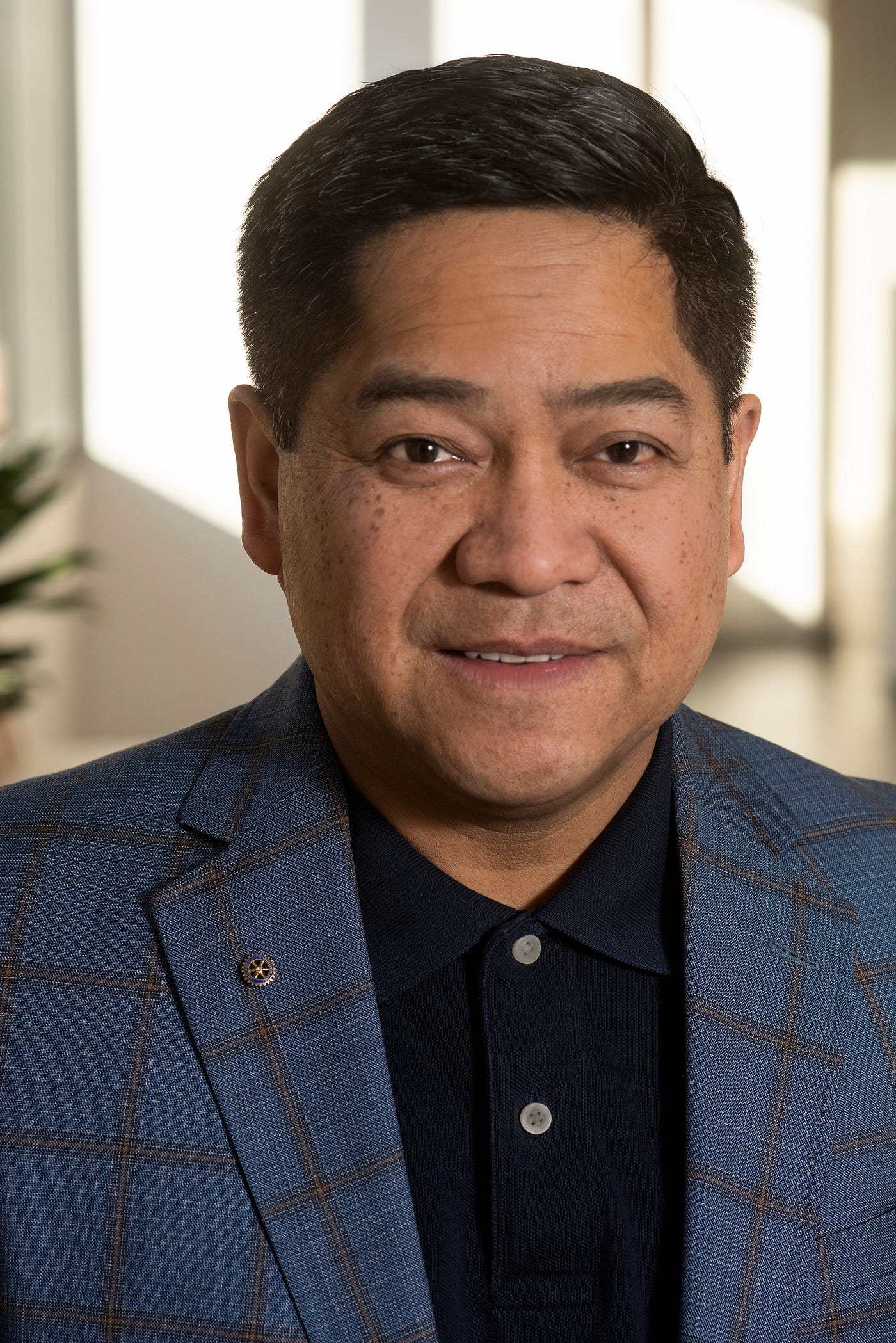
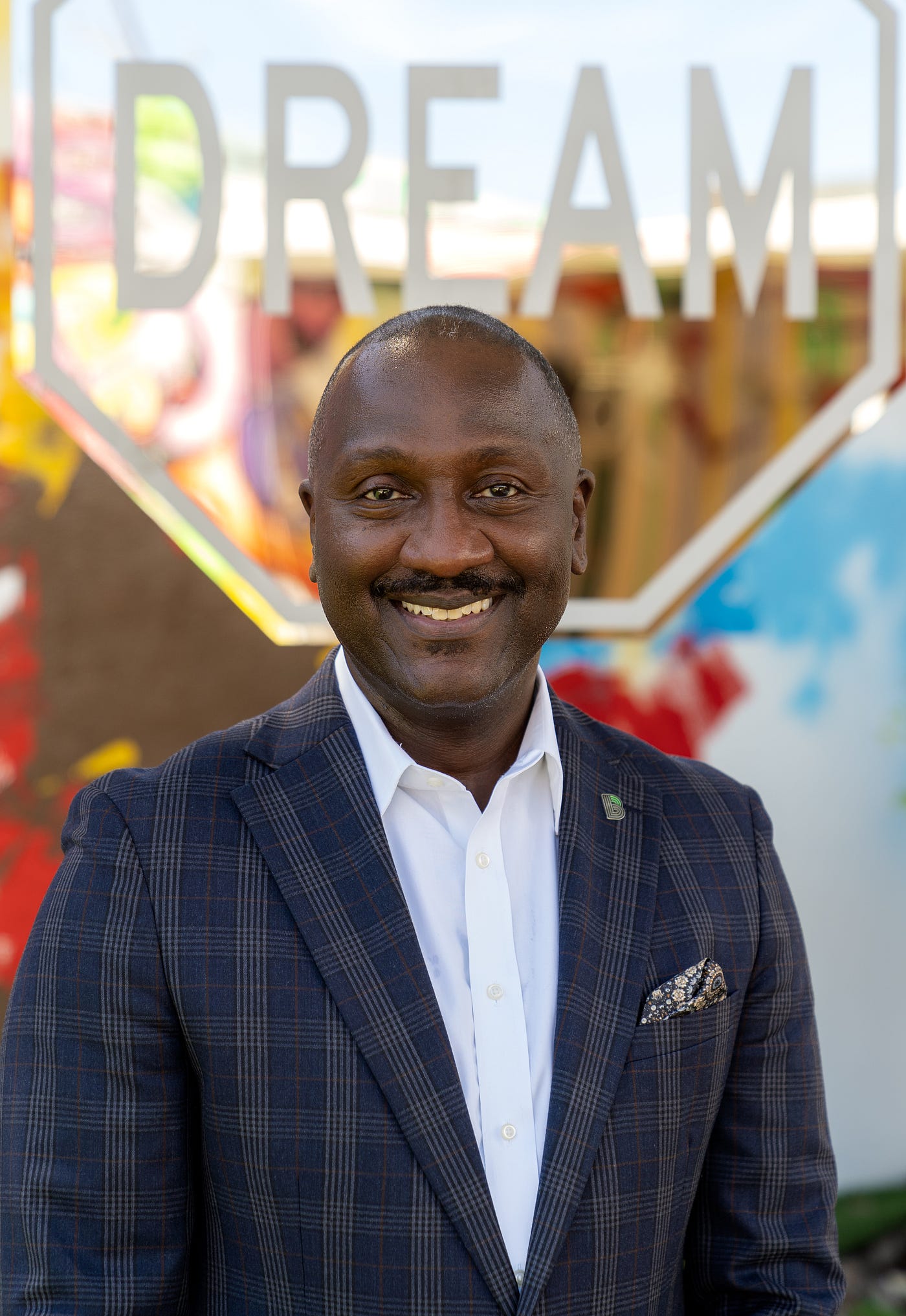
As part of my series about “individuals and organizations making an important social impact”, I had the pleasure of interviewing Gale Nelson.
Gale Nelson is President and CEO of Big Brothers Big Sisters Miami, where he has played a significant role in the growth and development of the agency’s mentoring and fund development programs. Gale has worked his way up the ladder the hard way — always confident, determined and focused on his goals and building strong personal relationships. His professional career includes over 27 years of non-profit management and leadership, and Gale also serves as the Minister and one of the elders at the Miami Gardens church of Christ.
Thank you so much for joining us in this interview series! Can you tell us a story about what brought you to this specific career path?
Sowhat’s interesting about my career path in nonprofit leadership, it really goes back to my experience running a juvenile justice boarding school. I was invited to come and visit and I was given some textbooks to work with some young men, all of whom had broken the law. I was told, “Go and teach them. They need to get their high school equivalency or their GED.” And so, when I found these young men that had zero interest in education at that time, I asked them for a basketball. They all looked because I peaked their interest. And I said, “Look, meet me on the basketball court.” These young men, with quite a bit of joy, met me on the court, and I proceeded to teach them a math lesson.
I am not a certified teacher by any stretch, but I wanted to be that servant leader, and I wanted to be strategic and situational. And so I proceeded to teach them fractions, percentages and decimals through the game of basketball, specifically shooting free throws. For example, making five out of 10 free-throws, what percentage is that? So what led me to this career path was really an investment in youth to make sure that they reach their potential, despite the circumstances or their backgrounds. They can be taught, they can learn, they can be coached. And so all these young men became committed to the school.
What eventually led me to Big Brothers Big Sisters was that I wanted to get to these kids before the police got to them. So my journey might have started with free throws, percentages, fractions, and decimals, but now I’m on this journey called “The Game of Life.” I’m very excited to be where I am.
Can you share the most interesting story that happened to you since you began leading your company or organization?
The year was 2020. So much was taking place in our world. And one of the most interesting and impactful things that happened to me was to see what was happening with the political division — the racial tensions and a global pandemic, all at the same time. And when I looked in the mirror, I looked at my beautiful four children, I thought about the impact that I make in this society and in this world.
I sat down and wrote a letter to my board of directors. I just shared my story — from childhood, to some of the challenges that I’ve faced, and with so many things taking place in our world, it really helped me relate to those who dedicate their time, talent, and treasure on our BBBS board, because I got very specific about my journey as a black man and how I felt the fear that I felt as a leader at this time.
The response was overwhelming in their support, and humanity, our focus on just taking care of our kids and their families. So when I think about the most interesting thing that has occurred, I just had to step out with courage and faith for my fellow man. This board continues to impress me. I’m thankful to work alongside people who truly care about not only me, but the kids and families that we serve. And so as I think about social impact,as I think about leadership, make sure that those you go to war with — war against poverty and illiteracy, war in making sure our kids are being educated — that those you are with have your back. Because at the end of the day, kids are counting on us. I needed the support. I needed that encouragement as a leader and it was reciprocated a hundredfold and I’m thankful for that.
It has been said that our mistakes can be our greatest teachers. Can you share a story about the funniest mistake you made when you were first starting? Can you tell us what lesson you learned from that?
One of the funniest mistakes I’ve made happened as I started my journey in leadership. I was working in an executive supervisory role and I had an issue with the headmaster of the school. I started drafting an email about this issue, and because it was so heavy on me that my emotions got the best of me, I ended up sending the email to my boss — the headmaster herself who I had the issues with. And so, maybe five minutes after I sent the email, I got a phone call from my boss, saying, “Can you come into my office?” So of course I’m thinking, “that’s it, it was a nice run.” This mistake of thinking about the person so intently that I sent an email with my concerns with that person directly to them.
So I went into her office, and she was as sweet as she could be. She said, “I don’t understand your email.” I was in somewhat of a shock, but she did not see herself in this email. She only asked about the contents. What I learned from this, not-so-funny mistake from my vantage point, was if you have an issue, focus on the what not the who — the situation and not the person. I was given that opportunity because we talked about the situation, communication, and boundaries. We even became a better team and kids benefited as a result. The lesson learned, deal with things authentically and transparently while focusing on the situation and not the person.
Can you describe how you or your organization is making a significant social impact?
Big Brothers Big Sisters was founded in 1904 by a court clerk who saw the need for children to have that trusted friend, counsel, and mentor — what we affectionately call Bigs. I think about the impact on humanity, along with the social impact. We have matches — Bigs and Littles — that come from so many different backgrounds, and they become family. Just today, I had breakfast with a Big Brother who was matched 55 years ago. His Littles who are brothers, one of whom just turned 62 years old. The brothers had lost their dad and their Big Brother has remained that father figure to them for over five decades. When we think about the tensions that we face in life, the things that can divide us, are the things that cause tension, humanity has to prevail and can prevail when people just get to know one another. Big Brothers Big Sisters is about that. We allow people to get to know one another who may come from totally different backgrounds, all walks of life. But at the end of the day, that’s my Big Brother. That’s my Big Sister. That’s my family. People investing their time and/or their treasure, that’s why we exist — to ignite the power and the potential of our youth. And that’s an investment worth making.
That social impact can be realized through a variety of ways. Once a month, companies allow their employees to mentor students while at work. They never have to leave the job to make a big difference. We call it School-To-Work. High school students are getting on a bus as a group and going directly to the corporation or the organization and they’re allowed to be exposed to so many different career pathways within an industry. They get to know the corporate culture and even apply for internships. Most importantly, that intimidation factor of seeing that big building with a name on it is no longer something unattainable. They can see themselves in the big seat. Also, one hour a week, we provide a tremendous social impact by having our Bigs mentoring here in our headquarters in Miami or at a local school — Bigs in School. Twice a month, you can make a social impact through community based mentoring, where you pick up that Little twice a month, face-to-face, and you can go to experience things — arts and culture, sporting events, or just hanging out and having fun going to a grocery store — like I did with my Llittle Brother, looking at food labels and prices and learning some real life lessons. So at the end of the day, there are so many ways to make this social impact and bridge the gaps. Not only the gaps in terms of economic disparities, but also in human relations, addressing racial tensions through the lens of friendship and humanity. That’s how we’re making a social impact.
Can you tell us a story about a particular individual who was impacted or helped by your cause?
The cause of mentoring has helped so many, there are so many stories that I could share, but one stands out. On an annual basis, we celebrate the High School graduation of our Littles, those who are mentored. We also give away scholarships through our various donors and through various partnerships and collaborations. At one celebration, this Little Sister stood on stage and we asked her to just tell her story. This story was one of academic achievement and resilience, which we expected. But what we didn’t expect was that this Little Sister shared that she thought about taking her life one day, as she stood on that stage and in front of hundreds of people and talked about her academic journey to earn that scholarship.
She talked about the significance of her Big Sister, who gave her the encouragement and was that non-judgmental friend, role model, and counsel for her. She said that, little did her Big Sister know, she needed that more than anything because their mother unfortunately had been incarcerated. This little girl went into a restroom and did not plan on coming out. She said she sat there thinking about taking her own life, she thought about her family, her little cousin, and her Big Sister. It just so happened her little cousin started knocking on the door and she opened the door. She recalled on that stage that night to all our fellow graduates and to her Big and all the Bigs and everyone else in attendance, “Choose life.” And so when you think about impacting someone’s life, she impacted so many that night. She went on to receive her full ride scholarship, but most importantly, this young lady is smiling brightly. That’s what we do every single day.
Are there three things the community/society/politicians can do to help you address the root of the problem you are trying to solve?
When I think about the root of the problem that we are seeking to “solve,” mentoring addresses so many areas — workforce development, education, poverty, family dynamics and family strengthening. So what the community, politicians, and leaders can do to help solve these compounded problems is to invest their time as mentors and to network and bring other like-minded folks together. Investing financially is also important, because when you think about the cost of incarcerating a child versus the cost of mentoring a child, it’s a stark comparison. Here in the state of Florida, you’re talking about the difference between $80,000 annually to incarcerate versus $1,500 annually to mentor, it’s a wise investment. So three specific things — investing time, investing resources, and from a political standpoint, from a completely non-partisan lens, children should never be a partisan issue. So what politicians can do is work together and make sure that barriers are not getting in the way of children being able to be exposed to mentoring and that the necessary funding is dedicated to providing mentoring relationships from a federal, state and local level should be a recurring item so we can ensure success.
How do you define “Leadership”? Can you explain what you mean or give an example?
Leadership. Wow, a topic that I just absolutely love. And when you think about leadership, how I define it, it is distinctive from management — management is just doing things right. Leadership is doing the right things. When you think about those who want to be leaders, leadership embodies listening, investing in others, and mentoring. So leadership to me is that investment in doing the right things the right way. It speaks to being situational, one size does not fit all.
As I think about my leadership journey, when leaders have failed to listen, they failed to lead. I have been around leaders who did not listen, and I’ve been around leaders who truly care about others. As we think about leadership in 2023, every day we have to be willing to see the bigger picture. How we can help others along the way, how we can truly make leadership perpetual. In order to do that, you have to see yourself. When I see myself I can make the necessary adjustments to ensure that people are hearing me and that I am hearing them. So in a nutshell, leadership is a journey. Leadership is doing things the right way, even when it hurts, and we need more of that today now more than ever.
One leadership example that I think about goes back to my high school days and even beyond from the time I was given a scholarship application for college. I told my counselor, “No, I need to work and take care of my mom.” He said just fill it out, and that catapulted me to collegiate success and then leadership success. Leaders invest in others, even when there may be resistance, don’t ever stop leading, because you never know who’s watching. You never know that second, that smile, that application, that handshake, or that hug what that will do for someone based on where they are and where they could be.
What are your “5 things I wish someone told me when I first started” and why. Please share a story or example for each.
- There is no playbook. Leadership is very much situational. I think about the pandemic. We had our gala just days before things turned upside down. To go from a room full of people supporting a great cause to standing before my staff and saying I’m sending you home and I have no idea what we are dealing with — there was no playbook. The pivot was real. So I wish someone had told me that “Hey, everything is not in this manual with policies and procedures. You have to go with your gut. You have to make sure to tend to your people.” And that’s exactly what we did. As I look back on that, and as I mentor others, I certainly want to let them know that the leadership is very much situational and don’t always try to make things so structured. You have to go with the flow.
- Don’t be afraid. I grew up in inner city, Toledo, Ohio, raised by a grandmother and a mother. As I look back on how they raised me, there was a lot of fear. Fear of their baby boy going down the wrong path. Fear of not saying the right thing and fear of, you know, making sure as a young black man, I don’t ruffle any feathers and draw too much attention to yourself. So there was fear as a motivator. Make sure that you step out and use that courage to stand up for what you believe in but most importantly, stand up for humanity.
- You will outgrow some people on this journey. It’s not about being better than anyone else. It is about making sure you are surrounded by those who add value to who you are and can assist you along the way. Because oftentimes we can be bogged down with those who may weigh us down. And so as I think about my journey, I had to move on from people and people have to move on from me, and that’s okay. I had to learn that.
- Saying no, is not a bad thing. We cannot seek to be just pleasers. When you know who you are, and you know where you want to go, especially in this business where we serve children every single day, they need to learn that saying no is not a bad thing. Through leadership, let your yes truly mean yes, and let your no mean no without apology. Because if that doesn’t fit, or that plan doesn’t help us get where we need to be, then it is an absolute no. When it comes to someone spending that quality time and investing in the growth and stability of youth and families, then it is an absolute yes.
- Leadership is a journey, it is not a destination. And it’s best traveled with someone else.
You are a person of enormous influence. If you could inspire a movement that would bring the most amount of good to the most amount of people, what would that be? You never know what your idea can trigger. :-)
There are so many nonprofit organizations that are doing good around this country.
If I had the opportunity to wave a magic wand and start a movement that would do so much good, it would be to build that stadium, and every nonprofit that was truly willing to collaborate would be invited, with tens of thousands of people. In this stadium, there would be breakout sessions that specifically talked about how we partner and connect the dots. What I find very clear is not everyone is ready to collaborate, and that’s okay so long as you do no harm. But if we truly want to start a movement, it is not about a singular grant or a funding source. It is about the good of humanity. And so that movement I want to start is for people to truly understand that collaboration is the new competition. We are so much stronger and bigger together. For organizations to literally show where it hurts, not come and do a dog and pony show, not come and say, “Here’s the good that we do.” But flip the script and literally talk about where it hurts, where are the gaps, and for someone else to come in and help fill those gaps. When we do that, we do something good. As a matter of fact, we do something BIG!
Can you please give us your favorite “Life Lesson Quote”? Can you share how that was relevant to you in your life?
My favorite life lesson quote is, “To whom much is given, much is required.” So many people, from that beautiful woman that raised me, my mom, to mentors along the way, leaders who gave me opportunities and who challenged and pushed me. I think about my late high school principal, Mr. James Ray, who put a microphone in my hand and I’ve never put it down. To Mr. James Norris, a high school counselor who put a scholarship application in my hand when I almost said, “No thank you” so I can help my family. When I think about “To whom much is given much is required,” those little things people give you and have given me, has propelled me to a level of leadership, where I am required to give it back.
Is there a person in the world, or in the US with whom you would like to have a private breakfast or lunch with, and why? He or she might just see this, especially if we tag them. :-)
There are so many people in the world that I would love to have that private breakfast or lunch with to talk about so many different topics, but there’s one man in particular that I would love to see again. And the reason I say again, is because I met him at a Martin Luther King dinner. He was the guest speaker. I was in college, completing my undergraduate degree at the University of Toledo in Toledo, Ohio. And one of my mentors, Eric Stockard, said to me, “Do not ask for an autograph, but tell him your story.” And so, when Julius Erving, NBA Hall of Famer, finished his speech, he took his seat and the line was around the room for people to get that autograph. I had my event program and I’m in line, and when I get to him, I thought about what my mentor told me. I told him that I’m a son of a single mom. My parents divorced when I was two. And I told him that I was at that school, the University of Toledo on a business scholarship. He just so happened to be on the Board of Directors for the company that funded my scholarship. When I told him my story, he put down the Sharpie and reached into his jacket and pulled out a business card and said, “send me your resume.” As a sports fan, to have Dr. J give me his number was quite humbling and exciting. I sent him my resume with no expectation. Then I get a letter in the mail from the company that funded my scholarship and the first sentence in the letter stated, “Mr. Erving, delivered your resume to me. As we put together our summer jobs, you will be at the top of the list.” This man who I saw dribble a basketball with elegance and artistry took the time to spend a few minutes with me. I did get that summer job. And I would love to sit down with Julius Dr. J Irving, for breakfast or lunch to say thank you for giving me an opportunity, for helping change the trajectory of my life. Because not only was he sophisticated on the court, he carried himself as a man. Little does he know that he changed this young man’s life. Now as I sit here as president and CEO of Big Brothers Big Sisters of Miami and the Florida Keys, I thank Dr. J for the assist he gave me.
How can our readers further follow your work online?
If readers want to continue to follow the work that I’m doing with Big Brothers Big Sisters, and the social impact that we make, just visit us at BBBSMiami.org.
This was very meaningful, thank you so much. We wish you only continued success on your great work!