Most real estate failures begin with leverage, unrealistic assumptions or both. If you buy an asset all cash and your assumptions are wrong, you may earn a poor return, but you can often survive.
Six months after launching his firm, Frank Forte woke at 3:00 a.m. to a video from a property manager. An 80-unit apartment complex his team had recently acquired was engulfed in flames. The asset already carried approximately 600 code violations and high-cost bridge debt. Now much of its larger building had been destroyed, the insurer was withholding payment and television reports were questioning whether the fire alarms had worked.
Lucern Capital Partners raised additional capital, rebuilt and leased the property, and sold it. Investors later received an additional approximately $500,000 to $600,000 after Lucern resolved its insurance dispute and paid the related legal costs. The experience reinforced Forte’s belief that conservative underwriting provides flexibility, but disciplined operations determine whether a troubled asset recovers.
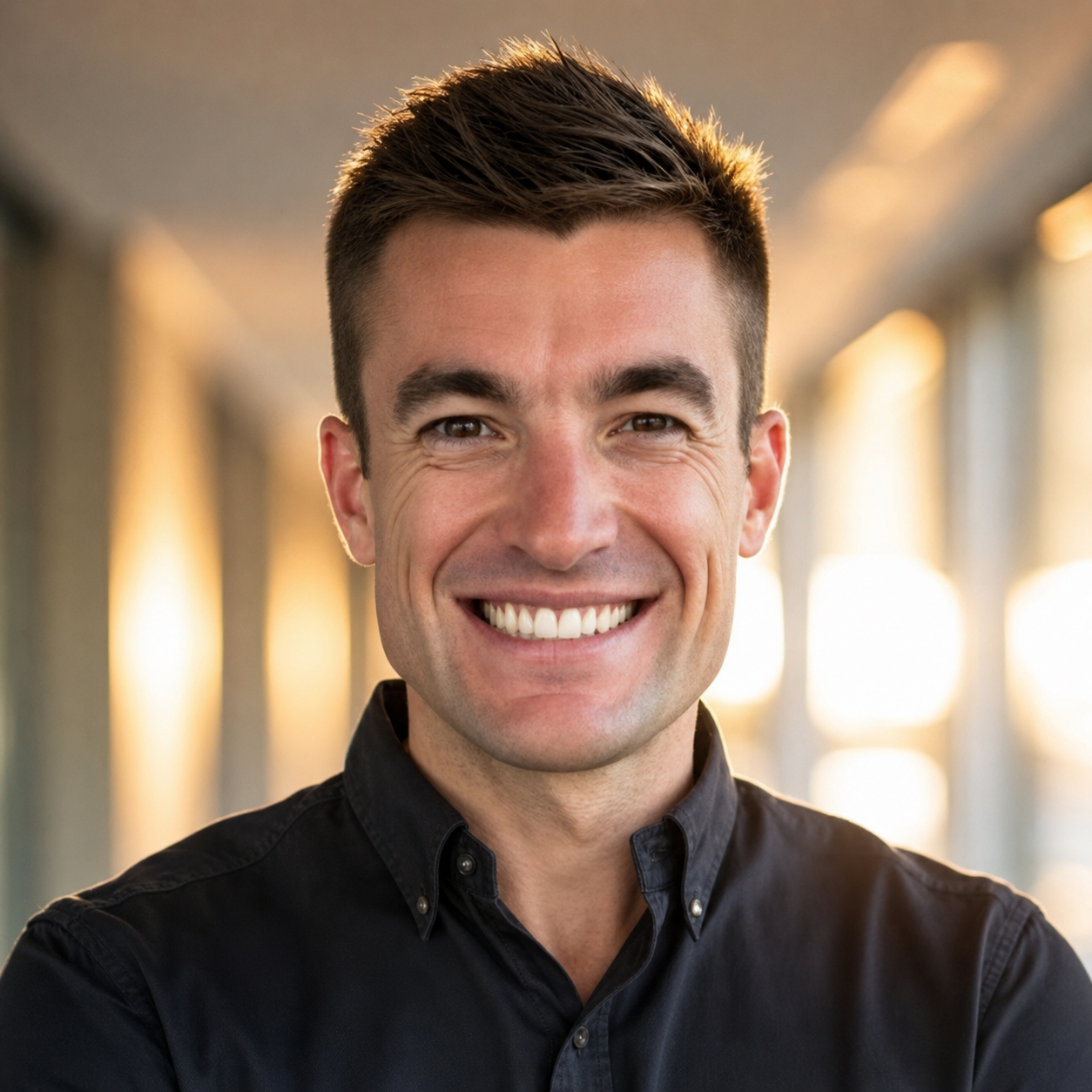
Forte brings a rare perspective from both sides of commercial real estate distress. He began his career working through failed banks and troubled portfolios after the financial crisis. Today, as Founder, Chief Investment Officer and Managing Partner of Lucern Capital Partners, he acquires and operates value-add assets within a transaction volumes approaching $500 million.
Because Forte has experience as both a workout professional and principal investor, our conversation has two parts: how lenders can protect value when loans become distressed, and how investors can acquire troubled properties and turn them into successful investments.
As part of our CRE Distress to Success series, we had the pleasure of interviewing Frank Forte.
Thank you for joining us. Can you share your professional origin story and what led you to build Lucern Capital Partners?
My path was unusual because most of my early roles involved distress, workouts or turnarounds. Right after school, I worked as a government consultant while banks were failing. We merged some institutions, closed others and dealt with the consequences of leverage and structured investments that should never have been made.
I later worked for a senior housing debt and equity firm. When healthcare reimbursement rates changed, much of the portfolio went upside down almost overnight. I then spent time at CWCapital, Fortress and Berkadia. By the time I launched Lucern, I had sat on many sides of the table and developed experience in acquisitions, capital markets, asset management and operations.
That combination gave me the confidence to build an investment firm that could do more than acquire properties. Many people can underwrite a deal and arrange the capital. Far fewer know what to do after closing. I believed we could create value by handling the operational work that other buyers found too difficult or time-consuming. We designed Lucern to stay lean and move quickly in niche markets, with the ability to source off-market deals and manage them closely. The goal was never to rely on a perfect exit. We wanted every investment to have enough downside protection to remain workable under stress.
What did the failed banks and distressed portfolios teach you about how real estate trouble begins?
Most real estate failures begin with leverage, unrealistic assumptions or both. If you buy an asset all cash and your assumptions are wrong, you may earn a poor return, but you can often survive. If you use substantial leverage and outperform your assumptions, the result can be excellent. The most dangerous combination is too much debt paired with a business plan that was never grounded in reality.
That is why we underwrite to the property as it exists. We do not depend on aggressive rent growth to make a deal work, and we use bridge debt carefully. Conservative assumptions give us time when a market moves more slowly than expected. When the market does outperform, we benefit from the upside without having needed it to survive.
What is driving the current wave of commercial real estate distress, and where are original underwriting assumptions breaking down?
The most immediate pressure is the refinancing gap. Many properties were financed when rates were much lower, and their current cash flow cannot support today’s debt costs. Some assets remain fundamentally sound, but their existing capital structures no longer work.
The second problem is the underwriting inherited from the low-rate period. Many business plans assumed strong rent growth, tight exit cap rates and fast lease-up. Rent growth has slowed in many markets, cap rates have widened and vacancies take longer to fill. Insurance, taxes, utilities and maintenance have also increased faster than many models anticipated.
The third issue is operational. Tenant delinquencies, deferred maintenance and code problems become more damaging when financing is expensive and growth is limited. These pressures can leave an asset technically solvent but practically unworkable under its current debt.
When you first evaluate a troubled property, what tells you whether its value is recoverable?
I begin with four lenses: in-place cash flow, the capital stack, the physical asset and local market, and the capability and alignment of the sponsor. I want to understand where the money is coming from, when leases expire, what obligations sit ahead of the equity and whether the current owner can execute a credible plan.
Then I look for durable location and realistic re-leasing demand. Deferred maintenance, code violations and outdated systems are expensive, but they are usually fixable. A permanent loss of demand is different. Capital cannot rescue a retail center in a declining trade area or an office property whose market no longer supports its original use.
A strong location, sustainable tenant demand and problems that capable management can repair usually indicate recoverable value. The distinction between fixable and structural problems determines whether additional capital is an investment or simply delays the loss.
Where do distressed situations most often break down as control shifts from the borrower to the lender?
The biggest risks are information loss, misaligned incentives and operational disruption. The lender may not fully understand the leases, vendors or local market, while a borrower who expects to lose the equity has little incentive to transfer that knowledge or contribute more capital.
That conflict becomes dangerous when no one has clear operational authority. Leasing slows, repairs are delayed, vendors stop showing up, tenants become uncertain and employees stop receiving direction. The strongest transitions move quickly to preserve information, communicate with tenants and give one accountable operator control of the day-to-day decisions.
How quickly must a lender, receiver or replacement operator act?
Speed is critical. Consider a 200-unit apartment property with leases expiring every month. If no one is managing renewals and new leasing for a quarter, occupancy can fall sharply. Recovering from that decline is much harder than holding the property steady during the transition.
I compare it with receiving a zero on a school test. One zero can crush the average, and it takes a long time to rebuild it. A property behaves the same way. Once occupancy, collections or tenant confidence falls beyond a certain point, the recovery requires far more capital and time.
The strongest transitions fill the authority vacuum quickly. Someone must stabilize the operation, communicate with tenants and employees, protect cash flow and create reliable reporting before uncertainty compounds.
How should a borrower work with a lender when a property is in trouble?
At Berkadia, we used to say that bad things happen to good people. What matters is how they respond. A borrower who stops communicating, withholds information or tries to outlast the lender usually makes the outcome worse.
If the borrower shares accurate information, cooperates and helps preserve the property, the lender has more options. In some cases, the borrower may even be able to work with that lender again. People remember how someone behaved in a difficult situation long after they forget the details of the dispute.
The choice between a private workout and a formal process usually comes down to borrower cooperation, asset quality and the complexity of the capital stack. A sound asset with a cooperative borrower and relatively simple financing may support an extension, recapitalization or consensual sale. An uncooperative borrower, a deteriorating property or multiple parties with conflicting claims may require receivership or foreclosure to protect value.
Can excellent operations rescue every distressed asset?
No. Operations matter enormously, but they cannot overcome every market. If one property is underperforming while its competitors are healthy, the problem is probably the asset, its capitalization or its execution. A strong operator has a real chance to fix that.
If an entire market has repriced, even an excellent team may not be able to restore the original value. Office is the clearest example. A property can be professionally managed and 75 percent occupied, yet still be worth far less than it was several years earlier. Operations can preserve income and limit the damage, but they cannot reverse a structural change in demand.
What do lenders and investors most often misunderstand about what is happening at the property level?
They sometimes rely too heavily on the spreadsheet. A rent roll and operating statement cannot show whether tenants are frustrated, a contractor is underperforming or local demand has shifted. Visiting the property and speaking with the people who operate and occupy it can change the diagnosis.
They also tend to underestimate the time and capital required to re-lease space during distress. Vacancies usually take longer to fill, tenant improvements cost more and neglected systems reveal additional work once construction begins.
Finally, tenant quality has to be understood locally. A company that appears acceptable on paper may be struggling at that location, while a smaller local business may be durable because it serves an established customer base. The best decisions combine financial analysis with current, on the ground information.
What separates a strong property manager from one that merely keeps the building functioning?
Accountability and urgency. A strong manager does not hide behind a chain of emails or give a different explanation each time a problem is raised. The team provides accurate information, takes ownership and follows through.
The best managers are firm without alienating tenants. They enforce leases and collections, but tenants still believe that someone is listening and maintaining the property. That balance is especially important in small-bay industrial and neighborhood retail, where many tenants are local business owners rather than large credit companies. We manage most of our portfolio in-house because these assets require close control. We use third-party management where a trusted local firm has the right coverage and has demonstrated that level of execution.
Buying and Operating Distressed Assets
His later experience as a principal investor and operator shaped the second path: acquiring troubled properties, correcting operational problems and creating value through leasing, capital improvements and disciplined execution.
You have a memorable way of describing where value is created. What do investors misunderstand about execution?
I tell our younger employees that 20 percent is the buy, 20 percent is the sale and the rest is operations. Buying well matters, and selling well matters, but most of the work happens in between.
A spreadsheet can show a rent increase, a construction budget and an exit value. It cannot make the repairs, collect from a late-paying tenant, supervise a contractor or explain a common-area charge to a small business owner. The value appears only when somebody executes those tasks consistently.
Our strategy has been to buy assets below replacement cost, invest the right capital, correct the operations and sell a stabilized property to a buyer who wants dependable cash flow without the heavy lifting. We have made money by doing the work other people prefer to avoid.
What did the pandemic teach you about operating through a crisis that neither the original underwriting nor the loan documents anticipated?
The pandemic was especially difficult for parts of our multifamily portfolio. Collections fell, remedies for nonpayment were constrained and lenders still expected to be paid. As rates later rose, the financing pressure compounded the operating problem.
We triaged each situation. We worked with tenants who communicated, offered limited forbearance when it supported a workable solution and took a firmer approach when a tenant could pay but refused. We refinanced or extended maturities where possible and contributed additional capital when that protected a sound asset.
The period reinforced the value of a strong balance sheet, conservative leverage and fast decisions. A crisis gives an owner little time to repair an aggressive capital structure. The flexibility has to exist before the shock arrives.
You restored a broken condominium project that many people believed should be handled more aggressively. What happened?
We acquired approximately 62 units in a 104-unit condominium after the lender completed foreclosure. Our basis was roughly $48,000 per unit. The association had no meaningful reserves, the property needed major work and conventional lenders would not finance individual purchases. That meant existing owners were trapped and any sale generally required a cash buyer.
Some advisors suggested that we use our controlling interest to steamroll the remaining owners. We chose to work with them. With their support, we joined the association board, found a life insurance company willing to make a $1 million loan to the association and used the capital to support repairs, including roofs and parking areas.
We then worked with mortgage lenders to restore financing eligibility. Approval began with larger down payments and eventually reached FHA financing for qualified first-time buyers. As financing returned and the property improved, values rose. We sold units that had cost less than $50,000 for as much as approximately $230,000 to $240,000 at the peak.
Why was that condominium recovery meaningful beyond the investment return?
Many existing owners were people on fixed incomes who had watched their homes lose value and become nearly impossible to sell. Restoring the association and conventional financing allowed some of them to exit after years of being trapped.
It also created affordable ownership opportunities for teachers, nurses and other local buyers in a county where housing was already expensive. That social result was not the original investment thesis, but it was a rewarding outcome.
The deal is also a useful lesson in control. We had the voting power to force decisions, but cooperation produced a better result for the asset, the residents and our investors. Distress does not always require the most aggressive possible approach. It requires the approach that best preserves and restores value.
Lucern moved away from multifamily and into small-bay industrial. Why did you make that pivot?
Multifamily was where I had the deepest experience, so leaving it was uncomfortable. We saw transaction volume slowing, heavy new supply in many markets and limited rent growth. Rather than wait for conditions to improve, we committed to a different strategy before the pivot became popular.
We focused on multi-tenant light industrial, especially small- and shallow-bay properties. These buildings serve local contractors, repair companies, service businesses and other users who need practical space near their customers. New supply is difficult because land, construction, entitlements and municipal preferences often favor other uses or larger buildings.
The assets can often be acquired below replacement cost, but they demand active management. That combination fits our operating background. The strategy is less about following industrial as a broad trend and more about owning scarce, functional space that small businesses continue to need.
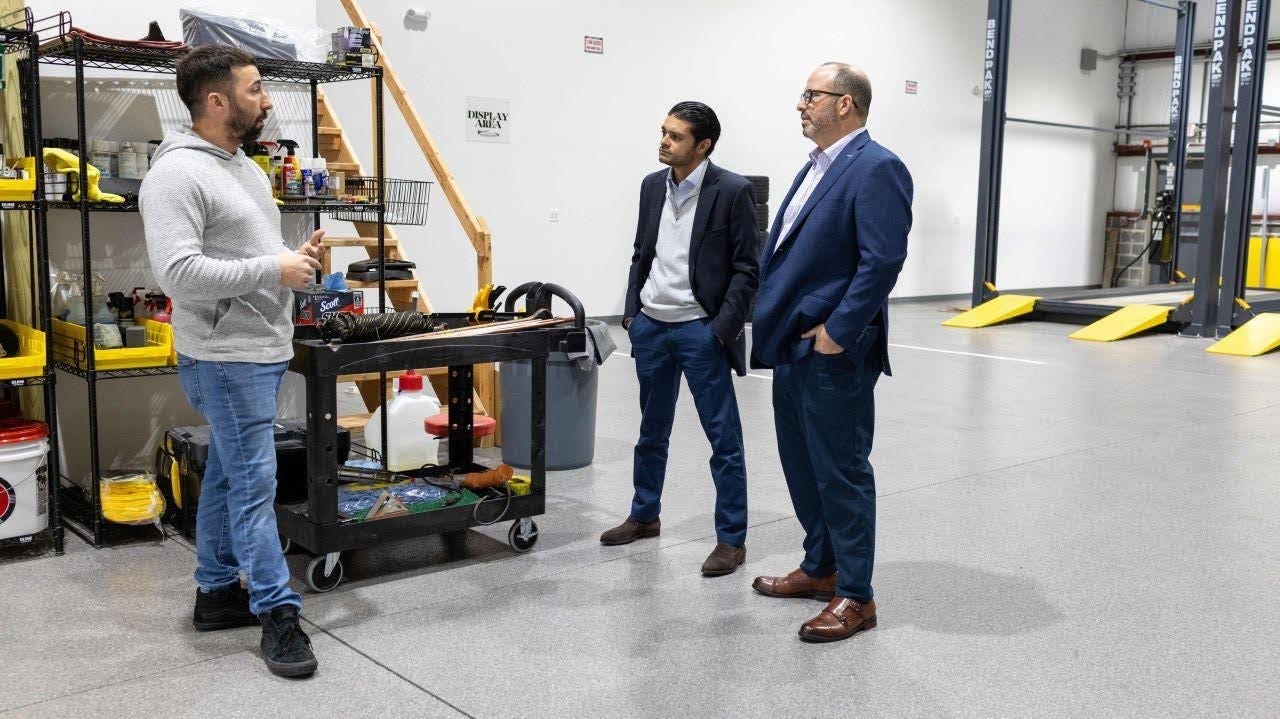
Where do the best small-bay opportunities come from?
Many are owned by families or long-time local owners who have not reinvested in the property. The next generation may have inherited it and may not want to manage dozens of small tenants, repair older buildings or pursue rent increases. The opportunity is usually operational neglect rather than excessive leverage.
Those transactions can take years. We recently worked on one direct acquisition for roughly two years before the owner was ready to sell. The property appraised materially above our purchase price, and we still had the opportunity to invest in it and improve rents.
A deep network matters because brokers, vendors and other owners bring deals to groups that have closed reliably and treated people fairly. Good sourcing is often the cumulative result of years of execution.
How do you underwrite hundreds of small businesses that do not carry institutional credit ratings?
There is both science and judgment involved. We review tax returns, credit, monthly cash flow and the history of the business. Then we have to decide whether the owner can sustain the rent and whether the use fits the property.
A local window contractor is not a public company with rated credit. The underwriting requires more work, and even after reviewing the information, you sometimes have to rely on experience and intuition. Institutions that are accustomed to a few large credit tenants may underestimate that workload.
The management continues after the lease is signed. Some tenants need education about triple-net charges, maintenance responsibility and payment expectations. Most pay on time, but a portfolio with hundreds of small tenants still requires active collections and consistent communication.
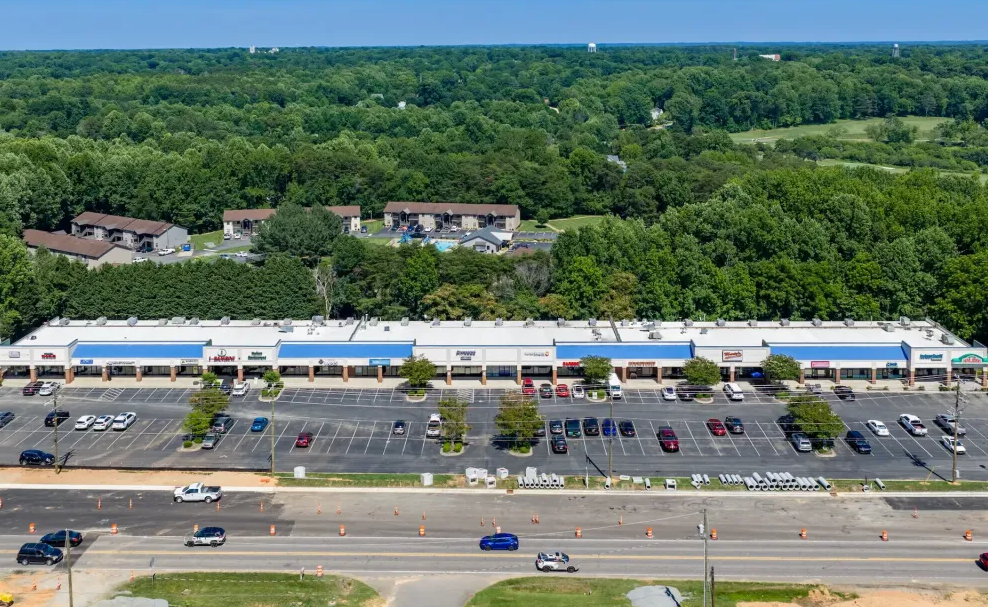
Why are you also investing in neighborhood strip retail?
We see many of the same supply dynamics. Small retail suites can be expensive and difficult to build because each unit needs separate mechanical systems, bathrooms, utilities and storefront improvements. Municipal design requirements can make new construction even more expensive.
When the location is right, the space serves businesses that need to be close to their customers. The replacement cost can be high relative to existing rents, which limits new supply. Tenant turnover is also more manageable than in a large institutional lease because the suites are smaller and the improvement packages are usually modest.
The common thread across our industrial and retail strategy is local demand, diversified tenancy and the ability to create value through hands-on leasing and operations.
What advice would you give lenders, owners and investors navigating today’s market, and where do you still see opportunity?
Be realistic, patient and selective. Lenders should underwrite to current rates and rents and judge whether the borrower can execute. Owners whose capital structures no longer work should begin pursuing a recapitalization, sale or consensual workout before the maturity date eliminates their options.
Investors should expect returns to come from careful selection and operational improvement rather than inexpensive leverage. We continue to see opportunity in small-bay industrial and select neighborhood retail. Well-located multifamily in growth markets may also offer value for buyers who can underwrite conservatively and operate it well.
Many investors focus on large institutional transactions. Smaller, more complex deals can offer a stronger edge because they require local knowledge, patient sourcing and active management. Complexity creates opportunity only when the buyer has the operating ability to solve it.
What habits or principles have contributed most to your success?
Work hard, stay close to the details and do what you say you will do. There is no secret blueprint. Real estate becomes understandable through repetition: solving construction problems, working through leases, handling difficult conversations and learning from the times you get hit in the face.
Remain willing to do uncomfortable work. The best opportunities often look messy because the operations are weak, ownership is fragmented or the capital structure has failed. If the underlying location and demand are sound, complexity can create the discount.
Finally, protect your reputation. Deals change, markets turn and individual investments end. The relationships with investors, lenders, tenants and industry partners determine whether you will be able to keep operating through the next cycle.
If you could inspire one broader movement, what would it be?
I would help restore dignity and status to physical work and the skilled trades. For years, young people were told that college and a white-collar job were the only respectable path, even when that meant taking on significant debt without a clear career opportunity. At the same time, the country developed a shortage of people who can perform essential hands-on work.
Artificial intelligence may accelerate the change. It can draft a report or analyze data, but it cannot rewire a building, repair a plumbing system or construct a deck. As technology reshapes office work, electricians, plumbers, technicians and other skilled workers should become even more valuable.
Real estate depends on those professionals every day. We should treat the trades as skilled careers with strong economic potential, not as a second choice.
Can you leave our readers with five principles for turning commercial real estate distress into success?
- First, underwrite the property as it exists. Do not depend on aggressive rent growth or a perfect capital market to make the numbers work.
- Second, use leverage responsibly. Debt can magnify a strong plan, but it leaves little room when weak assumptions and operating delays occur together.
- Third, move quickly when control changes. Stabilize staff, leasing, collections, repairs and tenant communication before uncertainty damages the property.
- Fourth, solve the operational problem at ground level. A financial restructuring creates time, but only execution can restore occupancy, income and confidence.
- Fifth, communicate and act with integrity. Difficult situations are survivable. A damaged reputation is much harder to repair.
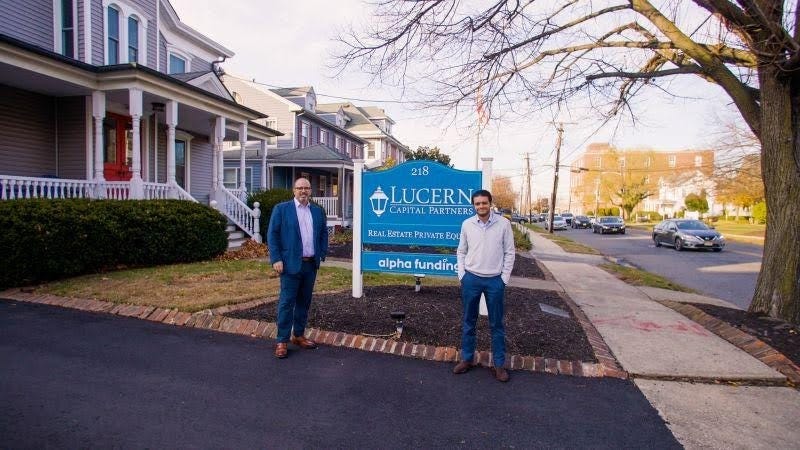
How can readers follow you and learn more about Lucern Capital Partners?
I am most active on LinkedIn, where I share Lucern’s transactions, market observations and thoughts on commercial real estate investing. Readers can find me at linkedin.com/in/frankfortelucern and visit Lucern Capital Partners’ website for company news, case studies and media appearances.
Frank, thank you for sharing your experience and practical insights. We wish you and the entire Lucern Capital Partners team continued success!
Series Overview: CRE Distress to Success is a premier interview series featuring the executives, investors, lenders, and operators leading the commercial real estate industry through today’s most challenging market conditions. Through candid conversations and real-world case studies, the series explores how industry leaders navigate distress, stabilize assets, and create value in challenging market conditions. Readers gain practical insights from the professionals shaping the future of commercial real estate.
About Aaron Weiner, Series Host: Aaron Weiner is a Senior Writer for Authority Magazine’s CRE Distress to Success series, TEDxLakewood Organizer, Director of Partnerships & Operational Advisor at Diversified Management Plus (DMP). He specializes in distressed office and retail assets, working with owners and lenders to stabilize properties, improve operations, and protect value. Aaron takes a relationship driven, asset-specific approach and helps oversee more than 25 million square feet across the Tri-State region.
Aaron is always open to sharing his perspective on strategy, market response, and execution. He can be reached by email aweiner@diversifiedmplus.com.