Before starting the business, friends repeatedly told me I was too young and inexperienced to make it on Madison Avenue, but I launched it at 23 years of age anyway.
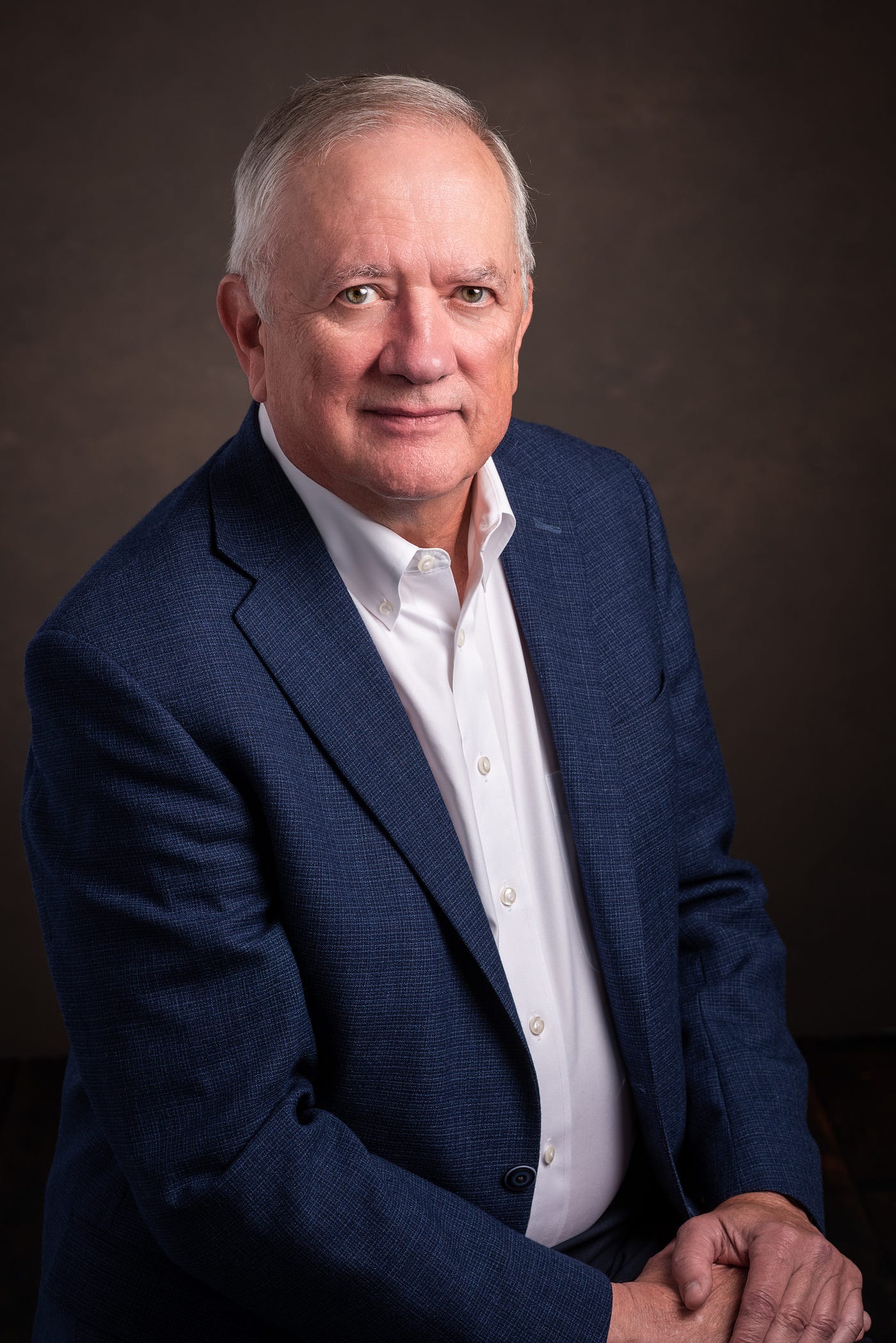
As a part of our series about “dreamers who ignored the naysayers and did what others said was impossible”, I had the pleasure of interviewing Dr, James R. Gregory.
Dr. Gregory is the former CEO of a global consulting business headquartered in New York City, focusing on corporate brands. He and his wife co-founded the company and led it for 40 years. They sold the business in 2013, and Jim has been writing books ever since.
Thank you so much for joining us! Our readers would love to ‘get to know you’ a bit better. Can you tell us your ‘backstory’?
I grew up in Johnstown, Pennsylvania, a small industrial town known for the tragic flood in 1889. I was the youngest of five and always full of ideas that many friends and family considered impractical. After college, I moved to New York City, met my future wife, and we opened an advertising agency on Madison Avenue when we were 23 years old.
Are you working on any new or exciting projects now? How do you think that will help people?
I just completed my first novel, Zephyr's War, which is an exciting endeavor. All my books aim to entertain and provide valuable life lessons for the reader.
In your opinion, what do you think makes your company or organization stand out from the crowd?
Throughout my career, our focus on corporate brands was innovative. We introduced a new category in the advertising industry and developed the CoreBrand Index®, a groundbreaking quantitative research study that provided substantial value to our clients.
Ok, thank you for that. I’d like to jump to the main focus of this interview. Has there ever been a time that someone told you something was impossible, but you did it anyway? Can you share the story with us? What was your idea? What was the reaction of the naysayers? And how did you overcome that?
From an early age, I was an artist and wanted to pursue a career as an artist and designer. My older siblings were all successful professionals in various fields and, with the best intentions, suggested that I might end up as a starving artist unable to support myself. That made me pursue my dream more aggressively. My mother, who was also an artist, told me to set my goals high and pursue them – which is what I did.
Before starting the business, friends repeatedly told me I was too young and inexperienced to make it on Madison Avenue, but I launched it at 23 years of age anyway. My colleagues told me I couldn't measure the financial impact of advertising on a company. Still, I built a quantitative research study called the CoreBrand Index, which was the first of its kind and was highly successful in helping our clients.
After selling the company, friends told me that I shouldn't waste my time by returning to university. Instead, I pursued a doctorate and achieved that goal by the age of 68. My friends were probably right about this decision, as it was challenging work for minimal benefit. Still, I get to put "Doctor" in front of my name, and that is fun!
While I had written business books throughout my career, my colleagues said that my goal of writing a novel was not a good idea since I only knew how to write for businesses. My first novel, Zephyr's War, is now available for preorder, and I’m hopeful to prove them wrong!
In the end, how were all the naysayers proven wrong? :-)
I achieved these goals despite the headwinds caused by well-intentioned friends, family, and business acquaintances who advised that my goals were unachievable. Staying focused and on track to achieve your vision is paramount to attaining your goals.
None of us are able to achieve success without some help along the way. Is there a particular person who you are grateful towards who helped get you to where you are? Can you share a story about that?
I met my future wife and business partner, Evelyn, on a rainy night in New York City on a subway. When I noticed she didn't have an umbrella, I offered her mine. That was the beginning of a significant turning point in my life, and we worked together as a team to accomplish the impossible. I wrote a book about her called Small Fortunes, an Amazon international bestseller in multiple categories, but I'm incredibly proud that one of the categories was "romance anthologies."
It must not have been easy to ignore all the naysayers. Did you have any experiences growing up that have contributed to building your resiliency? Can you share the story with us?
My father, a blue-collar steel worker, supported and respected my artistic pursuits, fostering resilience within me. Unfortunately, he passed away before witnessing the extent of success his encouragement inspired.
Based on your experience, can you share 5 strategies that people can use to harness the sense of tenacity and do what naysayers think is impossible? (Please share a story or an example for each)
1. Develop a personal brand—A personal brand is your vision for your future and should be your long-term personal goal. Where do you want to be in ten to twenty years, and how will you get there? This exercise is your big-picture thinking and should be codified into a sentence or two. In high school, my vision was to open an advertising agency on Madison Avenue. Every critical decision I made for the next ten years contributed to fulfilling that lofty goal. It is less important that you have a specific plan to get there and more important that you feel passionate about achieving that goal you've set for yourself.
2. Adjust as needed—Your goal is your goal, but if circumstances change, adjusting your goals over time is acceptable. It would be best if you planned to reevaluate your goals every five years. So, you update your 10-to-20-year vision every five years based on your current circumstances. To stay on track, it is a good idea to set your calendar. On January 1, every five years, write "Update my long-term goals," and you'll remember to dedicate the time to make it happen.
3. Focus your efforts—Everything you say and do should aim to achieve your goal. Your educational decisions should be in alignment with your goals. The friends you cultivate should support your goals. If you have a choice, make it with an eye toward your vision. Remember, everything matters—your brand is everything you say and do.
4. Celebrate your successes—It is important to acknowledge your milestones. Celebrate with a graduation party if you complete a program designed to support your goals. If you launch a business – celebrate with an open house. Every milestone brings you closer to your goal. You will be amazed at how quickly your achievements will add up and the goal instead of being some far-off pipe dream will become a reality faster than you can ever imagine. I achieved my goal of opening an advertising agency on Madison Avenue by the time I was 23 years old.
5. Enjoy your life—Be happy. I often meet people who are unhappy with their decisions and believe life is unfairly stacked against them. I feel for them, but I can't understand why they don't consider where they are and set a new goal.
YouTube Video Link: https://youtu.be/KLeODvcKJ2E
What is your favorite quote or personal philosophy that relates to the concept of resilience?
Bob Saget, the comedian, summed up my philosophy, "Today is the first day of the rest of your life. And if that doesn't work out for you, Tomorrow is the first day of the rest of your life..." Saget's statement resonates with me as a powerful reminder of the optimism and hope within resilience.
You are a person of great influence. If you could inspire a movement that would bring the most amount of good for the greatest number of people, what would that be? You never know what your idea can trigger.
I believe a return to the fundamental teachings of major peaceful religions could significantly benefit society. Fearing a societal decline, I advocate for a revival of these basic beliefs to advance peace and hope in our world.
Can our readers follow you on social media?
http://www.Jamesrgregory-books.com
Thank you for these great stories. We wish you only continued success!