When you start a company, especially if you’ve never done it before, you get advice from everyone and it’s important that you trust your gut instinct.
Social Impact
Erine Gray of Aunt Bertha: How Personal Adversity Inspired the Creation of America's Largest Social Care Referral Network
Founder and CEO Erine Gray shares how a devastating family medical crisis drove him to build a free online platform connecting millions of Americans to vital social services.
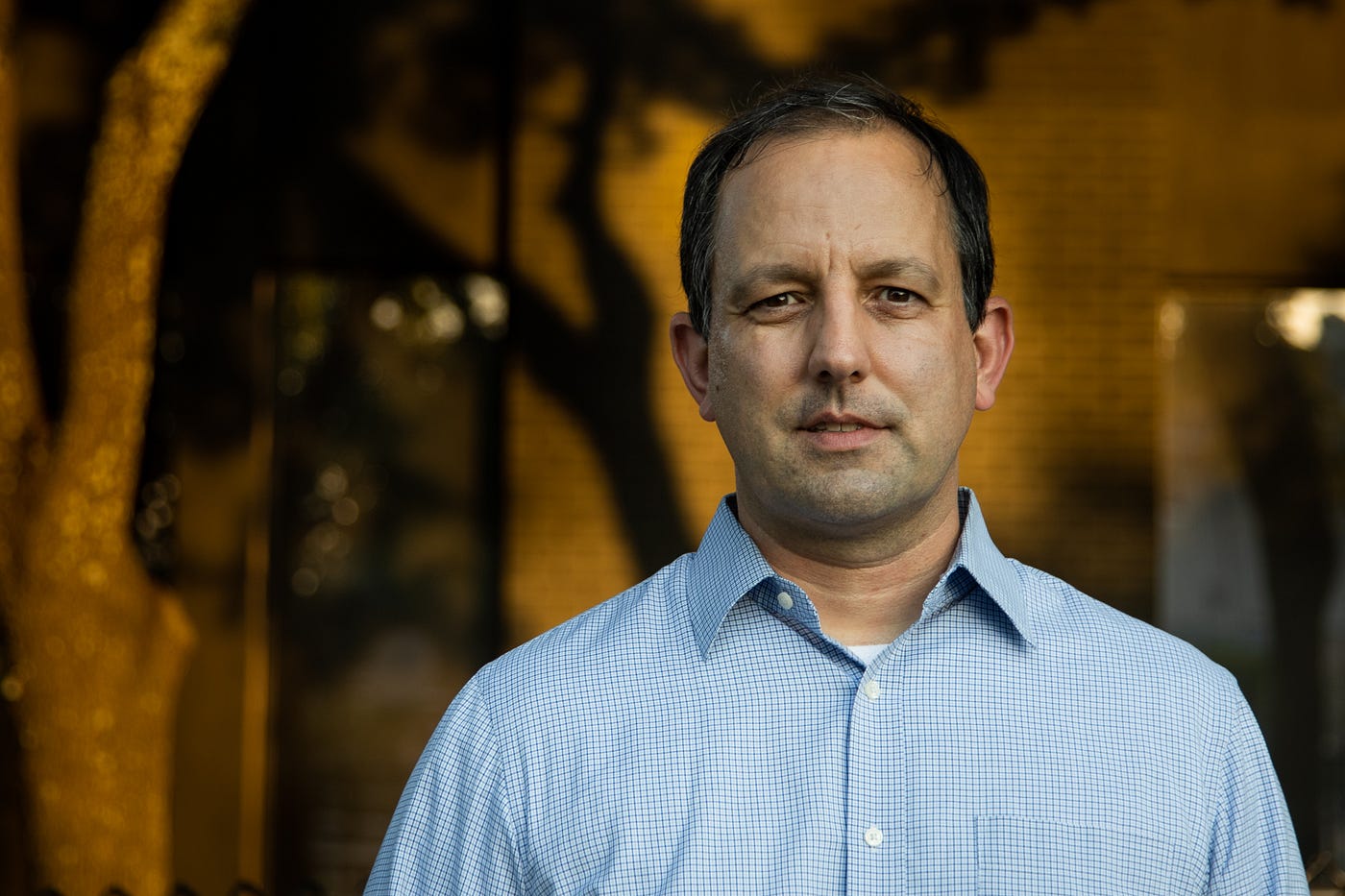
As a part of our series about business leaders who are shaking things up in their industry, I had the pleasure of interviewing Erine Gray.
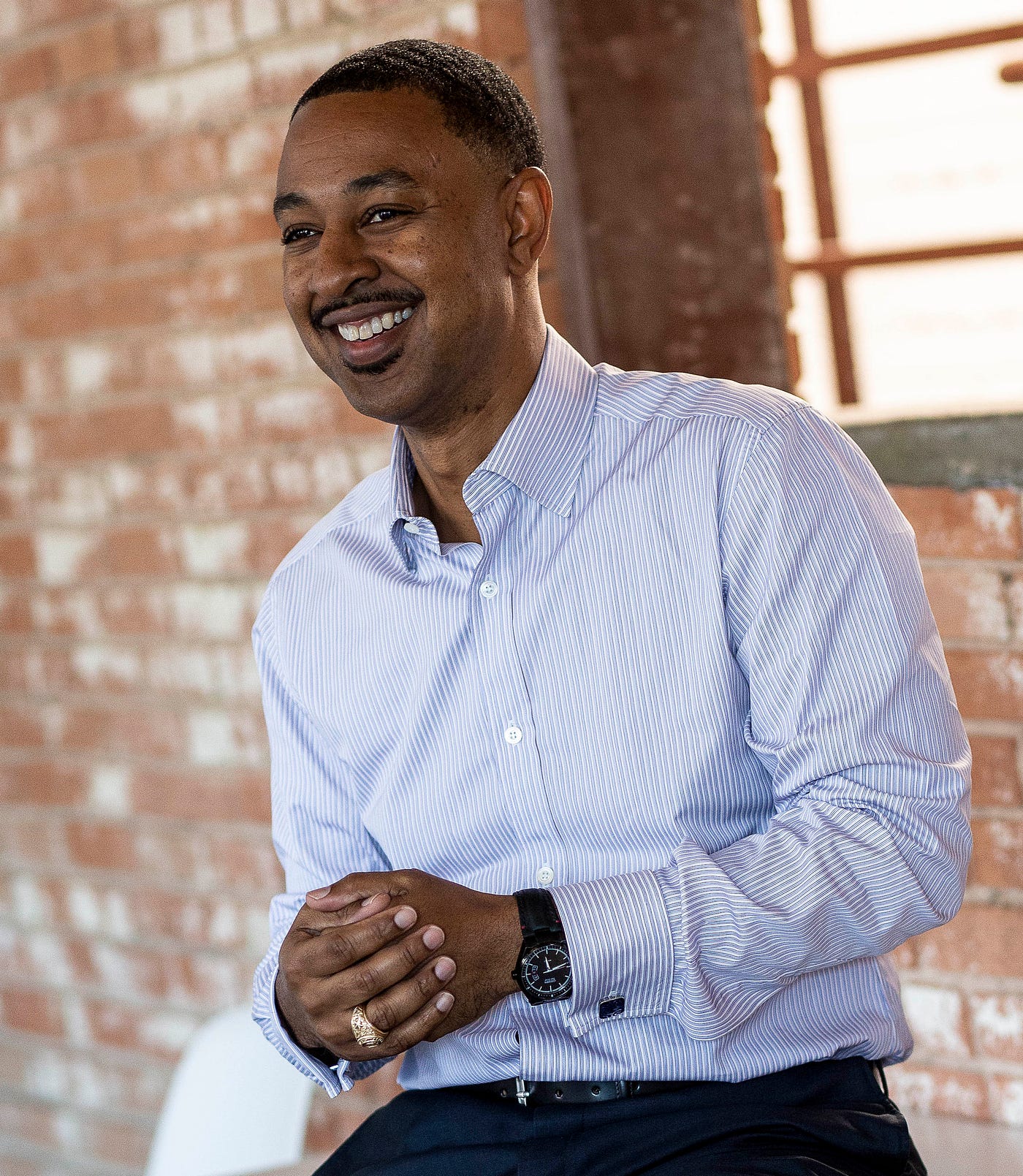
Erine Gray is the Founder and CEO of Aunt Bertha, a Public Benefit Corporation based in Austin, TX. Aunt Bertha is a free-to-use online platform that makes it easy for anyone in the U.S. to find and apply for social services — anything from Medicare to food stamps to housing — just by typing in a ZIP code. Aunt Bertha is the leading referral platform for social services in America, serving millions of users across the nation’s biggest cities and smallest towns. The company’s platform is used in a wide range of industries including education, government, housing, and healthcare. Erine is a 2014 TED Fellow, an Unreasonable Institute Fellow and most importantly, an advocate for the underserved in the U.S.
Thank you so much for doing this with us! Before we dig in, our readers would like to get to know you a bit more. Can you tell us a little about your “backstory”? What led you to this particular career path?
I grew up in a small town called Olean, New York, just an hour south of Buffalo. I was nearly 17, in the summer of 1992, when my mom, who worked as a janitor at the community college at the time, caught a rare disease called encephalitis. She was immediately rushed to Sayre, Pennsylvania, which was a four-hour drive, and flatlined twice on the way there, but made it to see a brain specialist. Unfortunately, while she survived an ensuing coma her brain was permanently damaged by the condition. Her memory was essentially wiped out — everything after her childhood and the first few years of the birth of her first daughter was gone. She had no memory of my little sister and I.
Three months later, she was released from the hospital. My dad, sister, and I were just trying to figure out how to care for her. She recovered, to some extent, but suffered from seizures on a regular basis — they would sometimes knock her out for the day. My dad did the best he could to take care of her, and he did, for nine years. He did it alone for the most part. We didn’t know what services were available. And when we did find programs, it was difficult to get through the application process.
I’ve always been interested in public policy, and shortly after I became my mother’s guardian in 2002 I went back to grad school to get my Master’s in Public Affairs from the University of Texas. I worked in Texas helping state agencies better deliver public services — including helping the State of Texas modernize how people find and apply for any of the 143 different State-based government services available to them. And I thought, “How can you take all the agencies, county governments and non-profit programs and put everything in one place?”
Can you tell our readers what it is about the work you’re doing that’s disruptive?
Aunt Bertha was founded on the belief that everyone — yes, everyone — should be able to find the help they need, when they need it, and with dignity and ease. We set out to become the go-to resource for individuals and families who are in need of services — such as food or legal aid — but don’t have access to, or familiarity with, the available resources in their community. Aunt Bertha’s B Corporation certification means that everything the company does is in service of its mission, balancing purpose and profit, while always considering the impact of its decisions on its workers, customers, suppliers, community, and the environment.
After nearly a decade of service — Aunt Bertha celebrated its 10-year anniversary this past August — the company is now the largest and most widely used social care network in the country. This includes over 1,100 resources on the platform in each and every county across the country — ensuring every American can readily find social services in their area, whether public sector or community organizations, at any time.
This is how we do it:
- It’s about building the network. Aunt Bertha’s team researches, verifies, and adds qualified programs to our listings so they’re easy to find on our search platform.
- It’s about open access to search. Aunt Bertha’s program search is free, open to the public, and easy to use so anyone can find help and connect with programs in just a few clicks.
- It’s about referral and collaboration tools. Nonprofits that claim their programs can send and receive referrals directly on our platform. This makes it easier for them to collaborate, ensuring every person gets the help they need.
- Finally, it’s about strengthening connections: Organizations building social care initiatives encourage nonprofit partners to use our platform for making and receiving referrals.
Aunt Bertha also helps social service providers coordinate care more easily between organizations, given the importance of Social Determinants of Health (SDoH) — the impact of factors such as where individual lives and works — on their overall well-being. That’s why Aunt Bertha is focused on helping make referrals and care coordination between providers as easy as possible.
Can you share a story about the funniest mistake you made when you were first starting? Can you tell us what lesson you learned from that?
Well, back in 2010 when Aunt Bertha was just getting off the ground, I was working out of Tech Ranch, a co-working incubator in Austin. One day, I struck up a conversation with Brian, an expert coder who was working on this advanced javascript library called Ext JS. The truth is I had been a back-end developer in a previous life but hadn’t written code in some time — but I was just fascinated by it! I took Brian out for some lunch and while sitting down at Black-Eyed Pea, I asked him to teach me everything he knows about Ext JS, I wanted to build Aunt Bertha on the program. Brian advised against it; recommending I use a basic query library. I knew better, well at least I thought, thus began my long struggle with Ext JS.
When you start a company, especially if you’ve never done it before, you get advice from everyone and it’s important that you trust your gut instinct. However, this doesn’t mean you should disregard people you trust or those who have some valuable insight to share. I would’ve saved myself a lot of headache just listening to my friend, who knew exactly what he was talking about. In fact, we’ve been fortunate enough to have him as part of the Aunt Bertha team for several years now!
We all need a little help along the journey. Who have been some of your mentors? Can you share a story about how they made an impact?
Like many other entrepreneurs out in the business world, I can say with confidence that I would not be where I am today were it not for my mentors. While it’s always great to have the support of my family and friends, a mentor — at least in my mind — is someone who has no ulterior motive or bias, someone who can be one-hundred percent honest with you and who has experience — and at least a couple of grey hairs. One of my closest and most valued mentors is my coach, Peter Reading. We’ve been meeting several times a year for the past six years.
In today’s parlance, being disruptive is usually a positive adjective. But is disrupting always good? When do we say the converse, that a system or structure has ‘withstood the test of time’? Can you articulate to our readers when disrupting an industry is positive, and when disrupting an industry is ‘not so positive’? Can you share some examples of what you mean?
It can be a bit difficult to describe disruption in a binary way — rarely is the disruption positive or negative for all parties involved. One of the biggest examples that comes to mind for me is how the growth of e-commerce giants like Amazon has impacted communities such as the one I grew up in.
From a consumer perspective, the disruption Amazon has driven has led to some incredible efficiencies & benefits — especially when it comes to shipping and similar logistics concerns. However, the cost of these efficiencies has been the disruption of traditional, physical retail and other SMBs like the ones that have traditionally powered communities such as Orlean. It’s not a black & white situation — you can’t just ignore the benefits to consumers overall. But this kind of disruption has been compounded by chronic underinvestment in the communities most impacted by it, resulting in entire communities being left behind — and increasingly diminished prospects for regrowth with each passing day.
Lead generation is one of the most important aspects of any business. Can you share some of the strategies you use to generate good, qualified leads?
- Many of our leads come from happy partners who have shared Aunt Bertha with others in their network. We start first by serving our partners well.
- Giving prospective partners all the information they need before serving a touchpoint is key. When we redesigned our marketing site earlier this year, this was our focus.
- A third-party agency that can provide a fresh perspective on your lead-generation funnel is a worthwhile investment. We were lucky enough to be able to partner with In-House International, an Austin-based digital agency, who helped us see our funnel in a new way.
We are sure you aren’t done. How are you going to shake things up next?
We’re accomplishing great things at Aunt Bertha — each and every day. We just celebrated our 10-year anniversary in August and surpassed 4 million users on our platform. As the COVID-19 pandemic took over earlier this spring, we launched findhelp.org, a new navigation tool to help people across the country address sudden lapses in unemployment, food security, or other problems they didn’t see coming. The new site has helped people find what’s needed most in this new, uncertain landscape — everything from free COVID-19 testing to specific household supplies as well as reduced-cost services such as rent relief, utility bill assistance, and mental health treatment, specifically for people impacted by the pandemic.
Do you have a book, podcast, or talk that’s had a deep impact on your thinking? Can you share a story with us? Can you explain why it was so resonant with you?
I’ve always loved to read. A while back, I started listening to audiobooks on my daily walks — if you’re busy like me and haven’t tried it, I highly recommend it. I recently finished The Wright Brothers, a masterpiece by the Historian author, David McCullough. The book tells the dramatic story about the courageous brothers who taught the world how to fly. I found Wilbur and Orville fascinating. Their approach to failure — and there was much of it — wasn’t viewed as a bad thing, rather it was an opportunity to learn and improve on their assumptions and approaches.
Perhaps more than anything else, it was the Wright brothers’ clear and unequivocal drive that resonated with me the most. You see, they were doing it for the right reasons — not fame, not money — rather, for the wonder and incredible possibilities manned flight would afford humanity.
Can you please give us your favorite “Life Lesson Quote”? Can you share how that was relevant to you in your life?
Margaret Mead, the American cultural anthropologist, once said, “Never doubt that a small group of thoughtful, committed citizens can change the world; indeed, it’s the only thing that ever has.”
Think about that for a moment, these words — what an incredible statement, what an empowering truth this is. Change doesn’t come from the top down, it comes from individuals with dreams and ideals, men and women bold enough to make their dreams a reality. This idea, that every individual has the power to enact positive change in the world is what drives me and the incredible Aunt Bertha team each day.
You are a person of great influence. If you could inspire a movement that would bring the most amount of good to the most amount of people, what would that be?
It’s hard to see myself inspiring a movement, and that’s just not something I’ve ever thought about. But if Aunt Bertha can provide an opening for someone — no matter where they are, no matter who they are — I’m happy with our place in the ecosystem.
How can our readers follow you online?
You can find me on LinkedIn here.
This was very inspiring. Thank you so much for joining us!
AM
Written by
Authority Magazine Editorial Staff
Editorial Desk · Authority MagazineThe Authority Magazine Editorial Desk produces, verifies, and edits long-form primary-source interviews with executives, innovators, clinicians, creators, and social impact leaders across Business, Tech, Pop Culture, Wellness, and Social Impact.

Published inAuthority MagazineTop Lessons, Top Authorities · 42K Followers
Exclusive, curated interviews with the leaders and changemakers shaping tomorrow. Leadership lessons, industry deep dives, and executive profiles.