I was born and raised in Jewett, a town with about a thousand people off the highway between Houston and Dallas.
Social Impact
Corey Anthony: Why Overcoming Binary Thinking Is The Real Key To Cultivating True Corporate Diversity
AT&T's Chief Diversity Officer shares how moving beyond echo chambers and binary thinking transforms corporate culture and drives genuine inclusion from the top down.
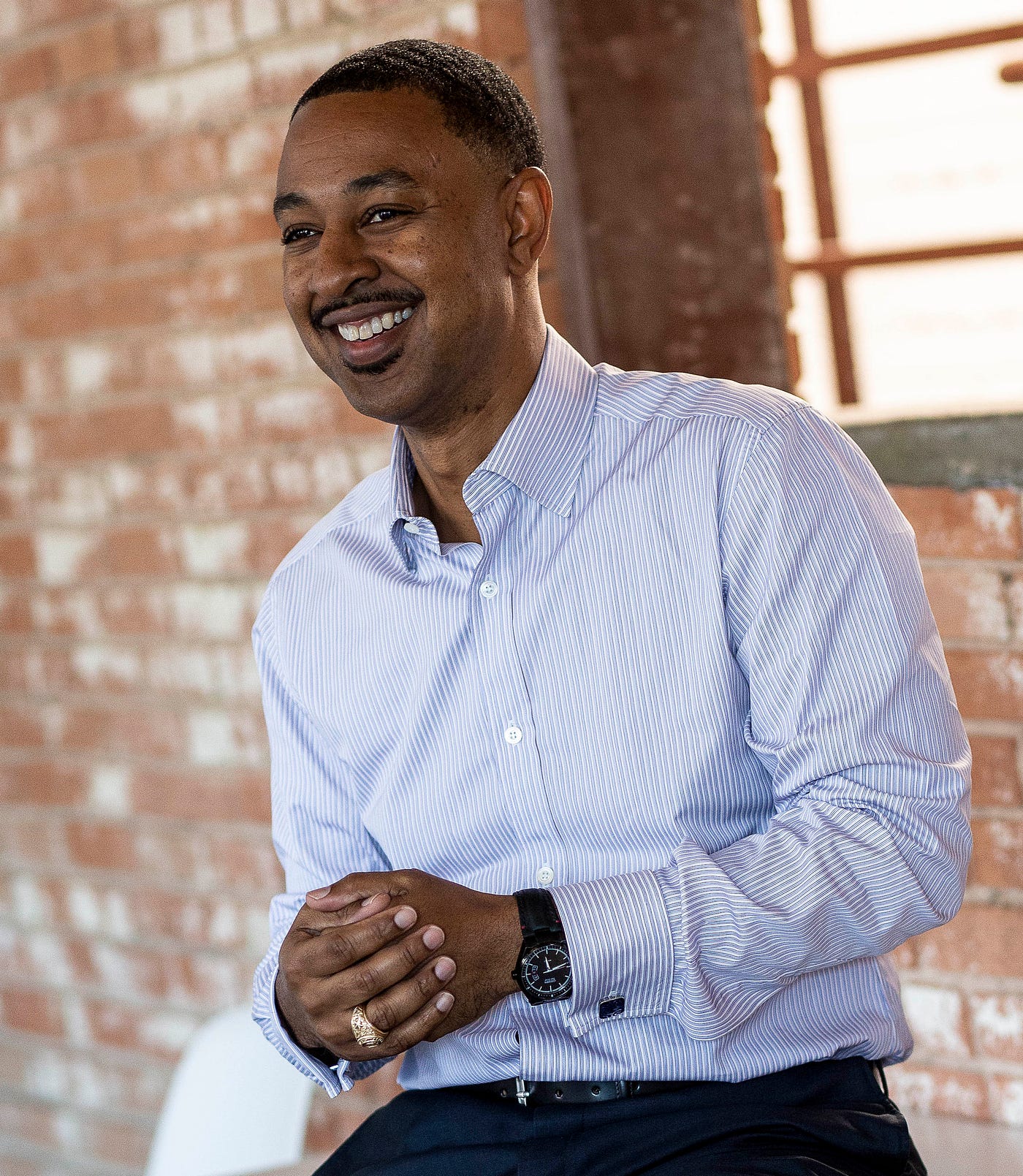
I had the pleasure of interviewing Corey Anthony. Corey is the Senior Vice President of Human Resources and Chief Diversity Officer for AT&T Services Inc. His responsibilities include identifying and developing leaders, aligning employee’s with the companies vision and priorities, and employee engagement. He also leads AT&T’s efforts to leverage it’s leadership in diversity and inclusion.
Thank you so much for doing this with us! What is your “backstory”?
I was born and raised in Jewett, a town with about a thousand people off the highway between Houston and Dallas. I was the first male in my family to graduate from college, obtaining a Bachelor of Business Administration degree with a double major in finance and accounting from Texas A&M. My wife and I have two kids, both in their teens.
I joined AT&T — which was actually Southwestern Bell at the time — right out of school in 1995 as a manager in Wichita, Kansas.
My experience with the company runs the gamut — wireless, marketing, finance, network operations, human resources and customer service. Working with these different groups has given me great view of the business and a pretty deep understanding of AT&T.
Can you share the funniest or most interesting story that happened to you since you began leading your company?
What’s truly interesting is seeing the wide variety of backgrounds and perspectives our employees bring to their jobs — sand how those perspectives impact not just AT&T, but the communities we live and work in.
Last year’s national conversation about whether states should keep confederate monuments in public parks, for example, was eye opening to me. Hundreds of employees shared their unsolicited perspectives with me, and they brought those passionate perspectives — on both sides of the issue — to work every day. That has little to do, at least directly, with AT&T’s business. But those employees brought their emotions inside the business — and that impacted how people interacted with each other. So, I was motivated to ask myself, what should we be doing as a company as we talk about issues like this?
To me, two things became evident. One: there were people on both sides of the argument who meant well but were trapped in echo chambers. Two: quite a few folks saw the issue in binary terms. There are actually nuances — like there are in most things. It’s not a strictly black and white issue, so to speak. But binary thinking tends to be so toxic that it shuts down conversation. I saw the need to help educate people on how to step outside echo chamber comfort zones and overcome binary thinking. This was months after our CEO Randall Stephenson told employees a very personal story about his experience with a black friend … and encouraged employees to lead the way in moving from tolerance to understanding.
Employees have since told me that while it can be tough to step outside one’s echo chambers and forego binary thinking, doing so has helped them connect better with their team members. They’ve said they found it incredibly helpful to think about issues differently, and as a result, they’re more empathetic. So that’s encouraging.
What do you think makes your company stand out?
There’s a popular hip hop saying: “I’m not new to this. I’m true to this.” That couldn’t be truer of AT&T; we’re not new to diversity and inclusion. We’ve led the way as a corporation for many decades. And what’s amazing is the level of commitment throughout the company — from our Chairman all the way to the front lines.
You might say a commitment to diversity and inclusion is in our DNA. Lewis Latimer, who worked alongside Alexander Graham Bell on the first telephone technology, was black. That was more than a century ago. Our workforce today is 43 percent people of color and 31 percent women. We’re one of the largest full-time union employer in the U.S. and the only unionized mobile carrier and media company. We provide tens of thousands of folks middle or upper middle-class wages that drives significant upward mobility.
Our employee resource groups (ERGs) also stand out. They serve members, the company, and their communities. They’re the heartbeat of the organization, and every AT&T leader is involved with them. I actually co-founded the Kansas City chapter of AT&T’s African-American group called The NETwork many years ago. I think our ERGs are a big reason that on our biannual Employee Engagement Survey, employees consistently give our diversity and inclusion practices the highest marks.
We also get a lot of external recognition, which is important — particularly from a hiring perspective. We receive an average of 75 Diversity & Inclusion awards annually and have been on DiversityInc’s top 10 list of Best Companies for Diversity each of the past five years. I truly believe AT&T is a place where the only limits on how far you can go are those you put on yourself. That’s not to say that I’m declaring victory; there are always things to improve upon. But we’re in an exciting industry that’s always evolving — and that requires us to be ready for change and willing to embrace it. There’s no room for distractions. We’re all on the same team and we’re all focused on one goal: winning in a way we can be proud of.
Are you working on any new or exciting projects now?
I discussed echo chambers and binary thinking earlier. That’s big. Another exciting project is how we’re engaging with our communities and grassroots organizations. While we’re a global company, we engage in the communities we live and work in constantly. One example is the work we’re doing in Chicago. We know that the clear majority of gun violence is in 19 communities. So, we’re working in these communities in conjunction with others to give young people exposure to the technology we use in the business — and the opportunities we have to help them achieve their full potential.
What advice would you give to other executives in your position to stay focused?
To all leaders, I would say, it starts at the top. Walking the talk when it comes to diversity and inclusion must start with a company’s most senior leaders. They drive the culture.
And consider setting up diversity councils that ultimately report to the CEO. Make sure employee development programs include diverse employees to build a robust talent pipeline. All voices should be heard. Create a companywide, committed mentorship program to help high-potential employees learn and advance. Encourage employees to establish organizations like ERGs for greater representation — and ensure leadership supports and recognizes these efforts.
None of us can achieve success without some help along the way. Is there a particular person who you are grateful towards who helped get you to where you are?
I was blessed because for me it started at home with my mom and pops. Professionally, though, the answer is yes. I had a mentor named Ray Wilkins. I was fortunate to meet Ray right when I started with the company. He’s the first black executive I knew personally. Ray was obsessed with delivering results through solid leadership. Because of Ray, I understood that it was possible for me as a black male to do anything in this business. He instilled that in me. I’m forever grateful to Ray, his mentorship and guidance.
What would you say to those black men and women watching and asking, “Can I do it?” and “How can I do it?”
Don’t limit yourself, especially don’t buy into the limitation based on the color of your skin, your race. Some folks may try to project that onto you but don’t succumb to it. Be on your game all the time. Have a full understanding of your value. Make sure you understand the difference between managing work and managing people. Manage work and lead people. That will set you apart. Deliver results, make an impact and remember innovation is your friend. And that’s in any business.
How have you used your success to bring goodness to the world?
I love this question. This concept is so important to me. First and foremost, it starts in my home, where I make sure I’m an example of what a father and a husband should be. Beyond home, I’m on the board of a wonderful organization called Court Appointed Special Advocates (CASA). Its members train and supervise volunteers to advocate for abused and neglected children living in protective care. Last year, more than 4,600 such kids in Dallas County were in the protective care of the state because their home life wasn’t safe. So, CASA volunteers gather information to help judges decide where these children can safely and permanently live.
I also spend a lot of time working with Junior Achievement, an organization that teaches financial literacy — which I’m a firm believer in. In my opinion, this has the power to break the cycle of poverty and the pitfalls that come with it.
Can you share the top five lessons that you have learned from your experience as a “Black Man In Tech”?
I have three must-haves. You must always 1) make an impact, 2) drive innovation, and 3) hone your ability to lead. You have to marry these three concepts to succeed. It’s possible to make it to the top. But you have to believe it. Take the time to acquire necessary skills. Know your value: What do you bring to the table? How good are you at what you do? What sets you apart? You need to know yourself to sell yourself. Who will believe in you if you don’t?
Can you please give us your favorite “Life Lesson Quote?”
“Talented people are naturally rebellious. To them, popularity is nice; influence is a means; acting honorably
is the ideal; and getting things done is the point. And the best people want to work for someone who shares that spirit.”
Some of the biggest names in Business, VC funding, Sports, and Entertainment read this column. Is there a person in the world, or in the U.S. whom you would love to have a private breakfast or lunch with, and why? He or she might just see this.
This may surprise you, but I would love to sit down with Jay-Z. I’m a huge fan of hip-hop and he does a great job of straddling various worlds at once — business, music, and humanitarian work. He’s shown that it’s possible to talk about music and hip-hop and discuss social and political issues. He even did it with the President at the White House. I would love to pick his brain.
Another person I would’ve liked to sit down with is Malcom X. This was a man who struggled with prejudice and anger early on, then completely transformed once exposed to the truth of his faith and the reality of who he had become. He found and spoke about new truths — and ultimately died for expressing those convictions.
Jamie Michael Hemmings President & Co-Founder of Best Tyme. He is running a series highlighting Black Men In Tech.

Published inAuthority MagazineTop Lessons, Top Authorities · 42K Followers
Exclusive, curated interviews with the leaders and changemakers shaping tomorrow. Leadership lessons, industry deep dives, and executive profiles.