I am the first to say I am not perfect and make mistakes. I value the opportunity to hear other people’s perspectives and learn from them.
Business
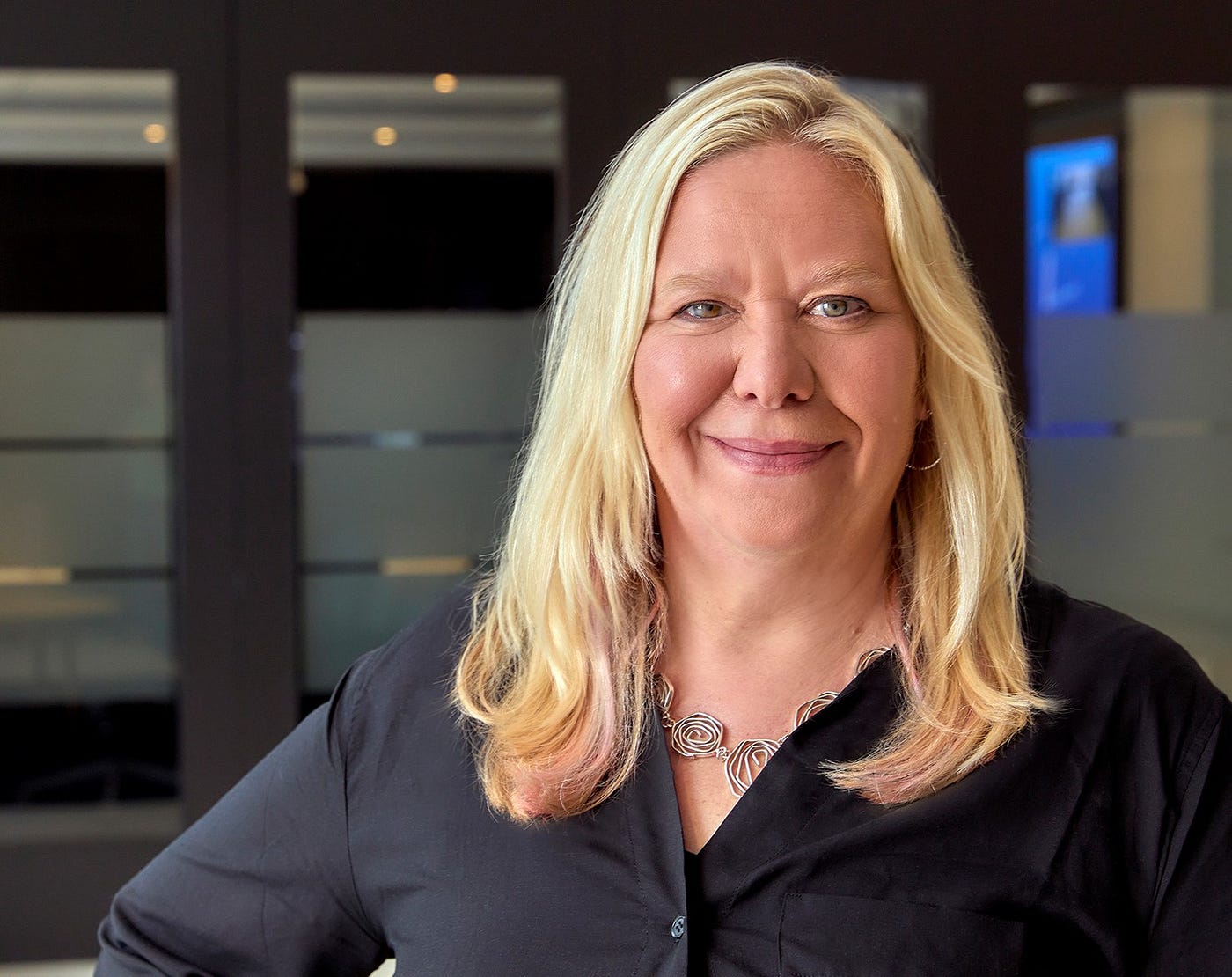
Erica Edwards of PepsiCo Beverages North America West Division: Why Walking Into The Room Prepared Is The Ultimate Antidote To Age And Gender Bias
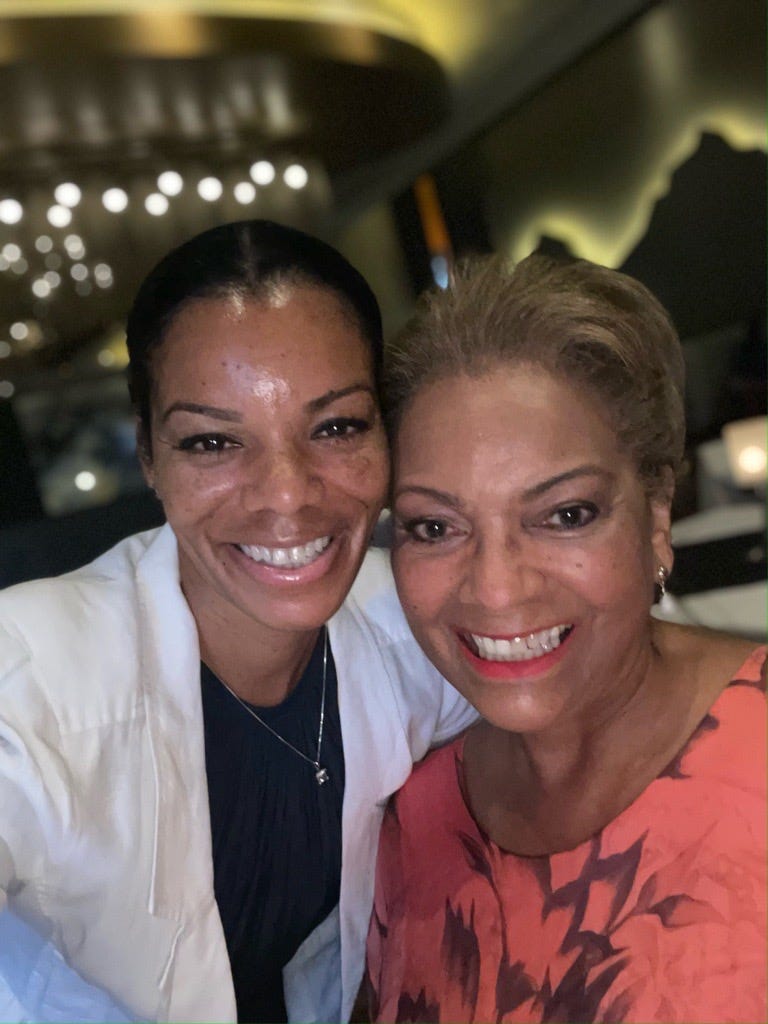
In the United States in 2022, fields such as Aircraft piloting, Agriculture, Architecture, Construction, Finance, and Information technology, are still male-dominated industries. For a woman who is working in a male-dominated environment, what exactly does it take to thrive and succeed? In this interview series, we are talking to successful women who work in a Male-Dominated Industry who can share their stories and experiences about navigating work and life as strong women in a male-dominated industry. As a part of this series, we had the distinct pleasure of interviewing Erica Edwards.
As the Senior Vice President of Supply Chain, Erica oversees the Supply Chain operations for PBNA’s West Division that is inclusive of 20+ locations with an organization of 4,800+ employees, across Manufacturing, Warehouse and Logistics. Passionate about the diversity and inclusion agenda at PepsiCo, Erica also serves as the Executive Sponsor for the Women’s Inclusion Network and the Women in Operations employee resource groups. She was born and raised in San Francisco, CA and graduated with a degree in Sports Medicine, Exercise Science from the University of Southern California, she currently lives in Los Angeles.
Thank you so much for doing this with us! Before we dig in, our readers would like to get to know you a bit more. Can you tell us a bit about your childhood “backstory”?
I was born in Fresno, CA and raised in San Francisco as an only child to my parents who are also California natives. In high school, I moved to live with my grandmother Nana until my freshman year of college at the University of Southern California (USC) in Los Angeles where I studied sports medicine. I’ve had a passion for sports since third grade and wanted to pursue it professionally but was forced to stop after tearing my ligaments for a second time.
Can you tell us the story about what led you to this particular career path?
I’ve always wanted to be a sports orthopedics doctor but stepped away to care for my father who was diagnosed with late-stage colon cancer. So instead of attending medical school, I decided to prioritize my family to support his health.
After he was cleared by doctors and healthy, I decided to pivot from medical school to sports physical therapy. I balanced my job at UPS while pursuing therapy hours as an intern, but ultimately didn’t feel fulfilled. Opportunity struck when I attended a career fair to explore other options. After speaking with the head of HR for a manufacturing plant, I was invited to visit the facility to interview for a job.
It was instantaneous: I was so mentally stimulated by my first experience seeing a consumer product come to life that I knew it was something I wanted to pursue. Two days later, I received an offer and started my supply chain career as a team leader on the off shift of a well-known manufacturing plant which built the foundation to where I am in my career today.
Can you share the most interesting story that happened to you since you began your career?
It’s so hard to pick just one because there are so many that are interesting stories, but the most impactful experience has to be when I was just starting my career and was the only woman on an all-male project team. I had some very challenging moments. I’ll also share momentarily how I also met one of my first great mentors, learned how to navigate roadblocks, and the importance of advocacy and finding allies.
You are a successful business leader. Which three character traits do you think were most instrumental to your success? Can you please share a story or example for each?
- Humility — I am the first to say I am not perfect and make mistakes. I value the opportunity to hear other people’s perspectives and learn from them. I’m not afraid to admit when I’m wrong and ask for help when I need it because that is a true sign of strength.
- Authenticity — I stay true to my core values which are the guiding principles to my work. Even if it is uncomfortable, we must stand up for what we believe in. For example, the Black Lives Matter movement, Asian hate crimes and Roe v. Wade decision are all important to me. I created internal discussion forums through Employee Resource Groups (ERGs) and spoke out about them publicly. I was transparent with my team and led by example and hope my colleagues feel confident doing the same with their teams.
- Passion — I am passionate about my work and inspired by how my team comes together to solve challenges. I don’t see obstacles, only opportunities.
Ok, thank you for that. Let’s now jump to the primary focus of our interview. Can you help articulate a few of the biggest obstacles or challenges you’ve had to overcome while working in a male-dominated industry?
Age discrimination or Perceptions — I was assigned a role on a significant and technical project with a former employer when I was fresh in my career and going to school full time. The all-male project team included people with an assortment of technical degrees and engineering experience.
During the first team meeting, I was prepared to present my work to contractors and senior-level colleagues from headquarters and the local manufacturing plant. I walked in with confidence but then my supervisor proceeded to tell them it was I was new to the organization, green behind the ears and that it was my first project and asked that they not hold it against me if I got a word or two wrong.
I was livid but proceeded with grace and received rave reviews. After, the HR head set up a one-on-one meeting, apologized for my supervisor’s behavior, and let me know he addressed the situation. But what he said next stuck with me:
“Erica, I know you were angry, but you handled that comment with poise. You walked in the room not as a woman, but someone who knew her facts and owned her voice. You had the best presentation of the day.”
This is a lesson I share with female leaders often: Always walk in the room prepared — and know your stuff!
Networks — When I started with PepsiCo, I had the privilege of working alongside female leaders. The plant I joined was led by a woman. Additionally, the production manager was a woman, and I was hired to run the warehouse. These women invested in me and provided an invaluable network. When I moved to a new plant, I was the only top female leader and discovered the internal network and support wasn’t the same. It was a male-dominant environment and help was limited — sometimes I was alone on an island. To have the experience of both sides of the aisle, it gave me deep insight into why networks are necessary and should be implemented.
Navigation — Navigating male-dominated environments as a woman can be tough — but there is also the additional dynamic of long time, top performing male leaders who have worked at a company for 25, 30 or more years. Their networks are strong so having an opportunity to own your voice with influence is important. Navigating this network when you have less experience and fewer contacts can be tough, especially if your voice and thoughts challenge the status quo.
Can you share a few of the things you have done to gain acceptance among your male peers and the general work community? What did your female co-workers do? Can you share some stories or examples?
I show up and do my best to own my voice with strong facts. I work hard to motivate and inspire others, both on and off my team, to do the same.
I build strong teams and understand it is not just about getting the work done but about having strong relationships with each leader. It is about connecting with the individual and learning what makes them tick to help build their careers. This helped me build strong, lasting networks internally and externally and I leverage these relationships to elevate my work.
I am very passionate, and some would even say competitive. This helps drive productivity among my peers and we get a lot of credit for our wins. Some examples of our successes include being recognized as the best plant when I was the plant director in Las Vegas and winning best region when I was the Sr. Director of California. Currently, I’m leading the Division Supply Chain team and we are working towards being the best Division too!
What do you think male-oriented organizations can do to enhance their recruiting efforts to attract more women?
I am intentional about my recruiting efforts to increase supply chain hiring to 50% women. To do this we need to put strong women in front of the strong women we are trying to recruit. But it shouldn’t stop there.
Once hired, joining a network or Employee Resource Group (ERG) should be strongly encouraged to navigate the company and supply chain teams early. In addition, we should be intentional within the first 90-days of partnering that new leader with a supply chain peer to further support the unspoken culture navigation, this can be especially rewarding because it offers an opportunity to partner with colleagues and build strong early relationships with those who are investing time and resources to help them be successful in their role. This also lays the foundation to build early networks that unlocks the ability to grow within the company.
Ok thank you for all of that. Here is the main question of our interview. Based on your opinion and experience, what are the “Five Things You Need To Thrive and Succeed as a Woman In a Male-Dominated Industry?” (Please share a story or example for each.)
- Earn a seat at the table, at every level. Be great in your current role, become a resource for your team and others, have a strong perspective and speak with confidence. In my experience, I’ve learned that you should walk into every room as someone who knows the business and their facts — like I mentioned earlier when I gave my first presentation and offered an incredibly unique, well-received perspective.
- Navigating for success is key. Leverage your teams, build partnerships with peers, and understand the up and downstream value or complexity. Also, have sponsors and mentos to build a strong network. This is crucial for driving visibility, gaining allies, and spotlighting accomplishments. Even the Lone Ranger had Tonto and you don’t have to do anything alone
- Passion and authenticity are crucial. I’m passionate and fearlessly authentic. When both of those are in balance, my career is easy, and I enjoy my work. It is important for people to find their passions and be authentic so we can all find success.
- A closed mouth doesn’t get fed. This was something my great grandmother Zalise Tubbs would tell me when I was little, and I still reference it. Be deliberate with what you need for success, say your aspirations aloud and ask for what you need. It’s ok to say you need to leave early for your son’s soccer game, for example, and if you own your voice, people will listen — and others will follow.
- Pay it forward. Give back to new leaders and help pave the way for others. Always be working to remove obstacles so their journey is better than yours — something I work on daily.
If you had a close woman friend who came to you with a choice of entering a field that is male-dominated or female-dominated, what would you advise her? Would you advise a woman friend to start a career in a field or industry that’s traditionally been mostly men? Can you explain what you mean?
Yes, of course! Working in a male dominated field is not a negative — I have an entire career that says that is not the case, and I have women around me who are killing it in this space. I would advise on the steps I previously mentioned.
Have you seen things change for women working in male-dominated industries, over the past ten years? How do you anticipate that it might improve in the future? Can you please explain what you mean?
Yes! Organizations are becoming more inclusive, more women are amplifying opinions, and more companies are listening. Mentoring and ERG forums are becoming bolder, the pay gap is becoming narrower, and there are enhanced benefits to support women who take time off to raise children with improved work re-entry options.
We are very blessed that some very prominent names in Business, VC funding, Sports, and Entertainment read this column. Is there a person in the world, or in the US with whom you would love to have a private breakfast or lunch with, and why? He or she might just see this if we tag them.
I would really love the opportunity to meet with Cynt Marshall, CEO of the Dallas Mavericks and Ursula Burns, a businesswoman, former CEO of Xerox and the first African American woman to serve as CEO of a Fortune 500 company. Both of them are inspiring female leaders!
Thank you for these fantastic insights. We greatly appreciate the time you spent on this.
MS
Written by
Ming S. Zhao
Editor & Journalist · Authority MagazineMing S. Zhao is a senior columnist at Authority Magazine covering Pop Culture and Business, conducting primary-source Q&A interviews with founders, executives, and industry leaders.

Published inAuthority MagazineTop Lessons, Top Authorities · 42K Followers
Exclusive, curated interviews with the leaders and changemakers shaping tomorrow. Leadership lessons, industry deep dives, and executive profiles.