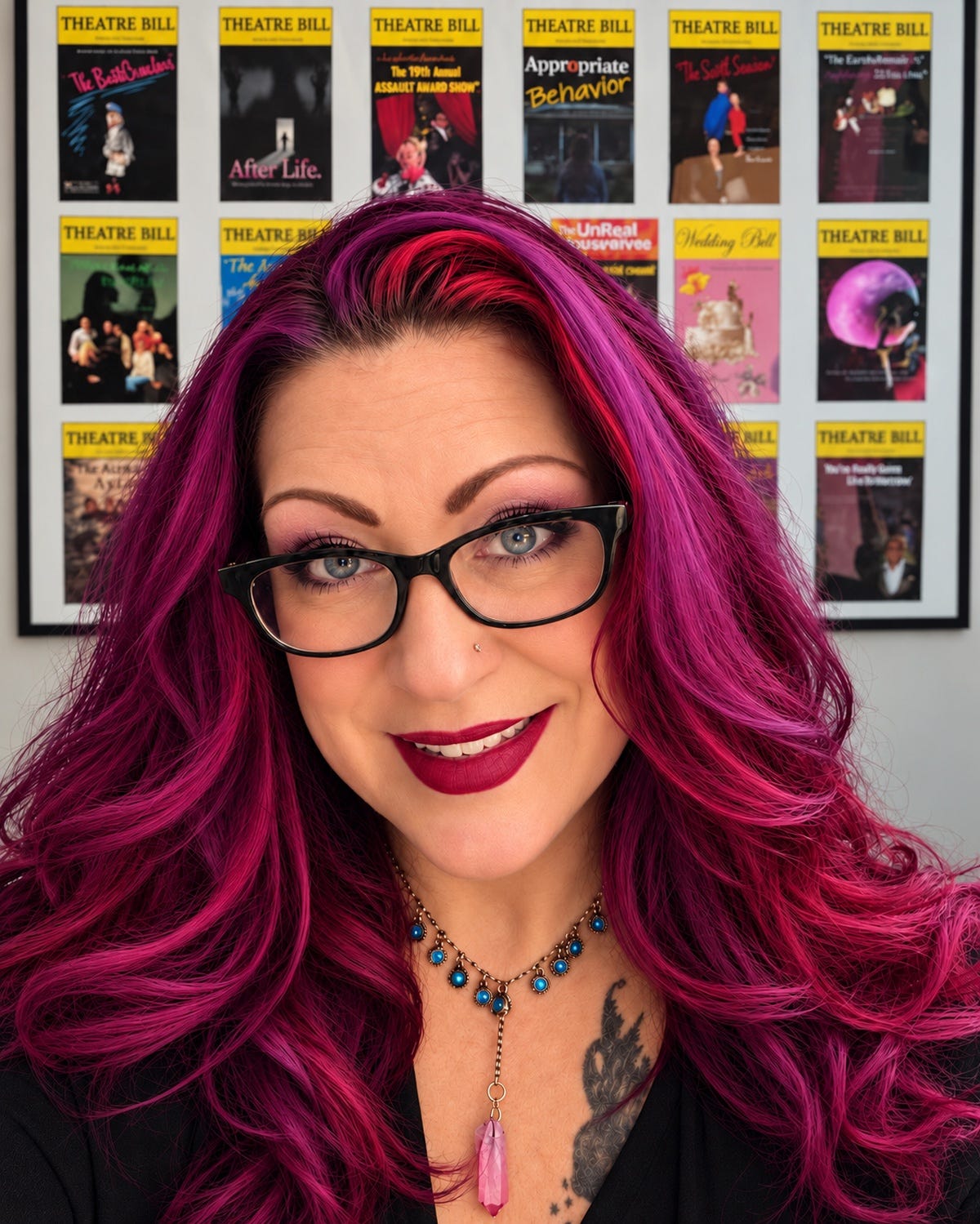
When you’re a kid living on a mountaintop without modern technology, you learn to entertain yourself, trust your imagination, and make something out of whatever resources you have available.
As a part of our series about creating a successful career in theatre, I had the distinct pleasure of interviewing Elise Maurine Milner.
Award-winning producer, playwright, and director Elise Maurine Milner has built a track record spanning more than two decades of writing, developing, and producing original theater in New York City. With 18 original scripts and more than 450 cumulative performances to her credit, her work spans intimate dramas, dark comedies, musicals, interactive, and experimental theater. In April 2026, Milner founded and produced the inaugural “Back Door to Broadway Theater Festival,” bringing together ten original productions and playwrights from across the U.S. and abroad. Her latest production as playwright and director, “Ascension Underground,” runs November 3–8 at the American Theatre of Actors in NYC. Originally scheduled for a 2020 premiere, the off-Broadway, bold, avant-garde production was derailed by the pandemic just days before opening. Six years later, Milner is bringing the widely-anticipated production to the stage for the first time. Elise’s extensive experience includes creating original work, producing independently, championing emerging talent, and navigating the challenges of New York’s theater industry.
Thank you so much for joining us in this interview series! Can you tell us the story of how you grew up?
I would describe my upbringing as rather unique, to say the least. My mother was a bit restless and liked to move us around quite a bit. I was born in St. Petersburg, Florida, but when I was six years old, my father, who was a college professor and briefly a literary agent, moved our family across the country to San Francisco. My younger sister and I spent a couple of years living in the city before my parents divorced. My mother eventually remarried a man from the Bay Area, and we relocated to Virginia City, Nevada, a historic mining town that remains remarkably well-preserved today. At the time, Virginia City had a population of approximately 600 people, and my classes consisted of about 14 kids! But here’s where things get even more interesting…
We didn’t actually live in Virginia City proper. We lived about eight miles outside of town in the Virginia City Highlands, approximately 5,500 feet above sea level, surrounded by spectacular mountain views. My family purchased eight acres of land, and we built our home from the ground up on top of a mountain! We also built our own barn and created a mini ranch per se, complete with horses, chickens, and so many pets! By the age of 12, I was riding horses, learning to care for them, and eventually competing in 4-H horse shows throughout my teenage years. I would spend hours riding through the mountains, exploring the landscape, and entertaining myself… that last part is particularly important.
This was the early 1980s. There were no cell phones, no cable television where I lived, and when we first moved there, our neighborhood barely had electricity! If you wanted entertainment, you had to create it yourself, and I believe that environment played an enormous role in developing my imagination, independence, and entrepreneurial spirit. In fact, when I was 12, my mother gave me my first typewriter, and I promptly launched my very first publishing venture: a little magazine called Horse Talk. I wrote articles about horses, created hand-drawn titles, and even included fictional advertisements! I published approximately four issues a year and actually sold subscriptions to family members. Looking back, I find it hilarious that I was the kind of kid who would rather shop for business supplies than toys. I was always dreaming up some little enterprise!
My other great passion was theater. I fell in love with acting and writing when I entered eighth grade. Virginia City had one school serving grades seven through twelve, and our community theater program brought together students and local adult performers. We staged everything from large musicals to avant-garde dramatic plays, and because we were such a small community, everyone had to pitch in.
I learned lighting, sound, acting, directing, writing, set construction, prop building, and just about every other aspect of theatrical production as a teenager. And I absolutely loved ALL of it. That early experience gave me something I consider invaluable today: an understanding and appreciation of every job involved in bringing a production to life.
After high school, I attended college classes in San Francisco and Los Angeles, studying subjects including television directing, radio broadcasting, and writing for television. I never pursued a formal degree because, even at that age, I was concerned about accumulating student loan debt while entering a notoriously unpredictable profession. I wanted to be an artist, but I also wanted to be practical about it. Instead, I selected classes that would help me develop specific skills and better understand the business of entertainment.
I then spent in my early 20s, approximately four years in San Francisco studying, acting, performing stand-up comedy, and exploring different creative opportunities, followed by another four years in Los Angeles, where I continued my studies, completed an internship at Universal Studios, and wrote short plays and scenes for fellow community college students in acting classes.
Then, eventually, I inherited a little of my mother’s restlessness and I decided I wanted to experience New York City. Although I had lived in San Francisco and Los Angeles, I had never ventured east, and something about New York was calling me. So, in 1999, I packed up a barely functioning car, enlisted the help of an ex-boyfriend who fortunately had some mechanical skills, gathered my cat and a few pieces of furniture, and drove across the country.
I arrived in New York with literally $80 in my bank account. Which quickly dwindled to 22 cents after groceries. Not exactly a financial master plan! But I had determination, an enormous amount of creative energy, and the belief that I could figure things out along the way.
Looking back, I think growing up in such an isolated, unconventional environment where I had to work for not only every cent, but for every goal, or just to walk the 2 miles to my school bus stop, gave me the greatest gift imaginable: the ability to create my own opportunities.
When you’re a kid living on a mountaintop without modern technology, you learn to entertain yourself, trust your imagination, and make something out of whatever resources you have available. And I still approach my career that way today.
If I had to describe myself professionally, I would say I’m a writer first, a producer second, a director third, and an actress fourth, probably in that order. But all those creative disciplines are interconnected, and I love having the opportunity to explore them. I’m incredibly grateful for my unusual, wonderfully independent, pre-technology childhood. I wouldn’t trade it for anything.
Can you share a story with us about what brought you to this specific career path?
By the time I arrived in New York in 1999, I had already spent years exploring different aspects of the entertainment industry, from acting and theater to radio, television, and stand-up comedy. I knew New York was going to be my final stop, geographically speaking, and I felt it was time to figure out exactly what I wanted to build. I didn’t want to spend my life working full-time as a waitress or bartender while squeezing my artistic ambitions into evenings and weekends. I wanted to make my living as an artist, even if that meant living modestly. I had this enormous creative fire inside me, along with countless stories I wanted to tell. Growing up in different parts of the country, observing the adults around me, and experiencing so many different environments has given me a wealth of material and perspectives. I was determined to carefully and deliberately create a very different life from those around me.
Call me the artistic rebel with a cause… but I kept asking myself one question: What exactly is my job going to be here in NYC? Was I a writer? An actress? A director?
Shortly after arriving in New York, I auditioned for a small repertory theater company that specialized in producing original works by New York playwrights. The company operated out of an intimate theater with approximately 45 seats and was looking for both writers and actors to participate in its productions. I auditioned, was accepted, and began working with the company. What fascinated me wasn’t simply the opportunity to perform. It was watching the two young men who had founded the company turn their post-college dream into an actual working theater organization. Unfortunately, the company folded after approximately six months, but those six months changed the direction of my life. I realized that I didn’t want to limit myself to being exclusively a writer, actress, or director. I had skills and interests that extended across nearly every aspect of production, and I wanted a career that allowed me to use all of them. That’s when it hit me. I wanted to be a producer.
Producing offered me the opportunity to bring people together, develop original material, direct productions, design marketing campaigns, create sets and props, raise money, and oversee the entire creative process. And because I didn’t have any investors or significant financial resources, I had to learn how to do everything myself.
I taught myself graphic design, web design, and prop/set building for starters, so I could create promotional materials, advertisements, and keep the budget low. I taught myself telemarketing and cold calling so I could approach potential sponsors and raise production funds. I learned how to negotiate, budget, organize, market, and sell tickets. In those early years, it really was just me, myself, and I with another friend that had helped me who was an enthusiastic thespian herself. We figured things out one task at a time.
Eventually, I wrote my first full-length play and decided I was going to produce it in New York City. A friend from the West Coast generously loaned me enough money to put down the deposit on a theater, and I raised the remaining funds necessary to bring the production to the stage. By the time we opened that show in 2002 in a 65-seat theater, we were sold out, debt free, and I had proved to myself I could do this job! And keep doing it! With new scripts, new dates, and I remember thinking, “Well, I’ll be damned. I’m officially now a producer!”
And that became the foundation of Hanging Cow Productions, the independent theater company I officially established in 2001. I was determined to make something of myself in New York City, but I also understood that I had arrived without industry connections, financial backing, or an established professional network. New York moves quickly. If you’re standing around waiting for somebody to hand you an opportunity, you can very easily get left behind. I had decided that rather than waiting for someone to give me a place in the industry, I would create my own little place in it. More than two decades later, that’s still exactly what I’m doing.
None of us are able to achieve success without some help along the way. Is there a particular person who you are grateful towards who helped get you to where you are? Can you share a story about that?
I’ve been incredibly fortunate to have several people in my life who encouraged me, believed in me, and supported my ambitions in different ways. One of those people was my longtime theater friend from Nevada, Matt Rifley. Matt had been stationed at West Point shortly before I moved to New York, and he and his family generously allowed me to stay with them for several months while I found employment, saved money, and got myself established. When I arrived in New York State, I knew virtually nobody, so having that initial support was invaluable. Matt and his family gave me the opportunity to find my footing in an entirely unfamiliar part of the country, and I’ve never forgotten that kindness.
Another enormously important person in my life was my late grandmother, Leona Lozowski. She was one of the most unconditionally loving people I’ve ever known. Throughout my childhood and early adulthood, she encouraged my creativity, believed in my potential, and even helped me financially with college tuition and classes. She never made me feel that pursuing an artistic career was foolish or impractical. She simply wanted me to follow the things that made me happy, along with my baby sister Elizabeth, another fellow creative with the kindest soul. That kind of unconditional support is something I will always treasure.
But if I had to name the person who has been my greatest supporter throughout my professional career, it would unquestionably be my husband, Christopher. We met online through Love@AOL in 2000, about a year after I moved to New York. At the time, I had recently become involved with the small repertory theater company I mentioned earlier. Christopher and I started dating, fell in love rather quickly, and discovered that we had something very important in common. We were both creatives who wanted to make our art our livelihood.
My ambition was to build a career in theater, while his was to work professionally as a photographer. We understood each other’s creative drive, and we recognized that making a living in the arts required far more than talent. It demanded persistence, resourcefulness, sacrifice, and a willingness to take risks. Christopher was there for my very first New York City production in 2002. And he’s been there for every production since. Since officially establishing Hanging Cow Productions in 2001, I’ve produced more than 450 theatrical performances cumulatively, and he has supported me throughout that entire journey.
What’s particularly wonderful is that our creative lives have become increasingly intertwined. For approximately the past five years, Christopher has taken on the responsibility of running the technical lighting and sound for my productions. He’s become an integral part of the theater company, while still maintaining his identity and passion as a photographer. And believe me, being married to an independent theater producer isn’t always easy! On any given day, I might be functioning as a playwright, director, producer, graphic designer, guerilla marketing coordinator, fundraiser, ticketing manager, publicist, set designer, seat filler, or one of about 22 other things that need to get done! Christopher understands that this isn’t simply a hobby for me, it is my life’s work. He’s never once questioned whether I was capable of accomplishing something I set out to do. Even when I’ve taken on projects that seemed wildly ambitious, he’s been there encouraging me and helping me figure out how to make them happen. And perhaps most importantly, he knows me well enough to recognize when I need encouragement, when I need practical help, and when I simply need someone to remind me to take a break! After more than two decades together, I can confidently say that no one understands my creative spirit quite the way he does. He’s not just my husband. He’s my partner, my hero, my biggest cheerleader and my favorite part-time employee.
You probably have a lot of fascinating experiences. Can you tell us the most interesting story that happened to you since you began your career?
One particular story of unexpected generosity absolutely takes the cake. One of my favorite plays, Answers to Apathy, which I’ve produced four separate times Off-Off-Broadway, attracted a gentleman who purchased a ticket, attended the performance, and apparently loved it so much that he returned to see it again later that week, but this time, he brought something with him. He approached me carrying a stack of sealed envelopes, each meticulously labeled with the name of a cast or crew member. I recognized him from his first visit, but I had no idea what he wanted. He asked, “May I speak to the person in charge?” I said, “That’s me!” He handed me the stack of envelopes and asked if I would distribute them to everyone. Naturally, I was curious. Were these fan letters? Reviews? Complaints? I wasn’t sure whether I should be delighted or concerned! I asked him, “Is everything okay? Is this a good thing or a bad thing?”
He simply replied, “I just want to do some good in the world.” And then he turned around and left. One of the envelopes was addressed to my husband, who was named as set builder. Since he wasn’t at the theater at that moment, I decided to open his envelope first, partly as a precaution before distributing mysterious correspondence to my cast. Inside was a beautifully typed letter expressing how deeply the show had touched this gentleman and how much he appreciated everyone’s work. And tucked inside was a check for $50. As it turned out, every single envelope contained a personalized letter and a $50 check! He had gone through our Playbill, carefully identified the cast and crew members, and written each of them a personal expression of gratitude. I was absolutely floored. Here was someone who had no personal connection to any of us, who simply experienced a piece of theater that moved him and decided to do something extraordinary for the people who created it.
I was so overwhelmed by what he had done for everyone else that I could barely comprehend it, but there was one problem. He hadn’t left any contact information! No email address, no phone number, nothing that would allow us to thank him. Well, I wasn’t having that! I remembered what he looked like, so I started digging around online. Eventually, I matched his photograph to a LinkedIn profile and managed to track down a post office box in Brooklyn. I sat down and wrote him an old-fashioned thank-you letter. I explained how much his gesture meant to all of us, how delighted the cast and crew had been, and how profoundly touched I was that someone would go to such lengths simply to encourage a group of independent artists. I included my contact information and website, mailed the letter, and hoped it would reach him. Not only did it reach him, but he responded! He was astonished that I had gone to such lengths to find him just to say thank you. And then, after visiting my website, he made an additional $500 donation to Hanging Cow Productions! I couldn’t believe it. He explained that he was retired and simply wanted to spread a little goodness in the world. I’ll respect his privacy and won’t share his name or profession, but I will never forget what he did.
When you’re an independent producer, every dollar matters. Every prop, every bottle of paint, every piece of scenery, every marketing expense, and every theater rental has to be accounted for. You’re constantly working to raise funds, fill seats, and bring the next production to life. To have someone spontaneously recognize the value of our work with such extraordinary generosity was almost surreal. For one evening, we all felt like Cinderella at the ball! And what stayed with me wasn’t just the money, it was the realization that something we had created had touched another human being so deeply that he wanted to give something back. THAT is the magic of live theater! You never really know how profoundly your work might affect someone sitting quietly in the audience. And sometimes, that person turns around and reminds you why you do what you do.
It has been said that our mistakes can be our greatest teachers. Can you share a story about the funniest mistake you made when you were first starting? Can you tell us what lesson you learned from that?
I’ve always had an interesting relationship with the word “mistake.” As a playwright, I’ve explored this distinction through my characters many times. To me, a mistake is often something accidental, something you didn’t anticipate and subsequently have to correct. But then there are conscious choices we make that, in hindsight, might not have been the best decisions. I think there’s an important difference between the two. And after more than twenty years of producing theater, I’ve certainly experienced plenty of unexpected challenges! Interestingly, though, I can’t point to one enormous, catastrophic production disaster. We’ve had our share of theatrical emergencies, but somehow we’ve always managed to get the curtain up. For example, we’ve had actors leave productions just days before opening night, and when I say days, I mean literally three days! Imagine spending eight weeks rehearsing a show, only to suddenly find yourself posting emergency casting notices, desperately hoping someone talented, available, and perhaps just crazy enough will agree to learn an entire role in seventy-two hours! It’s the kind of situation that can send a producer’s blood pressure through the roof. On one occasion, the replacement actor learned the lines, stepped into the production, and actually delivered a stronger performance in three days than the previous actor had developed over eight weeks! Sometimes the universe hands you a crisis that turns out to be an upgrade! And that’s one of the greatest lessons theater has taught me.
You cannot control everything that happens, but you can control how you respond to it. Of course, nothing tested that philosophy quite like COVID. In March 2020, we were only a few days away from opening my play Ascension Underground when theaters across New York City, including Broadway, suddenly shut down. Everything stopped. And for the first time in my career, there was a very real uncertainty about whether live theater would ever return in the form we’d always known. For someone who had devoted her entire adult life to the performing arts, that was a frightening prospect.
Yet I made a conscious decision not to allow that uncertainty to consume me. I kept writing. I kept creating, and I found ways not only to keep paying my rent with zero income, but I had to reconnect with other parts of myself that brought me joy. One of those things was horses. I had sold my last horse when I was seventeen, and after decades away from horse ownership, I decided it was time to welcome that part of my life back. I found an older horse who needed someone to love him, and I needed a little equine therapy myself! It turned out to be one of the most rewarding decisions I’ve made. And now, more than six years after Ascension Underground was originally scheduled to premiere, we’re finally bringing it to the stage in November 2026, and my horse, at 24-years old, is clapping his hooves for me in his pasture as we speak!
To me, this production represents something much bigger than simply opening another show, it represents hope and resilience, and it represents the understanding that circumstances can interrupt your plans without destroying your dreams, and I think that’s true of almost everything in life.
Sure, we might have a disappointing night at the box office or receive a terrible review. We might spend months creating something that doesn’t resonate with the audience the way we’d hoped. But art is subjective. You’re never going to please everyone, and I don’t believe you should try. As an artist, your responsibility is to create something authentic and put it into the world. Maybe it makes someone laugh, helps someone heal, maybe it challenges perspective, and maybe it simply entertains someone for a couple of hours. All have value.
I’ve also learned that pursuing a creative career sometimes means making very conscious sacrifices. I’m in my fifties, and I’ve never owned a home. I’ve never even lived in an apartment with my own washer and dryer! I’m still hauling my laundry to the laundromat, which is hardly the glamorous lifestyle people might imagine when they hear that someone produces theater in New York City! But… I made those choices because I wanted the freedom to spend my life creating art.
Would I love to own a beautiful home someday? Absolutely! Would I love to stop schlepping my laundry around? You don’t have to ask me twice! But I also wake up every day knowing that I’ve spent more than twenty years building a career around something I genuinely love, and I wouldn’t trade that for a conventional life that left me wondering what might have happened if I’d followed my dreams. So perhaps the greatest lesson I’ve learned isn’t really about mistakes, it’s about perspective, and resilience, adaptability, and understanding that a temporary setback doesn’t have to become a permanent defeat. And sometimes, when everything seems to be falling apart three days before opening night, the person who walks through the door to save your production turns out to be exactly the person you needed all along. That’s theater. And that’s life!
What are some of the most interesting or exciting projects you are working on now?
I’m fortunate to have several projects that I’m tremendously excited about, including two plays that I believe represent some of my strongest writing. The first is Appropriate Behavior, a deeply emotional and often darkly humorous family drama about a college student whose vulnerabilities, insecurities, and unresolved family trauma become exposed to the world through a devastating viral incident. Despite the guilt, shame, and consequences of what happens, she perseveres, follows her heart, and struggles to forgive herself and the dysfunctional family that helped shape her. The play explores the dangers of digital culture and social media, but at its heart, it’s really about unresolved family trauma and the difficult process of becoming our own people. As we grow into adulthood, we eventually have to decide who we are independently of who our families believe we should be. It’s one of my favorite works to date, and I’m currently shopping the script to Broadway producers in New York City. Another production that’s especially close to my heart is Angels Among Us. This has been one of my most frequently produced plays and has developed a wonderful following over the years. It’s an intertwining, vignette-style story that follows several characters across twenty-five years, examining the choices they make and the ways our lives intersect. Sometimes someone enters your life for only a moment, yet that interaction can change your entire trajectory. Other people remain with us for decades, shaping us in ways we don’t fully understand until much later. The play explores those connections and the profound effects we have on one another, often without realizing it. It also features an extraordinarily intense childbirth scene performed live onstage. My team and I have spent years refining that sequence to make it as authentic and emotionally powerful as possible.
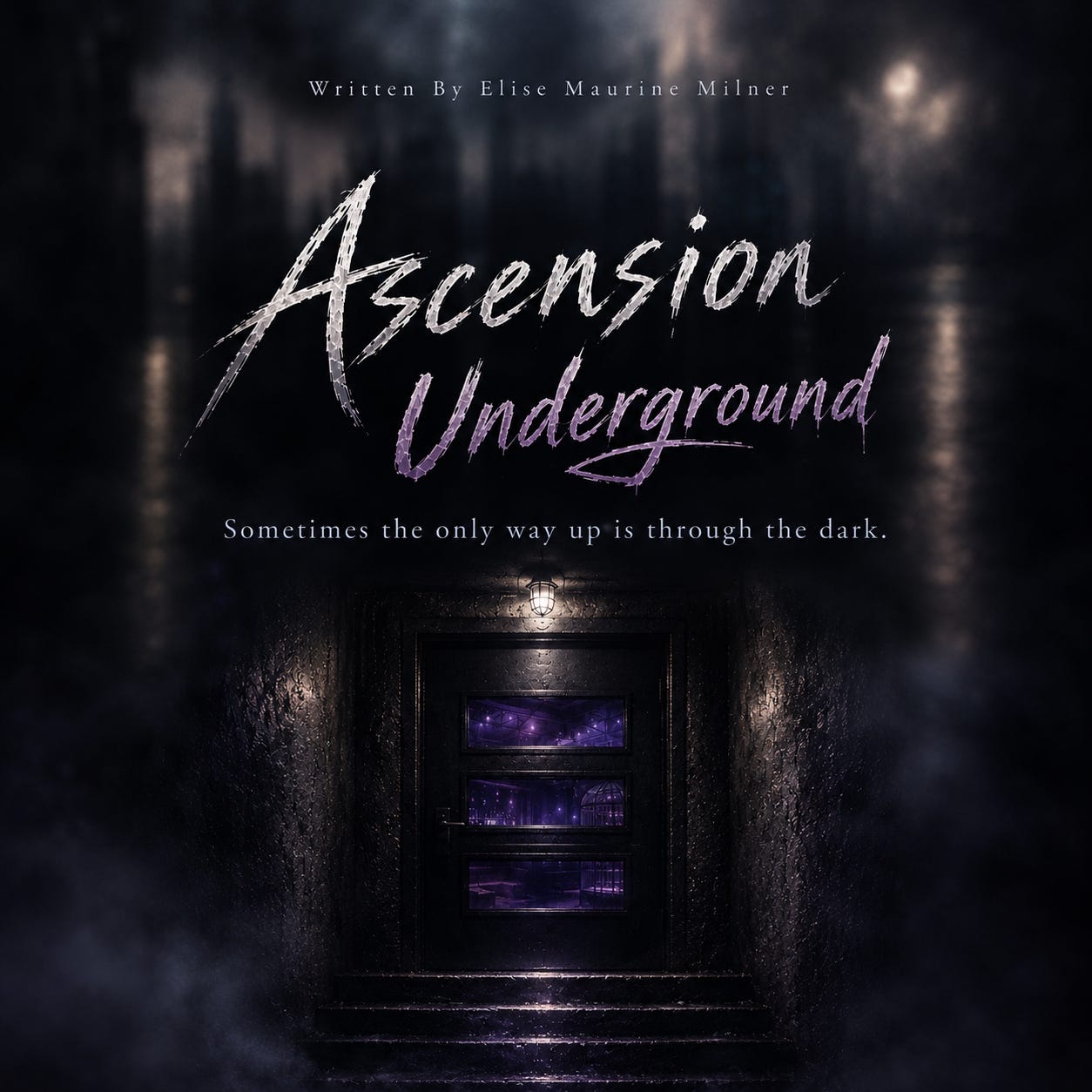
We’ve never been particularly interested in shying away from difficult or controversial material simply because it presents a staging challenge. Some productions might choose to have a character describe such an event rather than actually portray it. But for this particular story, we felt it was essential for the audience to witness the birth itself because of what it reveals about the mother and the journey that follows. It’s a beautiful story about humanity, healing, and the unexpected ways we’re connected. My dream is to eventually take Angels Among Us on a national tour. And then there’s my newest production, Ascension Underground, which is finally making its world premiere in November 2026! I originally wrote the play in 2020, and we were approximately eight days away from opening when COVID shut down theaters around the world. Like so many other productions, ours was suddenly stopped in its tracks. The show never got its moment onstage, now, more than six years later, we’re finally bringing it to life! I’ve made some revisions to bring certain elements up to date, and we’ve assembled a wonderful cast and another extraordinary skeleton crew to produce the show Off-Off-Broadway. Ascension Underground is a rather unusual theatrical experience. Imagine a nightclub that’s not really a nightclub. It’s part psychological exploration, part fever dream, part scavenger hunt, and part celebration of human connection. The story brings together people from vastly different backgrounds, identities, and walks of life who enter an unconventional pop-up nightlife experience. Through anonymity, music, play, discovery, unexpected encounters, and carefully curated circumstances, they begin uncovering parts of themselves they may have buried beneath the expectations of everyday life. The club’s owner has created an environment where people can temporarily step outside their familiar roles and explore who they might be without the usual judgments and social expectations. It’s not exactly therapy, and it’s certainly not an ordinary nightclub. It’s a place where people can become a little more awake to themselves and to one another. And while the owner can engineer the circumstances, he cannot control the humanity that unfolds within them. That’s what makes the story so fascinating to me. The production will mark approximately my nineteenth theatrical production and more than 470 performances under the Hanging Cow Productions name since 2002.
Ascension Underground premieres November 3 and runs through November 8, 2026, at the American Theatre of Actors in New York City. After waiting more than six years to bring this story to the stage, I couldn’t be more excited!
You have been blessed with success in a career path that can be challenging. Do you have any words of advice for others who may want to embark on this career path, but seem daunted by the prospect of rejection, lack of support, or failure?
Whew! Well, first of all, you definitely need thick skin! But I also want people to understand that there’s no single correct path to becoming an artist. You certainly don’t have to do what I’ve done, which is pursue this full-time while taking on approximately twenty-two different jobs that come with running an independent theater company! Many incredibly talented artists have full-time careers outside the arts and still manage to write, perform, direct, or produce wonderful work in their spare time. I think that’s fantastic. We need artists from every background, regardless of whether they’re creating professionally, part-time, or simply for the joy of it. For me personally, I realized that maintaining another full-time job would take away from both the quality and quantity of the work I wanted to create. And I have this rather radical theory that every human being deserves the opportunity to make a living doing something they genuinely love!
Unfortunately, financial insecurity, family obligations, fear, and countless other circumstances often make that difficult. But I knew what I wanted very early in life. When I was about fifteen, my mother sat me down for a conversation. She recognized how passionate I was about theater, but she also understood how difficult it could be to make a living in the performing arts. She suggested that I go to college, earn a degree in something more financially stable, and keep theater as my backup plan. My Plan B. I looked at her and said, “What’s the point of having a Plan A if you’re just going to choose Plan B?”
And that pretty much settled it! By seventeen, I knew I wanted to go to Los Angeles, eventually make my way to New York City, and pursue a career in theater. I wanted to live in a big city, create big things, and someday make it to Broadway. When I first arrived in New York, I waited tables and bartended. I was actually quite good at both, and I’m grateful for those experiences because they helped me support myself while pursuing my creative goals. But when I turned thirty and sold out my first theatrical production, something clicked… I decided that this was what I wanted to do with my life, even if it meant working seventy hours a week for what sometimes felt like six dollars an hour! And here’s a little perspective. Today, if I work approximately sixty-five hours a week, take two weeks off annually, and earn around $55,000, my effective hourly rate is about $16.92. That’s without overtime, benefits, or someone else paying me to take a vacation!
But I built this career myself, and I genuinely love what I do. Of course, I would love to earn substantially more, and I fully intend to keep growing my company and expanding my opportunities, but the opportunity to produce my art is wealth on its own. I also recognize the extraordinary privilege of waking up every day knowing that my work is something I chose because I love it.
My advice is to make room for your art, whatever your circumstances.
If you can only devote a few hours a week to writing, acting, painting, dancing, or producing, then give those hours everything you’ve got. If you have the opportunity to pursue it full-time, wonderful! But don’t allow the inability to do something professionally to become an excuse for not doing it at all.
One of the ways I’ve tried to give back is through my Back Door to Broadway producing workshops. I developed these workshops to teach aspiring producers how to fund and stage their first productions with little or no starting budget. Even today, I begin nearly every new production with no money specifically allocated to it. Every show has to be funded from the ground up. I’ve spent more than twenty years developing methods that allow me to do that, and I wanted to share those techniques with people who might otherwise believe producing theater is financially impossible. I offer the workshops virtually approximately three times a year, and participants receive my step-by-step production guide, which I call my Production Bible. It covers the process from A to Z, whether someone wants to produce in New York City or in their own community. I’ve helped transform dreamers into producers, and that has been incredibly rewarding.
Even if you’re not ready to produce your own show, start somewhere.
Most importantly, eliminate some of the distractions that keep you from creating. Turn off the television occasionally, limit scrolling, and never let someone else’s opinion convince you that your ideas aren’t worth pursuing. And don’t let your own defeatist attitude become your greatest obstacle. I’m a firm believer that discipline matters. If you want to write a play, sit down and write one. And I don’t mean simply typing a prompt into artificial intelligence and asking it to create your entire play for you. I mean taking your own experiences, imagination, observations, and emotions and putting them onto paper. Technology can be a wonderful tool, but the human creative voice is something worth protecting.
Create more. Consume less. And don’t abandon something you love simply because the road is difficult.
We need more original art emerging from humanity itself, especially in an increasingly digital world.
Which tips would you recommend to your colleagues in the live performance industry to help them to thrive and not “burn out”?
What’s most important is understanding your own personal balance. Everyone has a different set of responsibilities, relationships, interests, and priorities. I often think of life as a pie chart. We divide our time among work, family, friends, hobbies, obligations, and personal pursuits. The trick is recognizing when one piece of that pie has become so large that everything else is getting squeezed out. For me, creating is invigorating. I love moving from one production to another, and I generally try to write at least one new play every year, sometimes two. Often, before one story has even made it to the stage, another is already forming in my imagination and I find that exciting rather than exhausting. But I’ve also learned that loving your work doesn’t automatically mean you’re immune to burnout. Sometimes you have to consciously make time for the other parts of your life that nourish you. For me, that includes spending time with my horse, ice skating, enjoying nature, traveling, and simply stepping away from the constant responsibilities of producing.
I also think it’s important to recognize the difference between being busy and being fulfilled. I often tell people that I’m more of a creator than a consumer, and that is where I’ve found a tremendous amount of personal satisfaction. But self-awareness is essential. If your creative work begins to take away from your health, your relationships, or your enjoyment of life, it’s probably time to reassess how you’re dividing your energy. Ultimately, I don’t believe balance necessarily means spending equal amounts of time on everything. It means spending your time in ways that support the life you actually want to live, and sometimes the most productive thing an artist can do is walk away from the work for a little while and go enjoy being human.
Thank you for all that. This is the main question of our interview. What are your “5 Things You Need To Create A Highly Successful Career in Broadway, Theater or Live Performances” and why? If you can, please share a story or example for each.
1. Believe in yourself and become your own greatest advocate.
Before anyone else believes in your work, you have to believe in it yourself. That doesn’t mean refusing constructive criticism or assuming everything you create is perfect. It means having enough confidence in your abilities and your creative instincts to stand behind your work and give it a chance to succeed. We all love the romantic idea that someone will discover us overnight and suddenly open every door, but for most artists, that isn’t how it happens. We’re the ones who have to send the emails, submit the scripts, invite the producers, audition for the roles, and convince people to take a chance on something we’ve created. I’ve spent more than twenty years doing exactly that. Every production I’ve staged has required me to advocate for the work, often long before anyone else knew it existed. And if something doesn’t succeed the way you hoped, you keep going. You write another play. You audition for another role. You produce another show. I’m also an equestrian, so I know a thing or two about falling off the horse and getting back on! I believe one of the most extraordinary things we can do as human beings is learn to access our highest selves while forgiving our lowest moments. You don’t have to be perfect to accomplish something meaningful. You just have to be willing to keep growing.
2. Be persistent, but remember that your future is built in the present.
I think one of the greatest traps ambitious people fall into is living perpetually in the future. We’re always thinking about where we want to be five years from now, what we hope to accomplish, or what success will eventually look like and sometimes we forget that the only place we can actually build that future is right here, today. I’ve wanted to reach Broadway since I was a teenager. That dream hasn’t changed, but I’ve also spent more than two decades creating hundreds of live performances, developing new plays, building relationships, and learning how to sustain an independent theater company. Every one of those experiences has been part of the journey. I don’t want to spend so much time anticipating Broadway that I forget to appreciate everything I’ve already created. Dreaming is wonderful. But doing is what moves us forward. Do something every day that brings you closer to your goal, even if it’s something small. Become the person today that you hope to be tomorrow.
3. Surround yourself with people who elevate your work and your life.
No one builds a successful career entirely alone. Even when you’re an independent artist who handles an enormous number of responsibilities, you eventually need collaborators who share your values and respect your vision. Some of my greatest professional relationships have come from people who believed in my work and were willing to contribute their own talents to making it better. I’ve worked with artists who have remained part of my creative family for years! And I’ve learned that the right people don’t simply help you accomplish tasks. They inspire you, challenge you, encourage you, and sometimes see possibilities you hadn’t considered, while the opposite is also true. If you’re constantly surrounded by negativity, dysfunction, or people who undermine your ambitions, that environment can gradually erode your confidence and creativity. Sometimes putting a little distance between yourself and unnecessary drama can be one of the healthiest decisions you make. Protect your peace. Choose your collaborators thoughtfully, and never underestimate the value of people who genuinely want to see you succeed.
4. Stay open to criticism, collaboration, and evolution.
One of the greatest gifts an artist can give themselves is the willingness to keep learning. I don’t care how many productions you’ve staged or how many years you’ve worked in the industry. There’s always something new to discover. I’ve watched my own writing evolve enormously over the years. I’ve also learned to listen carefully to actors, directors, designers, and audiences. Sometimes someone will offer a suggestion that initially challenges the way I’ve envisioned a scene. But when I consider it objectively, I realize that their perspective might actually make the work stronger. That’s one of the things I love most about theater. It’s a collaborative art form. A script begins as words on a page, but it becomes something entirely different when actors bring those words to life. And because art is subjective, something that deeply moves one audience member might affect another person very differently. There’s room for all kinds of stories, voices, interpretations, and experiences. Don’t become so rigid in your artistic identity that you stop allowing your work to grow. Potential, not perfection. That’s a philosophy I return to often.
5. Be resourceful, disciplined, and willing to do the work.
Talent is wonderful, but talent without action doesn’t get a production onto a stage. You need discipline, resourcefulness, and the willingness to solve problems that sometimes seem impossible. I’ve built Hanging Cow Productions without investors, substantial financial backing, or a large administrative staff. Every production begins with a vision and a determination to figure out how to make it happen. Sometimes that means finding sponsors, or negotiating with vendors, building your own props, designing your own marketing materials, or working until three in the morning to finish something that absolutely must be ready for opening night. I’ve done it all! And while I wouldn’t necessarily recommend working quite as many hours as I have, I do believe that successful artists need to understand the practical side of bringing their ideas into the world. Creativity and business skills are not mutually exclusive. In fact, learning how to fund, market, and manage your work can give you tremendous freedom as an artist. And remember, success doesn’t have to mean Broadway, Hollywood, or international recognition. For one person, success might be producing a play at their community theater, for another, it might be writing a script that changes someone’s life. For me, Broadway remains a dream I’m actively pursuing, but I also recognize that I’ve already created a career doing something I love. And that is a success worth celebrating!
For the benefit of our readers, could you describe how the skill sets you need in a theater performance are different from the skill sets you need for TV or film?
One of the most beautiful differences between theater and film is the way we experience time.
Theater exists entirely in the present moment. A live performance happens once, in a particular room, with a particular audience, and it can never be recreated in precisely the same way again. The actors are responding to one another in real time. The audience is responding to the actors. There’s an exchange of energy that becomes part of the performance itself.
Film and television offer something different. They allow us to preserve a particular performance and revisit it again and again. You might carry the memory of your favorite Broadway musical in your heart for the rest of your life, but you can also watch your favorite film repeatedly and discover something new each time.
Both mediums are extraordinarily valuable. From a practical standpoint, theater requires performers to sustain their characters and emotional journeys continuously, often for hours at a time. There’s no stopping to reset a scene or filming another take because someone missed a line.
Film and television require a different kind of discipline. Performances may be captured out of sequence, scenes can be repeated numerous times, and actors have to maintain emotional continuity despite those interruptions.
My own professional experience has been primarily in theater. I’ve written a television pilot and worked on short films and video projects, but theater is the medium I’ve built my career around, and I absolutely love it. I love the smell of a theater. I love sitting onstage before a performance, looking around at the set we’ve created, and knowing that in a little while, an audience will enter that room and experience something we’ve spent months bringing to life.
There’s something incredibly intimate about that.
And one of my favorite parts of producing independent theater is the opportunity to interact directly with our audiences. Because I wear so many hats, I sometimes even work as the bartender during intermission! I get to greet people, talk to them about what they’re watching, hear their reactions, and learn how the story is affecting them. That’s invaluable to me as a playwright and producer. When a film is released across the country, audiences generally don’t have the opportunity to meet the writer, director, producer, or crew members afterward, but in a small theater, those conversations can happen organically. You can see people’s faces. You can hear their laughter. You can feel the silence when a scene becomes particularly emotional. And sometimes you can watch an entire room react together to something unexpected.
Film often creates a more private relationship between the viewer and the story, especially when someone is watching at home. Theater creates a shared experience among everyone in the room. Neither is inherently better. They’re simply different ways of connecting human beings through storytelling, and I think the world needs both.
You are a person of enormous influence. If you could inspire a movement that would bring the most amount of good to the most amount of people, what would that be? You never know what your idea can trigger. :-)
What a wonderful question! I think the movement I would most love to inspire is one that encourages people to stop merely surviving their lives and start actively creating lives they genuinely want to live. As an artist, I’ve been fortunate enough to recognize my calling and pursue it professionally. Writing, producing, and directing theater isn’t simply something I do for a paycheck. It’s an enormous part of who I am. But I don’t believe everyone needs to be an artist to experience that kind of fulfillment. Someone might have a brilliant idea for a scientific breakthrough. A teacher might discover an extraordinary new way to inspire students. Someone else might want to open a small business, learn to dance, volunteer with animals, or write a book they’ve been thinking about for twenty years. Whatever it is, I believe people deserve the opportunity to explore the things that make them feel most alive. And if circumstances prevent them from pursuing those interests full-time, then pursue them part-time! An hour a week is better than no hours at all. I think too many people allow fear, expectations, financial pressures, or the opinions of others to determine the direction of their lives, and before they know it, years have passed. They’ve spent so much time fulfilling obligations that they’ve forgotten to make room for their own dreams. I would love to see a cultural shift toward encouraging people to recognize their talents, explore their interests, and make creativity and personal fulfillment a greater priority, not just for artists, but everyone! Because life isn’t only about productivity, financial security, or checking boxes… It’s about joy, discovery, and about the people we meet, the things we create, and those wonderful moments when something unknown suddenly becomes possible! I would love for people to feel empowered to choose their own roads rather than simply accepting the ones laid out for them. And I think that begins with authenticity. Whatever you do, do it with your whole heart, with curiosity, and with courage. And whenever possible, do it with joy! Because to me, that’s the difference between living a life and merely surviving one.
Can you please give us your favorite “Life Lesson Quote”? Can you share how that was relevant to you in your life?
When I was about twelve years old, I saw the movie Flashdance, and it had an enormous impact on me. I remember watching Jennifer Beals portray Alex Owens and thinking, “That’s the life I want!” Not necessarily the welding part! Haha, but everything else! I wanted to live in a big, beautiful, unconventional loft in a vibrant city. I wanted colorful walls, a dog running around, a corner where I could paint, another where I could dance, and another where I could play my drums. I’ve always loved music, singing, and playing the drums, so the idea of living this wonderfully bohemian artistic life was incredibly appealing to me, but what really moved me was Alex herself. She was sensitive, thoughtful, insecure at times, and trying to overcome her fears. She had people around her who questioned her abilities and made her doubt herself. But when she stepped onto that stage and danced, everything else seemed to disappear. The judgment, the expectations, the insecurity. Even the circumstances of her everyday life. In those moments, she was completely immersed in the joy of doing what she loved, and there was a line associated with the film that stayed with me:
“If you give up your dream, you die.”
I remember how profoundly that affected me as a young girl who already knew she wanted to become an actor, writer, and artist, and I’ve carried that philosophy with me ever since. Of course, I don’t interpret the quote literally. To me, it means that when we abandon the things that make us feel most alive, something essential inside us begins to disappear. We can become so consumed by routine, obligations, and expectations that we start functioning almost mechanically. We wake up, go through the motions, fulfill our responsibilities, and repeat. And somewhere along the way, we lose touch with the person we once imagined becoming. That’s the last thing I’ve ever wanted for myself. I don’t want to wake up feeling like a battery whose only purpose is to power someone else’s expectations. I want to feel that I have choices. That I’m creating something meaningful, and participating in my own life rather than simply moving through it. I think that’s why I responded the way I did when my mother suggested that theater should be my backup plan. Even as a teenager, I understood that I didn’t want to build my entire life around something I considered Plan B. I wanted to pursue Plan A. THE DREAM. And more than forty years after watching Flashdance for the first time, I still feel exactly the same way. Plan A or die! (Figuratively speaking, of course!)
We are very blessed that some very prominent names in Business, VC funding, Sports, and Entertainment read this column. Is there a person in the world, or in the US with whom you would love to have a private breakfast or lunch, and why? He or she might just see this if we tag them.
I think one of the things I admire most about successful people is the determination it often takes to get where they are. I’m particularly drawn to people who began with very little, believed passionately in what they wanted to create, and refused to abandon that vision. Whether they’re Broadway producers, filmmakers, entrepreneurs, or innovators, I feel a tremendous sense of camaraderie with people who understand what it means to build something from the ground up.
That’s certainly been my experience. I didn’t begin my career with a trust fund, investors, influential connections, or a large financial safety net. I’ve had to work for every dollar, every audience member, every production, every opportunity. I’ve given away tickets to introduce people to my work, stayed awake all night finishing props or marketing materials, negotiated countless arrangements to make productions financially possible, and spent years developing relationships within the theater community. And yes! I would do it all again! Because I believe in what I’m creating.
My goal-in-progress is to bring one of my plays to Broadway. I also have a television pilot, An Awkward Inheritance, adapted from a stage production I’ve mounted twice, that I would love to see developed for television. It’s a wonderfully dysfunctional comedy about three adult siblings who unexpectedly inherit a Nevada brothel after their mother’s death. Oopsie, that’s not an easy one to swallow! And I’d LOVE to see that story reach a much larger audience!
So, if I could sit down with someone, it’s a Broadway producer and entertainment executive who understand the value of independent voices and original storytelling. Someone who recognizes that meaningful, entertaining work doesn’t always originate within the traditional industry pipeline. But I would hesitate to name only one person. There are so many extraordinary individuals I’ve worked with, and who have worked tirelessly to bring their own visions into the world, and I would welcome the opportunity to learn from any of them.
What interests me most isn’t simply meeting someone famous or financially successful. It’s meeting someone who shares a genuine enthusiasm for creating something worthwhile, who wants to collaborate, who believes that entertainment can be joyful, thought-provoking, emotionally meaningful, and commercially successful without sacrificing its authenticity! I’d love to sit across the table from someone who says, “I love what you’re doing. Let’s see what we can create together.” Because ultimately, that’s what I’m looking for. Not someone to hand me a career…. I’ve already built one. I’m looking for the right people to help take the work I’ve created to its next level, and if someone reading this happens to share that philosophy, I’d be delighted to make them lunch!
How can our readers continue to follow your work online?
The best place to find me and learn more about my work is through the Hanging Cow Productions website. There’s quite a bit to explore! You can learn the rather unusual story behind the company’s name, watch a video about my background and creative journey, and discover the many productions I’ve written, directed, and produced over the years. The website also features my catalog of plays and musicals, including works available for licensing to theaters, educational institutions, and independent producers. We’re currently seeking Broadway opportunities for several of our strongest scripts, and I’m always interested in connecting with producers who are looking for original theatrical material. You can also learn more about my television pilot, An Awkward Inheritance, which was adapted from one of my stage plays. And, of course, I would absolutely love to welcome your readers to our upcoming world premiere of Ascension Underground! The production runs November 3–8, 2026, at the American Theatre of Actors, located at 314 West 54th Street, fourth floor, in New York City. Performances are scheduled Tuesday through Saturday at 7 PM, with additional matinees on Saturday and Sunday at 3 PM.
If you enjoy intimate, independent theater that makes you think, laugh, question things, and perhaps discover something unexpected about yourself, I’d love to have you join us. There’s something truly special about experiencing original theater in a small New York City venue. And who knows? You might just be sitting in the audience for the next production that finds its way to Broadway!
This was very meaningful, thank you so much! We wish you continued success!