
My reason for being a lawyer is not to make a lot of money but to help as many families as possible so they can provide a better quality of life for their children.
The legal field is known to be extremely competitive. Lawyers are often smart, ambitious, and highly educated. That being said, what does it take to stand out and become a “Top Lawyer” in your specific field of law? In this interview series called “5 Things You Need To Become A Top Lawyer In Your Specific Field of Law”, we are talking to top lawyers who share what it takes to excel and stand out in your industry.
As a part of this interview series, I had the pleasure of interviewing Eduardo Z. Herrera, Lead Attorney, Brigante Law Group.
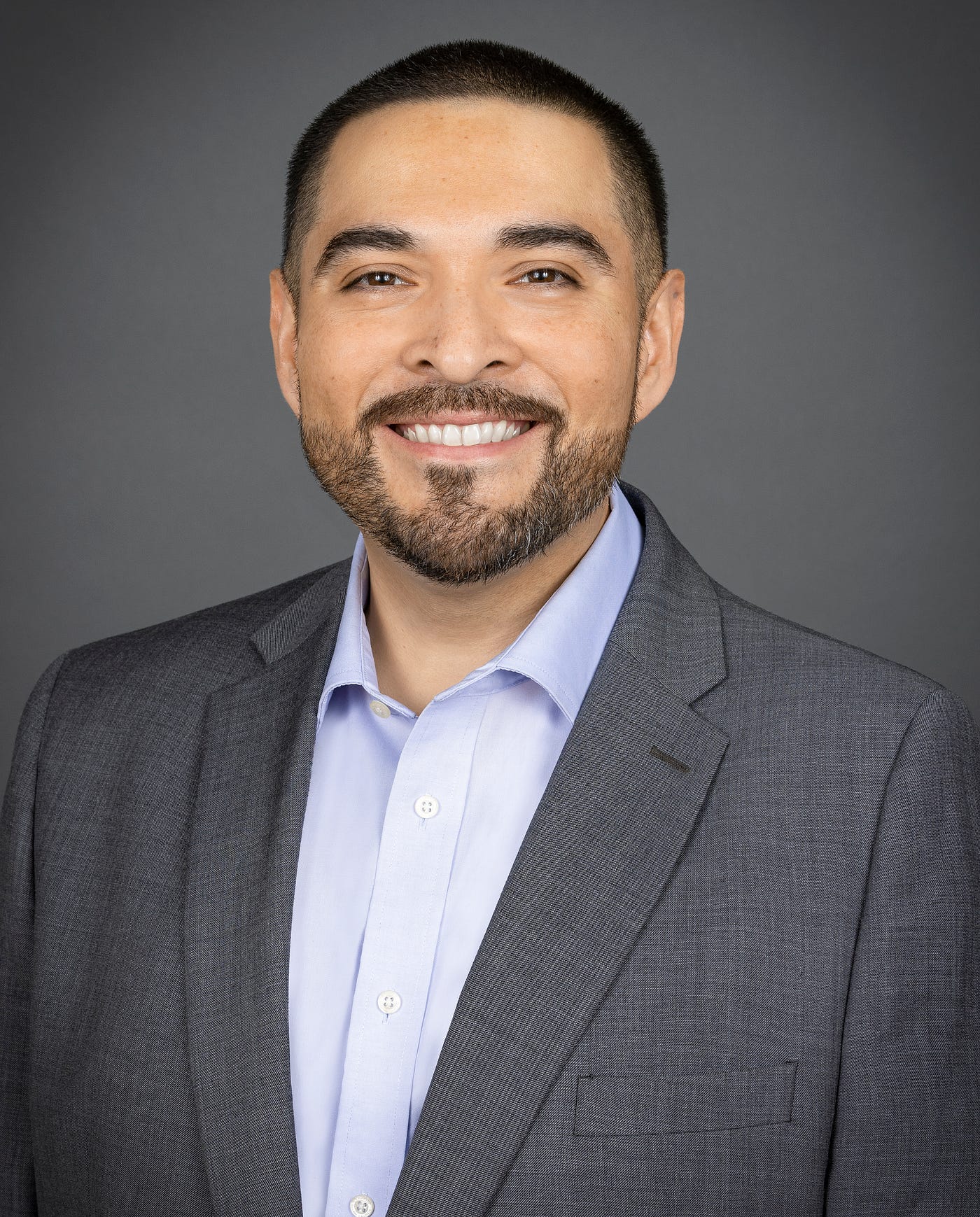
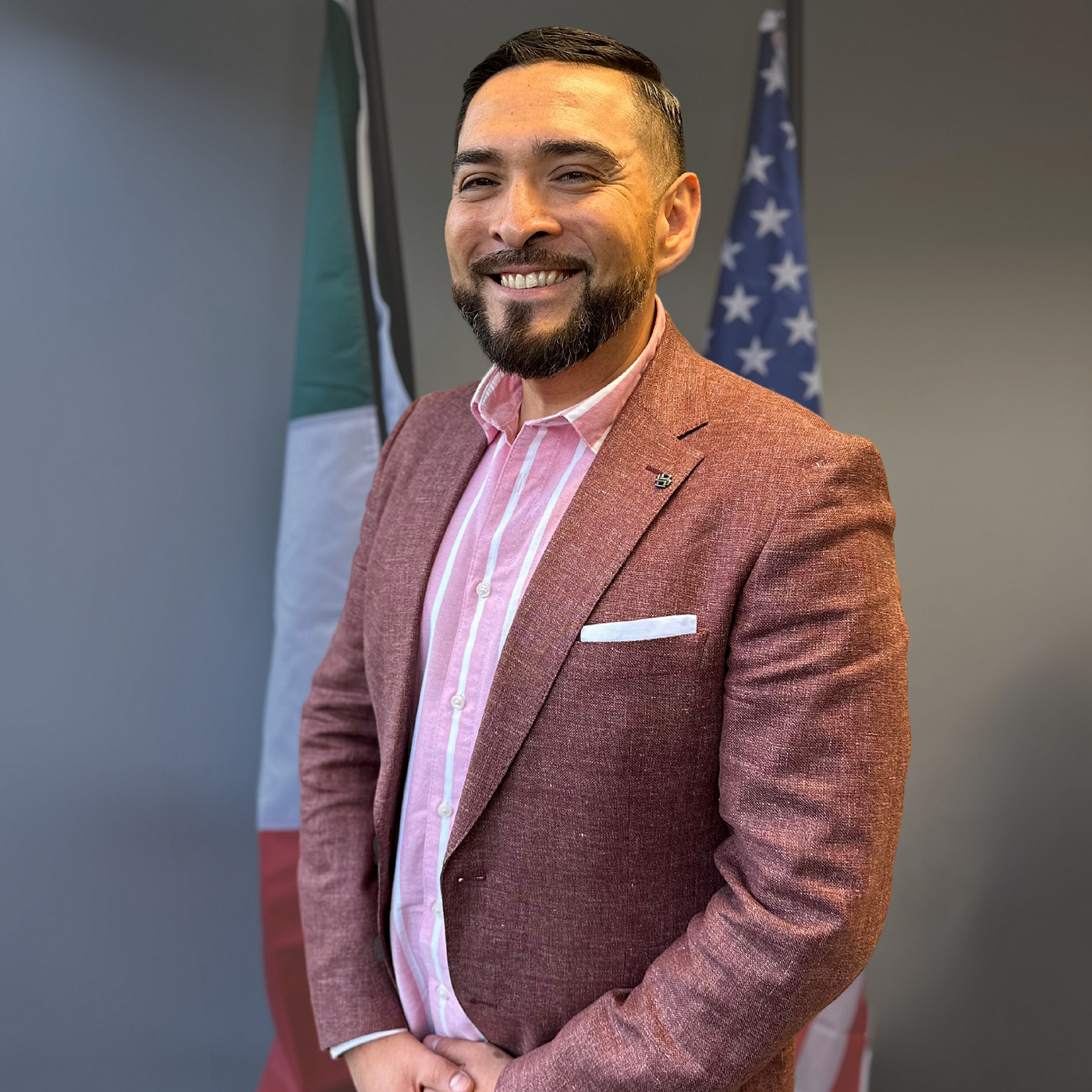
Eduardo Z. Herrera is an experienced immigration attorney who is passionately driven to help individuals and families utilize the legal process to achieve peace of mind and access the American Dream. The child of immigrants who came to the U.S. from Mexico, he grew up in a working-class, close-knit neighborhood in Pasadena, Calif., where he was instilled with an appreciation for family, community, education, and hard work.
Mr. Herrera was the first member of his family, and the first person in his neighborhood, to go to college, graduating from the University of California at Santa Barbara with a major in history and a minor in education. After graduation, he decided to give back to the community that had supported him, working as a middle school teacher in Pasadena and South Central Los Angeles. Mr. Herrera later discovered there was another way he could give back — by providing legal support to immigrants like his parents, who had spent many years working and raising families in the U.S. before receiving legal resident status, or citizenship.
While attending Lewis & Clark Law School in Portland, Ore., Mr. Herrera worked for the Northwest Workers Justice Project, helping mostly immigrant and Spanish-speaking clients file wage theft claims, and Sponsored Organized to Assist Refugees, providing immigration legal services to families who could not afford to hire private attorneys.
After earning his Juris Doctor from Lewis & Clark Law School, Mr. Herrera co-founded his own law firm in Oregon providing legal representation on immigration and criminal defense matters to underrepresented communities. In November 2022, he returned to his native Pasadena to join the newly established Brigante Law Group Inc., where as Lead Attorney, he works with Mexican and other immigrants who entered the U.S. illegally many years ago, but have worked, raised families, and contributed to communities here and wish to legally resolve their residency status, and eventually, achieve American citizenship.
Mr. Herrera is an expert in immigration law, and is committed to utilizing the legal process to give immigrants and their families support and peace of mind. He is fluent in Spanish and English, and is a member of the American Immigrant Lawyers Association.
Thank you so much for joining us in this interview series. Before we dig in, our readers would love to get to know you a bit more. What is the “backstory” that brought you to this particular career path in Law? Did you want to be an attorney “when you grew up”?
Well, I am the proud son of Mexican immigrants who were fortunate enough to gain residency during the Reagan administration and the amnesty program. I mention this because my parents were able to afford my siblings and I a much richer quality of life. I saw the difference between my upbringing and my cousin’s, whose parents did not have lawful status. I always felt very fortunate that my parents could work legally, drive legally, and live peacefully in this great country. This gave my siblings and me a deep sense of security and confidence.
I always enjoyed school as a child, but I cannot say I wanted to be an attorney. As a child, I wanted to be a professional wrestler like Hulk Hogan or the Macho Man Randy Savage. That all changed in the 4th grade when I was a young boy in Mrs. Ellis’s classroom. The year was 1994, and at that time, O.J. Simpson was on trial accused of murder. Mrs. Ellis was so intrigued by the trial that she would watch it during recess and lunch break. One day, I asked if I could watch it with her, and she gladly said “yes.” That day, I was mesmerized by the brilliance, eloquence, confidence, and style of the late great Johnnie Cochran. I fell in love with lawyering and advocating for your client. From that day on, I no longer wanted to be the next Hulk Hogan; I wanted to be the Mexican Johnnie Cochran.
I started my professional career as an elementary school teacher in my hometown of Pasadena, CA. I did not go straight into law school because I felt a strong sense of commitment to my community and Mrs. Ellis — without her, I would not be where I am today. My time as a teacher reinforced my desire and passion to work with immigrant and disenfranchised communities. I worked as an elementary and middle school teacher for five years before I started my law school journey. I graduated from law school in 2014, and two months later, my best friend and former law partner and I opened our office, and the rest, as they say, is history. Since then, I have dedicated my life to helping immigrant families in the United States attain a better quality of life so their children can grow up with all of the benefits and opportunities that my parents were able to afford me.
Can you tell us a bit about the nature of your practice and what you focus on?
Our goal at Brigante Law Group is to become a full-service immigration law firm emphasizing humanitarian-based visas. Humanitarian visas allow us to help more families, as most immigration benefits are tied to having a qualified relative (i.e., a relative who is a United States citizen or lawful permanent resident). Humanitarian visas are based on the immigrant’s experience as the victim of crimes, domestic violence, or human trafficking. These visas also have the added benefit of giving certain immigrants the right to gain lawful permanent residency without having to leave the country — something that a lot of people are afraid to do.
In addition, we are a national law firm that accepts cases from across the United States. We offer all our services remotely to allow us to reach more people. This has become especially important as our country is facing a population shift away from major urban areas to more rural or affordable places to live. These smaller communities often lack competent legal representation, especially in Spanish. Our office allows immigrants nationwide access to qualified legal representation in their native tongue.
You are a successful attorney. Which three character traits do you think were most instrumental to your success? What unique qualities do you have that others may not? Can you please share a story or example for each?
- Purpose
One of my mentors once told me, “Eduardo, if you want to make a lot of money, don’t go to law school. Go to business school and get an MBA because there are easier ways to make money than through law practice.” My reason for being a lawyer is not to make a lot of money but to help as many families as possible so they can provide a better quality of life for their children. This has never resonated more with me than when I became a father four years ago. I do this work to help people and communities with the added benefit of providing a comfortable life for my family.
- Resilience
The practice of law, like most businesses, is very competitive, and to be successful, you have to learn to pick yourself up when you get knocked down. Mike Tyson once said, “You must lose before you can win because life is loss.” This proved to be true early on in my career when my former law partner and I were trying to figure out how to run a business — which implies wearing all the hats that business owners wear — and learning how to practice immigration law. I must admit that I made many mistakes early on in my career, and as a result, I received some brutal chew-outs from federal, state, and immigration judges, but I learned, and I learned quickly. One incident comes to mind: In 2014, I first appeared at an immigration detention center in Washington State. I was representing a lawful permanent resident accused of selling meth, and the government wanted to deport him. At the end of my legal arguments, the judge tore me and my legal argument apart in front of a packed courtroom. The judge turned red, spit was flying from his mouth, and he was shouting, and to make it worse, opposing counsel joined in on the fun. At the end of the hearing, I was in shock; I felt humiliated and stupid. I started to question whether I made the right career move or not. As soon as I got into my car for the three-hour drive back to Portland, Oregon, I began to cry, and I cried most of the way home. I felt like giving up, but my family and friends reminded me of my purpose and why I do what I do. Since then, I have developed some of the thickest skin in America.
- Confidence
Success breeds confidence, and confidence breeds success. I cannot emphasize enough how important confidence is in law, primarily when you represent clients in front of a tribunal. My parents’ confidence in me as a child has propelled me to where I am today. I have always felt like I can do anything. My confidence allowed me to pick myself up after my first-ever court appearance in an immigration detention center. Without confidence, I would have most likely returned to the classroom and abandoned my dream of being the Mexican Johnnie Cochran.
Do you think you have had luck in your success? Can you explain what you mean?
I believe that luck is a combination of opportunity and capacity. What I mean by capacity is the competency or intelligence to discern shiny objects that are distractions and look like gold but aren’t, from shiny objects that are really gold. Opportunity comes into play through the community and people you surround yourself with. The more meaningful connections you make in business and life, the more often you will be approached with opportunities.
Do you think where you went to school has any bearing on your success? How important is it for a lawyer to go to a top-tier school?
Yes and no. I never dreamed of working for big or corporate law, so I knew I did not have to attend a tier 1 or top law school. I went into law school knowing that I wanted to provide legal services to immigrant communities, in particular Spanish-speaking immigrant communities. During my decade-long career, I have only been asked once, “Where did you go to law school?” I have never been asked what my class rank is or my GPA. That said, I firmly believe that the most critical thing law school can provide is the connections and the impact that your classmates have on your career path and way of thinking.
Based on the lessons you have learned from your experience, if you could go back in time and speak to your twenty-year-old self, what would you say? Would you do anything differently?
I would tell my younger self to cut out all the distractions and the people actively holding you back from reaching your full potential. Through time and growth, I have learned that some people are meant to be in your life to teach you something or for you to teach them something. Still, all relationships have their expiration date, and it is ok to let people and bad habits go when they are not contributing to your purpose and success.
This is not easy work. What is your primary motivation and drive behind the work that you do?
My community and family. As a young boy, I always had a strong sense of purpose and community, and I contributed this to my Catholic mother and upbringing. I have always enjoyed helping people, especially people who have yet to find their voice. I feel that we all have gifts or talents in this life, and I was fortunate enough to see my gift — my voice — early on in life. I will continue to use my voice and platform for the betterment of my community and all immigrant communities across the United States, for I firmly believe that this is why I was placed on this earth.
What are some of the most interesting or exciting projects you are working on now?
On a personal note, my family is getting ready to welcome my second child and first son into this world. I mention this because aside from being an immigration attorney and a voice for the immigrant community, I most take pride in being a father.
On a professional note, I am excited about our office rolling out our civil litigation department. Although our focus and foundation will always be immigration law, providing our community with competent legal representation in the areas they need most is essential. This ties into my desire and purpose of improving the quality of life for our immigrant communities so they can better prepare the next generation of Americans.
Where do you go from here? Where do you aim to be in the next chapter of your career?
I am still a relatively young man, and I plan to have a long and successful law career. From here, I want to continue to develop and roll out our business and employment-based immigration practices and to scale our business so we can reach and help more people across the United States. However, one of my career goals has always been to argue a case in front of the United States Supreme Court. I also want to live a life worthy enough so that one day, I can write a book that people will want to read.
Without sharing anything confidential, can you please share your most successful “war story”? Can you share the funniest?
My most successful war story comes from my time as a criminal defense attorney. My former law partner and I represented an immigrant man accused of sexually abusing his 13-year-old stepdaughter. This man was adamant that he was innocent and that his stepdaughter was fabricating everything out of jealousy. This man sold everything but the shirt off his back to hire us and the legal team of experts we would need to win his case. This man was facing a state-mandated minimum of 10 years in prison if found guilty. However, he refused to accept a plea offer from the district attorney’s office, and we went to war. The trial took an entire week and was the most exhausting and emotionally draining experience of my career. At the end of the trial, the jury took a whole two hours to reach a verdict. Usually, this means that they reached a verdict of guilty. As I was out to lunch with my client, I got a call from the court clerk to return to the courtroom for the verdict. I quickly made my way to the restroom and proceeded to vomit my lunch. That’s how nervous I was, and sure that my client was going to go to prison for at least 10 years. My client and I walked back to the courthouse almost in complete silence. Right before we entered, I told him, “Thank you for having faith in me and my firm to handle your case, and your faith is now in the hands of the jury.” My client and I hugged, shed a tear, and walked into the courthouse with our heads held high. As the jurors entered the room, my knees started to buckle, and I had to hold onto the table so I wouldn’t fall over. As the jury foreman began to read the verdict, my heart stopped. I looked the lead juror in his eyes as he read the verdict. “We, the jury, have reached a unanimous decision on all counts, and we find the defendant not guilty on all counts.” The courtroom, packed with my client’s friends and family, shouted joyfully. My client and I embraced and once again shed a tear. I was sure I had failed my client, but I was glad to be wrong. Later that year, my firm gained lawful permanent residency for this client, and I am proud to say that since then, he has become a United States citizen and has opened a house painting business.
OK, fantastic. Let’s now shift to discussing some advice for aspiring lawyers. Do you work remotely? Onsite? Or Hybrid? What do you think will be the future of how law offices operate? What do you prefer? Can you please explain what you mean?
I am old-school because I love coming into the office, wearing a suit, interacting with our staff, and mentoring the next generation of young attorneys. I cannot work remotely because I need personal interaction. That said, I believe the future of law practices is remote and virtual. I see the day when clients can access their attorney and legal files quickly and conveniently through their phones. Ever since the pandemic, consumers have become increasingly comfortable working remotely with professional service providers like doctors, accountants, and attorneys.
Based on your experience, how can attorneys effectively leverage social media to build their practice?
I can only speak to the practice of immigration law and criminal defense, but I think advertising on social media is essential for any successful practice. Social media marketing should be the foundation of any successful marketing strategy. Radio ads and billboards still have their place in the market to supplement social media efforts, but not in place of it.
What are your “5 Things You Need to Become A Top Lawyer In Your Specific Field of Law?”
Please see the video (https://youtu.be/RKS9VRwlL1c?si=90XHzY6cpNQYqH5H).
In addition:
- Purpose/Passion: When you go to law school, most people who go to law school, have this vision for working for Big Law and making a lot of money. Typically, people don’t go in wanting to do immigration law, because it’s not the highest-earning area, even though it pays very well. It’s not going to be “get rich quick.” You can help a lot of people, but you can spend a few years or almost a decade behind your classmates who are partners. It’s not the sexiest area of the law. What is your “why,” what is your interest in serving immigrant communities? Your purpose cannot be money.
- Resourcefulness: Unlike other areas of the law, there aren’t many immigration attorneys who you can learn from and pick their brains. You need to be resourceful. There are plenty of materials out there, but there aren’t many people who are willing to help. When I was starting off as a new attorney, most of the other immigration attorneys were not willing to share their trade secrets with me. My former law partner and I had to figure this out on our own — and find mentors who were willing to share, and cling to them.
- Bilingual/Bicultural: Speaking another language helps a lot in immigration law, and in general in the legal profession, because you can expand your client base and serve international clients. But it’s not just a matter of speaking another language (in my case Spanish). Growing up in the United States, I grew up in a Mexican household where my parents were actively fighting against assimilation. We celebrated Easter not by dressing up like a bunny and hiding eggs, but in Church. My family never celebrated Halloween. You have to be fluent in the American culture and legal system, but you also have to have an understanding of the community you’re serving, so you can work with them and extract the information you need from them. You need to know how to communicate with predominantly non-American folks.
- Entrepreneurship: They don’t teach this in law school, but you have to treat your legal practice like a business. There are a lot of immigration attorneys who go into this profession wanting to help every client and save the world, but they don’t grow their businesses because they don’t have that interest or expertise. To be a top lawyer in any field you need to be a partner at a sizable firm, but the firm can only become sizable through growth.
- Reach/Audience: Most of our immigration clients aren’t coming from business transactions at the golf course/country club. Could be word of mouth, but more often than not, people see an ad that makes them want to contact us. The people we serve are not consuming the mainstream media, they’re consuming Spanish-language media. You need to be able to reach the right audience, and you need the entrepreneurial skills to expand that audience.
We are very blessed that some of the biggest names in Business, VC funding, Sports, and Entertainment read this column. Is there a person in the world or in the US with whom you would love to have a private breakfast or lunch, and why? He or she might see this. :-)
The obvious answer is Johnnie Cochran, but unfortunately, he is no longer with us. I would one day love to meet Shaquille O’Neal. I was and still am a huge Shaq fan going back to his days at LSU. I love his confidence, charisma, and business aptitude.
This was very inspiring. Thank you so much for the time you spent with this. We wish you continued success and good health!
About the Interviewer: Eric L. Pines is a nationally recognized federal employment lawyer, mediator, and attorney business coach. He represents federal employees and acts as in-house counsel for over fifty thousand federal employees through his work as a federal employee labor union representative. A formal federal employee himself, Mr. Pines began his federal employment law career as in-house counsel for AFGE Local 1923 which is in Social Security Administration’s headquarters and is the largest federal union local in the world. He presently serves as AFGE 1923’s Chief Counsel as well as in-house counsel for all FEMA bargaining unit employees and numerous Department of Defense and Veteran Affairs unions.
While he and his firm specialize in representing federal employees from all federal agencies and in reference to virtually all federal employee matters, his firm has placed special attention on representing Veteran Affairs doctors and nurses hired under the authority of Title. He and his firm have a particular passion in representing disabled federal employees with their requests for medical and religious reasonable accommodations when those accommodations are warranted under the Rehabilitation Act of 1973 (ADA). He also represents them with their requests for Federal Employee Disability Retirement (OPM) when an accommodation would not be possible.
Mr. Pines has also served as a mediator for numerous federal agencies including serving a year as the Library of Congress’ in-house EEO Mediator. He has also served as an expert witness in federal court for federal employee matters. He has also worked as an EEO technical writer drafting hundreds of Final Agency Decisions for the federal sector.
Mr. Pines’ firm is headquartered in Houston, Texas and has offices in Baltimore, Maryland and Atlanta, Georgia. His first passion is his wife and five children. He plays classical and rock guitar and enjoys playing ice hockey, running, and biking. Please visit his websites at www.pinesfederal.com and www.toughinjurylawyers.com. He can also be reached at eric@pinesfederal.com.