Early into my career as a physician, I found myself living in the uncomfortable space of fearing the future and its uncertainties. One of the most important tutorials I learned was not to take myself or my death too seriously.
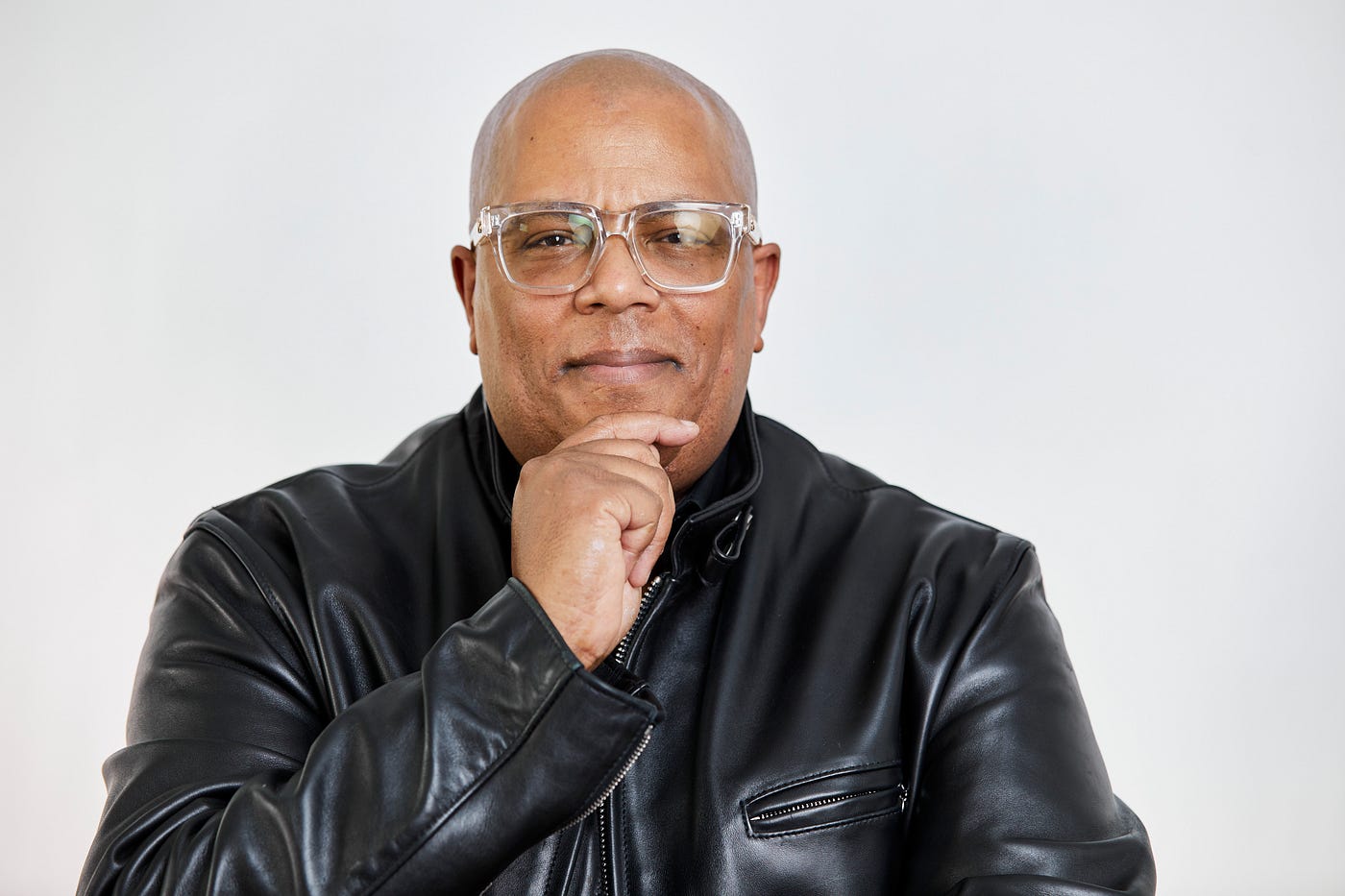
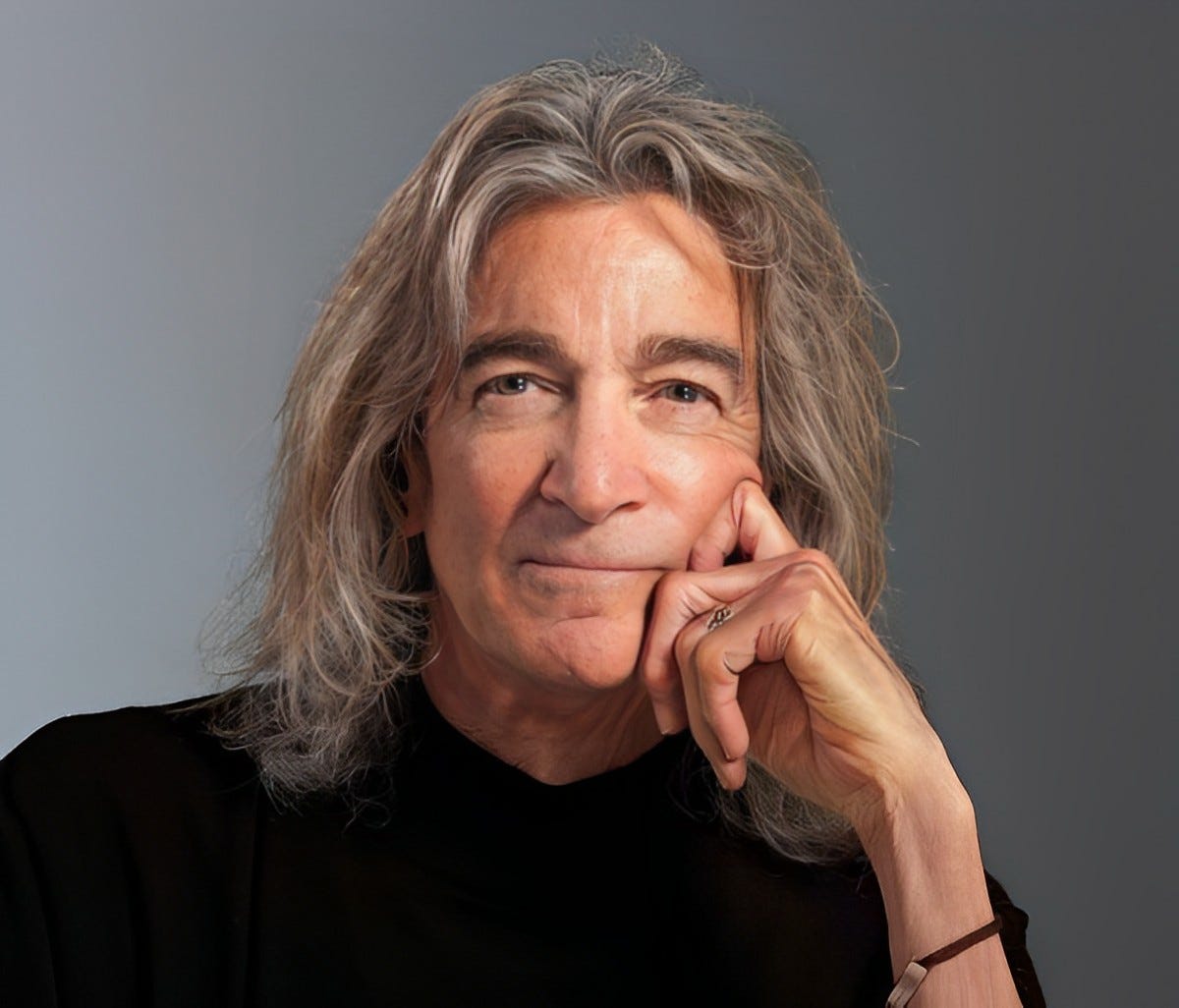
As part of my series about “authors who are making an important social impact”, I had the pleasure of interviewing Dr. Terry Gordon.
As the American Heart Association’s National Physician of the Year 2002, Dr. Terry Gordon is no stranger to death. During his illustrious career as a Cleveland Clinic trained invasive cardiologist, he was able to observe from a unique vantage point over 1,000 individuals as they transitioned to the next phase of life.
His compelling new book is, No Beginning . . . No End, where he provides a marvelous perspective on the topic of immortality.
Thank you so much for joining us in this interview series! Before we dive into the main focus of our interview, our readers would love to “get to know you” a bit better. Can you tell us a bit about your childhood backstory?
Myinterest in cardiology was piqued as a youngster while watching a show on television called Operation Open Heart. It was about a boy who was born with a hole in his heart. Although he and I were both 10 years old, the difference in us was dramatic. I was very active physically. Not only could this boy not run — he couldn’t walk six feet without turning blue.
In order to catch his breath, he would have to squat, breathing through pursed lips for several minutes before he could stand up and continue for another few steps. Then he would have to stop once again repeating the maneuver. This was the first time I recall not only becoming aware of my many blessings but being grateful for them as well.
The documentary projected on our black and white TV revealed his doctors subjecting the boy to a myriad of tests in order to formulate a working diagnosis of their young patient’s tenuous medical condition. The methodical process of working up his malady captivated me. As complicated as it seemed, there was a beautiful simplicity to the way the heart worked.
Watching his open-heart operation, I felt an exhilaration I had never experienced before. Weeks after his successful surgery, this boy was able to walk and play like any other child his age. I marveled at how a single surgical procedure had so dramatically improved the quality of his life.
The scientist seed in me had been sown! The foundation of what I was to become continued to blossom as every book report, every school project assigned, even the plastic models I built were centered on this beautiful piece of machinery, the human heart. My intention, although I didn’t know how to describe it so early in life, was to become a heart doctor. That desire would be nurtured and honed for many years. Its evolution continues to this day . . .
When you were younger, was there a book that you read that inspired you to take action or changed your life? Can you share a story about that?
You know, as children, we are inadvertently introduced to the harsh realities of life. Looking back at the books, the movies and the fairy tales I was exposed to in my youth, I recall the horror I felt as a youngster sitting in a theater watching Walt Disney’s movie, Bambi.
One scene riveted me to my seat. During his first winter of life, Bambi and his mother are out foraging for food when a hunter approaches. The mother alerts her infant of the danger as they both bolt in the direction away from the deer hunter.
A single shot is fired as Bambi makes it to the safety of the underbrush. Turning around, he breathlessly exclaims, “We made it, Mother! Then, realizing that she isn’t with him, he hesitantly calls out, “Mother? Mother, where are you?”
Alone in the dark snowy forest, he wanders aimlessly in search of his protector, too young to be able to comprehend that his mother has been shot and killed by a hunter.
From the darkness of night, a buck appears and says with his deeply comforting voice, “Bambi, your mother can no longer be with you.”
I remember feeling the knot in my throat when Bambi’s innocent eyes welled up with tears as he looks back into the emptiness of the forest with the buck softly encouraging him: “Come, my son.”
That was my first experience with death, learning from the silver screen the apparent finality of life. It would become one of many lessons that would prepare me to help thousands of my patients and their families as death loomed nearer.
Fear of this unknown would become fodder for growth and ultimately offer me a more complete understanding of life and the journey toward death we must all face.
It has been said that our mistakes can be our greatest teachers. Can you share a story about the funniest mistake you made when you were first starting? Can you tell us what lesson you learned from that?
Early into my career as a physician, I found myself living in the uncomfortable space of fearing the future and its uncertainties. One of the most important tutorials I learned was not to take myself or my death too seriously. A dear friend of mine while in the process of dying sent out the most hilarious emails to his friends and family cataloging his experiences while navigating the medical field as a patient. Selflessly, his approach ended up helping the rest of us. I learned from him that dying didn’t have to be bogged down in sadness.
Once I changed my outlook and allowed myself to expand my horizons by being open to everything and attached to nothing, only then did I begin to cross paths with some physicians who had discovered the secret to healing the body and the spirit. They had found a special tonic, a potion called laughter that releases into the brain naturally occurring morphine-like substances called endorphins. This secretion causes the body to relax while strengthening the immune system.
I embraced the awareness that if the act of dying is viewed not as a threat, but as an opportunity for growth, we can come to appreciate our demise as a transitioning event of beauty and continuation. After all, each of us is going to do it! We can then be free to experience death without sorrow, savoring it with delight and even humor.
Dr. Hunter Adams, better known as “Patch” Adams is a physician who has taught us that humor can be therapeutic even in the setting of death and dying. If you haven’t seen the movie, Patch Adams, which is based on his life, you must. It’s an enjoyable eye opener.
In the movie, he’s trying to connect and interact with an angry patient whose end-stage pancreatic cancer is causing him great physical and emotional distress. In his agony, he has tuned out his caregivers at the hospital including his physician, Patch Adams.
One evening, Patch enters the man’s hospital room as the patient’s wife is leaving to go home. After she departs, Patch shares with the man how “hot” his wife looks. He then asks the patient if it would be okay after the man dies for Patch to take his wife out on a date.
At first, disbelief crosses the angry man’s face. Then the patient doubles over, howling in uncontrollable laughter.
Patch and his dying patient were finally able to connect and share a dimension of consciousness of which many others are not even aware exists. While most would likely feel very uncomfortable being jovial while talking with a dying person, it is my belief that people feel important when someone cares enough to make them laugh.
Several opportunities presented themselves for me to try out what I learned from my dying friend. And guess what, it worked! Laughter in the setting of excruciating pain experienced by several of my patients helped alleviate not only their incessant agony, but it assuaged their trepidations regarding their looming deaths. When one of my patient’s time arrived, a smile remained on his face as he peacefully moved on.
Can you describe how you aim to make a significant social impact with your book?
No Beginning . . . No End
A Cardiologist Discovers There Is No Such Thing As Death
is a book that has been writing me for decades. Being a willing participant in the process has enriched my spiritual journey so much more than I could have ever imagined. I find myself feeling enormously grateful for the many Truths the Universe is offering me.
For many, our greatest fear lies in the turmoil and confusion as we contemplate death. The closer we get to “meeting our maker” the greater the anxiety.
When our physical body sprouts into being, two travel companions join the rapidly developing manifestation of a unique life form. This newly combined triumvirate watches together as miraculously, an exponential expansion of many types of cells with varying functions, begins to unfold.
But with all the fanfare that new life introduces, many of us fail to acknowledge the two fellow travelers that have joined our body in the trek. Despite the oversight, the triad will remain connected every single moment of every single day, traveling with one another on their conjoined journey. One compadre joining the physical incarnation is the Soul . . . the other is Death.
Now, many of us assume that death waits to present itself until the time of our ultimate departure from life draws near. To the contrary Death is there from the outset. It accompanies our passage from the healthy and vital days of our youth through the inescapable deterioration brought on by aging and disease.
All too often, we foolishly suppress the inevitability of death and then one day when we least expect it, life’s circumstances shock us into an enhanced awareness of our own impending demise. Because we have ignored this companion for too long, when Death does start knocking louder and louder at the threshold, we find ourselves too petrified to open the door. How we process the fear of what the Grim Reaper might have in store for us determines how much of a paralyzing advantage he will be able to exert over us.
The most effective antidote for such distress is to deprive death of its foreignness, to befriend it. By recognizing and embracing this fellow traveler early in life, we can learn to simply get used to death over the course of time.
Becoming familiar or even friendly with death doesn’t have to be morbid. If encountered early enough, such familiarity can be immensely helpful in guiding us to accept the inevitability of our own demise without fear or trepidation.
Getting to know death doesn’t have to be delayed until we are lying on our deathbed. To the contrary, it’s much more fruitful to become friends with death while we are still in a state of wellbeing.
The intention of this book is to touch the hearts of those who find themselves navigating a unique journey of discovery, charting a course of self-discovery that will enrich the rest of us as well.
Can you share with us the most interesting story that you shared in your book?
The inspiration for my new book, No Beginning . . . No End germinated from a profound, life-altering awakening.
Adrianne was a delightful 82-year-old. I was privileged to serve as her cardiologist for well over a decade. From the moment I assumed her care, we connected. We were both raised in the South. She was from Charleston, South Carolina; I was from Louisville, Kentucky. We had much in common.
She had a very serious heart condition that required the placement of an implantable defibrillator, a device that would save her life by shocking her out of a life-threatening heart rhythm disturbance should it occur.
One morning, she presented to the hospital with her defibrillator shocking her repetitively. Despite my efforts to quiet her very sick heart, she continued to receive jolts of electric shocks by the device. By the end of the day, it had delivered over 85 shocks, sadly all of them while she remained fully awake — a very painful circumstance. Later that afternoon, she beckoned me to her room. As I entered, she said, “You know Terry, I’m not afraid to die. If the truth be known, I’ve been dying for ten years now.”
I protested by saying, “No, Adrianne, you’ve had a great ten years! You have done so much better than I ever expected.”
She then added, “What I meant by that was I have been preparing for my death for over a decade. I have been consciously shedding all the extraneous things most people consider so important. I do not fear death, Terry,” she said resolutely, “but I don’t wish to continue living like this any longer. Will you turn my defibrillator off?”
I told her that of course I would if that was her wish, explaining that the next time her heart degenerated into a chaotic rhythm, she would cross over. She understood the implications of her decision.
I felt sad for her as she was facing such a momentous decision by herself. Her children and their families all lived in South Carolina. They were unified in their resolve not to allow their loved one to endure any more unnecessary pain. As circumstances would dictate, they would not be able to make it to her bedside until the following day. The unanimous decision was made to go ahead and deactivate her defibrillator.
I shared with Adrianne what a privilege it had been for me to care for her all these years and what a special friend she had been to me. As I turned to leave the room, she hesitantly added, “You know Terry, I have one more request.” She paused for a moment, looked up at me, and with a tear in her eye, asked, “Will you hold my hand?”
I sat down beside her on the bed. We hugged. Smiling, I replied, “Adrianne, of course I’ll hold your hand as long as you don’t tell my wife. She gets very jealous when I hold hands with beautiful women!” I winked at her.
I shared with her the honor I felt being there with her at this important moment of her life. Once I turned the defibrillator off, I asked the nurse to leave us alone in the room. Adrianne and I sat there together, hand in hand. We reminisced about southern living, and as we spoke, I caressed her hand; she responded to mine in kind. This time we shared together was precious.
I looked up at her heart monitor at the precise moment her heart stopped beating. Her eyes fluttered for a moment and then gently rolled back as she peacefully transitioned.
While I sat there in silence, I continued holding her hand, looking at it. I realized that it was the same hand I had been holding just a split second before, yet now it was no longer responsive to mine. Still warm, her hand had within its veins the same blood cells and electrolytes. The same ligaments remained; its bony structure hadn’t changed. It was the same hand, except for one thing — the spirit had left the vessel.
The strangest thought crossed my mind. I recalled the movie ET. There is a scene where ET is showing off to the little boy in his bedroom closet. When ET’s bony finger reaches over and touches a flower . . . ding, the flower immediately withers. As he touches it again, ding, the flower comes back to life.
It occurred to me what had just happened to Adrianne. God had dinged her. And in that instant, her spirit left the vessel she had called home for over eighty years. For the first time in my career, because I allowed myself to do so, I could feel her energy swirling behind me in the room. It hovered for only a moment, and then, whoooosh, it was gone!
We think we know so much about science. The truth is, we do not. But there is one fact we do know for certain. Energy doesn’t die. It transforms; it changes. And when its stint in a particular form is done, it offers itself back to the Universe where that energy will be forever.
From the moment Adrianne’s spirit departed her body, her energy, her essence, her soul, set sail on its journey to infinity. Accepting that premise, I believe it is equally true that her soul existed for infinity before she was dinged into her worldly vessel.
Considering ad infinitum on either side of what we call life, the time we spend here is infinitesimal. This is not meant to minimize the experience, as the time we are here is neither inconsequential nor insignificant. It matters not whether the span of our life lasts four days, four weeks, four decades, or fourscore. It is in the relative sense, fleeting.
Liberation rests in the acceptance that there is no annihilation. We don’t die, we transform. In acknowledging that Truth, we can come to accept the process without trepidation, celebrating our transition as one of the most miraculous adventures of life.
Death is not our enemy. It is our companion, our guide, our friend. It reunites us with eternity, where there is no beginning . . . and no end.
What was the “aha moment” or series of events that made you decide to bring your message to the greater world? Can you share a story about that?
An enlightening realization occurred close to the end of my career as a cardiologist. Have you ever found yourself repeatedly in close proximity with something you had never before noticed or acknowledged?
Well, throughout my tenure as a cardiologist, I had read thousands upon thousands of EKGs or electrocardiograms. But during the countless hours I spent doing so, I never once contemplated what I am about to share with you.
It was late one evening after a very busy day. My mind was numb as I began the task of tackling the large pile of over 400 EKGs that had accrued over the course of the day. As I began the process of interpreting one after another, I soon settled into a zone, a meditative state that allowed the reading of those electrocardiograms to flow with ease.
When an EKG is performed, electrodes are placed on the surface of the chest, arms, and ankle. These leads become receivers of the electromagnetic energy generated by the heart. Because no two hearts are alike, each individual EKG inscribes its own unique signature.
As I continued reading the EKGs, I began contemplating what it takes to create an electrocardiogram. Years before in medical school, I had been taught the physiology of what drives each heartbeat. The body’s mineral consistency and 80 percent water content provide an excellent milieu for conduction of cardiac impulses.
Electrical excitation causes the heart muscle to contract, propelling enriched, life-sustaining blood throughout the body. I thought about how, on a beat-by-beat basis, this life force enlightens each and every cell in the body to the nature of its heart, constantly circulating and recirculating this vital information day in and day out, for as long as that particular physical form survives in the material realm.
My meditative state deepened, as I became that electrical impulse spreading throughout the body, exciting everything in its path. I pondered the place of its creation and how it knew what it needed in order to fulfill its destiny. And, just as intriguing, I contemplated where each electrical impulse was headed.
For the first time in my career, despite my having read tens of thousands of EKGs, I wondered what happens to that electromotive force once the impulse is transmitted to the electrodes at the end of our arms and leg and the EKG is written? Does the energy of that impulse suddenly hit a roadblock and stop? Is there is a shield that obstructs its further transmission?
The answer is no. The impulse continues; it continues on its outward-bound path, rippling out into the Universe. Similar to every other electromagnetic impulse, our heart’s voice travels at the speed of light, 186,000 miles per second. After only one minute, each heartbeat’s signal has the potential to travel more than 11,000,000 miles from its beacon point!
Every impulse emanating from each beating heart, whether human or belonging to a blue whale or a fairy fly, each beat becomes as much a part of the cosmos as the most powerful photons emitted from the largest stars. Some of those stars died millions of years ago, yet their essence continues as the twinkling light we observe as their energy traverses through the vast Universe heading in our direction. Granted the impulse of the heart is not nearly as strong as that of a star, but the heart’s voice, soft as it may be, travels in the very same vacuum of space . . . forever! The heart’s imprint is like that of the stars; it never ceases to be.
It was with this revelation that I first embraced an epiphany that would forever change my view of life. A new understanding settled in my soul when I accepted the acknowledgement that there is no such thing as death.
Without sharing specific names, can you tell us a story about a particular individual who was impacted or helped by your cause?
Close to the end of my father’s struggle with metastatic prostate cancer, I remember him saying to me, “Son, I’m not going to make it.”
My anemic response to him was: “Oh yes you are, Dad. You’re going to get better. You can beat this cancer. I know you can.”
I must admit the inflection of my voice wasn’t very convincing.
He knew I was not being upfront with him; I knew the same. One of my greatest misgivings in life has been that I didn’t have it in me to address my father’s fears head-on with him at a time when I suspect he needed me the most.
For the longest time after his death, I had a recurrent dream. Dad had moved away by himself while the rest of us continued living our lives. We knew he was out there somewhere, yet our lives carried on without him, nonetheless.
On occasion, our family would gather with him at his modest, meagerly furnished one-bedroom apartment. He seemed content with his circumstance.
In this dream of mine, every time we’d visit him, which wasn’t very often, we were all surprised that he was still alive! After all, his doctors had told us his prognosis was extremely poor, to be measured in months not years.
Self-psychoanalysis tells me that the nightmare I continue to have, even though now only rarely, represents the guilt I feel having not been open and honest enough to help my father. Oh, how I wish I could relive that interaction with him. By not being forthright about his poor prognosis, I felt like I had ostracized him even further into isolation, leaving him feeling abandoned, smothering in his despair.
I have since come to appreciate the metaphor of Dad’s “moving away.” His departure was, in truth, not that at all. While the lives of those in our immediate family continued to unfold as they were destined to do, I know his energy remains out there and is available to us whenever we feel the need to connect.
Over the years, it turned out that this inadequacy on my part proved to be an invaluable instructor, teaching me the importance of open communication between my dying patients and their families.
Most people who are dying wish to protect their loved ones from the uncomfortable conversations that cry out to be addressed. Often, we find it more palatable to curtail discussions about such morbid topics as death and dying.
In like fashion, we as families of the dying unfortunately make the same mistake by not being open with our loved one about their impending demise. What ends up happening is both sides avoid what could be healthy conversations that would benefit everyone involved.
The bottom line is this: Be open to the conversation your loved one likely desires regardless of how uncomfortable such a conversation might be. Being open and honest about your loved one’s poor prognosis removes the weight of a thousand shackles from her and from you. Strive to be a good listener. The opportunity might present itself for you to share some of your thoughts as well. I believe you’ll find it will have a settling effect that can result in immeasurable peace for all involved.
Allow your loved one to share his greatest fears with you. I wish I had . . .
Are there three things the community/society/politicians can do to help you address the root of the problem you are trying to solve?
It is not often that something is placed before us, which defines in crystal clear fashion, our purpose. The untimely death of a High School football player in our community provided such direction for me.
Josh Miller was 15 years old, a bright student and a wonderful young man. He had his entire life facing him when he collapsed on the football field one Friday night. In front of his teammates, in front of his friends, and sadly in front of his parents, Josh Miller died. He suffered a sudden cardiac arrest. Kids are not supposed to do that!
I had the unfortunate experience of watching the videotape of his final moments. It was sickening knowing that a simple device could have saved him. An automated external defibrillator or AED was not available to those who tried so desperately to resuscitate Josh.
The eyes are the portals to the soul. I have had to look into the sad eyes of his parents; their gaze has propelled me onto what I believe to be a destined path of helping to prevent this sort of tragedy from devastating other families.
Every year over 300,000 Americans collapse from cardiac arrest. Sadly only 3–5% of those survive. The reason is simple. For every minute that one remains in the chaotic heart rhythm disturbance called ventricular fibrillation (VF), the chance of survival drops by 10%. Nationwide, the average response time for EMS is 8–12 minutes. One can easily appreciate why such precious few survive.
If CPR is performed, survival can almost double to 5–10%. Coupled with CPR, if an AED is used quickly, the survival can be as high as 50%. AEDs should be placed in schools as every day, 20% of the adult and child population is housed in our schools, which are often used as community centers at night.
At the time of Josh’s death, I was the president of the Summit County American Heart Association and I vowed this would never happen again in our community. We placed AEDs in all our middle and high schools, becoming the first county of its size in the nation to do so. I was named The American Heart Association’s National Physician of the year 2002 for my efforts. Ultimately, our Ohio legislators were convinced to pass The State of Ohio School AED Initiative. A total of $5,000,000 was granted that placed 4,470 AEDs in schools K through 12 throughout Ohio. We trained 5 individuals in each school in CPR and the use of AEDs as well as giving them an emergency response template to use. This was the first comprehensive statewide program of its kind in the nation. To date there have been well over 50 saves as a result of this initiative.
National legislation to place an AED in every single school in the nation, introduced as The Josh Miller HEARTS Act (HR 4926) was mirrored after our Ohio School AED program. The bill was proposed by U.S. Congresswoman Betty Sutton and first passed the U.S. House of Representatives unanimously in June 2008. Proposed by then Senator Hillary Rodham Clinton, it unfortunately did not make it through the HELP Committee in the U.S. Senate, as Senator Kennedy was struck ill. It was proposed again and passed the House as HR 1380 in June of 2009 and was proposed by Senators Brown and Voinovich but failed to emerge from the HELP Committee once again. The tragedy is that since the bill first passed the United States House in 2008, over 300 children have needlessly died of sudden cardiac arrest in schools across America.
There is no greater feeling than helping to save a life . . . especially the life of a child. Passage of this life-saving bill will touch the lives of millions upon millions of Americans for years to come. As Martin Luther King said in his I Have a Dream speech, “there is a fierce urgency of now!” We cannot allow such an injustice of nature to continue.
Our U.S. legislators have AEDs hanging on the walls of their office buildings. They are protected; the same protection must be offered to our most precious resource, our children.
United States Congressmen and Congresswomen, as well as those individuals in state and local government can easily do something to correct this travesty.
As it is written in the Torah and Koran: “If you can save one life, you can change the world.”
How do you define “Leadership”? Can you explain what you mean or give an example?
There are two ways to get people to follow your lead. The first way is to force them to do so. The other approach embraces true leadership as you empower others to want to follow you.
In his book, Power vs. Force, David Hawkins, M.D., Ph.D. describes this clear differentiation in brilliant detail. Through his extensive research in the field of kinesiology, Hawkins describes the physical effects resulting from exposure to each type described above.
When we are empowered by another, we become motivated and energized with “positive attractor patterns” that enable us to flourish. On the other hand, when force is utilized as a control mechanism, we might succeed in the task asked of us, but the negative and low energy patterns that drives the act inevitably promulgate weakness. We generally become defensive and if we are not careful, transference of that same negative energy to all of those with whom we come into contact occurs.
The importance of using power as the motivator has to do with the encouragement of that which supports life, thus promoting health and happiness. The use of force on the other hand, accomplishes the opposite effect, creating illness and fostering perpetual turmoil.
No one likes being forced to do anything, and certainly our ego resists such an encroachment. We would much rather be empowered to perform rather than being forced to do so. Unlike force, which sucks the life out of us consuming our energy, power provides us with sustenance, the energy necessary for us to succeed. It is like the sun whose rays indiscriminately bathe everything on earth, never once saying: “You owe me”. It’s just the empowering gift that keeps on giving.
As Hawkins so eloquently puts it, “The universe does not forget. Every choice we make has karmic ramifications; each choice has huge consequences. Every act or thought adds to a permanent mosaic”
Sadly, in today’s world, those with bonified leadership qualities are few and far between, contributing low energy patterns that will by their nature perpetually pass through the universe tainting it as it goes.
“Force can bring satisfaction, but only power brings joy.”
~ David R. Hawkins, M.D., Ph.D.
What are your “5 things I wish someone told me when I first started” and why? Please share a story or example for each.
1 . I wish someone had eased the tension by encouraging me earlier in life that it was okay to let my hair down.
Much to my mother’s chagrin and embarrassment, she was mortified when she first saw me on stage at our Civic Theatre for an event called Docs Who Rock. I was the co-emcee of a fund raiser for the United Way. Over its 10-year history, we raised over 100,000.
My mother, forever the southern belle, thought it highly inappropriate for someone of my “stature” as she put it, to act out so foolishly in public. Her concern was that such mischief would result in the loss of respect of my peers and patients and community.
To the contrary, the arc of my trajectory was not negatively impacted in any way. Instead of undermining my credibility as a cardiologist, I discovered that humor is more than okay when it comes to interacting with people of all walks of life.
One of the nicest compliments ever paid to me was when one of my patients told me I reminded her of Hawkeye Pierce from the TV show, M.A.S.H.
Now, some physicians might be offended by such a comparison, but I was flattered to be described in such a way. You see, Hawkeye Pierce was a jokester; he always had a wisecrack, a quip on the tip of his tongue. He was constantly concocting some sort of tomfoolery to play on his friends, fellow co-workers, and even on those who outranked him.
The beauty of the man was that in a nanosecond, when the need arose, he became a serious healer. In an instant, he could morph into a superb surgeon who became hyper-focused and could operate with the best of them as he saved the lives of injured soldiers.
Hawkeye had somehow learned how to heal not only with his gifted hands, but with his heart as well. He knew that laughter could be beneficial and, in fact, therapeutic. He also knew in comparison to the sky rocketing cost of pharmaceuticals, that laughter is cheap medicine.
I came to appreciate that being a nationally recognized cardiologist, a self-help author and a rock star all blended quite nicely especially because I didn’t take myself too seriously!
By the way, when accolades for the events started rolling in, my mother jumped on the bandwagon, deciding perhaps it was not so detrimental to her son’s career after all.
2. It’s more than OK going around to the back door when the gatekeeper of the front door won’t let you in. I just wish someone had shown me where the key was to the back door.
When I first began formulating my initiative to place defibrillators in every junior and high school in our community, I approached an individual at one of the largest foundations in our county.
I made a brief presentation to him, outlining my request for assistance in raising $180,000. Mind you, I thought the recent sudden cardiac death of a fifteen-year-old high school football player in our community would make this an easy pitch. His offer was to donate $1,000 each year for the next 3 years. Three thousand dollars over 3 years was not my plan!
I thanked him for his time and left his office. I walked across the street to our hospital entering the CEO’s office and sat down to share with him my plan. A smile crossed his face. I knew he got it! I could see in his eyes that he too embraced the placement of these life-saving devices that could potentially save thousands of lives in our community.
His pledge right then and there was $90,000. With such seed money, we were well on our way to being the first county of its size in the nation to have such amazing coverage.
In the process, I chose not to take “no” for an answer. I was confident that the conviction of our plan was pure. In the 5 minutes it took me to cross the street, $3,000 expanded into $90,000.
It wasn’t cockiness on my part. I was practicing the power of intention, although I didn’t know what to call it. You see, when you intend something to be . . . it already exists. I envisioned defibrillators already hanging on the walls of all the schools in our community. I “saw” them saving lives of our children, making our schools safer places to be.
My advice: Don’t give up . . . persevere. It’s so much less congested at the back door.
3. I wish someone had informed me earlier in life that there isn’t just one path to achieving enlightenment. We shouldn’t fall into the trap of comparing one person’s path with that of another’s.
As our journey toward enlightenment unfolds, we must come to understand that there are no exclusively correct paths nor are there wrong paths leading to Oz. No route chosen by any of us is identical to any other passageway ever chosen by anyone else. And yet ultimately, we will all end up at the same destination, nonetheless.
Achieving enlightenment isn’t something immediate. If the truth be known, it isn’t something we can “achieve” at all. It’s an awareness that evolves as the conditions for its unfolding ripen.
I have found that the more aggressively enlightenment is pursued the greater will be the struggle to align with it. When a seedling is planted, all the coaxing imaginable will not cause the tree to grow any faster than the Universe will allow. So too it is with enlightenment. It might be that we need to live many years before a single lesson we are to learn presents itself. On the other hand, the wisdom of a thousand tutorials might be imparted to us in just a blink of the eye.
By its very nature, enhanced spiritual consciousness cannot be rushed. It can only begin to unfold once the receptivity to such profound messages offered begin to comfortably settle into the deep recesses of the soul. All we must do is to become receptive to the lessons that begin coming our way. We do so by simply listening to the brilliant silence the Universe has to offer.
From My Favorite Martian, a television sitcom in the early 1960s, the marooned space traveler who had landed on Earth could only communicate with those back on Mars when his antennae were activated. We must do the same thing with our figurative antennae. We must learn how to be receptive of the messages the Universe is gifting us. It will be then that one’s unique spiritual path will begin to blossom.
The Universe will provide the right people at just the right time.
Mentors don’t necessarily have to be sought after. Enlightenment may come from a guru, a friend, a pauper or a total stranger. From wherever it arises and without judgment . . . accept it.
Appreciate the offering, remembering that each of us is the Divine. We must be open to learn from everyone and everything we encounter. It matters not your religious background. Accept the offering, exalt in the diversity of the deliverer.
4. I wish someone had taught me about the perils of dis-ease before I “contracted” one? Out of necessity, I learned a painful lesson in life.
Several years ago, while experiencing a prolonged and very stressful time in my life, I received a phone call from my urologist. He informed me that my biopsies had come back positive for Prostate Cancer. My response to that disturbing news was a feeling of chagrin. I felt like a little boy who had just gotten caught with his hand in the cookie jar!
I knew better. Just like Lance Armstrong who had to have known he would eventually get caught in his lies, I also realized that it was only a matter of time until the stress I had allowed to consume me would catch up, rearing its ugly head in the form of some disease or another.
I was well aware that physiology doesn’t lie! My immune system had been in the off position, in hibernation far too long. This allowed the cancer cells within my prostate gland to begin multiplying and expanding, unimpeded by my now poorly functioning immune system.
I now recognize the incessant mental chaos percolating through my mind was preventing me from finding inner peace and now, it was adversely affecting my overall health as well!
The first step I had to take was to liberate my consciousness of the destructive thought forms that had highjacked my serenity. Once unshackled from them, I began seeing with clarity how destructive those thoughts had been. I learned from my dear friend, Dr. Wayne Dyer: “So as you think . . . So shall you be.”
With this new revelation, I felt like Mark Twain who once said: “I’ve had thousands of problems in my life, most of them never actually happened.”
5. Looking back, I wish someone had shared with me the importance of incorporating meditation into my life.
As Jeremy Taylor so eloquently described it: “Meditation is the tongue of the soul and the language of our spirit; our wandering thoughts in prayer are but the neglects of meditation.”
It has been said that as we pray, we are speaking to God. But when we meditate, that is when The Divine speaks to us. Communing with the Source of everything cannot be achieved while one is immersed in the noise and restlessness of chaotic thoughts.
Life in its hectic phase is like the river’s rough surface churned up by the wind. Those waves represent the flurry of thoughts, the recurrent worrying thoughts stirred up by the perceived windstorms of life. The incessant nature of these streams of thought, the constant chatter in our minds generally gets us nowhere, imprisoning us in an unending eddy of discontent.
The commotion of the mind is analogous to the turbulent surface of the river. The deeper portion of that same flowing body of water is less chaotic, with movement much less than that found on the surface. The deepest part, the bottom of the river, has a barely perceptible motion to it at all. If you have ever gone scuba diving or been at the bottom of the deep end of a swimming pool, you have likely experienced that calm.
After a fierce storm, once the turbulence has abated, if allowed to do so, the river’s murky water will settle. As the mud gravitates back down, the water’s innate clarity returns.
I have found that meditation takes me to that respite. It provides the channel that allows me to dive deeply into the mind where calmness, peace and serenity prevail. Meditation leads me to space where I can cultivate consciousness in its most pure form.
As the Buddha once said: “There is no way to peace . . . peace is the way.”
Can you please give us your favorite “Life Lesson Quote”? Can you share how that was relevant to you in your life?
Immortality is very real! What I’m going to encourage each of you to consider is changing your thought about immortality. Dr. Wayne Dyer shares his wisdom: “When you change the way you look at things, the things you look at change”.
Now, what I’m about to share with you is a different way of looking at immortality. As you may know, there are many religions that promise immortality for their believers, freeing them from the despair of death and decay.
My definition of eternal life doesn’t mean that the current physical rendition of Terry Gordon will endure forever, because it won’t! What I have grown to accept is that upon my transition, I will live on, it’s just going to be in a different way.
Each of us has a unique DNA pool that has amalgamated fifteen billion years of existence within its structure. Just imagine that, each element and every atom that comprises what each of us is at this point has existed for fifteen billion years, participating as an integral part of innumerable existences, all of which have culminated in the you who is currently thriving on this earth.
From each contributor to fertilization, DNA information unites and coalesces, orchestrating a miraculous process of growth and development. Such a merger of life-force ultimately becomes a unique individual, a creation never manifested previously.
Now, think about this! Because the DNA that has come from your predecessors is offered up by you to the next generation, it lives on. Carrying even a small part of the donor into the future, assures its immortality. And through offering our DNA back to nature when we transition, we become part of the building blocks of life that are yet destined to become.
This perpetuating and replicating gene pool is how the Universe guarantees its own immortality . . . proof that there is no such thing as death. And all it takes is changing the thought.
Is there a person in the world, or in the US with whom you would like to have a private breakfast or lunch with, and why? He or she might just see this, especially if we tag them. :-)
An Avatar is believed to be a divine teacher whose soul has been released in bodily form while on earth. Many believe the purpose of such a special visit is to counter evil that’s present in the world.
My truth is that avatars have no exclusivity; they do not come from a particular religious belief system and are available to us all if we choose.
My guest for breakfast would be Former President Barack Obama, a man who came to us at just the right moment in history. He was the 2009 recipient of the Nobel Peace Prize for his extraordinary efforts to strengthen international diplomacy and cooperation between peoples. What more a noble purpose could there be?
His task has been assigned to illuminate the paths to Peace, Shalom, Salaam and Shanti. I look forward to listening to his wise words.
How can our readers further follow your work online?
No Beginning . . . No End
A Cardiologist Discovers There Is No Such Thing As Death?
Purchase on www.Amazon.com
Website www.drterrygordon.com
TW @DrTerryGordon
FB https://www.facebook.com/terry.a.gordon.56
FB fan page https://www.facebook.com/pages/Dr-Terry-A-Gordon-LLC/100221550064852
Google + https://plus.google.com/u/0/105804544418400483498/posts
Email terry@drterrygordon.com
Thank you for these really excellent insights, and we greatly appreciate the time you spent with this. We wish you continued success.