
I always tell my team that you cannot go in a straight line without a ruler. I have found that having a mentor has grounded me in every possible way.
As a part of my series about the “5 Ways That Businesses Can Help Promote the Mental Wellness of Their Employees” I had the pleasure of interviewing Dr. Ryan Neinstein.
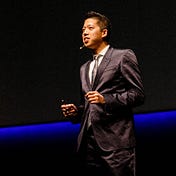
Dr Ryan Neinstein is a board-certified plastic surgeon in New York City, and owner of Neinstein Plastic Surgery. He is often referred to as the surgeon’s surgeon as many surgeons choose him as their own trusted doctor. As the author of safety guidelines and masterclass instructor he stresses the importance of hyper-specialization and patient care above all else. He is also an entrepreneur in the crypto, bio tech, spirits, and real estate world. His most proud achievements are the loving family he has with celebrity fitness instructor wife Lauren Neinstein.
Thank you so much for doing this with us! Before we dive into our discussion, our readers would love to “get to know you” a bit better. Can you share with us the backstory about what brought you to your specific career path?
Growing up as the grandchild to holocaust survivors I have always had a moral compass that drove towards serving others through the accumulation of skills. Naturally I was drawn towards medicine. Intellectual curiosity has no bounds in this field and the opportunity to make meaningful impact in people’s lives daily make this the dream profession to me. Early on in my medical academic pursuits I was drawn to the hands-on aspect of surgery. Plastic Surgery serves a unique role in medicine whereas most surgical pursuits are to reverse injury or disease with the goal of returning to baseline in Plastic Surgery we have the opportunity to enhance form and function something unique and exciting in any life pursuit.
Can you share the most interesting story that happened to you since you started your career?
For me I am constantly motivated and overwhelmed by the long lasting deep and meaningful connections we have made with patients who we have been an integral part of their lives. I once volunteered for the ambulance service in Israel to gain a wider perspective of what health care means to me. Interestingly, I came away having a deeper devotion to the practice of medicine and value of service to others. Many of our patients have deformities from cancer, trauma, disease, or massive weight loss and I never would have predicted how impactful we are to their day to day lives.
What advice would you suggest to your colleagues in your industry to thrive and avoid burnout?
I always tell my team that you cannot go in a straight line without a ruler. I have found that having a mentor has grounded me in every possible way. I truly believe this essential for any leader to help weather the storm of entrepreneurship. When I discuss mentorship, I discuss it in two ways. First is to be a student of history. It may sound odd but in many ways Marcus Aurelius, Seneca, Cato, and countless statesman are my mentors. Nothing is new and we can learn so much from 4000 years of human trials and tribulations.
More importantly is my real-life mentor, David Adelman. I cannot in words express the gratitude for his influence on my life. A few of the lessons I have learned are – compassion, unwavering adherence to decisions, indifference to superficial honors, sense of when to push and when to back off, never to be content with first impressions, advance planning, constant devotion to family, willingness to take blame, respect tradition, keep things within bounds of decorum, everything is to be approached logically and how your actions will truly impact others.
What advice would you give to other leaders about how to create a fantastic work culture?
Work culture to me is an authentic and dynamic unified pursuit of patient happiness and staff wellness. Just like Marcus Aurelius observed thousands of years ago when your mind has a positive lens you can filter all thoughts and actions positively. Our office lens is kindness and respect. We all start our day with that sentiment all of our actions reflect the gratitude we have for each other and what we do. This is the foundation of our work culture in my office. While we do many events such as group fitness and community initiatives which add sparkle to the culture the true underlying foundation is not an event it is a day after day sense of belonging and value to one self and your teammates. During staff shortages of 2021 we had 100% staff retention and over 100 applicants to work in our office. I do not believe people do not want to work, I do believe people do not want to work for bad employers in bad environments that do not foster universal virtues and values.
Can you please give us your favorite "Life Lesson Quote"? Do you have a story about how that was relevant in your life?
"Real strength has to do with helping others." Fred Rogers
If you are willing to take a step back, to be brutally honest with yourself and evaluate what really matters I think you will come to the conclusion that it is your impact on others that will give you a sense of fulfillment far beyond any material item or superficial award. For me this starts at home, my wife and I truly move through our days trying to find ways to help each other. This creates a foundation of love that permeates out into my surgical practice and the way in which I interact with everyone I meet. I am not just helping patients achieve wellness and staff a sense of purpose but we are all helping each other navigate life.
Ok thank you for all that. Now let’s move to the main focus of our interview. As you know, the collective mental health of our country is facing extreme pressure. In recent years many companies have begun offering mental health programs for their employees. For the sake of inspiring others, we would love to hear about five steps or initiatives that companies have taken to help improve or optimize their employees' mental wellness. Can you please share a story or example for each?
One of my first strategic initiatives to improve employee mental health was to shift from a classic hierarchical organization structure to a flatter structure. This reduced the friction of silo communication and allowed team members to be heard more and not have to speak to superiors before they got to me. By simply listening more I had a better understanding of individuals motivations and fears. For instance, we had one nurse who was having trouble adapting to our work flow, since she felt comfortable with our communication strategy, she shared with me that the schedule was conflicting with childcare and that this was causing turmoil at home. We quickly created a custom work schedule to better reflect her childcare needs and almost instantaneously her clinical productivity increased
It cannot just be about the work. When I gauge the temperature in America right now, I feel as though incivility is at an all-time high in my lifetime likely from fear and confusion. One way to diffuse this amongst our team has been to focus on charity and reducing cognitive dissonance between us and those in need. We spend so much of our lives involved in work for mental clarity and sense of wellbeing I have found that team members seek more from their jobs than simply what they do within the office. In 2021 we started a community initiative program. Neinstein Plastic Surgery is more than just a medical practice, we are an integral part of our community. Our corporate culture has an ethos based in moral and civic excellence. The Neinstein Plastic Surgery Look Good, Feel-Good, Do-Good program is our initiative to help bring these virtuous principles to life. The goal is simple, for Neinstein Plastic Surgery to give back to its community by supporting great causes. These events have helped strengthen the fabric of the culture and gives our team members a sense of wellbeing that contributes to each other’s positive mental health.
Given our business is medical we attract lifelong students and continuing education is something that is near and dear to my heart. Encouraging learning leads to radical creativity and evolution within our practice. On an individual basis our team members through internal surveys show increased work satisfaction, job security, and positive mental health changes. This is a real commitment I make to my team and each member has their own unique path to knowledge. For instance, some of our nurse injectors wanted to travel to hands on workshops with key leaders. We have other nurses pursuing higher education degrees in the evenings which we help foster. For me and the surgeons its spending thousands of hours cultivating our experience into academic research that we get to share with surgeons from around the world. This constant flow of new information creates a stimulating exciting environment within the office that makes us all feel great about what we do every day.
Imagine yourself in a situation where you are stuck choosing between embracing change and honoring the traditions that you developed from the lessons taught to you by authority figures in your life. This is exactly where I was. I saw surgical training and private practices with antiquated hierarchical models that did not make mental health initiatives a priority amongst the team. I wrestled with this because I have always seen that happy medical practitioners means happy patients. I made the bold move of creating a full-time motivational position within the practice. We hired a full-time motivation officer who goes by Mitch Motivates. Mitch brought experience from being a counsellor in the rehab community to our practice. We gave him formal training in supply chain management to round out the position which he excelled in but his day-to-day purpose is to keep a pulse on the mental health of the team members individually and on a whole. We consider this to be a vital sign of the practice similar to heart rate and blood pressure of the company. While industry experts may think this is frivolous, we have real world performance indicators that show productivity and reduced downtime from mental fatigue with this pivotal move.
Our world is full of stimuli, and it can be mentally discombobulating to sort through it. One initiative we have done to improve team member wellness is to slow down and simplify. Our main goal at any time within the patient care cycle is patient care. If you stop and think at every moment of your work flow “is this improving patient care” it brings clarity and simplicity. This has made our employees happier. Instead of drowning them in key performance indicators on every move they make we truly look at patient happiness through our outreach indicator program. This transition has made our team codified and unified and not just improved mental health but it trickles down to revenue.
These ideas are wonderful, but sadly they are not yet commonplace. What strategies would you suggest to raise awareness about the importance of supporting the mental wellness of employees?
I often speak with other surgeons looking to grow their practice and they always have the same trepidations about growth. They like to run the business in a very hierarchical way and they don’t want to eat away at their revenue to engage staff wellness. My answer is always the same, I tell them they have to take radical ownership of the patient experience. To do that they must put people over profit. I explain that you have to care enough about your team to draw the line somewhere and immerse yourself into the mental wellness of each team member.
From your experience or research, what are different steps that each of us as individuals, as a community and as a society, can take to effectively offer support to those around us who are feeling stressed, depressed, anxious or having other mental health issues? Can you explain?
I love this question. I have found that most people on my team brew their anxiety based on immediacy concepts. Meaning they are always in a rush to accomplish something which is admirable but unrealistic. When they are trying to have the perfect marriage, become physically fit, get a new degree, and be an amazing team member all at the same time it becomes overwhelming so the dangerous sequence of anxiety and depression begins. My first step is to remind everyone that time is free but at the same time it is priceless. I also breakdown the concept of slow wisdom. I deeply engage in reminding team members that life happens day by day and stress the importance of slowing down mentally. The fastest way to get anywhere is to go slow and when you adopt this mindset the world becomes a bit easier to navigate.
This might seem intuitive to you, but it will be helpful to spell it out. Can you help articulate a few ways how workplaces will benefit when they pay attention to an employee's mental health?
Yes of course. Well let me explain how we actually bring all of our concepts to life. Number one we make it crystal clear from leadership that mental health and personal wellness of our team is top priority. Then we go on and build the machinery that reflects this. We have hired a third-party company to provide internal and external mental health resources that range from counselling services to nutrition counselling. Once the foundation was set, we expanded. To better understand the intricacies of each of our team members personalities and lives we created a weekly group fitness event. These events give us time to talk to each other in a new setting at the same time accomplish personal and group goals all together. There is something about exercise that relaxes the mind and opens us up to free-flowing communication that is not achieved in the workplace. Our chief motivation officer checks in with our third-party counselling services and the team members for a temperature gauge of the mental health of the team and we constantly pivot and adapt as needed. When you aggregate this date we have less employee turnover, more productivity, and increased revenue. Benefits of mental health awareness is undisputable.
Do you use any meditation, breathing or mind-calming practices that promote your mental wellbeing? We’d love to hear about all of them. How have they impacted your own life?
I live in New York City, the undisputed fastest and most dynamic city in the world. At the same time there are people and things everywhere so finding the space between the rain drops for mental clarity is difficult. I walk to and from work every day. Just like so many great thinkers and leaders before me the blend of physical movement with mental calm breeds mental clarity. Tesla discovered magnetism on one of his morning walks in Budapest and Walt Whitman would frequently discuss world events with Ulysses S Grant as the two would see each other on their daily stroll. Even withing the chaos of NYC, I am able to find that simple few moments of clarity that grounds me before the day as I stroll through central park and take in nature in the morning.
I work in the communications industry, so I’m particularly interested in this question. As you know, there are a variety of communication tools such as video conferencing, phone, text, and push-to-talk. What changes or improvements would you suggest for these technologies to help foster better mental health?
We have so many tools at our disposal to communicate with each other when we are not physically present. In our office we have found that setting parameters limits the fear and confusion of talking to others without being able to have personal context. We prune out commentary and emotion and typically use communication for simple organizational matters. We blend the online-offline communication experience to keep the context positive and not allow any misunderstand through misinterpretation this has dramatically improved employee mental health by obviating any concept of cyber misrepresentation. For people looking for actionable take ways to improve mental health through communication check out Hi thrive. This is an easy plug in to slack which we use as a very safe and secure form of communication. It provides a way for each staff member to recognize each other for small things we do day to day and give points towards that member. These points become actionable at the end of the month and can be used for mental health gifts like candles or can be converted into currency for donation to charity.
You are a person of great influence. If you could start a movement that would bring the most amount of good to the most amount of people, what would that be? You never know what your idea can trigger. :-)
Find confidence and avoid ego. Goliath was driven by ego and hubris. Young David was a visiting shepherd, confidence in fighting arose from experience not ego. After having fought bears and lions for years he preceded with true self-awareness, used his resources and defeated Goliath. Too much strife and interpersonal conflict comes from the perils of ego and the lack of humility. If we all took a second to think about the other persons journey in life and how they got to the point in which we are now in conflict we may be able to see some of our own self in them. With common ground we can surely lower the temperature in our country and improve the sense of community with our surroundings
What is the best way our readers can further follow your work online?
Please follow along with my work and my family as we navigate life @drneinstein and my wife @lifeoflaurenashley on Instagram. For more information about game changing surgery, check out www.neinsteinplasticsurgery.com
Thank you for the time you spent sharing these fantastic insights. We wish you only continued success in your great work!