When I started my YouTube channel, I thought we needed to be very heavy on the informational side. And the mistake I was making was taking myself very seriously in this regard.
Social Impact
Dr. Mike Varshavski: How Combining Medical Accuracy with Pop Culture Memes Scaled a Health Education Empire
Leading health and lifestyle expert Dr. Mike Varshavski explains how fighting misinformation and engaging millions online requires dropping your ego and embracing digital culture.
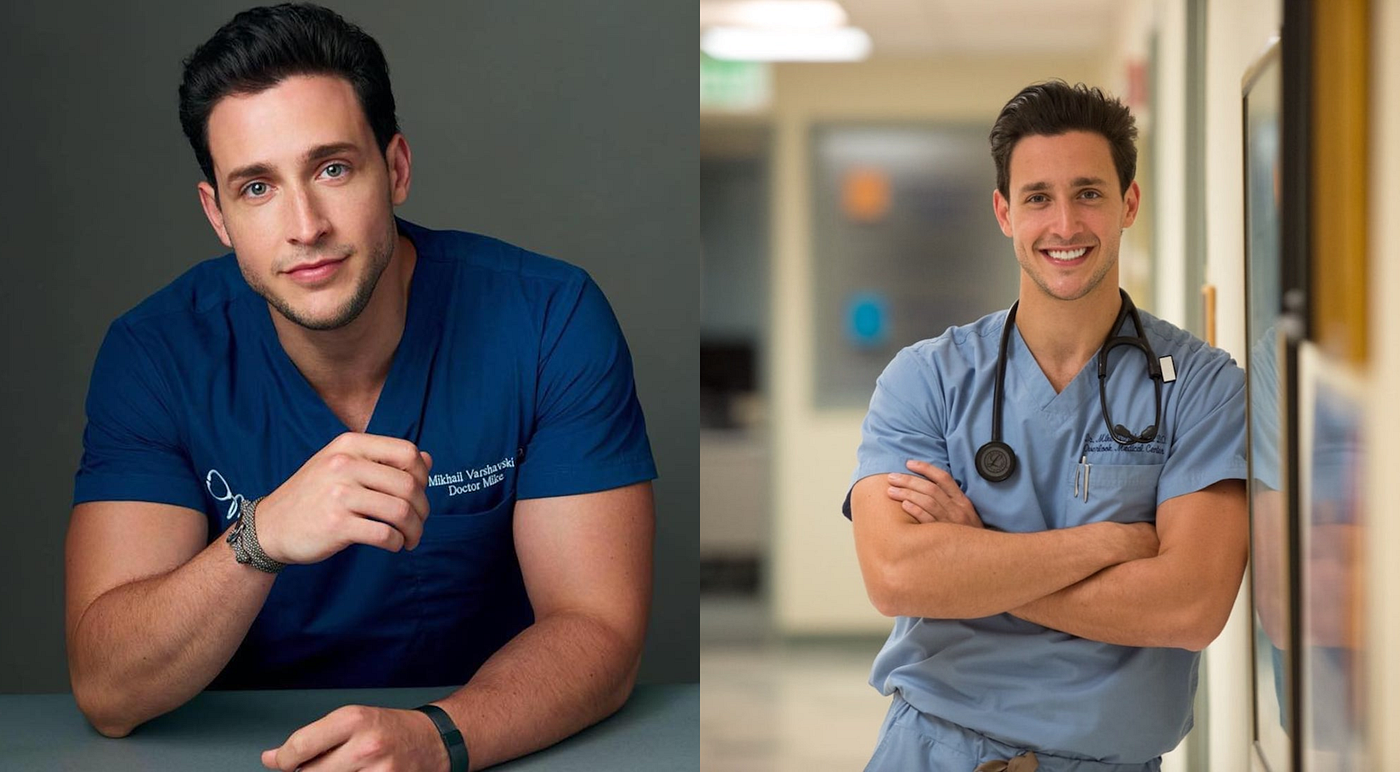
As a part of my series about leaders who are using their platform to make a significant social impact, I had the pleasure of interviewing Dr. Mike Varshavski.
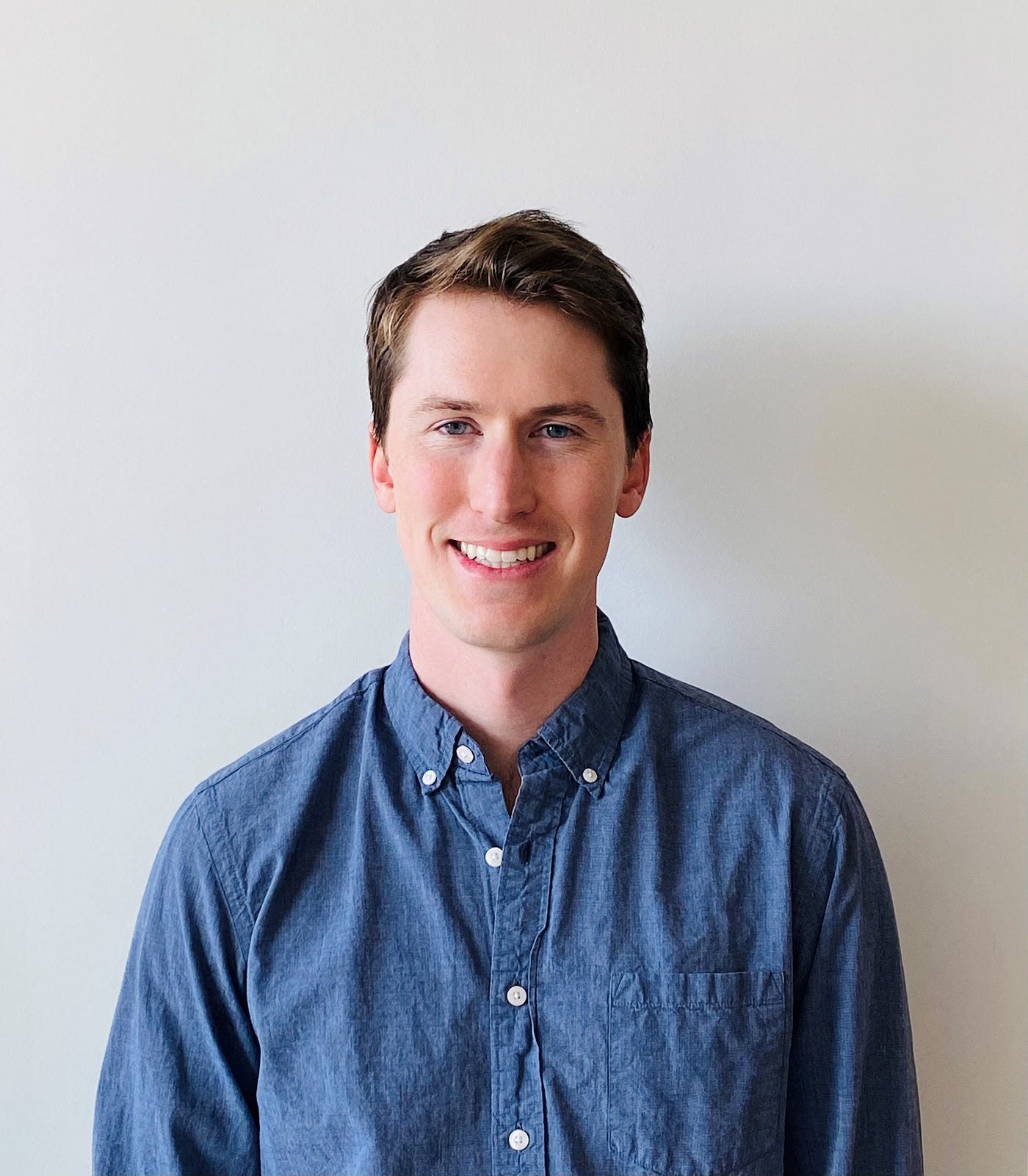
Dr. Mikhail Varshavski, better known as “Doctor Mike,” is a leading health & lifestyle expert who spotlights the value of preventive medicine and healthy lifestyle choices to over 15+ million followers on his social media platforms and YouTube channel.
Having established himself as a trusted source of information, Doctor Mike has made appearances and consulted on CNN, ABC and Fox News, while also interviewing such notable healthcare professionals as Dr. Anthony Fauci, the director of the National Institute of Allergy and Infectious Diseases (NIAID), and Dr. David Feinberg, the head of Google Health.
Thank you so much for joining us in this interview series! Can you tell us a story about what brought you to this specific career path?
MV: When I was studying for my boards in medical school, one of my buddies told me about Instagram, which at that time was really new. I posted a picture of my Siberian Husky, Roxy, and a skier I had watched in the previous Olympics liked the photo. That piqued my interest in the app, and I began showing what it’s like to be a medical student — that you could have a healthy social life and maintain a healthy lifestyle while doing so. Once I had a moment of viral fame, I had an opportunity to share my story with the hosts of some of the biggest talk shows. I then moved that conversation to something meaningful — preventive medicine. In time I began to do the same thing on YouTube, and we now have almost seven million subscribers and a billion views.
Can you share the most interesting story that happened to you since you began this career?
MV: After I gained notoriety on social media, I was in the hospital running a Code Blue where someone’s heart had stopped, and one of the person’s loved ones recognized me and asked if I could take a picture. I said I couldn’t, as I was in the middle of saving their family member’s life. I’ve also had people in bathrooms ask for photos. These are the stories I’ve never gotten used to. You don’t think of yourself as a celebrity. I’m still the same person I was three years ago.
Can you share a story about the funniest mistake you made when you were first starting? Can you tell us what lesson you learned from that?
MV: When I started my YouTube channel, I thought we needed to be very heavy on the informational side. And the mistake I was making was taking myself very seriously in this regard, and I realized after so many fans requested certain types of series, like medical memes or medical drama reviews, that I should talk about the reality of what happens in hospitals in comparison to this. As soon as I started implementing these cultural concepts into my educational content, it skyrocketed.
You have been blessed with success in a career path that can be challenging. Do you have any words of advice for others who may want to embark on this career path, but seem daunted by the prospect of failure?
MV: There are important variables to consider, like not being afraid to take chances — stepping outside of your comfort zone and not being afraid of being uncomfortable. And once you get to the next level, being comfortable with being comfortable. Because when you’re getting 1 million views of a video, it’s very easy to develop anxiety and ask, “How long is this gonna last?” And the final step is, to really see the value in doing this.
OK, super. Let’s now jump to the core focus of our interview. Can you describe to our readers how you are using your platform to make a significant social impact?
MV: There is an epidemic of misinformation. I started a YouTube channel because I was disappointed by what I was seeing in medical media. I decided that the social impact I needed to have is to educate folks on which part is BS and what they need to do to take their health in their own hands. If we boost that through our content, we can actually improve people’s quality of life, extend their lives and foster better doctor-patient relationships. On top of that, we can fund projects, as when we donated $50,000 worth of masks during the shortage, raised over $100,000 for the CDC or donated over $600,000 worth of skincare products to frontline workers.
Can you tell us a story about a particular individual who was impacted by this cause?
MV: One of the most popular series on my social media platform involves my critiques of TV medical dramas, and one of the things I’ve honed in on is the tendency in these shows to shock a patient after their heart stops. That’s not medically accurate. Rather, you’re supposed to do chest compressions. In fact, that’s become my rallying cry when I review those scenes: “Chest compressions, chest compressions, chest compressions.” I’ve even created merchandise featuring that saying, and I’ve received feedback from people saying that when their loved one collapsed or they saw someone on the street collapse, the first voice they heard in their head was mine.
Was there a tipping point that made you decide to focus on this particular area? Can you share a story about that?
MV: When I was a family medicine resident, I often saw evidence of misinformation and a lack of health literacy. I realized then that a doctor is as much an educator or influencer as a teacher or marketer because we are marketing good health habits, education and being consistent with your medications. And I realized that if I can scale this from the 20–30 patients I see a day to the thousands and millions online, I can achieve some of the same goals to an exponential degree.
Are there three things the community/society/politicians can do to help you address the root of the problem you are trying to solve?
First, we need more genuine empathy. That means empathy for those with whom you agree and disagree. It doesn’t mean unanimous agreement. It doesn’t mean saying someone is all good or all bad, because these are cognitive distortions we make in our mind, which guide us. Second, I would like to see more funding for the trailblazers, who have made strides down these avenues. Third, I would like to see greater advocacy through official channels to establish consequences for those who spread misinformation.
What specific strategies have you been using to promote and advance this cause? Can you recommend any good tips for people who want to follow your lead and use their social platform for social good?
MV: When you’re getting started, and even when you’re at the point I am, you have to understand that you have to drop your ego. People are not always going to love you, and they’re not always going to be interested in you. There’s a lot of competition for eyeballs and clicks now, so you have to really get comfortable with pairing something that’s well-known and well-liked with you. For example, I like to take some of the medical memes that are in circulation and teach people about the things they’re describing, while also getting a good laugh at the meme itself.
What are your “5 things I wish someone told me when I first started” and why? Please share a story or example for each.
MV: 1. Numbers are not fulfilling. You get 5,000 followers, and you can’t wait for 10,000. You get 10,000, and you can’t wait for 100,000, and then you want the million. If you base all your happiness on that, you will end up disappointed, because the only thing that matters is your level of intrinsic happiness.
2. Don’t be afraid to experiment. You never know which piece of content will turn out to be a monster. A case in point is my series on TV medical dramas. It seemed silly to me for a real doctor to critique a fictional show, but my fans clamored for it and — boom — my channel went to a different stratosphere.
3. Understand that pulling people between platforms is very difficult. Instagram followers, for instance, want something very different than the people who frequent YouTube. You have to understand why you’re putting content on each platform, and what success means on each platform.
4. Never forget to focus on yourself. If you forget about your own needs, your content starts to suffer. Your work starts to suffer. Taking a week off every now and then will actually make you more productive in the long run.
5. Don’t take losses personally. There have been times one of my videos has performed poorly, and I began to catastrophize: “This is the end. This is the failure. No one is ever going to watch again.” And there have been down months. You should learn from it, but you shouldn’t think of it as the thing you’re trying to achieve, because tying back to the first point, your barometer of success should be something more meaningful than a digit.
You are a person of enormous influence. If you could inspire a movement that would bring the most amount of good to the most amount of people, what would that be? You never know what your idea can trigger. :-)
MV: Education — refocusing our efforts on educating not just children, but the entire population, and figuring out a unique way to make education relatable, fun and entertaining, so it becomes the norm to want to talk about health concepts and science.
Can you please give us your favorite “Life Lesson Quote”? Can you share how that was relevant to you in your life?
MV: I have one tattoo, which I got about 10 years ago, and it’s on my back: “Know thyself” in Latin — “Nosce Te Ipsum.” Ironically I heard the quote the first time I watched The Matrix. The Oracle has it written above her kitchen doorway, and it really resonated with me. To know yourself, you have to experiment, and you have to consistently put yourself outside your comfort zone.
Is there a person in the world, or in the US whom you would love to have a private breakfast or lunch with, and why? He or she might just see this, especially if we tag them. :-)
MV: Martin Seligman, a psychologist who focuses on the positive aspects of that discipline. We put such a heavy emphasis on eliminating negative feelings and fighting depression that we never really focus on how to develop positive feelings. My goal with a patient who is experiencing depressive feelings is not just to get them to not be depressed; it’s to get them feeling positive emotions and learning what it takes to feel fulfilled. I would love to spend breakfast with Martin, talking about the most up-to-date research, how he’s implemented some of these things in his own life and how he sees the future of this evolving.
How can our readers further follow your work online?
This was very meaningful, thank you so much!
This was very meaningful, thank you so much. We wish you only continued success on your great work!
About The Interviewer: Growing up in Canada, Edward Sylvan was an unlikely candidate to make a mark on the high-powered film industry based in Hollywood. But as CEO of Sycamore Entertainment Group Inc, (SEGI) Sylvan is among a select group of less than ten Black executives who have founded, own and control a publicly traded company. Now, deeply involved in the movie business, he is providing opportunities for people of color.
In 2020, he was appointed president of the Monaco International Film Festival, and was encouraged to take the festival in a new digital direction.
Raised in Toronto, he attended York University where he studied Economics and Political Science, then went to work in finance on Bay Street, (the city’s equivalent of Wall Street). After years of handling equities trading, film tax credits, options trading and mergers and acquisitions for the film, mining and technology industries, in 2008 he decided to reorient his career fully towards the entertainment business.
With the aim of helping Los Angeles filmmakers of color who were struggling to understand how to raise capital, Sylvan wanted to provide them with ways to finance their creative endeavors.
At Sycamore Entertainment he specializes in print and advertising financing, marketing, acquisition and worldwide distribution of quality feature-length motion pictures, and is concerned with acquiring, producing and promoting films about equality, diversity and other thought provoking subject matter which will also include nonviolent storytelling.
Also in 2020, Sylvan launched SEGI TV, a free OTT streaming network built on the pillars of equality, sustainability and community which is scheduled to reach 100 million U.S household televisions and 200 million mobile devices across Roku, Amazon Fire TV, Apple TV, Samsung Smart TV and others.
As Executive Producer he currently has several projects in production including The Trials of Eroy Brown, a story about the prison system and how it operated in Texas, based on the best-selling book, as well as a documentary called The Making of Roll Bounce, about the 2005 coming of age film which starred rapper Bow Wow and portrays roller skating culture in 1970’s Chicago.
He sits on the Board of Directors of Uplay Canada, (United Public Leadership Academy for Youth), which prepares youth to be citizen leaders and provides opportunities for Canadian high school basketball players to advance to Division 1 schools as well as the NBA.
A former competitive go kart racer with Checkered Flag Racing Ltd, he also enjoys traveling to exotic locales. Sylvan resides in Vancouver and has two adult daughters.
Sylvan has been featured in Forbes, the Wall Street Journal, the New York Times and has been seen on Fox Business News, CBS and NBC. Sycamore Entertainment Group Inc is headquartered in Seattle, with offices in Los Angeles and Vancouver.
ES
Written by
Edward Sylvan
Editor & Journalist · Authority MagazineAuthority Magazine Columnist & Contributor

Published inAuthority MagazineTop Lessons, Top Authorities · 42K Followers
Exclusive, curated interviews with the leaders and changemakers shaping tomorrow. Leadership lessons, industry deep dives, and executive profiles.