I decided to stay at Nazarbayev University because it is always interesting. It is an opportunity to see how human capital can be systematically developed and leveraged for local, regional and global impact.
Business
Dr. Loretta O’Donnell: How Moving Across the Globe Helped Build a New University in Kazakhstan
Dr. Loretta O’Donnell shares her journey of leaving an established Australian career to lead academic affairs at Nazarbayev University and foster global education.
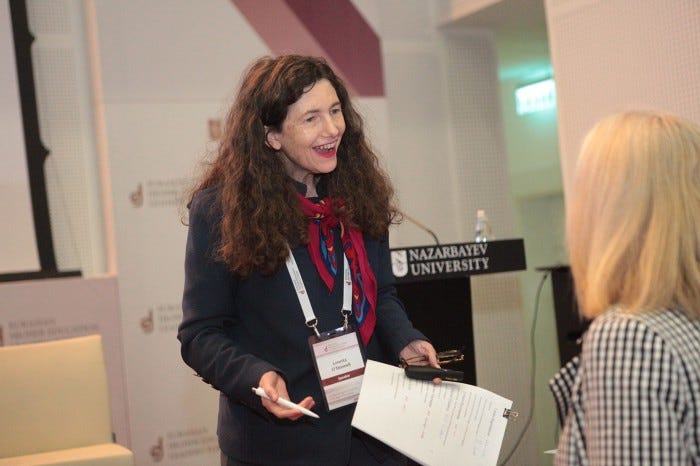
I had the pleasure to interview Dr. Loretta O’Donnell. Loretta is Vice Provost for Academic Affairs at Nazarbayev University in Kazakhstan. She has over twenty years of experience in teaching Executive MBA, postgraduate and undergraduate business students. She left her home country of Australia and an established career for an adventure she couldn’t refuse.
Thank you for speaking with us! Can you tell us about why you pursued this career path?
If you have never experienced good teaching, it is hard to become a good teacher. My three sisters and I were fortunate to learn from great teachers. All four of us were inspired to become professional educators.
Our late father, Tom, firmly believed in high-quality education for his daughters. In his volunteer work he often helped women with young children who were obliged to leave untenable family situations and had no income. He encouraged us all to be independent and he saw education as essential.
I decided to join Nazarbayev University after receiving several calls from a recruitment firm in Frankfurt. The consultant said: “I am not promising you a job; I am promising you a visit. Take the opportunity to visit Nazarbayev University and then we will talk again”. I visited campus over the Easter long weekend in 2013 and I was immediately impressed with the optimism and vision from everyone I met.
There was a palpable sense that this is the time to be part of history. The Provost at the time, Simon Jones, challenged me in the interview by saying: “You are either up for it, or you are not.” I accepted the challenge.
When I returned to Sydney, my husband and I decided this could be a great adventure as our three daughters had finished school, two were at university and one was on a gap year. It felt like an ideal time to make such a drastic life changing move.
After moving to Nazarbayev University, what was it that made you decide to stay?
I decided to stay at Nazarbayev University because it is always interesting. It is an opportunity to see how human capital can be systematically developed and leveraged for local, regional and global impact. It was a chance to bring my research to life. There is a long way to go but I felt like I could make a real difference here.
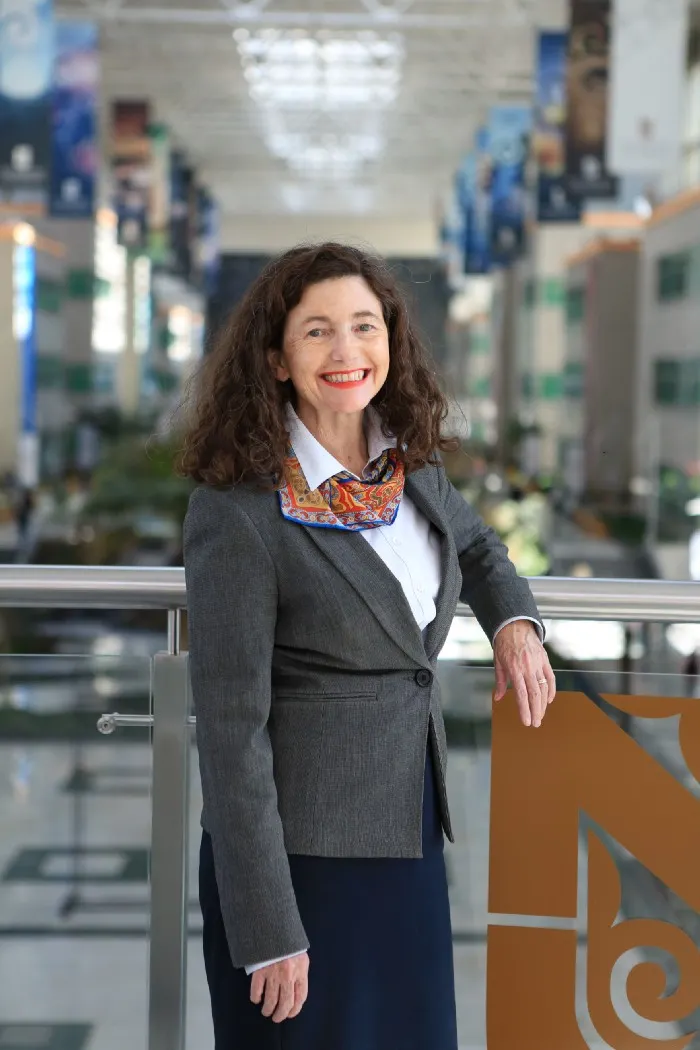
What did you study in Australia and what were your areas of expertise?
I come from a business school background. My area of study is human capital analysis in financial markets. I looked at the ways in which investors, such as fund managers, valued the human or social element within listed firms. This is a component of ESG investing — environmental, social and governance — investing, which has become increasingly popular in financial markets in recent years. Typically, the ‘E’ and the ‘G’ are relatively well understood. The ‘S’ or social aspects of investing are less clear to the investment community. My co-authors and myself explored how the social aspects of investing can be valued, using a human capital systems perspective.
How does higher education in Kazakhstan differ from that in Australia?
Higher education in Australia has become a mature industry, with more than 400,000 international fee-paying students entering every year. In Kazakhstan, there is an existing tradition of international students in very specific areas, such as Medicine but it is not the norm.
We plan for international students to comprise 20% of the student body within the next few years. In Australia, 39 universities serve a population of 25 million. Many universities have over 50,000 students in order to achieve critical mass in specific disciplines, such as solar cell research or melanoma research. In Kazakhstan, over 100 universities serve a population of 18 million so there are major differences in the scope and scale of each institution.
What challenges have you faced by moving to a higher education institution in a different part of the world?
Some of the challenges in moving to a higher education system in another part of the world include the need to make implicit knowledge much more explicit. We have nearly 500 faculty members from 59 countries. Quite naturally, everyone arrives in Kazakhstan with a fully formed view of how a university should function. It takes time to come to a consensus position on the most appropriate way to operate within this context. For instance, five years ago, we debated the meaning of simple terms such as “learning outcomes”, because our British, American, European, Australian and Kazakh colleagues all used the term in different ways.
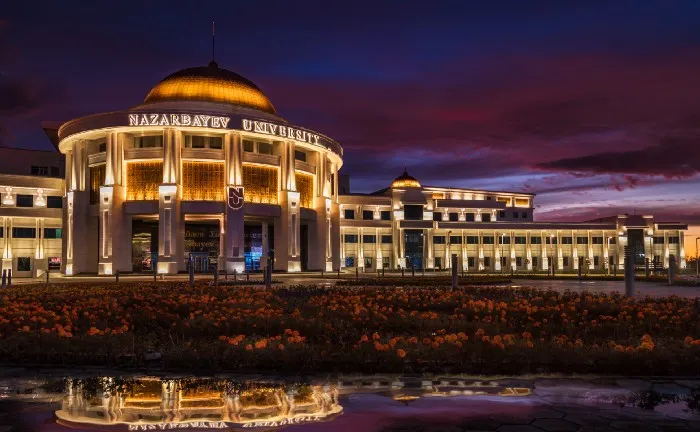
What is the campus community like at Nazarbayev University?
Almost all our students and academics live on campus. Most students receive free education and subsidised accommodation. Students and academics use the skywalks to walk from the residential blocks to the lecture halls and classrooms so they are protected from extreme weather conditions. It can reach -40 degrees Celsius in winter and 40+ degrees in summer.
As the world is becoming more and more connected, what student mobility trends have you observed recently?
Similar to the Australian Federal Government “New Colombo Plan”, we see that our students are keen to experience student life in other parts of Asia, as well as the more traditional US, UK and European destinations. More than 700 NU students have had study abroad experiences since 2013.
We see an increase in the number of international students applying to NU for degree programs, including from: USA, Nigeria, Ghana, India, Pakistan, China and regional nations including Mongolia, Uzbekistan, Kyrgystan and Tajikistan.
What research areas are Nazarbayev University making developments in?
Expert anthropologists and archaeologists are developing the New Silk Road in an ethical, sustainable, and culturally respectful way. This is after joining The University Alliance of the Silk Road (UASR), an alliance between universities with the aim of reviving the 2000-year-old East to West trading route.
The UASR supports The Belt and Road Initiative, which Chinese President Xi Jinping introduced after visiting Kazakhstan, to create the New Silk Road. The Belt and Road Initiative, along with the UASR, aims to promote educational collaboration and economic growth in countries along the Silk Road.
The Silk Road was a network of trade routes integral to the economic, cultural, political, and religious interactions between the East and the West from 2nd century BCE to the 18th century — almost two millennium. Its name is taken from the original use of trading in silk, but would also carry paper, gunpowder, and scientific advancements, as well as philosophies and religions. This trade was significant in the development of civilisations in Southeast Asia, South Asia, Iran, Europe, and Africa.
Founded in 2015, the UASR includes 132 universities spread over five continents, and has become vital to the Ministry of Education of China’s plans for Educational Development along the Silk Road through student exchange and joint research.
What hopes do you have for the future and higher education in Kazakhstan?
Working here is a chance to be part of history. It is a liminal moment as this newly independent nation moves from a post-Soviet environment towards a modern knowledge economy.
I hope that the citizens of Kazakhstan, and the region, will become proud of our university as it systematically develops the intellectual talent to solve the most complex and compelling problems of our time.

Published inAuthority MagazineTop Lessons, Top Authorities · 42K Followers
Exclusive, curated interviews with the leaders and changemakers shaping tomorrow. Leadership lessons, industry deep dives, and executive profiles.