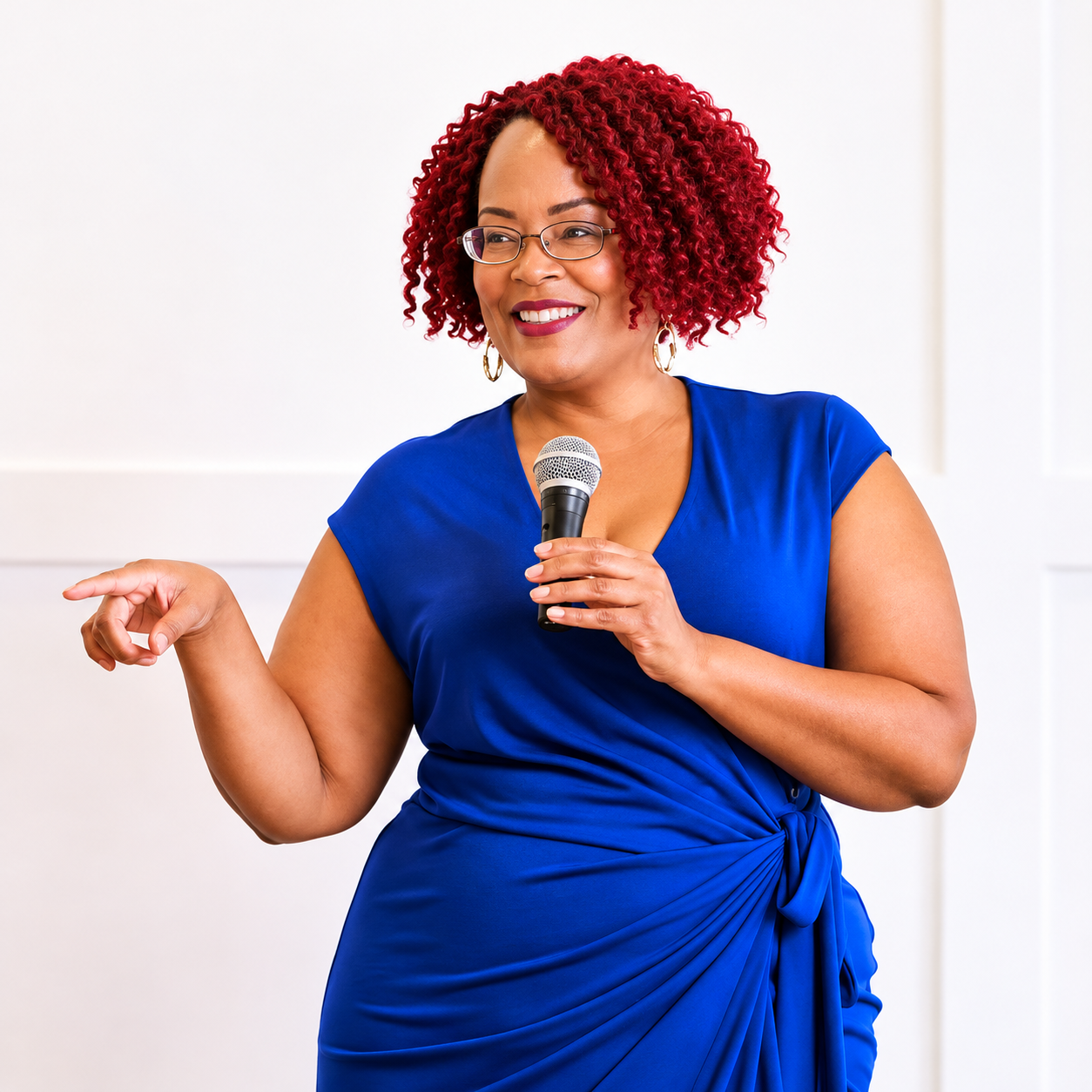
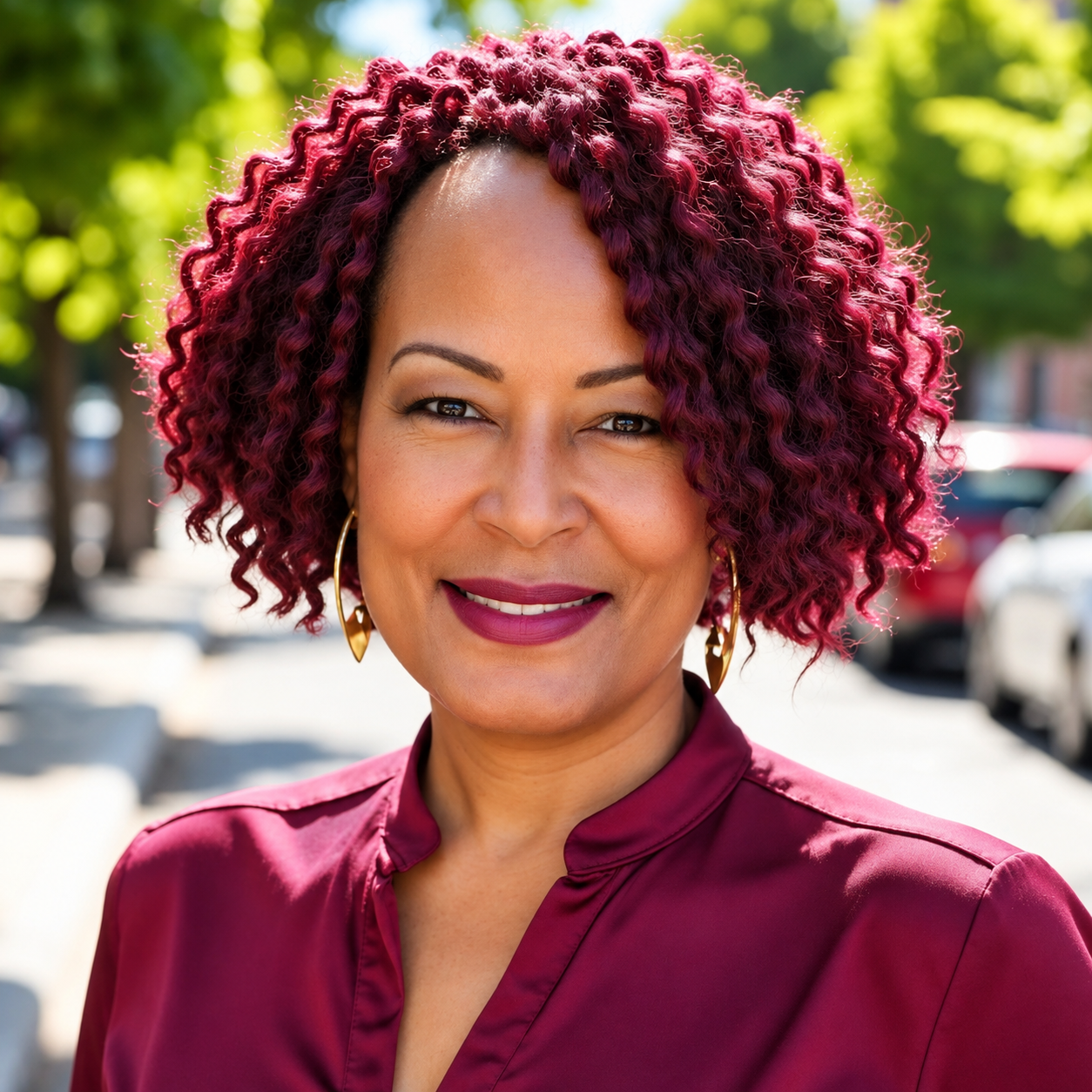
I want to be my authentic self and a public-facing person who people can count on.
I had the pleasure of talking with Dr. DeShawn Taylor, a physician who once cut short a conference trip to return to a hospital where a pregnant woman was dying. The patient was 22 weeks pregnant, her heart was failing, and continuing the pregnancy threatened her life. She had initially refused an abortion on religious grounds but eventually consented. A specialized medical team was assembled, and Taylor, still relatively early in her career, made a decision. She called her department chair with a message that was more announcement than request: “I’m not calling you to ask for your permission. I’m calling to let you know that I’m coming back to save this lady’s life.”
Taylor recalls that the procedure itself took about five minutes. The preparation required far more: a cardiothoracic anesthesiologist, cardiac specialists, and equipment to support the patient’s failing circulation. According to Taylor, the woman’s heart function improved immediately afterward. She survived and returned home to her children. For Taylor, the experience became a defining professional moment, one that revealed how differently abortion care can look inside a hospital than it does in the public arguments surrounding it.
Today, Taylor is a board-certified OB-GYN, a clinical associate professor at the University of Arizona College of Medicine in Phoenix, and the founder of a reproductive health clinic operated through her nonprofit, Desert Star Institute for Family Planning. She is also a Black woman, a practicing Christian, and an outspoken abortion provider. Those identities are often presented in American political discourse as incompatible. Taylor has built a career insisting that they belong together.
Growing up in Los Angeles, she had two possible futures in mind by the age of six or seven: doctor or teacher. Medicine won, although teaching eventually found its way back into her life. Through the University of Southern California’s MedCor program for urban youth, she encountered different medical specialties and became fascinated by neurosurgery. She maintained that ambition until her sophomore year of college, when reading Ben Carson’s Gifted Hands prompted an uncomfortable realization. She wasn’t sure she could accept a specialty in which even her best efforts might fail to save a patient. Women’s health offered another path, and she eventually chose obstetrics and gynecology.
Her residency, which began in 2001, complicated her understanding of the profession. She had entered medicine assuming that her responsibility was to help patients pursue their own reproductive decisions, whether they wanted to continue a pregnancy or end one. Instead, she discovered how many physicians avoided abortion care. She heard stories of providers practicing almost anonymously, including one predecessor who reportedly arrived wearing a trench coat and sunglasses.
Taylor wanted no part of that secrecy. “I want to be my authentic self and a public-facing person who people can count on,” she explains. She pursued a two-year fellowship in family planning, choosing greater visibility in a field where visibility could carry professional and personal consequences.
At first, her ambitions were firmly rooted in academic medicine. She imagined becoming a clinical researcher and perhaps eventually chairing an OB-GYN department. But institutional politics frustrated her. She moved to Planned Parenthood, an organization she continues to respect, while growing increasingly dissatisfied with the limits of implementing her own approach to patient care inside someone else’s institution.
When people suggested opening her own clinic, she laughed. “I am not doing that,” she told them.
Then she changed her mind. One April, she began seriously considering the possibility. By May, she had established the business. By September, the clinic was open.
The speed of that decision concealed the difficulty that followed. Taylor operated the practice independently for a decade, establishing a nonprofit along the way that eventually became financially strong enough to purchase the clinic. Building the institution she wanted meant accepting responsibilities she had never planned to shoulder. “I would not recommend it for anyone,” she says of starting a clinic from scratch. Each year brought another problem she had to learn to solve.
Her Christianity has presented a different kind of challenge. In conversations about abortion, faith is frequently associated with opposition to the procedure. Taylor argues that the loudest religious voices do not speak for everyone. She initially resisted invitations to address the relationship between faith and abortion because, as she put it, “I’m no theologian.” But she came to recognize that other people working in reproductive health were struggling with similar questions, and that patients sometimes needed room to discuss their own religious beliefs without judgment.
Her first book, Undue Burden, explores her experiences as a Black woman physician, Christian, and abortion provider. When readers approached her at events with sticky notes tucked into pages and handwritten observations in the margins, she noticed something important: they were trying to work through the ideas themselves. Her second book, Beyond Choice, became a workbook designed to help them do precisely that. She is also gathering stories about the difficulties people encounter when bringing their faith into abortion care.
Beneath these projects is a broader argument about medicine itself. Taylor believes the language of individual choice often obscures the circumstances that determine whether a person can actually exercise that choice. “People aren’t making their health decisions in a vacuum,” she says. They are making them within economic, social, political, and institutional systems that can either support or restrict their autonomy.
There is a revealing irony in Taylor’s career. She became an independent clinic owner because she wanted the freedom to practice medicine according to her values, yet much of her public work now challenges the assumption that freedom can be understood solely as an individual matter. She has spent years trying to create one institution that functions differently. The larger question she continues to confront is what it would take to change the systems surrounding it.
That tension between personal conviction and institutional reality runs through her story, from the young physician determined to practice openly to the reluctant entrepreneur who discovered how difficult it could be to build something on her own terms. It also shapes the conversation that follows, in which Taylor examines faith, medical responsibility, leadership, and the difference between having a right and genuinely being able to exercise it.
Yitzi Weiner: Dr. Taylor, it’s an honor to meet you. Before we dive in deep and talk about your great work, our readers would love to learn about Dr. DeShawn Taylor’s personal origin story. Can you share with us the story of your childhood and how you grew up, and particularly the seeds of all the amazing leadership that has come since then?
DeShawn Taylor: I’m Dr. DeShawn Taylor. I am a board-certified OB-GYN and clinical associate professor at the University of Arizona College of Medicine, Phoenix. And I founded and run a health justice clinic in Phoenix, Arizona, under the umbrella of my nonprofit, Desert Star Institute for Family Planning. I also am founder and CEO of Health Justice MD, which is my LLC that I do my narrative-shift work through, including my books and speaking and workshop engagements and that type of thing.
So, with that in mind, how far back do I want to go on my origin story? Well, I was about six or so. I grew up in Los Angeles, California. Born, raised, trained. I moved to Arizona 17 years ago. And so when I was six or seven years old, I decided that I would be a doctor or a teacher. And as I went through my time, through the education process, very quickly I realized I did not want to be a teacher. I’d rather be a doctor. But it turns out I’m a teacher, too. So that worked out. But I ended up participating in this program at the University of Southern California for urban youth who wanted to go into the health field, and that was called the USC MedCor program. There was this health fair my first year, and it had all the different types of doctors. And I initially decided that I would be a brain surgeon.
And I held on to that idea all the way up until my sophomore year of college. I had this whole narrative about how marvelous the brain is and how I wanted to work with the brain, et cetera. And so I read Ben Carson’s book, titled *Gifted Hands*, my sophomore year in college, and after reading that book I realized that I don’t think it was my personality to do the best I could for someone and they could die anyway. And so once I made that realization about myself, I started to cycle through in my mind, well, what kind of doctor do I want to be? And so I settled on I wanted to be a women’s health doctor, but I wasn’t sure if I wanted to be an OB-GYN or if I wanted to be a family medicine doctor that does OB. And so by the time I entered medical school, I had settled on that I would likely be an OB-GYN. And so here I am. I am an OB-GYN.
Yitzi Weiner: You probably have some amazing stories from your very successful career, and I’m sure this is difficult to single out. So, can you share with our readers two stories that stand out in your mind from your amazing career?
DeShawn Taylor: Well, I had a defining moment in my internship. So when you’re in medicine, you do medical school, and then you have to do something called a residency, and that’s additional training after medical school so you can specialize in what type of doctor you want to be. And so an OB-GYN residency is four years, and so in my first year, which is called the intern year, I had a career-defining moment. And so when I went into this idea of being an OB-GYN, I had this naive thought that I’m here for what my patient needs. So if my patient is pregnant and wants to continue the pregnancy, then I’m going to help her through that.
And if I have a patient who is pregnant and does not want to be, then I’m going to help her through the process of an abortion. And very quickly I learned how polarizing the issue of abortion was. There were people who were in my cohort of interns who were opting out of being abortion providers. And I learned that that was the case around the country. And so very early on I said, “Well, there are going to be plenty of OB-GYNs who are going to be there for people who want to continue pregnancies, but I’m going to be part of that low number, unfortunately, of OB-GYNs who are going to provide that care, and provide that care in a way that wasn’t from a place of, what’s the word I’m trying to think of, kind of incognito. I did my residency training in the early 2000s. And what I saw from abortion providers during that time was they were kind of in the shadows. Residents would tell me stories about the prior attending, not the one that I learned from, but the one right before, who would come in with a trench coat on and sunglasses on, being incognito.
And I was just like, that’s not how I want to provide this care, and I don’t want to provide it from that place. I want to be my authentic self and a public-facing person who people can count on and know who I am and that I cared about them and I was going to take good care of them. And so, yeah, I learned how to provide abortion care, and through my residency, I ultimately decided that I was going to do the family planning fellowship. And so that was an additional two years after my residency training. I did the fellowship. So that then kind of leads into another defining moment for me. I finished the fellowship and I’m on faculty at a university. There was a patient who was dying in the cardiac ICU at the hospital, and one of the fellows reached out to me because I was actually out of town at a conference and let me know that this patient was 22 weeks pregnant.
She was in cardiac failure in the cardiac ICU. This patient was Catholic and was refusing an abortion that was suggested to her to save her life. The fellow would go visit her and talk to her and let her know that there is a way for you to live and leave the hospital. And also I told the fellow to appeal to the fact that she had children at home who needed their mom. And the patient ultimately changed her mind and agreed to have the abortion. We were coming up on a holiday weekend, and had to coordinate all of the specialized things that were required for this patient whose heart was failing to actually have a procedure. We had to secure the appropriate anesthesiologist. We had to have the cardiac fellow available. We had to have the special operating area that had all of the machines and things. This woman had to be connected to a machine that brought the blood out of her body, oxygenated it, and put it back in her body because her heart wasn’t working.
I ended up flying back from the conference to do this procedure. I remember walking into this place and I was just like, “Oh my God.” The gravity of the situation became so much more real, and my fellow had prepared the patient the way we normally do for these procedures, and I looked at her and I was like, you know, I’m doing this one, right? And she was like, of course, of course, the attending has to do this one. Literally a five-minute procedure, patient’s no longer pregnant. And I remember the anesthesiologist was the chief of anesthesiology. And I remember the cardiac fellow being completely in awe and amazed to see her heart improve immediately after the pregnancy was resolved. The toll, the energy that the pregnancy was taking from her was what was killing her, because the condition she had was otherwise very treatable. And so this was a dying woman who lived and was discharged from the hospital with long-acting reversible contraception so she can continue to be a mother to the children that she already had who needed their mom.
I remember I called my department chairperson and I told them, I’m not calling you to ask for your permission. I’m calling to let you know that I’m coming back to save this lady’s life. And everything went well, and the chief of anesthesia contacted my department chair and was so complimentary about everything. And yeah, that was a really defining point, because at that point I wasn’t necessarily a leader in the department. I had just finished my fellowship. I was like the number two in my division. And from that point then it was like, I was the one who took care of business for my division of the department. So that was another defining moment for me.
Yitzi Weiner: What’s been the most challenging project or role you’ve taken on so far, and why?
DeShawn Taylor: God, the most challenging thing is starting my own clinic. I never, it was never anything that I planned for myself.
When I first started my training in residency, I was going to be an academic physician, a clinical researcher. I planned to be somebody’s OB-GYN department chair somewhere in the country. That was my plan for myself. As things evolved, I realized I really disliked department politics. And I ended up moving on from academic medicine to Planned Parenthood. And I’ll always stand with Planned Parenthood. That was really great service and an important time in my life. But from Planned Parenthood, then I opened my own clinic. And the reason that I opened my own clinic was because over the course of my time after my training, I just started having this really strong feeling about how I wanted people to be taken care of, how I wanted them to feel. And I would try to create some of that in the different environments I worked in. And obviously, when you’re working for somebody else, it’s really hard to carry out your own vision, right?
And so ultimately, folks were like, “You should start your own clinic.” And I literally laughed in their faces. I was like, “I am not doing that.” And then one April I was thinking about it and I was like, you know, I guess I’m going to start my own clinic. And I created the LLC in May and I opened in September. And that’s how quickly it all lined up once decided, , it was like the universe was waiting for me to accept it. It’s been challenging. Starting a clinic from scratch. I would not recommend it for anyone, but that was clearly my destiny to do it. It’s been difficult the entire time to be a solo owner of a private practice. I solo-operated it for 10 years, and then four years in I started a nonprofit, and so my nonprofit became financially strong enough to actually buy the clinic. So the clinic’s been operating under the nonprofit now for three years.
But yeah, that’s been the most challenging thing. Like every year there was something. I think that I’d figure things out, and then next year something new, and I think I figured that out, and then the next year something new. So there’s always something to learn.
Yitzi Weiner: Can you please tell us about the exciting new work, exciting new projects you’re working on?
DeShawn Taylor: So, for me personally, I self-published my second book in January of this year, which was *Beyond Choice:*, An Essential Workbook for Personal and Community Transformation Through Reproductive Justice. I decided to do a workbook after reflecting on conversations and interactions I had with people who read my first book, which was titled *Undue Burden:*, Aa Black Woman Physician On Being Christian and Pro-abortion in the Reproductive Justice Movement. At events, people would come up to me with sticky notes on the pages and notes in the margins. And so I was like, you know, people are really wanting to process the content.
I created this workbook to help people do just that. Prompts and questions and information. Each chapter requires someone to make a plan on how they’re going to use the information they’ve learned. By the end of the book, someone has their own personal blueprint on how they’re going to be the change they want to see as it relates to reproductive health, rights, and justice. Some of the feedback I’ve been getting is I clearly need to create a curriculum from the workbook. So that’s a mandate that I have. Not sure when I’m going to start to do that. But the other thing is from when I wrote the first book, most of the time that people bring me to speak, they want to talk about faith and abortion. And that’s a huge thing. And initially, I shied away from it because I was like, I’m no theologian. I’m just a practicing non-denominational Christian trying to work on my own salvation.
But that’s what most Christians are. Most people are just trying to figure things out for themselves and, you know, be the best person they can be. So I finally decided to lean in completely to that. I’m starting to collect stories from people about what’s the hardest thing for them to bring their faith into their work in abortion care. I’m not going to start writing the book anytime soon, but I’m starting to kind of get these stories and figure out how I want to pull this project together. My first book was a hybrid publisher.
My second one I self-published. This time I’ll probably try to seek out a traditional publisher. So it’ll be some time for all of that to work out.
Yitzi Weiner: I noticed you use the term reproductive justice instead of the more classical term reproductive rights. Can you articulate to our readers that distinction between reproductive justice and reproductive rights?
DeShawn Taylor: Yeah. So reproductive rights is specifically about people’s legal right to abortion care, quite honestly, plain and simple. Reproductive Justice was coined in 1994 by African-American women in Chicago who had attended a United Nations conference. They were enthralled with the human rights framework, and they felt that this framework could be applied to the fight not only for the right to not have children and to have abortions, but Black women and other women of color were fighting for the right to actually have and raise children during the same time. They thought that the mainstream feminist movement for abortion rights did not encompass the entirety of the experience of women of color. So they coined this term Reproductive Justice. And the original three tenets of reproductive justice were the right to have children, the right to not have children, and the right to parent children in safe and sustainable communities. And then a fourth tenet got added, which was bodily autonomy, and that was a nod to our LGBTQ+ cousins in their fight for bodily autonomy.
And so it’s been more than 30 years now. There have been more frameworks that have been expanded. But for me, the very basic tenets for me are bodily autonomy, the right to have and not have children, and to parent children in safe, sustainable communities.
Yitzi Weiner: That’s amazing. Okay. This is our signature question. Dr. Taylor, you’ve been blessed with a lot of success. You must have learned a lot from your experiences. Looking back all the way to the beginning, when you first started, when you first began your career as a physician, can you share five things that you’ve learned over the years? Five things you’ve learned over the years that someone starting out today can really benefit from?
DeShawn Taylor: Right. I think one of the first, the main thing that I talk to people about is sometimes when you feel like you have a really strong feeling that something needs to be a certain way in the world, you actually have to do it yourself.
And so through my journey, I’m often looking for something and then I can’t find it. And so I’ve created it, and I’ve done that on multiple occasions. The second thing is don’t shy away from bringing your authentic self into spaces. There is this term called code-switching that a lot of people of color do to fit into majority spaces, white spaces essentially. And I have never done that. So because I’ve never done that, I’ve had some scenarios where people clearly did not like me and clearly tried to put obstacles in my way. But that has never deterred me from bringing who I am and my lived experience to guide whatever I do. The third thing is, especially in abortion care, where the dominant narrative is that evangelical white Christians’ point of view around sin and all of those things as it relates to abortion,they do not speak for all Christians.
They’re just the loudest. And so my third point is for people in general, if they’re people of faith, to bring their faith into the work, because there is an unmet need for people of faith to be able to connect with providers of faith in this reproductive space. That’s an important thing. I think people should bring their faith to work. I mean, obviously I’m not sitting up with a forward lean like, “Hey, I’m a Christian. Do you want to talk about God?” No. But when you have these encounters where it’s obvious that it’s something that is causing distress for patients, to be able to connect on that level can be a game changer for their experience and how they remember the care. And I feel like as a person of faith, I’m able to connect across faiths because there are some very significant commonalities through all the faith traditions. And then let’s see, number four. We can’t do everything alone. It’s important to find values-aligned folks to share your vision, to help the vision come to reality.
We get a lot of messages about this rugged individualism and how people rise to become billionaires through the strength of their own innovation. That is a complete lie. These people are not doing all of this by themselves. But the thing is, too, in different times in our lives, those people may be different. So in one thing we’re doing, there are important people there, and then when you go to the next phase of something, then those people may not be the people to go with you to the next phase. Then there are new people. But know that great things cannot be accomplished without support.
And then five. I have values and a vision for my life that has guided every single decision I’ve ever made about my life. And so because of that, it allows me to be able to pivot. You have a vision and you have an idea, but it’s not a straight course. So sometimes you kind of end up thrown off course. Sometimes you’re facing a decision where you can go one way or the other. But it’s important that even though you may have to veer off and take detours, that you keep the vision and the values at the forefront to help you continue to keep going in the right direction despite the detours that you have to take. You don’t have to change the plan. You just have to adapt in the way that you’re trying to get there.
Yitzi Weiner: Dr. Taylor, this is our final aspirational question. Because of your amazing work and the platform that you’ve built and the organizations that you lead, you’re honestly a person of enormous influence. If you could spread an idea or inspire a movement that would bring the most amount of good to the most amount of people, what would that be? Because you never know what your idea will inspire.
DeShawn Taylor: With all that has transpired since I began my residency and decided to concentrate my career in the way that I have, I think the big message that I want to get across is that I want to challenge the framing around reproductive health and autonomy as a matter of individual choice. Because marginalized and oppressed people don’t actually have choices, right? I think a core idea for me is that people’s health outcomes are actually shaped by systems. And so when we are creating solutions that are aimed at people’s individual autonomy and we wonder why they keep breaking down, it’s because people aren’t making their health decisions in a vacuum. They’re making their health decisions in the context of their entire lives, and they are being impacted by systems that are not allowing them to exercise full autonomy over their bodies and their lives. When we think of it in that way, then we can actually start to think of solutions, system-wide solutions that impact the day-to-day lives of people, that allow them to exercise what technically is a legal right, but they don’t have access to for varying reasons.
I really want people to understand that health care is not individual like we think it is. Health care is systems, and we need to correct the systems so that we can serve the greater good for everyone in this area.
Yitzi Weiner: With your experience as a physician, if you were tasked by, you know, the president to overhaul and fix the US health care system, private, public, what are the main things that you would implement from your experience on the ground?
DeShawn Taylor: How many are you needing me to give you, a list? What was that part of the question?
Yitzi Weiner: No, just what are some things that you think…
DeShawn Taylor: Oh, you know, I think that for-profit insurance companies are a problem. Health care is a right, not a privilege. Everybody should have access to health care. We need universal health care and a system that is not tied to the bottom line of CEOs and shareholders of insurance companies.
Yitzi Weiner: Well, Dr. Taylor, how can our readers continue to follow your work? How can they purchase your books? How can the readers support you in your work in any possible way?
DeShawn Taylor: So my books, Undue Burden and Beyond Choice , are available on my website, healthjusticemd.net. Buying directly from me gets you a signed copy shipped from me, as opposed to buying on Amazon. People can follow me on Instagram and Threads at drdeshawn_MD. I’m also on LinkedIn under DeShawn Taylor.
I have a Substack, which I get active on in waves, but it is drdeShawn.substack.com.
Yitzi Weiner: Amazing. It’s been an honor to meet you. I wish you continued success and blessings in your amazing work, and I’d love to do this again next year.
DeShawn Taylor: Wonderful. Thank you so much for your time today.