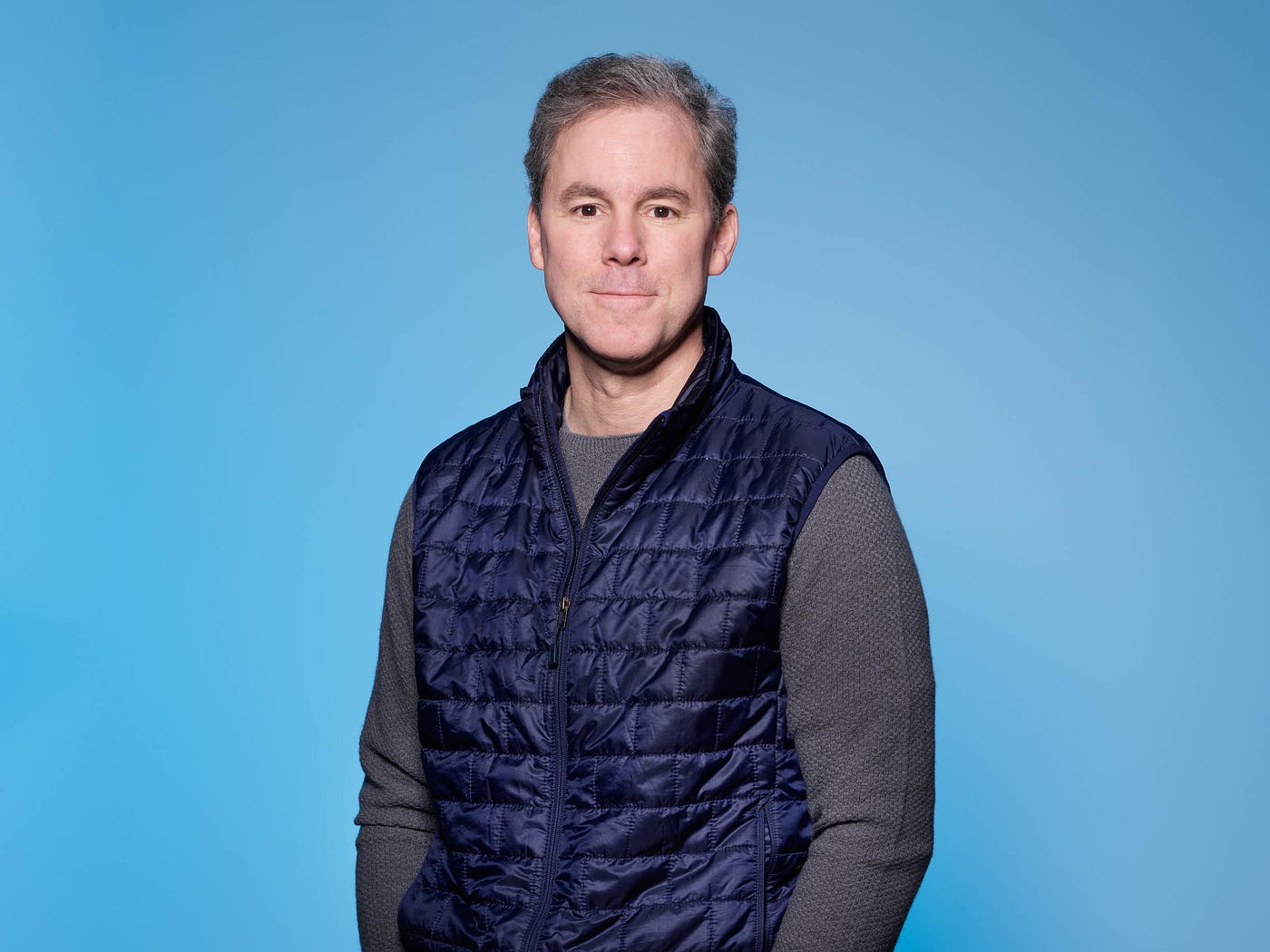
No matter what you do for work, you have to be having fun. If you aren’t having fun, time drags, people become annoying, and you slowly become jaded, cynical, and eventually bitter.
As a part of my series about the “5 Ways That Businesses Can Help Promote The Mental Wellness Of Their Employees” I had the pleasure of interviewing Dr. Bob Nelson.
For over 30 years, Dr. Bob Nelson has been a leading advocate of employee recognition and engagement worldwide. He has worked with 80 percent of the Fortune 500 and has presented on six continents.
He has been featured extensively in the national and international media including The New York Times, The Wall Street Journal, CNN, CBS 60 Minutes, MSNBC, ABC, PBS and NPR about how to best motivate today’s employees.
Dr. Bob has sold over 5 million books, including 1501 Ways to Reward Employees, The 1001 Rewards & Recognition Fieldbook, 1001 Ways to Energize Employees, The Management Bible, 1001 Ways to Engage Employees, and his latest book: Work Made Fun Gets Done! Easy Ways to Boost Energy, Morale, and Results.
Thank you so much for doing this with us! Before we dive into our discussion, our readers would love to “get to know you” a bit better. Can you share with us the backstory about what brought you to your specific career path?
I became a writer to have a broader influence on people, that is, to reach a greater number of people with information that could help them in their lives, especially at work. Writing is hard work—the hardest thing I’ve ever done—but somehow, I’ve managed to author over 30 books!
I’ve also always been drawn to simple, proven answers that aren’t widely known or practiced, for example, the power of positive reinforcement, which has been called The Greatest Management Principle in the World, but which is seldom used by most managers on a daily basis.
I’ve been blessed to have worked closely with some influential leaders who I felt were great at conveying simple, proven insights to others. These include: Dr. Ken Blanchard, who co-authored The One Minute Manager; Dr. Peter Drucker, who is considered “The Father of Modern Management”; and Dr. Marshall Goldsmith, who is considered the #1 Executive Coach in the World. I’ve learned from each of them.
Can you share the most interesting story that happened to you since you started your career?
One fun story about my career was about getting 1,001 Ways to Reward Employees published. I had the idea for that book in a graduate school course I was attending. That evening after I drove home, I typed up a letter to the CEO of a publisher in New York City that I wanted to publish my book. I spent several weeks trying to get him on the phone and then on one call, I could hear his personal assistant saying to him “This guy keeps calling, would you speak with him?!” and then the CEO got on the line and said, “What do you want?” I said, “I was following up on a letter I sent you about a book I wanted to do…” to which he interrupted me and said: “We won’t respond to a letter. If there’s a book you want us to publish, you have to send us a proposal about why your book has to be one of the 70,000 books to be published this year and why we’re the only publisher who could possibly get it right.” And as he was hanging up, he added: “We get 10,000 book proposals a year and publish 24 books.” [CLICK]
So instead of being discouraged, I thought to myself “Game on!” and wrote up a proposal and sent it to the CEO. The next time I spoke with him it was face-to-face in his office in NYC (where I flew at my own expense). He liked my proposal but was unsure about me. “What are you doing for work right now?” he asked. I described my job, but ended with the comment “It’s not really what I want to most do” to which he asked, “What do you really want to do?” I replied,
“Be a best-selling author.” He signed up my book and it has since gone into 64 printings with sales of over 2 million copies.
What advice would you suggest to your colleagues in your industry to thrive and avoid burnout?
No matter what you do for work, you have to be having fun. If you aren’t having fun, time drags, people become annoying, and you slowly become jaded, cynical, and eventually bitter. So, if you aren’t doing something you actually enjoy, it’s never too late to stop, reassess and change jobs to something you’d enjoy more. If you basically enjoy your work, you can always employ tactics to make boring, rote or routine aspects of your work more exciting. You control how much fun you have at work, and it really doesn’t take that much effort to do so!
What advice would you give to other leaders about how to create a fantastic work culture?
There’s a lot of elements that go into having a fantastic work culture, but a key one that is not emphasized as much is that it should be FUN. Each year the Great Place to Work Institute asks thousands of employees to rate their experience of workplace factors, including “This is a fun place to work.” On Fortune’s “100 Best Companies to Work For” list, employees in companies that are ranked as “great” responded overwhelmingly—an average of 81 percent—that they are working in a “fun” environment. The big takeaway: Employees of the best companies are having the most fun, and people who are having fun tend to be high performers. It’s two sides of the same coin.
At the “good” companies—those that apply for inclusion but do not make the top 100—only 62 percent of employees say they are having fun where they work. That gap in experience between the great and good companies to work for is, surprisingly, one of the largest in the survey. This is compelling data that supports the notion that any company should strive to make work more fun for employees in their organization.
Can you please give us your favorite "Life Lesson Quote"? Do you have a story about how that was relevant in your life?
There was a quote that grabbed my attention when I was in the 3rd grade: “Extraordinary consists not in doing extraordinary things, but in doing ordinary things extraordinarily well,” which has served as a backdrop to many of the successes I’ve had in my life. It helps me to keep a priority on doing my best work on a daily basis—including all the details that can easily bog one down.
For a story about that, when I initially met Dr. Ken Blanchard I had heard he was working on a book with Norman Vincent Peale, who had authored The Power of Positive Thinking. I asked Ken to see a copy of the manuscript and he replied: “Bob, the book is almost done. We’ve got edits and comments from dozens of people and we’re ready to submit the final draft.” I said I understood, but I’d still be interested in reviewing the manuscript.
Ken gave me a copy and I immediately took it home and spent 60 hours pouring over it, making suggestions and improvements of all kinds to the best of my ability. I dropped it off on Ken’s desk and 20 minutes later he called me and said: “From now on, I only want you to work on my projects. You gave more valuable feedback than everyone else combined!”
That book was published and became a success and I ended up helping Ken by ghostwriting 6-7 other books as well as a textbook for which I was one of the authors.
Ok thank you for all that. Now let’s move to the main focus of our interview. As you know, the collective mental health of our country is facing extreme pressure. In recent years many companies have begun offering mental health programs for their employees. For the sake of inspiring others, we would love to hear about five steps or initiatives that companies have taken to help improve or optimize their employees’ mental wellness. Can you please share a story or example for each?
An employee’s mental wellness is a very personal thing, so I feel it’s best to practice behaviors that can best support those you know and work with. Bottomline, we need to better connect with our community of workers. The five key behaviors I’d advocate are:
1) Listen. As Stephen Covey advocated in his book, The Seven Habits of Highly Effective People, “Seek to understand before you seek to be understood.” This behavior shows a willingness to focus purely on the other person, allowing for greater empathy, communication, and improved relationships. I’ve found that people feel better about themselves and their situations when others genuinely and patiently listen to them complete their thoughts. No interruptions. The better we listen, the better well-thought out, and helpful our responses will be. One of the best ways to set up good listening is by asking questions.
2) Ask. I find that asking questions gives people permission to share their thoughts and feelings. For example, “You seem quieter than usual today, are you okay?” or “The team tells me this deadline is causing everyone a lot of stress; how are you handling it?” can serve as icebreakers to discussing deeper concerns and problems that are bothering the other person. I remember a time when Ken Blanchard and I were leaving a conference center to fly out of Dallas. After getting in the cab, Ken asked the driver a question and just listened to what he had to say. Then he asked another question and listened. And then another, all the way to the airport. After Ken got out of the cab, the driver turned to me and said, “He’s a great guy—one helluva guy. What a conversationalist! He made me feel great.” All Ken did was ask and listen. Acknowledging people comes next, especially thanking them.
3) Thank. From my research, 85 percent of employees report feeling “overworked and underappreciated.” It only takes a moment to thank someone for doing a good job or helping you with a work need you have. Try to make this a priority to work into your daily routine. When you SEE something good, SAY something positive to the person(s) involved. We’ve all heard it: A simple and genuine thank you goes a long way. People feel better about themselves when other folks—especially their managers—recognize the value they bring to the company. From helping to make the culture cohesive to achieving formal goals. Next is providing support.
4) Support. Look for ways you can help others cope. This can be a simple as volunteering to help the person with a work assignment, running an errand for them that they need to do, or even buying them a cup of coffee. The simplest gestures can have great consequences when applied at the right times. Bob Small was an executive with Walt Disney Resorts who was well known for working alongside the housecleaning staff on Christmas Eve. They were called “Small” shifts and had a very positive effect on all involved. The last behavior is what people are especially looking for today.
5) Have Fun. Although it’s simple and easy to do, having fun with the person is an important way to help them relax and “de-stress,” shifting their attention to something other than what they may be worried about. This can be as simple as sharing a joke or passing on an Instagram video or taking the person out to lunch. Organizationally, it could be department potlucks, scavenger hunts, virtual happy hours, or office mini golf.
These ideas are wonderful, but sadly they are not yet commonplace. What strategies would you suggest to raise awareness about the importance of supporting the mental wellness of employees?
For any of us to do any of the above behaviors requires intentionality. We each have to want to help others in need, we need to be on the lookout for indicators that they are stressed (e.g., if they are looking tired or seem on edge or acting in ways that are uncharacteristic, i.e., snapping at someone over a neutral comment.) For example, if you’d like to start giving others more thanks, praise and positive feedback, keep some thank you cards readily available where you work so you can immediately use them when you see or hear good news from others. Or set aside a few minutes before leaving work at the end of the day to reflect on whose behavior stood out during that day: Who finished a project or helped a colleague or made a great presentation. Or when you start a meeting with someone (or a group of people), begin with something positive—share some good news, thank or praise another person or the group. From an organizational standpoint, you could host special days or events that highlight mental wellness to help remove the stigma often and unfairly associated with mental challenges. You could start a best buddy system. It’s not good enough just to know the things you should do; you actually need to make it a point to routinely do those things!
See Dr. Bob say more about the 5 Ways Businesses Can Help Promote the Mental Wellness of Their Employees.
From your experience or research, what are different steps that each of us as individuals, as a community and as a society, can take to effectively offer support to those around us who are feeling stressed, depressed, anxious and having other mental health issues? Can you explain?
We can’t do it for everyone we come in contact with in our lives, but for those that are closer or more important to us, taking time to listen, support and encourage them would be on the top of my list. Be there when they need someone without criticism or expectation of anything in return. Again, help remove the stigma. Do it early and do it often.
Help them get the resources they need to address their issues, such as counseling, EAPs (employee assistance programs), detox and rehab centers, sober-living facilities and so forth. In organizations, give people flex time to attend therapy sessions and support groups. Create a work environment where it’s OK to talk about mental challenges—to encourage people to get help without feeling shame.
Habits can play a huge role in mental wellness. What are the best strategies you would suggest to develop good healthy habits for optimal mental wellness that can replace any poor habits?
First and foremost, self-awareness is a must. It all starts with truly knowing ourselves. Any tool, technique or process that helps people understand what they really value and why they do the things they do puts them on track to make desired changes.
Practice new behaviors. Any proven class, program or process can be the vehicle for people to try new behaviors and get support for their development.
Review existing individual and organizational policies, procedures, systems and processes to see if they help or hinder desired wellness behaviors. If you find some that don’t, change them. Then promote and monitor the new policies, systems, etc.
Focus on the positive, about yourself, your circumstances and others that you know. The more you can do this, the less time is available for grousing, complaining or belittling others. One way is to keep a gratitude log, which has been shown to positively impact one’s state of mind and appreciation for one’s circumstances. It helps balance one’s perspective, especially with all the negative news we’re exposed to through traditional and social media channels.
Surround yourself with positive people as much as possible: friends, family, neighbors. You can’t control how positive someone else is, but you can respond in positive ways to spend more time and energy being with those that are positive in your life.
Do you use any meditation, breathing or mind-calming practices that promote your mental wellbeing? We’d love to hear about all of them. How have they impacted your own life?
I try to bike or hike 5-6 days every week. Exercise drains stress from one’s body and getting outside to breathe fresh air is also incredibly important. I often exercise with my wife or close friends so it becomes beneficial on that level as well.
Is there a particular book that made a significant impact on you? Can you share a story?
The Structure of Scientific Revolutions by Thomas S. Kuhn got me to see the current state of things as being transitional, not fixed. In it, Kuhn categorizes major scientific discoveries over time and how when an accepted paradigm was challenged by an outsider, that paradigm was vigorously defended by those who were a part of the status quo, but then as the proposed theory better explained reality, it came to become accepted and replaced the previous paradigm. I see this principle in almost all types of change: personal to organizational.
You are a person of great influence. If you could start a movement that would bring the most amount of good to the most amount of people, what would that be? You never know what your idea can trigger. :-)
It’s a journey I’m already on, trying to improve the work lives of employees everywhere. How they are treated, how they are involved, how they are encouraged and supported by their managers and the organizations they work for. As one reader (Sue Burch, Senior Learning Specialist, Insight Enterprises) recently told me: “When I read your books, I think of you as a friend who is giving me special permission to make things better.” That works for me!
What is the best way our readers can further follow your work online?
My website is bob@drbobnelson.com which overviews my services and many of the books I’ve written.
Thank you for the time you spent sharing these fantastic insights. We wish you only continued success in your great work!