If you’ve been invited to give a TED talk take heart in knowing that they don’t invite people with stupid ideas. Yes, it’s a boatload of time and energy.
In a world that is more connected than ever, the power of a well-crafted message to inspire, educate, and evoke change cannot be understated. TEDx Talks have emerged as a prestigious platform for sharing ideas worth spreading, reaching a global audience and creating impact on a grand scale. In this series, we are discussing the process of delivering a TEDx Talk that resonates and leaves a lasting impression. We are talking with experts who have successfully navigated the TEDx journey, including TEDx speakers, speaking coaches with a focus on TEDx preparations, and organizers involved in the selection and coaching of speakers. As part of this series, we had the pleasure of interviewing Debra Jarvis.
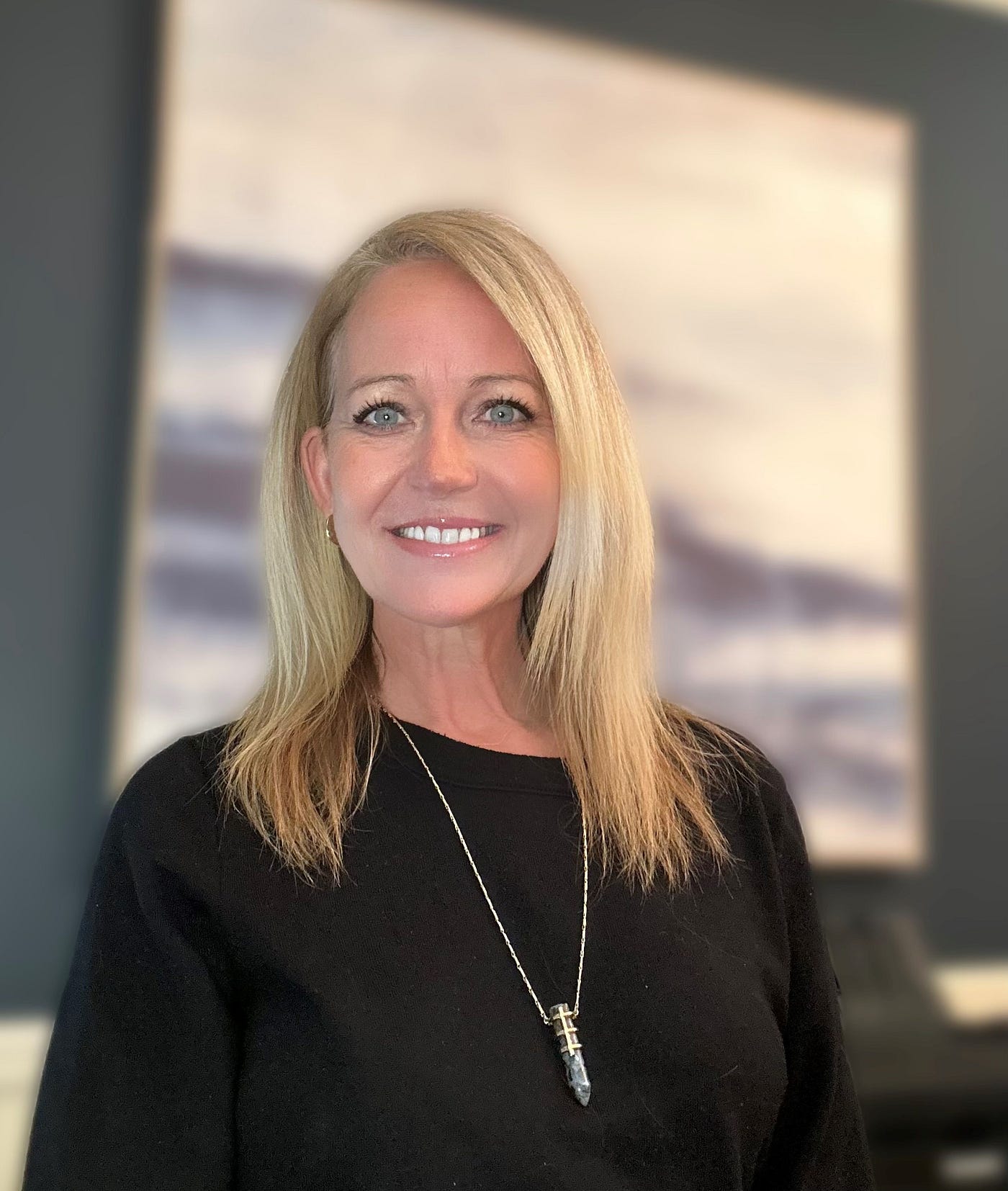
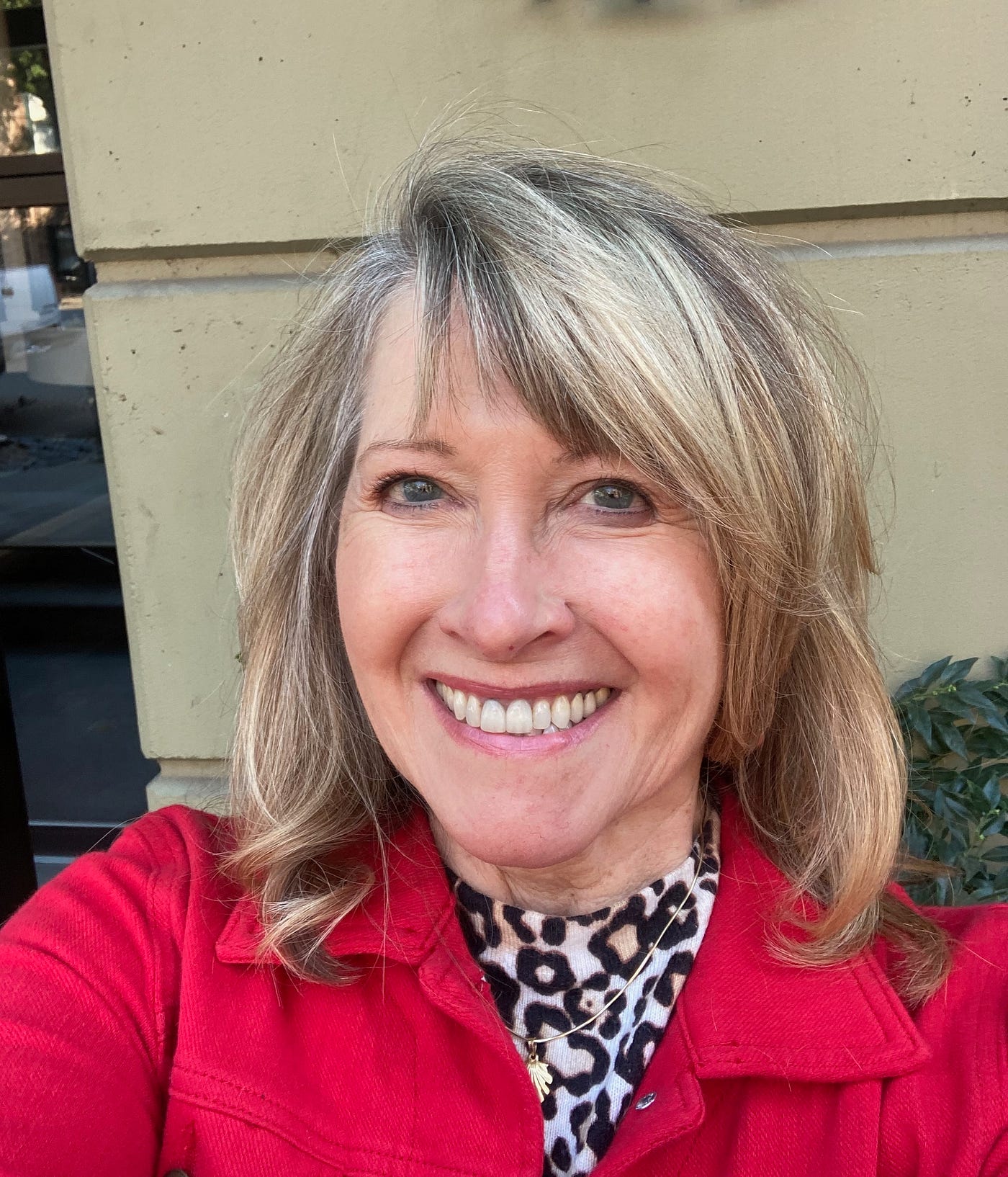
Debra Jarvis is a TEDMED speaker and the author of several books, her most recent is It’s Not About the Hair: And Other Certainties of Life & Cancer. She is also a screenwriter, hospital chaplain and podcast host/producer of “The Final Say: Conversations with People Facing Death.”
Thank you so much for your time! I know that you are a very busy person. Our readers would love to “get to know you” a bit better. Can you tell us your “Origin Story”? Can you tell us the story of how you grew up?
Igrew up in Cupertino, California, a place that was mostly fruit orchards — and I don’t mean Apple Computer. As a kid I always loved reading and writing stories. I lived for that moment when my third grade teacher would select a few student-written stories to read to the class. She always included one of mine. She would not say the student’s name until after she read the story. I loved sitting there soaking up the reactions of the other kids. By the end of the year, she would get halfway through one of my stories and the other kids would point to me and say, “It’s yours!” I found my writing style in third grade and continue to refine it.
Can you tell us a bit about what you do professionally, and what brought you to this specific career path?
After graduating from Cal, I continued to live in Berkeley and got a job at Alta Bates hospital. I worked my way up from lab receptionist to phlebotomist and EKG tech. I loved those jobs but at my yearly evaluation my supervisor would inevitably say, “Get the blood, get the cardiogram, get out of there. You spend too much time listening to the patients.” But that was the best part.
I also had a Master’s degree in Christian Arts and had many friends in seminary. One of them was doing his mandatory hospital chaplain internship and he said to me, “You should try this chaplaincy internship!”
I thought, “Well, what the hell? I can take off three months and see what this is all about.” The Clinical Pastoral Education program was a lot of brutal peer group therapy but it was also listening to patients all day. And I didn’t have to draw blood or get an EKG. By the end of the first week I knew: This is what I came to the planet for. So I stayed in that program for an entire year. Then I went to seminary and got a Master’s in Divinity, got ordained and started working as a hospice chaplain.
My experiences with patients were powerful, hilarious, inspiring. But I was disturbed at how squirrely Americans get when talking about death. I did several NPR commentaries about these experiences. And then when podcasting was born, I realized, “I can help people get comfortable talking about death, and learn some things about life from people who are facing death.” So I created The Final Say podcast.
Thank you for all that. Let’s now turn to the main focus of our discussions. Can you tell us a bit about your particular experience with TEDx talks?
I gave a TEDMED talk in Washington, D.C. TEDMED operated from 2009 to 2020. All the TEDMED talks focused on some aspect of medicine/health care/science. I was living in Switzerland at the time, and TEDMED very kindly flew me to D.C. I had a wonderful time at the conference and had a blast getting to know the other speakers. It was intense and energizing. The TED peeps do everything they can to help you give a great talk. You can practice on the stage the day before. They’ll do your hair and makeup. They were totally understanding about me walking around barefoot until the very last second when I slipped into my heels which were hideously uncomfortable but made my legs look good.
Before we talk about the details, let’s consider the big picture. Preparing for a TEDx talk and securing it obviously requires a lot of mindshare, bandwidth, resources, and energy. From your personal experience, why is it worth it to invest all that to do a TEDx talk?
This is an opportunity to share your thoughts and ideas with a world-wide audience. You are not giving the toast at your best friend’s wedding. (Although depending on the circumstances, that could be even harder.) The stakes are VERY high not only because of the size of the audience but also the expectation of excellence. If you’ve been invited to give a TED talk take heart in knowing that they don’t invite people with stupid ideas.
Yes, it’s a boatload of time and energy. You have to refine your idea, sell your idea, write your talk, refine your talk, practice your talk, rewrite your talk, practice and memorize your talk. It’s that process of following something through, from idea to delivered talk that is so very gratifying and satisfying. If you get positive feedback, that’s the cherry on top. It’s kind of like having a newborn and raising them all the way to becoming a healthy, happy adult. Yay, they’re an adult! But would you ever give up the experience of raising them? Didn’t it change you as person? Make you grow? See the world in a new way? Same thing with writing and delivering a TED talk.
Now, let’s talk about the how. Can you describe the application process for becoming a TEDx speaker? What are some common challenges faced in the application process that our readers should be forewarned about?
A TEDMED content director reached out to me after hearing me speak at a book signing event. She said what attracted her was that my message was actually going against what many organizations and professional were urging. TED really IS looking for ideas worth spreading — new ideas that may be controversial. I received many heated online comments after my TED talk went up.
Is your idea really worth spreading? Do you have a new solution to an old problem? An old solution to a new problem? How is your idea different than what’s out there? Even though TED reached out to me, it wasn’t a done deal. I still had to go through several pitch sessions with them, refining and clarifying my idea.
Is there a website where you can apply for a TEDx talk? How do you apply and submit? How can you find out about all of the TEDx’s that are available?
You can go to the TED website and fill out a nomination form either for yourself or someone else. Easy-peasy. For a TEDx, you need to contact the organizer directly through the TEDx event’s own web page or social media.
What strategies did you use or would you recommend to ensure that a talk is engaging and impactful?
Talk about something that everyone can relate to. I started off asking how many people experienced some kind of trauma. No one gets through life without trauma. So right there, people were interested.
Tell stories, use examples that are relatable. Make any abstract concepts tangible. Talk about your experience but not in a way that is self-aggrandizing. “And then I fought through the flames and saved every kid on that bus!” Who can relate to that? Don’t be afraid to be vulnerable. If you talk about how you peed your pants trying to save kids on a bus, well, that we can relate to.
Ask questions! Yes, I know you are the speaker, but you need make sure your audience has their curiosity turned up high. So model that for your audience by asking questions. Real questions, not just rhetorical questions. I’ll say it again: tell stories.
There’s a saying from Mark Twain about how it takes more time to prepare for a five-minute talk than for a two-hour talk. The point is that crystallizing an idea and using the exact words is much more difficult than a freeform talk. So, how does a person do that? How does a person boil down an idea into five minutes?
I was trained in journalism so immediately I think, Who, What, When, Where, Why and How?
Who will be most affected by this idea? Who will get the most out of it? Who will hate this idea?
What do I want them to take away? What questions will they need to consider?
When is the time for this talk? If you want to talk about the possibility of electric cars, then you are behind the times. When will the audience think about my talk — now, when they are older or only in a particular situation?
Where does my idea fit in the scheme of things? Is it something they need to know now? Is it crucial to their lives?
Why am I giving this talk? Why am I the perfect person to give this talk?
How did I get this idea? How do I want my audience to feel? Inspired? Righteously indignant? Joyful? Sobered?
Most of us can think of maybe half a dozen different topics that they could speak about. How does a person choose, and say “Okay, this is the one for a TED talk”? How do they choose which of all their ideas should be the one?
Are you passionate about it?
I have a million ideas doing laps around my brain at all times. The idea I pick is the one that I find myself bringing up all the time. It’s an idea that also engages other people. If you bring up this idea at a party and everyone leaves to get more nachos, you need to rethink it.
If you’re going to point out a problem, then what is your solution? If you don’t offer a solution then you’re just up there whining. You also want to offer people something they have to make a decision about. The main point in my talk was that getting your identity from your trauma limits your growth. So the question the audience left with is, “Do I identify myself through my trauma? If so, do I want to keep doing that?”
Feedback is crucial in shaping a compelling TEDx talk. Can you describe how to seek out and incorporate feedback during the talk’s preparation? Who do you turn to for honest critiques, and how do you iterate on your presentation based on the feedback received?
My first critic is always my husband. Before I write a talk I propose the idea to him. I refine the idea based on his response. Then I read him the talk and tell him what kind of feedback I’d like, i.e. where was he confused, bored, excited? He is a scientist and has given many talks — science talks. So after I get his feedback, I find someone who is not a scientist for feedback. My TED content director was wonderful at giving feedback.
Let’s talk about the actual delivery of an excellent TEDx Talk. Most people are scared of speaking in public. How do you manage the stage fright before the talk?
First of all, I never call it “fright.” I think of it as being, “alert.” So when people ask me if I’m scared, I say, “I am highly alert and that is good.” Reframe that emotion! I think it is possible to be too relaxed. I’ve seen people who are very relaxed and that can come off as being sloppy and unprepared. It’s disrespecting your audience.
For God’s sake don’t start by saying “I’m so nervous — heh-heh. It’s such an incredible opportunity to be here with all you great minds/high achievers/fabulous people. So I’m really nervous — heh-heh.” That does not make people more sympathetic toward you because you’ve just wasted their time.
It’s like going to a restaurant and having your waiter tell you how much work the chef put into this dish and how the kitchen really hopes you like it because you’re such a special customer with such a refined palate and they’re a little worried you won’t care for it and you sit there thinking, “Give me the food already!”
I also remind myself that I get to do this. It’s an honor, it’s fun and an incredible opportunity to share with the world what I think is really important.
My best advice is, “Be yourself,” which means don’t try to copy someone you’ve seen on the internet. You want to sound like yourself but a more direct, articulate and engaging version of yourself. So you leave out the “ums” and “uhs.” You get right to the point.
What can a person do to ensure that people will remember the talk and that it won’t just go in one ear and out the other? Can you share how you gauge and adapt to audience reactions in real time during your talk to ensure maximum engagement?
I deeply believe that you can never go wrong with a good story. For most people, numbers, statistics, charts, graphs are easily forgotten. But if you tell good story, it becomes the hook on which you can hang all those important facts and figures. Bonus points if it’s funny! People want to feel something — laugh or cry — they want to be moved.
When you are comfortable with your talk and not freaking out about what to say next, you can actually feel energy coming from the audience. You can also see people — are there eyes fixed on you or are they looking around? You can hear them — are they fidgeting or still as statues?
I have learned about the power of the pause after saying something moving or after saying something funny and giving people time to laugh. I’ve also learned that if I say something that falls flat, move on! That is not the time for a pause, hoping your audience will get it. Worse of all is making crack about how they didn’t get it. Just keep going.
Eye contact is huge! Many people say to focus on one person in the middle of the audience. I focus on whoever is receptive. Are they nodding their head? Then I’m looking at you! I also keep in mind that I’m not going please all the people all the time. So I don’t stress if I see someone looking at their phone — although I do think it’s super rude.
Here is the primary question of our discussion. Based on your experience or research, what are the “Five Things You Need To Deliver a Highly Effective TEDx Talk ”? If you can, please share a story or an example for each.
1 . You need to be yourself.
Of course there are speakers we admire from whom we can take tips, but don’t copy them. Trying to copy other speakers will cheat the audience of the best thing you are bringing to the stage: YOU! Your own unique idea and voice. So if you tend to be a more formal person, no need to add tap dancing and magic tricks to your talk. But do be passionate and enthusiastic about your idea. Enthusiasm doesn’t necessarily mean seventy-six trombones — think violin solo versus marching band. Both powerful in their own way.
2 . You need to smile
It’s a good idea to give a friendly smile as you walk on stage. You like the audience and now they like you! As you speak there will be times where you’ll smile naturally — all good. Smiling when appropriate also makes YOU feel better. But don’t force yourself to smile the entire time you are speaking unless you want to come off as insincere or like a manic monkey.
3 . You need to know your audience
TEDx talks tend to be more local or regional and your audience is usually local. So don’t be afraid to talk about what is specific to your area. TEDMED and TED talks tend to be more global in nature and so is your audience. So be aware of that. Find out who is in your audience: high school students, the elderly, police, military, academics, clergy, performers, writers, farmers? What are their ages and their interests?
4 . You need to tell stories.
Tell stories that support and clarify your idea. People will remember a story way longer than they will remember a list of statistics. I saw a science where the speaker droned on and used a pie chart. A big piece of the pie chart was blue and all I could think about was pie — blueberry pie. Where could I get it? Coffee or tea with it? But if he had told me a story I would have remembered his point.
5 . You need to get your damn hair out of your eyes.
I’m serious. I’m sorry to say that the worse example was a video I saw of myself speaking when I was growing out my bangs. I tossed my head, brushed them back with my hand and worst of all, I did that thing where you blow them out of your eyes with air from your own mouth. Horrifying. Worst of all, it’s distracting for your audience. Dinking with you hair can also distract you and cause you to lose your place. Hair spray. Bobby pins.
After delivering a TEDx talk, what strategies do you use to maximize its impact and reach? Could you share how to engage with your audience through social media, follow-up events, or other means to encourage action or further discussion on the topic?
Immediately get that link on your Facebook page and if you have one, your own website. Then reach out to your church/synagogue/mosque, your employer, any organization to which you belong or is relevant to the topic. Contact your book club newsletter, your alumni association and ask if they would post a TED link in their next newsletter. Most places are proud to claim a TED speaker. Be sure you put the link in your email signature.
How can our readers watch your TEDx talk and follow your work?
They can go to www.debrajarvis.com and find links for my TED talk, my podcast and my books.
Thank you so much for sharing these important insights. We wish you continued success and good health!