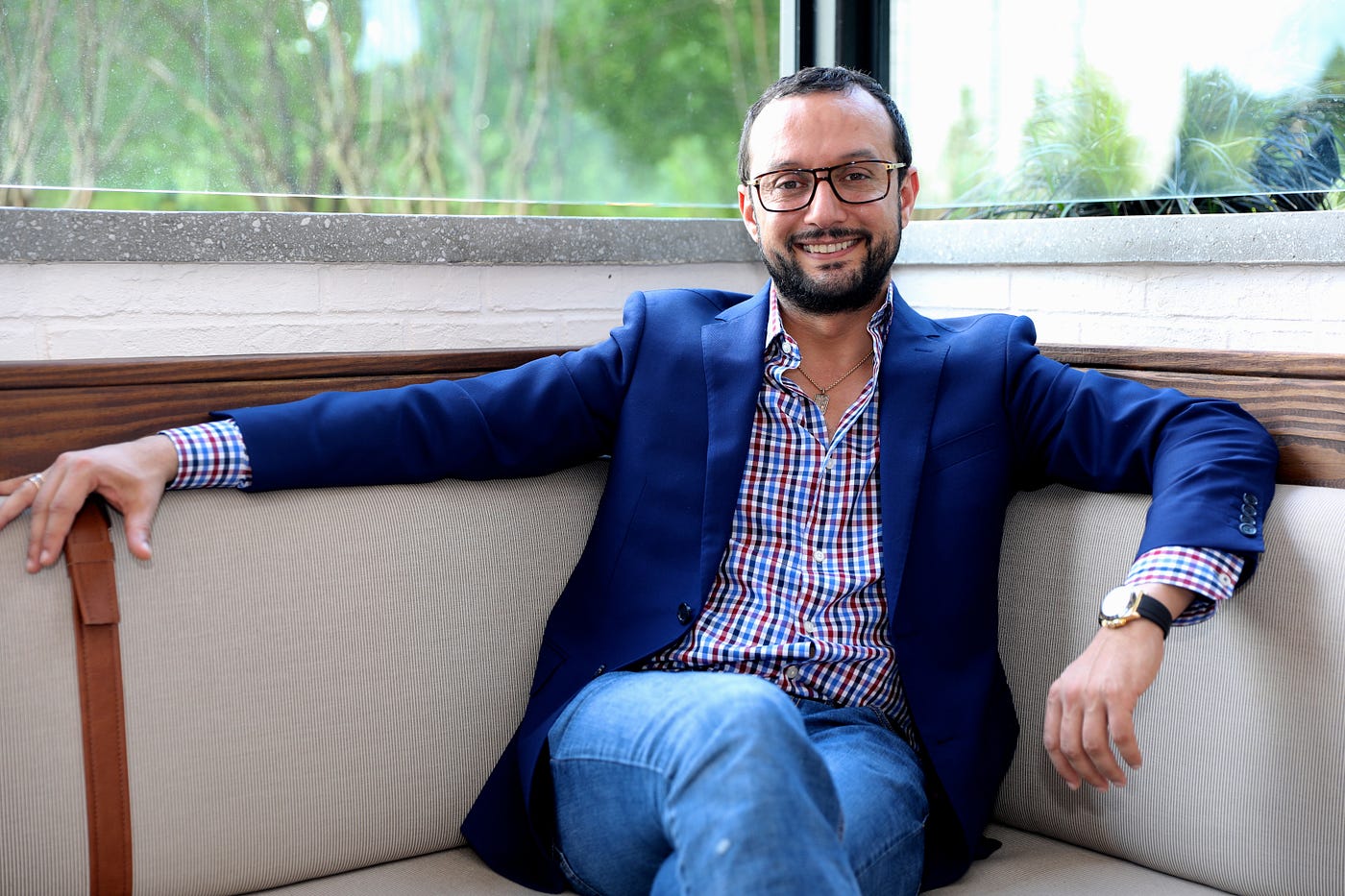
Building a start-up is hard with lots of ups and downs. It takes a very special team and culture to be able to weather storms, celebrate successes and continue to move forward no matter what.
Business
David Lyon of Oranj: Why Effective CEOs Must Schedule Dedicated Time to Do Nothing But Think
The founder and CEO of Oranj shares vital lessons on wealth management technology, building resilient startup cultures, and mastering the lonely reality of executive leadership.

As part of my series about the leadership lessons of accomplished business leaders, I had the pleasure of interviewing David Lyon.
David Lyon is CEO and Founder of Oranj, the industry’s first freemium wealth management platform, which gives financial professionals an end-to-end platform to streamline investment management and client service. Launched in 2014, David identified the need for the software, as consumers continue to transform the way they work and live, providing advisors with the digital tools to enrich the lives of their clients through a modern, differentiated advice service.
Prior to Oranj, David was the Principal of Main Street Financial, a $300m+ AUM multi-family office in Chicago, IL.
David is often sought out by the media and as a speaker for his insight on financial technology trends and business analysis within the investment industry. David has recently spoken at industry conferences such as the Morningstar Conference, FSI Conference, TD Ameritrade Institutional Conference, T3 Technology Conference, IN|Vest Conference and has been featured in the New York Times, Wall Street Journal, Financial Planning, InvestmentNews, Reuters, WealthManagement.com, ThInkAdvisor.com, and more.
Thank you so much for joining us! Can you tell us the story about what brought you to this specific career path?
I founded a wealth management firm and was watching the way that other companies like Uber, Amazon and Netflix had changed the way that people consumed other products and services. Reflecting on the experience that I was providing to my clients, I felt that technology could improve my clients’ experience much in the same way that Uber, Amazon and Netflix had done in their industries.
My first choice was not to go out and build software to solve for this. But when I couldn’t find an off-the-shelf solution, I decided to build it myself solely for the purpose of better serving my clients. Through this process I discovered that many other advisors had the same challenges and goals that I had.
Can you share one of the major challenges you encountered when first leading the company? What lesson did you learn from that?
My passion is creating a business that challenges the status quo and provides people on our team an opportunity that they haven’t been given anywhere else.
What are some of the factors that you believe led to your eventual success?
Having an idea or strategy is just one small part of building a company. Building a strong team and culture have been paramount in Oranj’s early success. Building a start-up is hard with lots of ups and downs. It takes a very special team and culture to be able to weather storms, celebrate successes and continue to move forward no matter what.
What are your “5 Things I Wish Someone Told Me Before I Became CEO”? Please share a story or example for each.
- It’s a lonely job. Lonelier than you might realize. CEOs are often peerless, meaning that they typically have no one with whom to share at a peer level. Despite that, you still have to appear confident, have the answers, have everything under control, and at the same time do not have anybody to whom you can easily vent.
- Communication is everything. I think it is pretty obvious to most people that an important part of being a CEO is communication. I did not realize or think that I actually had to make time every week to think and plan how I need to communicate.
- Prioritize finding time to think. When I first started Oranj I felt it was important to take on as much as possible, stack my calendar with meetings and be involved in every aspect of the business. I literally did the math and believed that if I consistently worked 14-hour days that would give me an extra 15 business day a month over someone working 8 hour days. There was a time when I did do that, but I realized over time that some of the things that I was taking on and doing an average job of would be better not done at all. Today, I make sure that I schedule time to do nothing but think. The importance of having time to think is way underrated.
- Give feedback, even when delivering it is tough By nature I subscribe to give smart people ownership over what they are responsible for.. It took me a while to realize that in my role people are constantly seeking approval and feedback on how they are doing.
- It always takes twice as long as you think
What advice would you give to your colleagues to help them to thrive and not “burn out”?
In the beginning when you first get started with a new company, founders often have to take on responsibilities outside of the areas where they are truly great. Be honest with yourself about what you are good at and realize that you can’t be good at everything. Focus on the things that you are great at, let go of other things that you know you could be doing and put them on the back-burner until you are in a place to bring on people that will be great at them.
None of us are able to achieve success without some help along the way. Is there a particular person who you are grateful towards who helped get you to where you are? Can you share a story?
I would not be where I am today without Kim Massey who was my boss and mentor at Live Nation. Kim taught me what it means to build a business, take chances and focus on the things that matter. She gave me my first big corporate job and gave me way more responsibility than I was qualified for. She saw something in me and gave me an opportunity to prove myself. When I developed an entrepreneurial bug and wanted to go out and start my first business, Kim encouraged me. I was terrified. My wife and I were expecting our first child and I needed a lot of direction. I was looking for a blueprint or instruction manual to make the leap. Kim’s advice was, “What is the worst thing that happens? You go out and find another job.” Without Kim’s support I don’t think I would have ever decided to start my own business.
What are some of the goals you still have and are working to accomplish, both personally and professionally?
Personally, I would like to find more time for my family. I am in a far better place to make time for my family now but often times the business dictates my schedule. This year I have been able to make time to take my daughter to school each morning, which I cherish
Professionally, I need to make more time to read. I typically read 20+ books a year and came nowhere close to that this year. Reading has always been a source of inspiration and ideas for me.
What do you hope to leave as your lasting legacy?
The only way that you can build a great company is by having great people. Great people create great products and services. I hope that my legacy will be that I was able to provide the people on our team the ability to do great things that they would not have had the opportunity to do anywhere else. At the end of the day it is all about the people.
You are a person of great influence. If you could start a movement that would enhance people’s lives in some way, what would it be? You never know what your idea can trigger!
I think there is so much more we can be doing to help provide inner city at-risk youth with greater opportunities to break the molds into which they were born. I have seen this first hand in Chicago and know that the same issues exist in other cities. The cards are stacked against most kids who are growing up in impoverished areas. These are kids who are growing up in households with parents who are dealing with significant mental illnesses, drugs, gangs and lack of basic living needs like good food and clean clothes. There are so many issues that need to be addressed to provide these kids with a better environment that to truly make a difference here it needs to be a movement and not just a program that is started.
How can our readers follow you on social media?
- LinkedIn: https://www.linkedin.com/in/david-lyon-2269755
- Twitter: @davidlyonoranj
JH
Written by
Jason Hartman
Editor & Journalist · Authority MagazineJason Hartman is a senior columnist at Authority Magazine covering Business and Tech, conducting primary-source Q&A interviews with founders, executives, and industry leaders.

Published inAuthority MagazineTop Lessons, Top Authorities · 42K Followers
Exclusive, curated interviews with the leaders and changemakers shaping tomorrow. Leadership lessons, industry deep dives, and executive profiles.