This industry can take you from playing basketball at a gym to FaceTiming a legend and thinking your entire life is about to change — and then, just as quickly, nothing happens.
As a part of this series, we had the pleasure to interview Daniel Prophete.
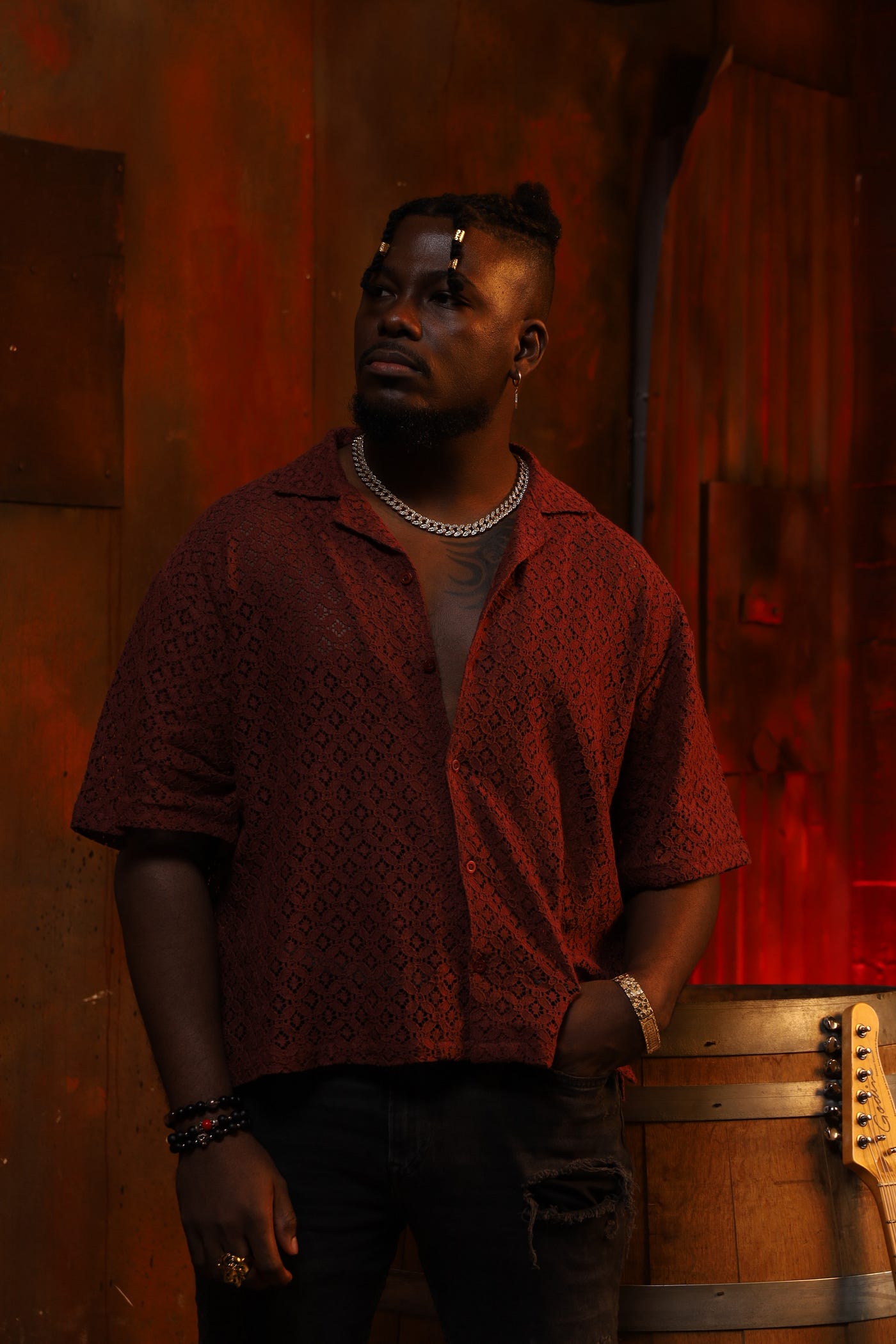
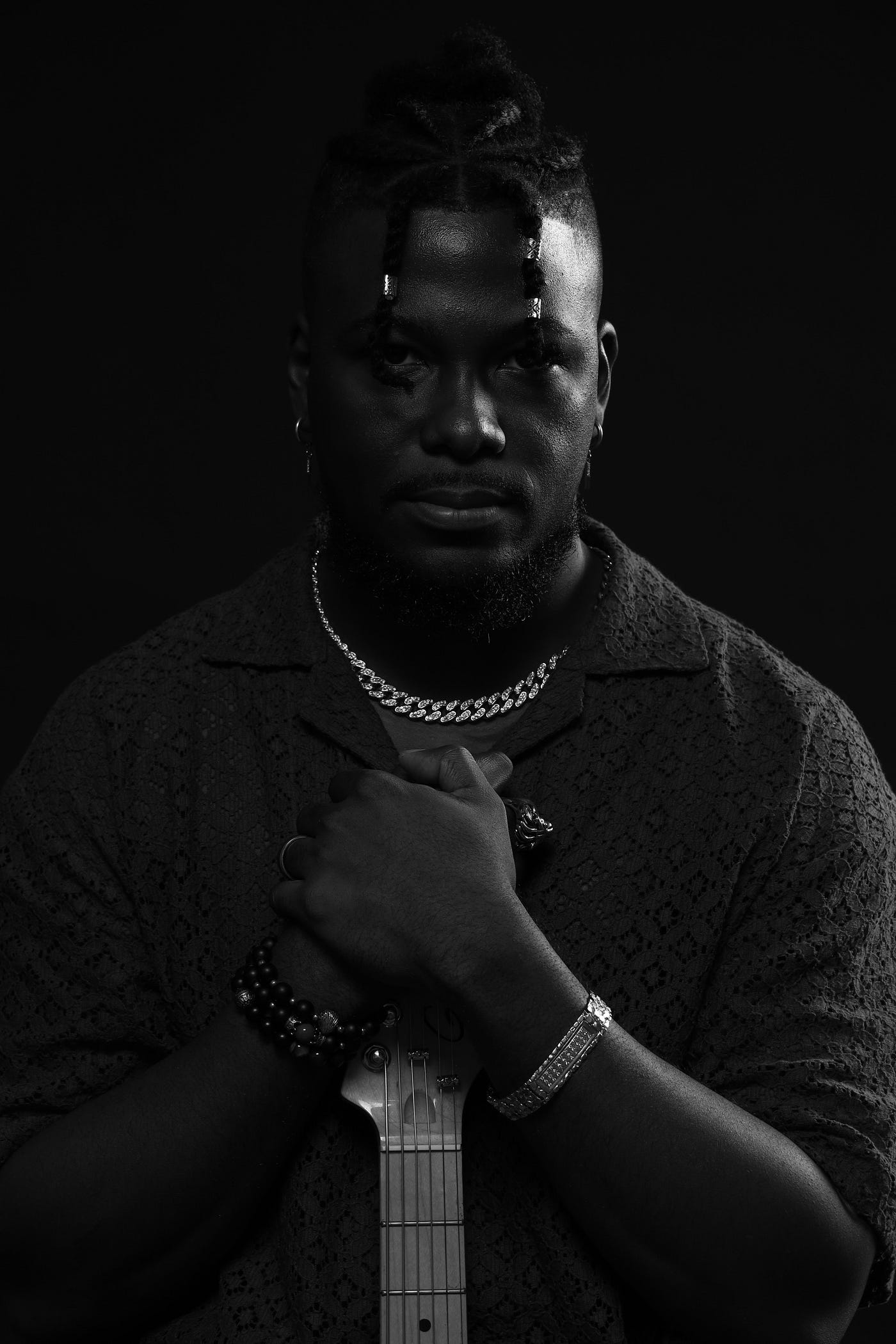
Daniel Prophete is a Haitian-American artist, guitarist, and producer. The guitar is at the heart of his music, with every record written and produced from the ground up in his own studio. He first picked up the guitar at eighteen. It quickly became the foundation of his sound, eventually leading him to study music business and performance at UMass Lowell and music production at Berklee. His sound is guitar-driven Afro-Caribbean and Latin fusion — music that seduces, unites, and moves you. When the truth calls for it, he switches to Kreyòl. Warm where much of the genre is cool, his records are built to sound like somewhere sunny, even when you’re somewhere isn’t.
Thank you so much for joining us in this interview series! Before we dive in, our readers would love to learn a bit about your “origin story”. Can you tell us the story of how you grew up?
Hi, my name is Daniel Prophete, and I was born and raised in Port-au-Prince, Haiti. I grew up Catholic and went to an all-boys school. My mornings started around 5 a.m. so I could get to school by 7:15. I’d get there, hang out with my friends before class, play Yu-Gi-Oh! and Pokémon, and then somehow make it through the school day. Sports were a big part of my life too, especially basketball. Music wasn’t really the plan.
That changed after the earthquake in 2010. I left Haiti and moved to Jacksonville, Florida, where I lived with my aunt. I also spent a lot of time around my cousin Sanders Solon, who was a prominent member of the Haitian band Harmonik. I started going to his gigs and watching him perform. I saw how happy he was onstage and how happy the music made everyone else. People were dancing, singing along, girls were pulling at him and screaming his name. As a teenager, I remember thinking, “Man, this is pretty cool. I could get a lot of girls doing this.” [laughs]
Obviously, that wasn’t the reason I stayed with music. Once I picked up the guitar, I genuinely fell in love with the instrument.
And looking back now, I realize the guitar gave me something even bigger: community. When I first started college, I didn’t really interact with many people. Then I started bringing my guitar to school. Suddenly people would approach me. We’d talk, I’d play, and I started making friends. Music became this bridge between me and other people.
I don’t think I fully understood that until recently. Music has given me friendship, community, and a sense of belonging at different points in my life.
Eventually I decided to take that feeling seriously. In 2016, I quit my job and enrolled at UMass Lowell to study music business and performance, and later went on to earn my master’s at Berklee College of Music.
There’s still a feeling I get when I’m onstage playing music with other people that I’ve never been able to explain properly. You have to experience it. I think I’ve been chasing that feeling ever since.
What inspired you to pursue a career in music, and how did your journey begin?
My cousin definitely sparked the initial interest. He was successful, respected, and I got to see firsthand what a life in music could look like. But I think what made me actually pursue it was something deeper.
I had been good at a lot of things growing up, but I never really had something that felt like it was mine. Music became that for me.
I also loved that there was no finish line. Music is constantly evolving, and no matter how good you become, there’s always something else to learn. A new instrument, a new technique, a new sound, a new way of writing or producing. That excited me then, and it still excites me now.
Over time, though, my reason for making music became less about what it gave me and more about what I could give through it. You can entertain someone, make their day a little better, communicate a feeling they haven’t been able to put into words, or make someone going through something difficult realize they’re not alone.
The idea that something I create in my studio could eventually reach a kid in Haiti, someone in Nigeria, or a person I’ve never met on the other side of the world is still incredible to me. That’s one of the biggest blessings of being a musician.
And I get to live a life where I genuinely don’t know where the music will take me next. There’s something really exciting about that.
Can you tell us the most interesting story that happened to you since you began your career?
One of the craziest stories happened around 2021 or 2022. I was playing basketball with a group of guys at a 24 Hour Fitness in Los Angeles, and one of them asked me what I did for a living. I told him I was an artist, so he asked to hear some of my music.
After I shared it with him, he casually said, “My uncle is Teddy Riley.”
At the time, I didn’t immediately recognize the name, so I went home and Googled him. Then I was like, “Oh… THAT Teddy Riley.”
He told me he liked my music and wanted to pass it along to his uncle. I honestly didn’t think much of it. People say things like that all the time in the music industry, so I went on with my life.
Then I released a song called “On Top,” and one day he reached out and basically said, “Get ready. Teddy wants to talk to you.”
Next thing I know, I’m on FaceTime with Teddy Riley. He’s telling me he loves my music, that he can tell I’m a true artist, and talking to me about coming to his house in Las Vegas and potentially touring with him in Africa.
You can imagine what was going through my head. [laughs]
We coordinated the trip, and my wife, who was pregnant at the time, came with me to Vegas. We got there… and ultimately, I never really got the opportunity to sit down with Teddy. The whole thing fell apart.
There’s a much longer version of that story, but strangely, I think the way it ended taught me as much as it would have if everything had worked out.
This industry can take you from playing basketball at a gym to FaceTiming a legend and thinking your entire life is about to change — and then, just as quickly, nothing happens. I learned not to build my career around a promise, a connection, or one big opportunity. Appreciate those moments when they come, but keep working as if nobody is coming to save you.
I still laugh thinking about it because, for a brief moment, I really thought, “Well… I guess I’m going to Africa with Teddy Riley.”
It has been said that sometimes our mistakes can be our greatest teachers. Can you share a story about the funniest mistake you made when you were first starting? Can you tell us what lesson you learned from that?
Oh, I’ve made plenty. [laughs] One that immediately comes to mind happened when I was releasing my first EP during COVID.
I was doing a million things at once and somehow forgot to credit one of the musicians who played on the project. There was absolutely no malicious intent behind it — I was just overwhelmed and missed it. But understandably, she was not happy with me.
I remember thinking, “Well… I’m never making that mistake again.”
Since then, I’ve become almost obsessive about checking things before a release. I double-check, triple-check, and then probably check one more time before I submit anything.
But the bigger lesson was that credits aren’t just metadata at the bottom of a song. They’re someone’s contribution to something you’ve created. When people give you their talent and their time, it’s your responsibility as the artist to make sure they’re acknowledged properly.
I’ve made much more expensive mistakes since then, but we’ll save those for another interview lol.
None of us are able to achieve success without some help along the way. Is there a particular person who you are grateful towards who helped get you to where you are? Can you share a story about that?
Oof, this one is impossible for me. [laughs] It truly takes a village. I could probably write an entire book dedicated to the people who have helped me get here, so I can’t honestly give the credit to just one person.
My wife has probably experienced this journey more closely than anyone. She’s put up with the demands that come with pursuing this career, but she’s also been part of the work itself — filming, editing, writing vocals, listening to songs a hundred times, giving me advice, and being there for the emotional highs and lows that nobody else sees.
My mom has supported me financially at different points and, more importantly, has continued encouraging me when pursuing music probably didn’t always look like the safest or most logical decision. My sister has dressed me, given me advice, helped me navigate social media, and told me when something wasn’t working.
Then there are people like Kenny Paul, Sanders Solon, Jamie Blake, one of my closest friends and musical mentors, who has had a tremendous impact on me as a musician. And friends like Olivier and Christina Durand, who have literally driven from Dallas just to be part of one of my videos.
And that’s still barely scratching the surface.
One thing this career has taught me is that when people see an artist succeeding, they see the person standing in the center of the picture. They don’t always see everyone standing just outside the frame — the person holding the camera, the person who sent some money when things were tight, the person giving advice, the musician who played on the record, or the person who simply said, “Keep going” at the right time.
So if I ever accomplish anything meaningful with music, my name might be on the front of it, but there’s a whole village behind it. I don’t take that for granted.
What are some of the most interesting or exciting projects you are working on now?
Honestly? Besides promoting my album, I’m trying not to start another major project of my own right now. LOL I need a break.
This album has been about three years of my life, so right now I’m trying to actually enjoy the moment instead of immediately asking myself, “Okay, what’s next?”
I’m preparing for the album release party and working on the live performances, which I’m really excited about. Performing has always been one of my favorite parts of being a musician, so I’m looking forward to taking these songs out of the studio and figuring out how they live onstage.
I’m also currently co-producing some projects with a friend of mine. I actually enjoy being able to step outside of my own music and help someone else bring their ideas to life. It challenges me creatively in a completely different way because I’m not asking, “What would Prophete do?” I’m asking, “What does this artist need?”
And there is one more song I’ve been working on that won’t be available on streaming. It’ll only exist on the vinyl edition of the album. I wanted there to be something you could only experience by owning the physical record — something special for the people who decide to have this album in their collection.
After that, I’m giving myself permission to breathe for a minute. Then we’ll see where the music takes me next.
We are very interested in diversity in the entertainment industry. Can you share three reasons with our readers about why you think it’s important to have diversity represented in music, film, and television? How can that potentially affect our culture?
I think diversity matters for a lot of reasons, but three immediately come to mind.
First, diversity creates new things. When people from different cultures and backgrounds bring their influences together, you can end up creating something that didn’t exist before. Music is probably one of the clearest examples of that. So many of the genres and sounds we love came from cultures meeting, borrowing from one another, and creating something new.
Second, entertainment allows us to understand the human experience through somebody else’s lens. A film, a song, or a television show can almost allow you to travel without physically traveling. You can experience someone’s language, food, humor, struggles, family dynamics, traditions, or way of seeing the world without ever having been where they’re from. I think that kind of exposure can create curiosity and empathy because suddenly something that felt foreign has a human face attached to it.
And third, representation can expand what someone believes is possible for themselves. When a kid sees someone who looks like them, sounds like them, or comes from where they come from doing something they’ve never imagined themselves doing, it can give them permission to think, “Maybe I can do that too.”
I actually realized something about myself later in life that illustrates this in a small way. I never developed an interest in hockey. Obviously there could be a million reasons for that, but when I thought about it, growing up I rarely saw people who looked like me associated with that world. So it never really felt like something that was for me.
That’s why representation goes beyond simply putting different faces on a screen. What we repeatedly see affects what feels familiar to us, what we’re curious about, and sometimes even what we imagine we’re allowed to become.
As a Haitian artist, that’s meaningful to me. I saw Wyclef as a kid, and I played on stage with him at Umass Lowell. If a kid in Haiti can see what I’m doing and it makes their world feel even slightly bigger, that’s powerful. And at the same time, if someone who has never been to Haiti discovers something about my culture through my music, that’s powerful too.
As a successful music star, you’ve likely faced challenges along the way. How do you stay motivated? How do you overcome obstacles in your career?
First of all, I don’t know if I’d call myself a music star yet lol. I still have a lot of work to do.
But honestly, one of my biggest motivations is very simple: I can’t leave this unfinished.
I’ve had dreams and goals for my life and my music for a long time, and I want to see how far I can take them. Of course there are moments when things don’t go the way I expected, when an opportunity falls through, when I get discouraged, or when I wonder if all the sacrifices are worth it. But eventually I come back to the same thought: I’m not finished yet.
And at this point, I’m not doing it only for myself.
I’m doing it for my wife and my son. I’m doing it for my family and for the people who believed in me before there was necessarily a reason to. I’m doing it for the kid somewhere who dreams about pursuing music and might see someone like me doing it and think, “Maybe I can too.”
When things don’t work out, I let myself process the disappointment. I don’t think there’s anything wrong with admitting that something hurt or that you were frustrated. But after that, I try again. That’s really it. I’m like Naruto — I just keep coming back lol. I don’t know how to give up until I decide it’s enough. I can’t let the world decide when I am done.
I’m also doing it because one of my biggest goals is to eventually take what I’ve learned and bring some of it back to Haiti. I want to represent my country in a positive light, but representation alone isn’t enough for me. I want to be able to contribute — to share knowledge, create opportunities, and play some small part in developing the creative community there.
Haiti gave me my culture, my perspective, my rhythm, my resilience, and so much of who I am. If I’m fortunate enough to build the career I’m working toward, I want some of what I gain along the way to make its way back home.
So when I hit an obstacle, I process the losses, learn what I can from them, and then I get back up and try again.
I’m not finished yet.
What are your “5 things I wish someone told me when I first started” and why? Please share a story or example for each.
1. Success is rarely overnight.
What looks like an overnight success from the outside is usually the accumulation of years of work that nobody saw. And the path isn’t linear. You can have an incredible month where it feels like everything is finally happening, followed by a month where nothing moves.
I used to think success would look like this steady climb where every song did better than the last one and every opportunity led to a bigger opportunity. That’s not how my career has worked at all. I’ve had breakthroughs followed by disappointments, songs that surprised me, opportunities that disappeared, and moments where something I did years ago suddenly started getting attention.
I’ve learned to focus more on taking the next step than trying to figure out when I’m going to “make it.”
2. Stop comparing your journey to somebody else’s.
This one can drive you crazy, especially now that social media gives you a front-row seat to everybody else’s career.
I’ve watched artists who were around a certain number of followers or listeners suddenly gain momentum. Naturally, you start analyzing: “What did they do? What are they posting? What kind of music are they making?” Then you try some of those things yourself and wonder why you’re not getting the same result.
Eventually I realized: because that’s their path.
You’re seeing their numbers, but you’re not seeing everything that led to those numbers. You don’t know their relationships, their struggles, their opportunities, their timing or what they’ve sacrificed to get there. Learn from people, absolutely, but don’t use somebody else’s life as the measuring stick for yours.
3. Don’t chase trends. Figure out what makes you you.
Early on, it’s very tempting to look at what’s working and think, “Maybe I need to sound more like that.”
But if you’re constantly chasing what’s popular, you’re already behind because by the time you’ve caught it, everybody else is chasing it too.
I’ve become much more interested in asking myself what I can bring to the music that somebody else can’t. My Haitian roots, the guitar, the different genres I’ve been exposed to, the way I write and produce — those things are much more valuable to me than trying to fit perfectly into whatever sound is popular at the moment.
Don’t follow a trend so closely that you erase the things that could have made you stand out. Be yourself. Maybe one day people will be trying to follow you.
4. Give yourself some grace.
I’m still learning this one.
When you’re ambitious, you’re constantly looking at what’s left to do. You finish one thing and immediately move on to the next. You hit one goal and suddenly you’re thinking about the five you haven’t reached yet.
Every once in a while, you have to look backward instead of forward and recognize how much you’ve already done.
There are things in my life today that a younger version of me would have been incredibly excited about, but because I’m living them now, they can start to feel normal. I’ve had to learn to acknowledge those moments instead of constantly moving the finish line on myself.
5. It’s okay to pause.
Resting and quitting are not the same thing.
There have been times when I’ve needed to step away, recalibrate and figure out what wasn’t working. Earlier in my career, I probably would have interpreted that as losing momentum. Now I understand that sometimes constantly moving without direction is worse than stopping for a moment and coming back with a plan.
The important thing is getting back in the game.
I don’t need to be better than another artist today. I just want to be a little better than the artist, musician and person I was yesterday. If I can keep doing that over enough time, I’ll eventually get where I’m supposed to go.
Can you share some insights into your creative process? How do you approach songwriting? How do you approach musical collaborations?
Most of the time, my songwriting starts with chords. I’ll sit with my guitar and play until something makes me feel something. Other times, the melody comes first, and I build everything around it.
For some reason, though, my best ideas seem to come at the most inconvenient times — usually in the shower or the second I put my head on the pillow after a long day. I’ve learned to grab my phone and record the idea immediately, because I’ve definitely told myself, “I’ll remember this tomorrow,” and then woke up with absolutely no idea what it was.
I also don’t expect every idea to be good. Sometimes I have to make three or four bad songs before I find the one idea that makes me go, “Wait… there’s something here.” Then I start developing it. I think that’s part of being creative — you have to give yourself permission to make something bad. If you’re judging every idea before it has a chance to become anything, you’ll probably kill some of your best ideas too early.
Collaborations are a little different. I usually look for people I naturally vibe with — artists I already like, people my friends recommend, or sometimes someone I discover randomly whose work catches my attention. I’ll reach out and see if they’re interested in creating something together.
For me, the best collaboration isn’t just putting two names on the same song. I want the other person to bring something I wouldn’t have thought of on my own. Their voice, culture, musical instincts, or perspective should push the song somewhere different. That’s when collaborating becomes exciting, because you can start with one idea and end up somewhere neither of you would have reached alone.
Your music has resonated with so many fans worldwide. What do you believe sets your music apart?
Honestly, I’m not completely sure lol. I think that’s probably something the listener can answer better than I can.
But if I had to guess, I’d say simplicity, honesty, and just being myself.
I don’t try to make everything overly complicated. Sometimes the simplest lyric or melody can communicate something much better than trying to be clever. If I’m talking about love, wanting to stay in bed all day, missing home, attraction, uncertainty, or whatever I’m feeling at that moment, I try to say it in a way that feels natural to me.
Musically, I’m also a product of everything I’ve been exposed to. I’m Haitian, I’m a guitarist, I’ve lived in different places, studied music, and fallen in love with sounds from different cultures and genres. All of that naturally finds its way into what I make, but I don’t sit down thinking, “How do I make this different?” I just make what feels right to me.
Maybe that’s what people connect with. I’m not trying to create a character when I make music. I’m just trying to be honest about who I am and where I am at that moment.
And hopefully, by being specific to my own experience, I somehow create something that feels familiar to someone else’s.
How do you connect with your audience?
I try to connect with people the same way I would want an artist I like to connect with me — as a person.
Social media obviously makes that much easier. I read comments, respond to DMs when I can, share parts of the creative process, post guitar videos, joke around, and let people see pieces of my life outside of just saying, “Here’s my new song, go listen to it.”
But I think the deeper connection happens through the music. I try to write about things people actually experience and keep the emotions simple and honest. Sometimes it’s something serious, and sometimes it’s literally just, “I don’t want to do anything today.” Both are real parts of being human.
One of my favorite things is when somebody hears a song and tells me, “This is exactly how I’ve been feeling,” or when someone connects with a guitar video, and it starts a conversation. At that point, the music has done its job. It created a connection between two people who may have never met otherwise.
I don’t really like thinking of the people who support me as numbers on a screen. Every stream, comment, message, or person at a show represents an actual human being who decided to give me some of their time. I try not to take that for granted.
With your busy schedule and demanding performances, how do you prioritize self-care and maintain a balance between your personal life and career in the music industry?
Two words: video games lol. That’s my life
Honestly, I try to make time for the simple things that allow me to disconnect from music for a little while. Spending time with my wife and son, eating good food, working out, playing video games — those things help me reset.
Music can consume you because there’s always something else you could be doing. Another song to finish, another piece of content to make, another email to answer, another opportunity to chase. I’ve had to learn that being productive all the time isn’t necessarily healthy or even productive in the long run.
Spending time with my family reminds me that there’s a whole life outside of being Prophete. Sometimes I need to just be Daniel, eat something good, play a game, work out, and not think about music for a few hours.
I’m still learning how to balance it all, but I’ve gotten better at recognizing when I need to disconnect so I can come back with a clearer head.
You are a person of enormous influence. If you could inspire a movement that would bring the most amount of good to the most amount of people, what would that be? You never know what your idea can trigger. :-)
“Enormous influence” might be a little generous right now lol. Maybe ask me again in ten years.
But if I could encourage anything, I think it would simply be for people to be kinder and more curious.
We live in a time where it’s incredibly easy to form an opinion about a person, a culture, a country, or an issue based on a headline, a clip, or what someone else told us. I’d love to see more people take the time to ask questions, do their own research, seek out different perspectives, and actually try to understand something before deciding how they feel about it.
And I think kindness is connected to that. It’s much easier to judge people when you don’t understand their experiences.
I don’t know if that needs to become some enormous movement with a name or a hashtag. I’d just like to see more people approach each other with curiosity before judgment and remember that there’s a human being on the other side.
If I could influence even a little more of that, I’d be happy.
Is there a person in the world, or in the US whom you would love to have a private breakfast or lunch with, and why? He or she might just see this, especially if we tag them. :-)
When I first read this question, I honestly had no idea who to choose. But I think I’d go with Barack Obama.
For one, I’ve seen the music playlists he shares, and I genuinely think he’d dig some of my catalog. I’d probably have to sneak “Konekte” onto the lunch playlist and see what happens.
But beyond music, I’d really want to talk to him about pressure.
Regardless of politics, being President of the United States for eight years means carrying a level of responsibility and scrutiny that most of us will never experience. I’ve always been fascinated by the composure he projected publicly through all of that.
I’d want to ask him how he dealt with criticism, how he separated the person from the position, how he handled moments when things didn’t go the way he wanted, and how he kept all of that from consuming his personal life.
As an artist, obviously the scale isn’t remotely comparable, but the further you go in any public career, the more opinions people have about you. I’d love to learn from someone who experienced that at one of the highest levels imaginable.
And then, of course, I’d ask what he thought of “Konekte.”
How can our readers continue to follow your work online?
The easiest way is to search for Prophete on your favorite streaming platform. My debut album, Daniel II Prophete, is out now, and that’s probably the best place to start if you’re discovering my music for the first time.
You can also find me on Instagram at @propheteofficial, TikTok at @propheteofficial, and YouTube by searching PropheteOfficial.
I’m always sharing music, guitar videos, behind-the-scenes moments, and whatever else I’m working on, so come say hi. I actually read the comments and try to reply to everyone against my sister’s wishes lol.
Thank you so much for these great insights, Daniel! We wish you continued success!
About The Interviewer: Tavares Beverly ( www.tavaresbeverly.com ) is the Founder and CEO of Beverly Boy Productions, a national video production company that has helped organizations tell their stories through video for more than two decades. Over the course of his career, he has worked with everyone from Fortune 500 executives and healthcare professionals to politicians, nonprofit leaders, educators, and artists, gaining a unique perspective on the role communication plays in leadership, business, and human connection. A frequent contributor on topics including communication, entrepreneurship, leadership, and personal development, Tavares believes that the ability to communicate effectively is one of the most valuable skills a person can develop. His work is driven by a passion for helping organizations connect with their audiences and helping individuals unlock their potential through mentorship, perseverance, and meaningful relationships. To learn more, connect with Tavares on LinkedIn or visit www.BeverlyBoy.com . If you’re interested in using the power of storytelling and communication to grow your organization, strengthen your brand, or inspire your audience, he welcomes the opportunity to connect.