Early in my career, a lot of what came my way was dismissive, and none of it helped me improve. Useful feedback is specific. It tells you what didn’t work and why.
As a part of this series, we had the pleasure to interview Cynthia Couyoumjian.
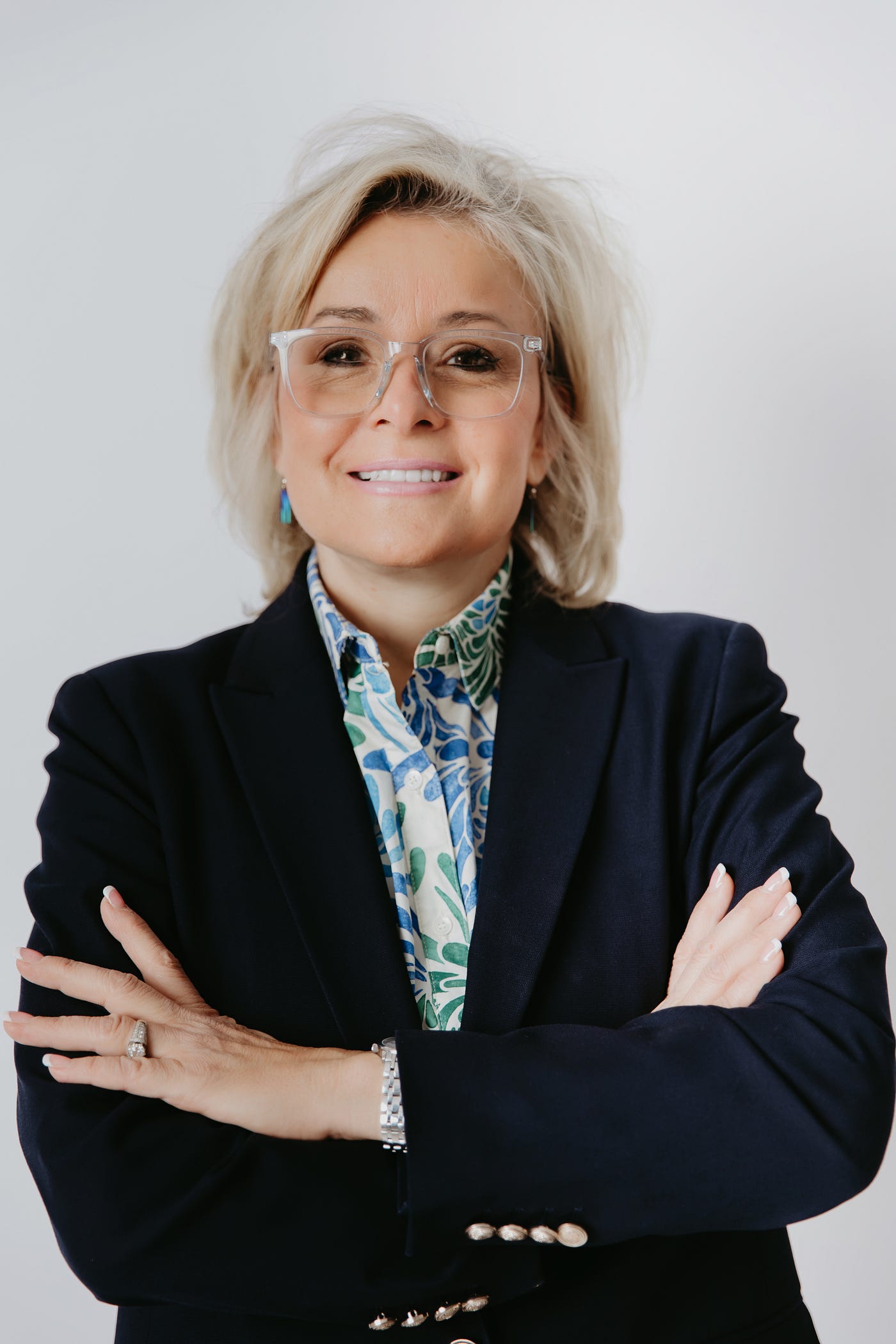
Cynthia “Cindy” Couyoumjian is a financial advisor and the founder of Cinergy Financial, a financial planning and investment services firm in Tustin, California, and has worked in the securities industry since 1986. She is the author of three books on financial literacy, women and wealth, and retirement: Redefining Financial Literacy, The Rise of Women and Wealth and The Silent Retirement Crisis. She writes and speaks about financial literacy, retirement and women’s financial confidence.
Thank you so much for joining us in this interview series! Our readers would love to ‘get to know’ you a bit. Can you share with our readers a little about your childhood backstory?
I grew up with four sisters, and our mother was a powerful figure who instilled in all five of us an enduring work ethic. She raised us with a sense of purpose, and in many ways she was ahead of her time. It was my mother who set me on the path to financial independence.
My high school coach and mentor, Jan Sanders, mattered a great deal to me, too. She inspired generations of young women to dream the impossible and achieve the improbable. She shaped my dreams both within and beyond sports, and she instilled in me a passion and competitive spirit that have stayed with me ever since.
Can you share the funniest or most interesting story that has happened to you since you started your career? What was the lesson or take away you took out of that story?
The most interesting one involves my first book. When I started writing Redefining Financial Literacy in 2018, I could not have imagined that a pandemic would bring the global economy to its knees before it was published. What happened in the world that year illustrated the argument I made in the book’s preface, that financial literacy has to include a basic knowledge of the hidden forces that can affect your bottom line.
The lesson I took from it is that you can’t predict the forces that will test your plan, so a good plan must leave room for them. I’ve carried that into how I talk with clients about emergencies, health and care.
Can you share a challenge you faced in your journey and how you overcame it to achieve recognition in the industry?
The hardest challenge was in my own head. As a young woman out of college, I was plagued by doubts and uncertainty. I was intimidated, and I was reminded endlessly that I didn’t belong. There was a time when I felt frozen in place.
I pushed on because I believed in my self-worth and in what I could contribute. Over time, my vulnerabilities became my strengths, and my doubts were transformed into resolve.
Recognition came much later. In 2022 I received two Bronze Stevie Awards, including Female Thought Leader of the Year in Business, and in 2023 the Los Angeles Times included me on its “CEO Visionaries” list. Those honors meant a lot to me, mostly because I remember where I started.
What role does feedback, both positive and negative, play in your development and growth?
A big one, though I had to learn to tell feedback apart from noise. Early in my career, a lot of what came my way was dismissive, and none of it helped me improve. Useful feedback is specific. It tells you what didn’t work and why.
Some of the most useful feedback I get comes from seminars. When I explain something and a room full of people looks lost, that’s feedback, and I go home and rework the explanation. And when someone tells me they finally understand their own retirement plan, I take that as feedback too. It’s the kind I enjoy most.
What first inspired you to pursue a career in financial planning, and did you face any early obstacles breaking into the industry as a woman?
Throughout my early career there were moments when I wanted to quit, and I pushed on. What kept me going was a powerful sense that my destiny was to help people, particularly women, work toward their financial goals.
As for obstacles, yes. Fresh out of college, I was fortunate to land a position at one of the largest insurance companies in the world. As I learned the insurance business and basic investment strategy, I started to move up the corporate ladder and felt I was a valued member of the company.
What I didn’t realize early on was what would come with being in a male-dominated financial culture. There were suggestive glances and innuendo, condescending and dismissive attitudes, and constant reminders that I should be grateful to have a job. I dismissed those micro injuries because I was driven. I was determined to show those poorly mannered men that I would never be defined by their sophomoric behavior. I wrote about them in The Rise of Women and Wealth so younger women can name what’s happening to them sooner than I did.
In a field historically dominated by men, what unique strengths do women bring to financial advising, and how can those strengths be leveraged for long-term success?
Patience is one I see again and again. Many of the women I know in this field are comfortable slowing a meeting down until everyone in the room understands what’s being decided, and clients feel that. Over the years, it builds the kind of trust that keeps families with an advisor for a long time.
Another is the habit of asking about a person’s life before asking about their accounts. When a woman comes in after a divorce or the loss of her husband, I start by asking what her days look like now and what she’s worried about. The portfolio questions come after that.
To make those strengths last, pair them with rigor. Warmth earns trust when it’s backed by preparation and careful documentation, so the client can see the reasoning behind every recommendation.
Can you share a defining moment or breakthrough that significantly shaped your career path?
Starting my own practice because it meant putting my own name on everything, outcomes included. It also gave me the freedom to build the kind of firm I wanted, one where teaching sits at the center.
One of the things we started doing at Cinergy Financial was offering monthly informational seminars, podcasts and webinars, so clients could better understand the forces that affect their investments. Putting teaching at the center shaped everything that came after, including all three of my books.
How do you maintain client trust and confidence — especially during volatile market periods — and what advice would you give to newer advisors trying to build that trust?
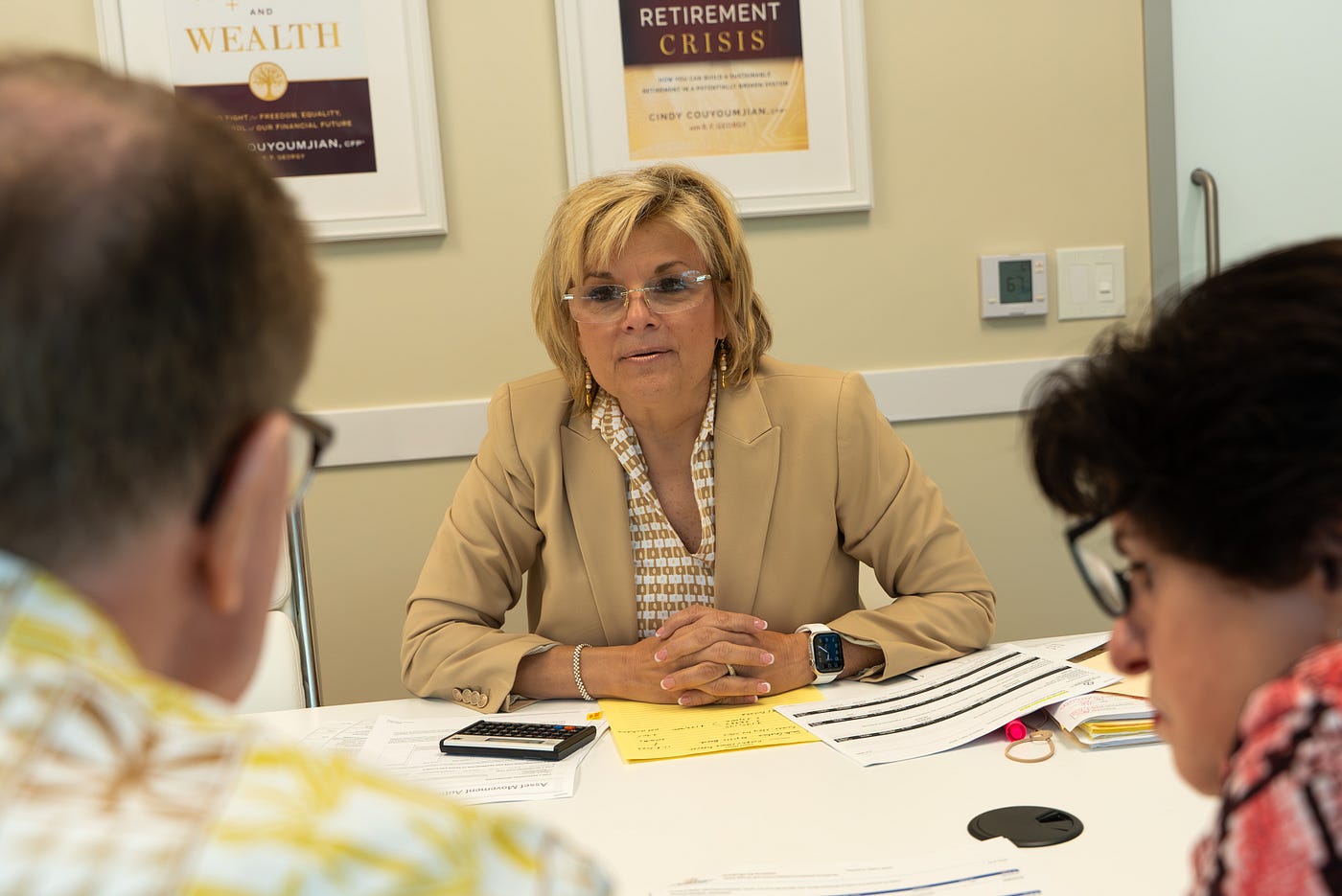
Trust in a hard market is mostly built before the hard market arrives. When I sit down with someone, we talk about how much risk they’re comfortable taking and what their money needs to do for them, and we write it down. When markets swing, we have something to come back to, and I can walk them through the plan we made together and the reasons behind it.
I also pick up the phone. Silence makes a scary week scarier, and even a short call that explains what’s happening can keep someone from a decision they’d regret later.
My advice to newer advisors is to explain risk honestly at the start, to never promise what you can’t control, make sure to put your recommendations in writing, and return calls quickly.
What are your “5 Things You Need To Create a Highly Successful Career as a Woman Financial Planner or Financial Advisor” and why? Please share a story or an example for each.
1. Keep studying long after the exams you need. I hold eight securities licenses and a California insurance license (#0719038), and I didn’t need all of them to get started. I added them over the years because each one made me better at explaining something to a client. Clients can tell when you understand a subject well.
2. Learn to teach what you know. A woman in this business is often underestimated in the first few minutes of a meeting, and nothing changes the tone faster than explaining something clearly. I’ve hosted weekly radio shows on financial literacy, and talking to listeners who can’t stop you to ask a follow-up question teaches you to be clear the first time. If you can explain how Social Security benefits are calculated to someone who’s never thought about it, a client meeting gets much easier.
3. Put your recommendations in writing. At Cinergy Financial, our process leads to written recommendations, and we revisit them as a client’s life changes. A written plan gives clients something to hold you to, and it gives you a record of why each decision made sense at the time. For a woman building credibility, that record helps in every review meeting.
4. Build a team you can lean on. When I was writing my books, the people around me spent more hours than I can count keeping my practice going. No one builds a lasting practice alone, and the sooner you hire people you trust, the sooner you can do the work only you can do.
5. Treat women clients as the capable adults they are. Many women come to me handling money decisions alone for the first time, often after a divorce or the death of a spouse. Some arrive apologizing for what they don’t know. I start by showing them how much they already understand, and then we fill in the rest together. Confidence grows quickly once someone stops feeling talked down to.
How do you navigate the work-life balance, especially in a demanding field like financial planning, and what advice do you have for women juggling both career and personal responsibilities?
I don’t think I’ve ever had perfect balance and I’ve stopped expecting it. Some weeks the practice needs everything I have, and some weeks it has to wait.
My advice is to put the things that matter outside work on your calendar the same way you’d put a client meeting there, and then keep those appointments. Stop apologizing for needing help. Hand off what someone else can do well and save your energy for the decisions only you can make. And forgive yourself for the weeks when it tips too far one way.
What role has mentorship (either giving or receiving) played in your journey, and how can women in finance support each other more effectively?
A huge role. When I started in the financial business in the 1980s, there weren’t many women I could look to for guidance, so I looked wherever I could. In The Rise of Women and Wealth, I describe two kinds of mentorship. Contemporary mentors are the successful women working and leading today. Historical mentors are the pioneers who came before, and some of my most important teachers are women I never met.
Today I try to give back what I was given. Support between women in finance can be practical. Share your study notes when a colleague is preparing for a licensing exam. Recommend another woman when you’re asked to speak and can’t. Explain the unwritten rules nobody explained to you. And when you see a younger woman being talked over in a meeting, make room for her to finish.
You are a person of enormous influence. If you could inspire a movement that would bring the most amount of good to the most amount of people, what would that be? You never know what your idea can trigger.
I’d start a movement of people teaching each other about money. If every adult who understands how Social Security or a retirement account works sat down and explained it to one person who doesn’t, we’d reach more people than any single program could.
That movement could easily start at the kitchen table by walking your child through their first pay stub or show a neighbor what Medicare does and doesn’t cover. Most people were never taught this, and they’re very capable of learning it. They just need someone patient enough to explain it without making them feel foolish, and caring enough to explain it well.
Thank you so much for these insights. This was very inspirational!