I worked as hard as any human being possibly could, tried everything I could try, to prove my value and prove my worth.
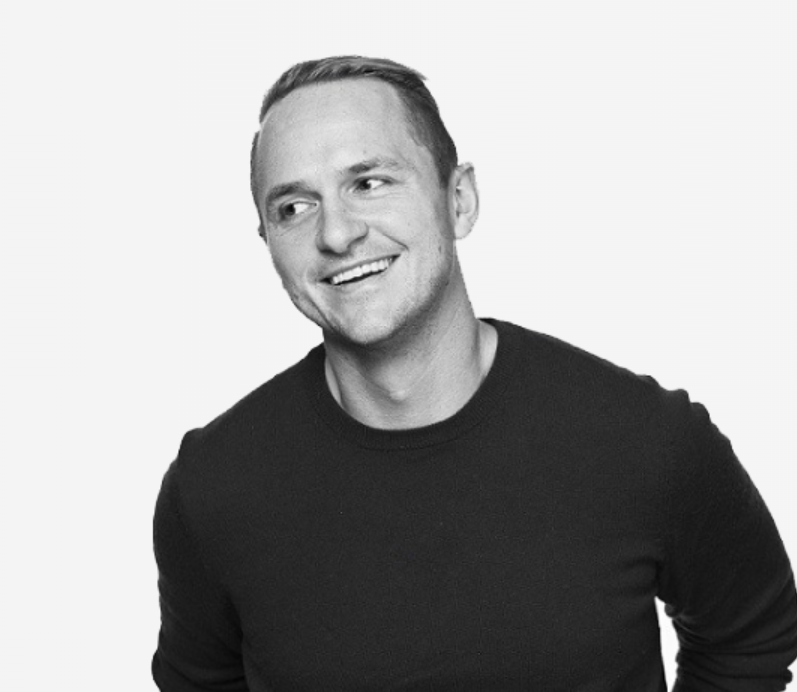
As part of my series about “authors who are making an important social impact”, I had the pleasure of interviewing Craig Greiwe.
Craig Greiwe is a business executive and former Chief Strategy Officer for one of America’s largest culture and marketing firms, Rogers & Cowan PMK, as well as a former 2022 Los Angeles mayoral candidate — but success didn’t happen overnight. He grew up in poverty in rural Indiana, before being abandoned as a teenager. He worked hard, relied on the blessings of others, and built a life from virtually nothing. Now, he’s known for finding solutions to seemingly impossible problems and developing groundbreaking strategy for America’s most trusted businesses, all while making sure that every friend has a drink in their hand, a warm shoulder to cry on, and a “chin-up” perspective. He has a relentlessly optimistic yet practical outlook on life — the kind you can only develop by having hit rock bottom and dusting yourself off to try again as chronicled in his debut memior “Chasing Normal: Growing Up, Letting Go, and Finding Joy in Being Different” (available now via Post Hill Press).
Thank you so much for joining us in this interview series! Before we dive into the main focus of our interview, our readers would love to “get to know you” a bit better. Can you tell us a bit about your childhood backstory?
Imean…my childhood. The first few chapters are a “gloss-over,” but I could have written three books about it. It was insane. Growing up poor is one thing. Growing up emotionally tortured is another. Then, like any child, I faced a choice: collapse in the face of it all, or work harder? I worked as hard as any human being possibly could, tried everything I could try, to prove my value and prove my worth. Only later would I realize that no matter how perfect I tried to be, I’d have to find value “on the inside” as all the books tell you. And none of that changed the fact that my childhood was horrific. I mean, picking asparagus out of a roadside ditch for food is one thing, stealing bass from a neighbor’s pond, convincing yourself that “it’s not that bad” just to get through the day with no friends while being bullied by everyone you know? Let’s just say it wasn’t the best start out.
When you were younger, was there a book that you read that inspired you to take action or changed your life? Can you share a story about that?
To be fair, no. I mean, I read “The Prince and the Pauper,” which made me fantasize about a better life, for sure. But back when I was a kid (30 years ago), we didn’t have “It gets better.” It didn’t, back then. I didn’t know I was gay; I didn’t know there was a way out of poverty, I didn’t even know how to get into college. I took action because I had to. Because if I didn’t, I would have died. To be honest, that’s the most powerful literary story in the world: survival. But for me, it wasn’t a story I read, it was a choice I faced.
Can you share the funniest or most interesting mistake that occurred to you in the course of your career? What lesson or take away did you learn from that?
I’ve made more mistakes than I care to count. Actually, I treasure most of them because I learned a lot. When you grow up the way I did, no one teaches you anything; you learn by mistakes. When I went to law school, I had this idea in my head — no joke — that it would be a little bit like “Legally Blonde.” Not that I thought it would be like a movie; I knew better. But I thought it would be a place where I could find my way and prove myself. I underestimated the sheer hostility of a place like that. But that didn’t stop me from bringing a “Legally Blonde” heart-shaped notepad and pink fluffy pen to the first day of class…now THAT was both a mistake and definitely one I would do again!
Can you describe how you aim to make a significant social impact with your book?
Lots of the books we read now are these things that tell you “I went through it, I did the work, and now my life is perfect.” But it’s not. It never is. My book doesn’t end on a perfect note. Yeah, my life is a hell of a lot better than I had ever imagined, but for decades, it was a mess. And it’s time we started telling people that it’s ok if your life is a mess for a little…or a long…while. If I can reach just a few people with the message that it’s ok for your life to be a mess, as long as you’re ON the journey and DOING the work, that’s worthwhile. Let’s stop trying to be Brené Brown. Let’s start accepting that being our messy selves is enough, as long as we’re working on being better.
Can you share with us the most interesting story that you shared in your book?
Honestly, I spent most of my life trying to forget the memories of this book. They were not pleasant experiences, although I’ve long since dealt with them in therapy. And now, I can see the tragic comedy in so much. I would say the most interesting piece is what happened with Columbia Law School — primarily because it’s a bastion that holds itself out to be a place of virtue and honor, but is anything but. It was shocking to me then, and is shocking to me now, that a top-tier, centuries-old law school would pervert the law in such extraordinary ways in the pursuit of power and ego. It should be a warning sign to anyone about the dangers of entrusting too much power to reputation and networking.
What was the “aha moment” or series of events that made you decide to bring your message to the greater world? Can you share a story about that?
I never intended to write a book. About six years ago, though, I read several memoirs over the course of one summer and they were very cathartic. I thought to myself, maybe I’ll just write a little short story. It turned into an entire book about the journey I had been on, and one I was really proud of — but still never intended to publish. It was only after meeting my agent Jeff Schmidt last year through fluke circumstances, that I was really convinced to come forward with my story. He believed in me when no one else would give me a shot, and this book is the result of his perseverance, encouragement and experience.
Without sharing specific names, can you tell us a story about a particular individual who was impacted or helped by your cause?
I have always believed that I would be nowhere without my education. So, I have spent a great deal of my life, energy, time, and money supporting education for those who needed it most. I have admired, and supported, the Point Foundation, along with a number of other organizations, focused on giving people the shot that I so desperately needed.
Are there three things the community/society/politicians can do to help you address the root of the problem you are trying to solve?
The unequal distribution of wealth in this country is unconscionable. I’m not an extremist or an activist, and I believe that people can and should be wealthy, but the gap is too large, larger than it’s ever been. Every citizen and corporation should have to pay a minimum tax, regardless of write-offs and exemptions.
Every student in America should be guaranteed post-high school education or job training, free of charge. We have to provide pathways to productive futures.
Also, we need to strengthen the pathetic excuse for child services and foster care we have in this country. It’s appalling how bad things are, and how much politicians and policymakers pat themselves on the back for minor improvements in the face of a total failure of our systems in every state, across this nation.
How do you define “Leadership”? Can you explain what you mean or give an example?
Leadership is showing up to help other people become their best selves. Period. It’s not about showing up for your own self, or being a motivational speaker or a business executive — it’s about helping others achieve great things. I’ve benefited from great leaders, and I hope to be one someday.
What are your “5 things I wish someone told me when I first started” and why. Please share a story or example for each.
Here is a link to Craig’s “5 things I wish someone told me when I first started” video: https://www.youtube.com/watch?v=GXXl-ciUYOQ&feature=youtu.be
I wish someone had told me:
Money does matter. Where you start matters. Don’t get angry about it, just accept it and do your best. Other people got a leg up, and that’s not their fault, or yours. But it doesn’t have to stop you from being your best self and showing the world that no matter how much of a head start everyone else got, you’re here to play.
Parents matter. So many times, things in my life have happened, and I’ve asked, “what in the world is going on?” Only later did a friend or coworker or therapist explain to me that their parents had explained to them what was happening. Like I lie awake at night thinking about how to make the world a better place. I had no idea that wasn’t a thing!
Failure is good. As someone who was abandoned growing up, I spent my life trying to be perfect in hopes someone would want me. I didn’t realize that failure was essential to growing, loving, learning, and being loved.
Perfect is not good. We’re taught through Instagram and motivational speakers that you have to “discover your power” and that everything has a motto. That isn’t true. Inspiration and happiness are in the mess, not in the filter.
Memoirs are hard. I thought writing my stories would be cathartic, and it was. But having held them in for so long, realizing they’re going to be out in the world as the God’s honest truth — a truth I’ve held inside for so long — that’s scary. And hard. But I’m here. So, let’s do this!
Can you please give us your favorite “Life Lesson Quote”? Can you share how that was relevant to you in your life?
“Dare to know.” The fear of the unknown has kept so many people from taking a chance, trying something new. Even where I grew up, people may have been miserable, but they were so scared that what was on the other side might be worse, they just never took a shot. You’ve got to know.
Is there a person in the world, or in the US with whom you would like to have a private breakfast or lunch with, and why? He/she might just see this, especially if we tag them. :-)
Jamie Dimon. Where I grew up, banks were places you put money that we didn’t have. I didn’t know that they led policymaking, world finance, and influenced every aspect of our lives. And I certainly didn’t know that there were people as smart as Jamie Dimon. We’re taught that politicians, actors, and celebrities are heroes, but to me, the people who do the right thing for the right reason, who provide wise counsel in a time of crisis, who lead with a steady hand, who quietly wield power to make this world a better place, they are the people I look up to the most. And for me, Jamie Dimon has always embodied that.
How can our readers further follow your work online?
Everything I do is at my website, www.craiggreiwe.com, and on Instagram at Instagram.com/theworldatcraig (short for “the world according to Craig,” because I certainly have a point of view that is different from everyone else!).