I don’t think telling children to dream big is as powerful as letting them watch you try something that scares you a little.
As a part of this series, we had the pleasure to interview Corina Kaufman.
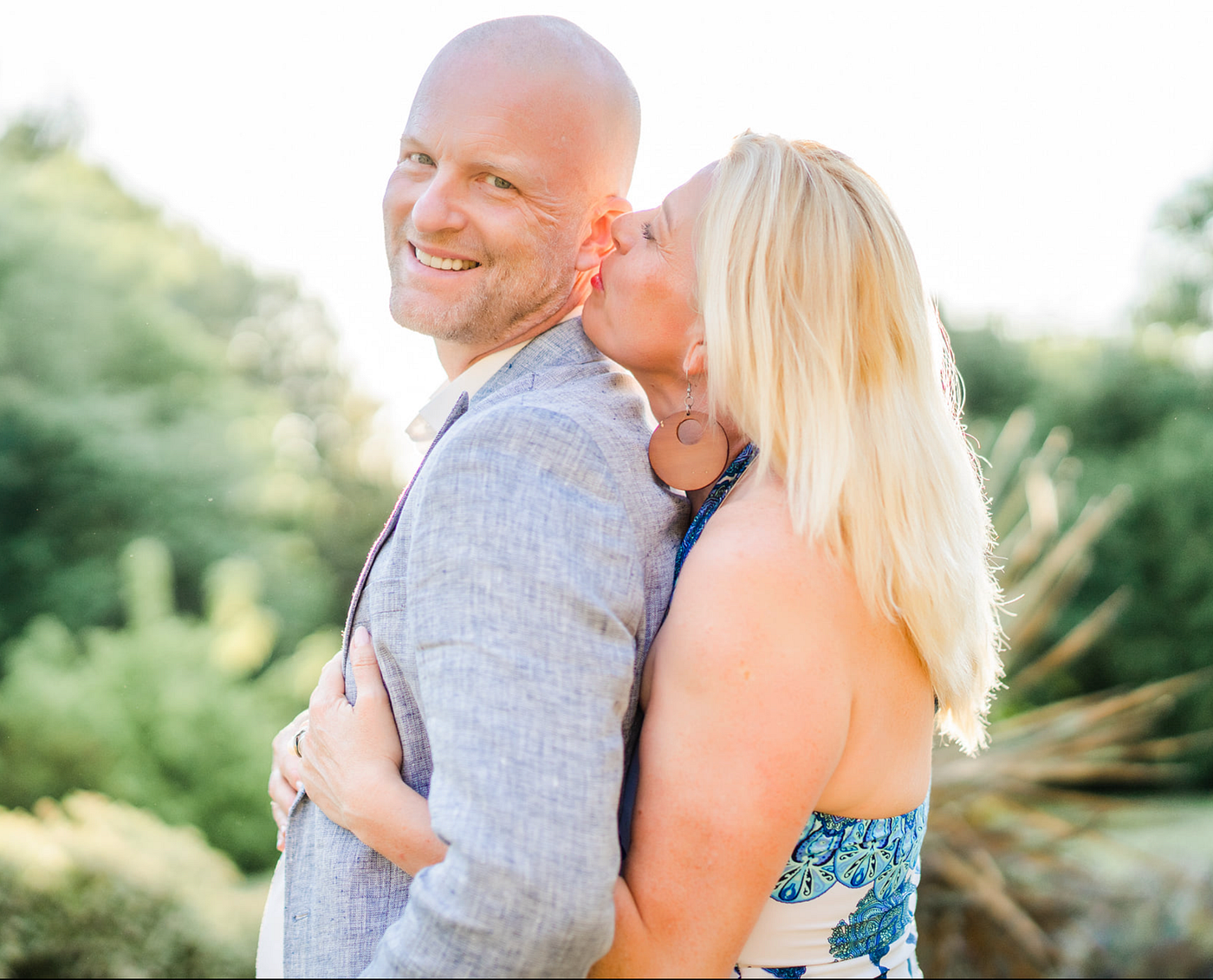
Corina Kaufman, Founder and CEO of Enzyne and author of the 12 Step Guide: How to Rank in AI Search Generative Engine Optimization (GEO), brings nearly 20 years of experience in B2B technology marketing, including growth strategy, demand generation, SEO, digital PR, integrated marketing and events. She founded Enzyne to help B2B technology companies strengthen their visibility across traditional and AI search. After stepping away from her career to raise her two children, she returned to work following an unexpected divorce and built the company around an emerging need she saw in the market.
Thank you so much for joining us in this interview series! Can you tell us the “backstory” behind what brought you to this point in your career?
I’d been in B2B technology marketing for close to 20 years. Growth strategy, demand generation, SEO, digital PR, events. A lot of my job was taking something complicated and helping people understand why they should care about it.
Then I stepped away to raise my children full-time. Coming back wasn’t part of some carefully mapped-out career plan. My marriage ended unexpectedly, and I needed to rebuild a working life while becoming the head of my household and still being the mother I wanted to be.
When I came back, the market had changed. People were starting to use tools like ChatGPT and Perplexity to research companies and make decisions. A business could have a great product and a recognizable name and still be missing from the answer. I saw a real need there, so I built Enzyne to help B2B technology companies show up more accurately and credibly across traditional and AI search. For me, the company is tied pretty closely to starting over and building a new future for my family.
Can you share with us how many children you have?
I have two children.
Where were you in your career when your child was born/became part of your family?
I was already established in B2B technology marketing. Later, I stepped away from full-time work to focus on raising my children.
Did you always want to be a mother? Can you explain?
Yes, I always wanted to be a mother.
Did motherhood happen when you thought it would or did it take longer? If it took longer, what advice would you have for another woman in your shoes?
I prefer to keep that part of my family’s story private.
Can you tell us a bit about what your day-to-day schedule looks like?
Honestly, it depends on the day. I’m balancing client work, building Enzyne and being available for my children, so I plan around the parts of the day when they need me. Then I use the quieter blocks for strategy, writing, research and the business side of running the company.
Has being a parent changed your career path? Can you explain?
Completely. I stepped away from my career to raise my children, and when I returned after an unexpected divorce, I had to look at all of my experience differently. I couldn’t wait for the circumstances to be perfect. And I couldn’t assume I would just pick up the old path exactly where I had left it.
Motherhood shaped the kind of company I wanted to build, too. I needed work that used what I already knew, responded to something real happening in the market and helped me create stability for my family. That’s really where Enzyne came from.
Has being a mother made you better at your job? How so?
I think it has. Motherhood makes you very honest about time. I’m better at seeing what really needs to be done well, what can be simplified and what doesn’t deserve the energy I was about to give it. That judgment carries over into growth marketing every day.
It has made me more resourceful, too. A strategy can look beautiful on paper and still fail in somebody’s actual workday. I pay a lot more attention now to the people who have to use the plan and the constraints they’re dealing with.
What are the biggest challenges you face being a working mom?
The mental load is probably the hardest part. Even when I’m working, I’m still a mother. And when I’m with my children, the business doesn’t disappear. I’m responsible for providing for my family and doing good work for clients, but I also want my children to know me as present, loving and dependable.
I don’t think there is a perfect split that makes every demand go away. Some days lean toward work. Some lean toward family. I try to notice what needs me most right now and then come back to the priorities that matter to us.
Are there any stories you remember from the early days of parenthood that you want to share?
When my youngest son was about three months old, I had an exciting job interview opportunity. I scheduled the video interview during nap time, thinking I had it all figured out. Of course, my baby woke up right before the interview started and needed to breastfeed. I wasn’t going to miss the opportunity, so I positioned the camera so the baby wasn’t visible and went ahead with the interview while nursing. At some point, I was having such a hard time focusing on the questions that I finally admitted I had an infant with me the entire time and showed them. The women interviewing me started cheering and said, “Women rock!” It was such a funny, unexpected moment. What could have been an awkward situation turned into a moment of connection and reassurance. I got through the interview, and it became part of my story.
Are there any meaningful activities or traditions you’ve made up or implemented that have enhanced your time with your family? Can you share a story or example?
I love going on spontaneous adventures with my children. Sometimes, the morning of, we’ll look up outdoor activities and find somewhere new to explore in nature. It might mean grabbing our bikes and riding along the Tennessee Valley Trail in Marin or heading out for a short hike in the Alamo Hills. We enjoy discovering new outdoor places.

We all live in a world with many deadlines and incessant demands for our time and attention. That inevitably makes us feel rushed and we may feel that we can’t spare the time to be “fully present” with our children. Can you share with our readers 5 strategies about how we can create more space in our lives in order to give our children more quality attention?
1. Protect the small routines. I don’t think quality time always has to mean finding an entire free afternoon. Breakfast, the drive home from school or bedtime can become the time when your children know they really have you.
2. Put the phone somewhere else. If it’s sitting next to me, part of my attention is still on it. Moving it out of reach works better than pretending I won’t look.
3. Let some things be good enough. Perfection can eat up a lot of time without making the result much better. I’d rather save that attention for the work and family moments that really need it.
4. Plan around the family anchor points. I look first at the parts of the day when my children need me, then build focused work time around those when I can. The schedule changes. At least the priorities are visible.
5. Ask for help, and actually accept it. That second part can be harder. Support from family, friends, colleagues or paid services can create room for the people and responsibilities that need your full attention.
How do you inspire your child to “dream big”? Can you give an example or story?
I don’t think telling children to dream big is as powerful as letting them watch you try something that scares you a little. My children have seen me return to work, learn a fast-changing area of marketing and start a company when our lives did not feel especially settled. I want them to see that uncertainty doesn’t mean you have to stop.
They also see the less exciting parts. Learning, asking for help, trying again, doing the work when you don’t know yet how it will turn out. That’s part of dreaming big, too.
How do you define success in both your career and your family life, and how has this definition evolved over time?
My definition has definitely changed. Earlier in my career, success was easier to measure through professional progress and business results. Those things still count. They’re just not the whole answer anymore.
Career success now means doing work that uses my experience, helps clients adapt and creates a stable future for my family. At home, it means my children feel loved, secure and able to talk with me. I don’t expect every day to look balanced. I care more about whether the life we’re building reflects our priorities over time.
What are your favorite books, podcasts, or resources that inspire you to be a better parent? Can you explain why you like them?
I enjoy exchanging parenting advice with my girlfriends and learning from resources that focus on nurturing the whole child. Books like Malcolm Gladwell’s Outliers, along with growth mindset principles, influence how I parent. I encourage my children to ask questions, think independently, challenge ideas rather than blindly accept no, and stay curious. I want them to develop an entrepreneurial mindset, recognize possibilities, and feel confident exploring their ideas. Most importantly, I want them to know they have my support, believe in themselves, and understand that they can accomplish anything they set their minds to. I like Malcolm Gladwell’s Outliers because it reinforces the idea that success isn’t reserved for a select few. With focus, practice, and persistence, you can accomplish things that may initially seem out of reach. I want my children to understand that their potential isn’t fixed and that they can achieve a lot when they believe in themselves and put in the work.
Can you please give us your favorite “Life Lesson Quote” that you share or plan to share with your kids?
The lesson I want my children to remember is, “Setbacks don’t have to define us. We can learn, adapt and create a new path forward.”
That one is personal. My life changed unexpectedly, but my experience and ability didn’t disappear. I want my children to know they can begin again without pretending the hard part never happened.
If you could sit down with every new parent and offer life hacks, must-have products, or simple advice, what would be on your list?
First, I’d tell new parents to let go of the idea that there is one correct way to manage a family, a career and a home. Build routines for the family you actually have. Accept help before you’re completely exhausted. And protect a few moments of undivided attention each day, even if they’re short.
Thank you so much for these insights! We really appreciate your time.