Particularly if you are in startups or early-growth companies, the highs are so high, but the lows can be low. So, to stay grounded in remembering what you can achieve is essential.
Reading the news can be so demoralizing: climate change, war, fires, epidemics, rogue AI, mental health, authoritarianism, extreme partisanship. But humans need hope. For us to create a positive future, we need to be able to have hope that there can be a positive future. What is the “Case for Optimism” over the next decades? What can we look forward to and hope for to help us strive for a more positive future?
In this series, we aim to explore and highlight the positive aspects, potential breakthroughs, and reasons for optimism that lie ahead in the coming decade and beyond. We are talking to authors, researchers, entrepreneurs, scientists, futurists, and other experts who can shed light on the exciting advancements, innovations, and opportunities that await us. As a part of this series, we had the pleasure of interviewing Dr. Christine Swisher.
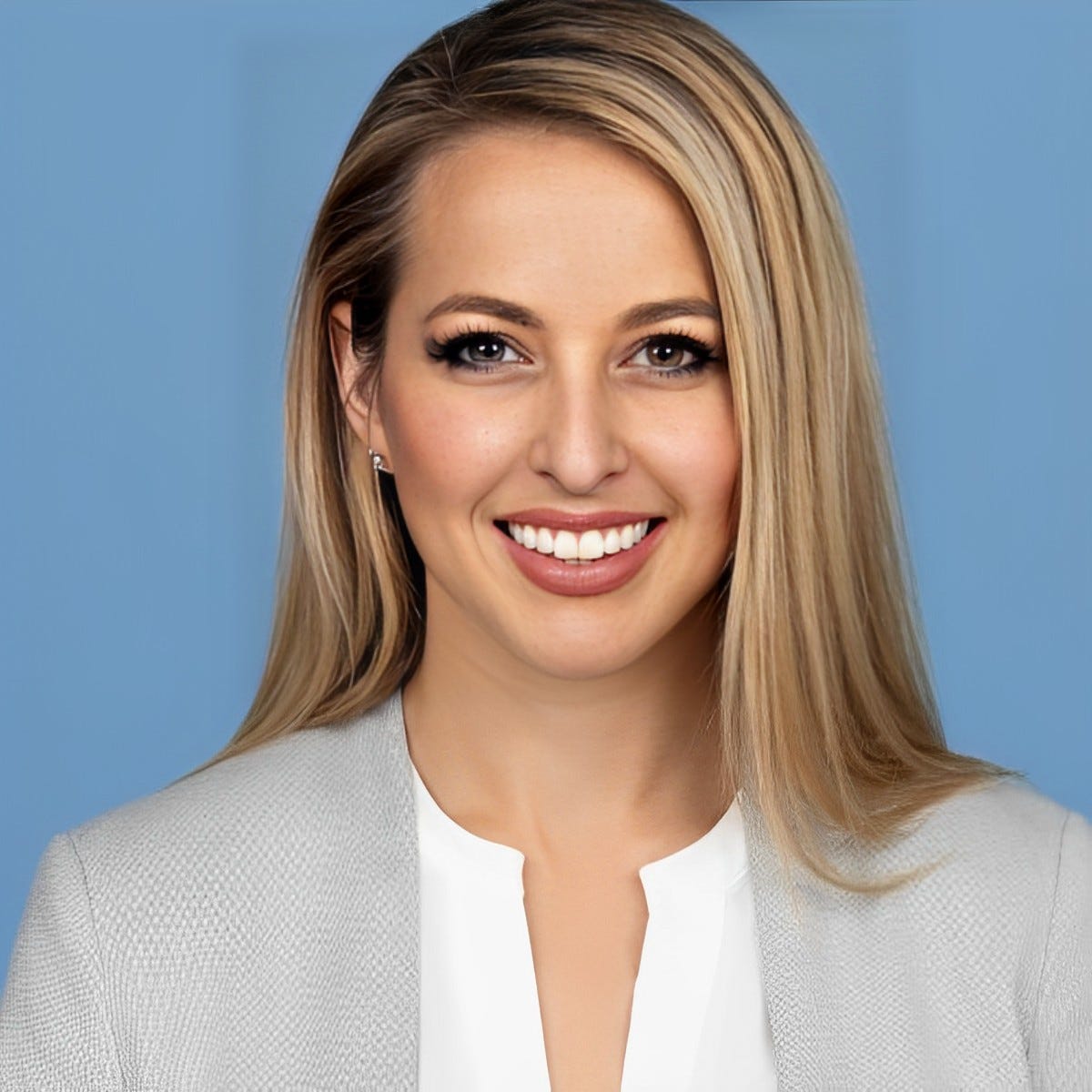
Christine Swisher, Ph.D., is the Chief Scientific Officer at Ronin leading multidisciplinary teams of data scientists, statisticians, clinical informaticists, and machine learning experts to build technologies that solve challenging clinical problems. Together with the entire Ronin team, they have delivered transparent artificial intelligence-based clinical decision support systems, NLP innovations, and demonstrated causal impact on clinical and institutional outcomes with the use of the Ronin platform.
Thank you so much for joining us in this interview series! Before we dive into the focus of our interview, our readers would love to “get to know you” a bit better. Can you tell us a bit about your childhood backstory? What or who inspired you to pursue your career? We’d love to hear the story.
When I was little, my grandmother helped raise me, and she was diagnosed with cancer. She had a long journey with cancer and passed away. Since then, I have always felt better decisions could have been made around her care. And I also saw how cancer affects the person who has it and their family members. So that inspired me to go into biomedical engineering in college, but I had a better aptitude for computer science.
Then, when I went to graduate school, I was using data science, as well as earlier machine learning methods than we have today, to find the best treatment for cancer patients. At Ronin, I’m proud I can live up to that goal I set incredibly early in my childhood.
We can only achieve success with some help along the way. Was there a particular person who you feel gave you the most help or encouragement to be who you are today? Can you share a story about that?
I’ve had so many great mentors along the way who took a chance on me and gave me a more significant scope than I imagined for myself, or even maybe than sometimes I was ready for. They let me fail and learn. It started with my undergraduate advisor, who let me be the statistician that supported a group of surgeons when I worked in a research lab. Typically, a Ph.D. would do that work, but he gave me the opportunity as an undergraduate. Additionally, several professors at Berkeley and UCSF, notably Sarah
Nelson and Dan Vigneron selflessly enabled me to have opportunities to grow in both leadership and technical acumen.
Then, as a professional, mentors at every phase of my career supported me. At first, Homer Pien helped me switch from academia to industry. Later, at Human Longevity, Scott Sorensen believed in me like a few others. There is not a single thing I have accomplished or an opportunity I have received without the support of a great mentor.
What are some of the most interesting or exciting projects you are working on now? How might that help people?
One project that sticks out to me was when I joined Philips in the early 2010s and worked with Homer Pien when deep learning was not what it is today. At the time, no one was using deep learning in healthcare, but he had the foresight to realize that this technology would transform healthcare. Today, not only has that happened and resulted in over 100 FDA-cleared 510(k)s that are AI-based, but it’s even more relevant when considering what generative AI is doing. He allowed me to say, “Let’s look across all of the healthcare verticals and see where there’s opportunity.” And for somebody who had recently left academia to join the industry, this was the most incredible opportunity to learn.
You are a successful leader. Which three character traits do you think were most instrumental to your success? Can you please share a story or example for each?
Resilience: Particularly if you are in startups or early-growth companies, the highs are so high, but the lows can be low. So, to stay grounded in remembering what you can achieve is essential. Humans overestimate what we can achieve in a year and underestimate what we can achieve in five. It’s important to remember what we have accomplished in those low times and celebrate those wins because the down times are part of the journey. It would be boring otherwise.
Empathy: When you’re progressing in your career, it’s important to remember what it was like when you first started, like when you were writing code and struggling to get rid of the bugs. Thinking back on those experiences helps you empathize with the end user, whether a patient, physician, nurse or someone else. The ability to place yourself in someone else’s shoes helps immensely throughout your career. Everyone wants to work with people who have empathy.
Ambition: It’s essential to be competitive when working at fast-growth, early-stage companies. Set ambitious goals, even if they’re hard to achieve. Try to do the hard thing, not just go for incremental wins. Make sure you keep your eyes on the prize and make that prize worth winning.
Ok, thank you for all of that. Let’s now shift to the focus of our interview, the case for optimism. Let’s begin with a basic definition so that we all are on the same page. What exactly do we mean When we are optimistic about the future?
In healthcare, for example, one reason to be optimistic is that technology will allow for a greater degree of personalization of care. I am excited about that because it will result in better patient outcomes. Additionally, in healthcare, we are seeing technology deliver more democratization of care so that we can bring higher-quality care to everyone. It will be challenging to get there, and there are enormous challenges, but there is significant opportunity for improvement.
Why is it important to have an optimistic outlook about the future?
It’s important to be optimistic about the future, not because we should ignore challenges but because it helps us see the opportunities. With modern technologies, for example, there are always transparency, privacy, and usability challenges. But we can also look at certain technologies and see opportunities to improve healthcare, drug discovery, and overall social good. We will only obtain that benefit if we focus on the negatives. If we can say, “How do we address the challenge and balance that with the potential?” we’ll be better off.
What are some reasons people might feel pessimistic about the future, and how do you suggest we address these concerns?
As healthcare gets more advanced, there are new ways that we must be proactive to stay up with technology to prevent unforeseen harm. Modern technologies may not have solved key factors like transparency, privacy, and security; we must keep innovating and being rigorous in our evaluations. What worked yesterday might not work today, and we must be thoughtful.
Fantastic. Here is the central question of our discussion. Can you please share with our readers your “5 Reasons To Be Optimistic About The Next Ten and Twenty Years?” (Please share a story or an example for each.)
1. The changing nature of how we work: The COVID-19 pandemic allowed us to experiment with how we work, and we’ve explored new ways to work together as teams, including entirely remotely. As a result, we have new ways to build thriving and creative teams and create a better work-life balance. So, we are reframing how people work and doing it in new ways that can give parents and caregivers more opportunities to be in leadership positions.
2. AI automation: AI enables us to automate tedious tasks so that we can have more ambitious goals and work on more exciting problems creatively. We can focus on the opportunity to work on the things we love rather than on how technology might replace us. In the past, for example, we went from animation with hand drawing to CGI. CGI expanded the scope of what we could deliver and how productive we could be. This is an enormous opportunity where we can work with innovative technologies that will allow us to grow our impact.
3. Accessibility and understanding of the whole genome: We moved from mapping the human genome, an international effort that took years and billions of dollars, to sequencing individual genomes at a fraction of the cost and time, and sometimes even at the point of care. By better understanding the genome and making it more accessible, we’ll better understand our human history. We’ll have better treatments and be able to prevent disease better. We can have more personalized medicine. And even looking outside of human genetics, we can have healthier and more sustainable foods.
4. AI that understands cause and effect: Our current machine learning methods, even the most impressive approaches, need help with causality. Such inferences come very quickly to us as humans, but machine learning that reasons by association, versus causal reasoning, is the next frontier. With this advancement, we will have AI that doesn’t contradict itself. We will have AI that can drive equity and inclusion and accelerate discoveries, such as novel drug targets and understanding the drivers of disease. This is our next frontier for AI.
5. Generation Alpha: They were born in the digital world. They accept and understand different lifestyles and cultures. I’m so inspired by this next generation and the world that they will create, that they embrace the technology that’s been our vision and that they will be the ones who make it a reality.
What areas do you see technology having the most positive impact over the next 10 to 20 years?
I would like to see every decision along a patient’s journey — from initial symptoms to diagnosis, hospice, or survivorship — be data-driven and personalized to that patient and at that specific time. Equally as important, healthcare must empower patients and caregivers with the knowledge necessary to actively participate in their care and ensure they experience seamless engagement with their care team.
Further, we must continue to reduce clinician burden by ensuring they make decisions efficiently and confidently. When clinicians spend less time scanning and digesting information and more time providing care and engaging with patients, we will continue to experience improved outcomes and a better care experience for providers, caregivers, and patients.
While technology holds immense potential, it can also present challenges. How can we ensure that the progress we make in technology contributes to a more optimistic future and doesn’t exacerbate societal problems?
Consider AI as an example: While it can potentially transform healthcare for the better, healthy skepticism exists around its safety and efficacy. For clinicians who lack data science training, for example, AI can be a black box. To increase the adoption of transformative approaches to care, like AI, vendors must build AI-human interfaces that are designed for interpretability.
Delivering this technology requires a deep understanding of clinical workflows and how clinicians’ access and utilize data. There is no technology to replace humans when it comes to providing care. However, we can impact patient lives by expertly designing technology that improves the clinician experience and builds clinician-patient trust by removing friction points.
How do you maintain your optimism during challenging times?
There’s a great quote from Winston Churchill: “The pessimist sees difficulty in every opportunity. The optimist sees opportunity in every difficulty.”
Maintaining optimism is about reframing your thinking. If you have a complex problem, think, “How can I change this challenge into an opportunity?” Then focus and find fulfillment in your power to impact others and make the world slightly better.
Ok, we are nearly done. You are a person of great influence. If you could inspire a movement that would bring the most amount of good for the greatest number of people, what would that be? You never know what your idea can trigger.
My big, ambitious goal would be to empower patients with their data in a way that’s accessible, with the proper education they now need it. Moreover, I would like to inspire a movement that centers on patients and puts them in the driver’s seat, where patient experience and outcomes are the most important.
We are blessed that some of the biggest names in Business, VC funding, Sports, and Entertainment read this column. Is there a person in the world, or in the US, whom you would love to have a private breakfast or lunch with, and why? He or she might just see this, especially if we both tag them
First, Alan Turing is widely regarded as the father of theoretical computer science and AI. It would be great to have a meal and discuss the philosophical implications of his work in AI.
In terms of people who are alive today, I’d love to meet some female leaders and innovators. One is Fei-Fei Li, whose work in AI, computer vision, and AI ethics have inspired me. In addition, Sheila Marcelo is someone who thought deeply about the role of providing a social support system that is accessible for caregivers. She started Care.com and, finally, Sheryl Sandberg, who taught female leaders to lean in.
How can our readers further follow your work online?
I’m on LinkedIn at @ChristineSwisherPHD.
Thank you for these really excellent insights, and we greatly appreciate the time you spent with this. We wish you continued success and good health!