Writing is about embodied experience. All sensations, feelings, and thoughts are transmuted onto the page.
Some writers and authors have a knack for using language that can really move people. Some writers and authors have been able to influence millions with their words alone. What does it take to become an effective and successful author or writer? In this interview series, called “5 Things You Need To Be A Successful Author or Writer” we are talking to successful authors and writers who can share lessons from their experiences. As part of this series, I had the pleasure of interviewing Chelsea Rose Odhner.
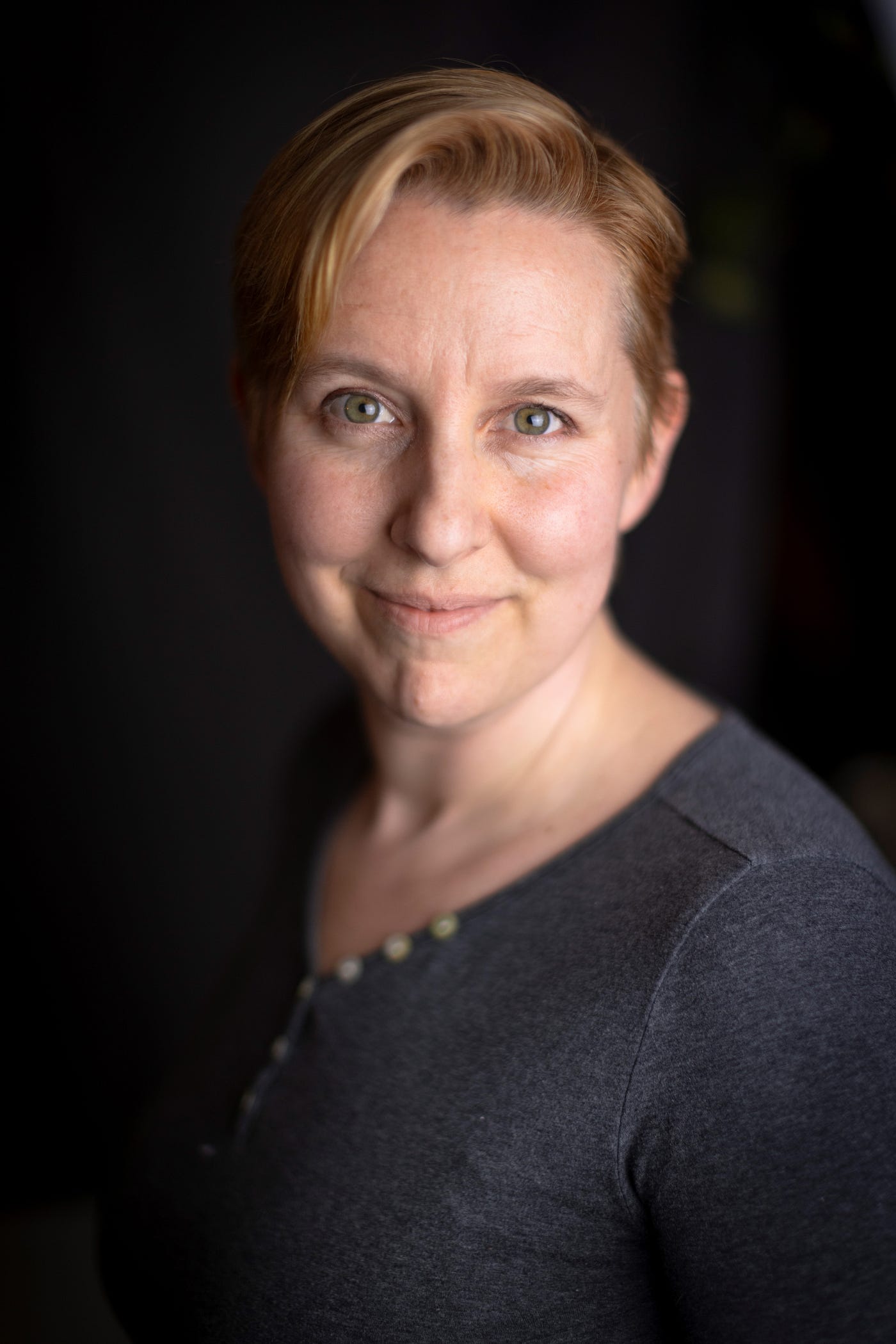
Chelsea Rose Odhner is the Vice President of Publishing at the Swedenborg Foundation, an author, writer, and multifaceted professional who bridges spiritual scholarship, creative expression, and holistic healing. As a licensed massage therapist, certified coach, and Internal Family Systems practitioner, they bring a unique interdisciplinary approach to understanding human experience and helping people rediscover wholeness. In their newest title, Opening the Inner World: Spiritual Healing, Internal Family Systems, and Emanuel Swedenborg, they explore the intersections of spiritual growth, psychological understanding, and whole-body wellness with co-authors Robert Falconer and Jonathan S. Rose.
Thank you so much for joining us in this interview series! Before we dive in, our readers would love to “get to know you” a bit better. Can you tell us a bit about your ‘backstory’ and how you got started?
Some of my most treasured memories are of sitting on the braided wool rug in the half of the great room that we used for our living room in our A-frame summer house on Hog’s Neck Bay on the North Fork of Long Island. The front of the house was all windows, so at night, when we’d gather around my great-Aunt Cathy to hear her read Grimm’s fairy tales, the lamplight of our room created an alcove of warmth, while we could see the lightning bugs blinking in the dark beyond the windows. There was just enough space between the trunks and branches of the tall oaks in our front yard to see the glint of the moon on the bay. I could feel the magic of creation there, and listened, riveted, to the mythical fables.
Our summers in Peconic would be full of reading. There was no digital entertainment beyond calling the telephone number for the time (“At the tone, the time will be 3:35 and 10 seconds . . . beep!”) or the one for the weather forecast and tides. We would make a trip, within the first day or two of arriving, to the local Southold library to collect all the books we could carry for our six week stay at the beach house. As a young teen, my older cousins read me the 500+ page epic The Power of One by Bryce Courtenay in one summer. Our time was spent reading, laying on the beach tapping the sand, swimming while dodging crab bites and jellyfish stings, or sailing on the Sunfish with Aunt Cathy, and hoping it wouldn’t be a time when she’d flip the boat to teach us how to right it again. We’d walk along the water collecting stones or shells or write our names in the sand.
The magic I felt in Peconic was a refuge the summer my mom was diagnosed with inoperable brain cancer. She stayed at home outside Philadelphia for her radiation treatments while my sisters and I were taken to the beach house. She passed away that fall, when I was ten years old. My earliest writing was in the form of letters to God and to my mom after she passed. Writing became a form of connection to something greater than myself, and a means of staying anchored to myself and my experience no matter how intense my circumstances were.
Healing and writing became intertwined throughout my life. I trained and then worked as a massage therapist and studied yoga as I completed my college degree in English and Biology. My senior thesis was on the application of writing therapy as a mental health intervention for people navigating cancer.
After college, I got married and had three kids. As a motherless mother, with unprocessed trauma stored in my system, the crucible of parenting infants called writing forth from my soul as a means to cope. Writing is about embodied experience. All sensations, feelings, and thoughts are transmuted onto the page. I carved out time to sit and allowed whatever needed to to come out of me onto the page. I wrote poems, spoken word pieces, lyrics, essays, and finally fiction. I produced an album of original music.
I was hired by the Swedenborg Foundation and soon became a writer for the Swedenborg & Life show on the Off The Left Eye YouTube channel. Here my writing shifted dimensions into screenwriting and show production. After eight years, I transitioned to leading the publishing department. Now for three years I’ve had the pleasure and experience of working on the industry side of book publishing, overseeing all facets of the book creation process.
Writing is at the heart of my healing. I wrote my way into freedom from the dogma of the church in which I was raised. I wrote my way into recognition of my suppressed sexuality. I wrote my way into understanding my nonbinary and neurodivergent identity. I write to become myself more deeply, because writing is inherently liberating. I write to heal, and I write to empower others to do the same.
Can you share the most interesting story that occurred to you in the course of your career?
I believe our writing and becoming are intertwined with our ancestors and dreams. As I grappled with leaving the church in which I was raised, I had an intense dream that seemed to mirror my process of leaving the church but was of a man in the late nineteenth century grappling with doing the same. This dream gripped me with a desire to write the fullness of the story I had glimpsed.
I wrote drafts of the book and then began to study the history of the denomination in order to understand the context of the story I was creating better. But I found I wasn’t creating it. The history I discovered was undeniably what I had dreamt and written—even down to the name of one of the main characters I had created. He was actually a historical figure! This parallel encouraged me to dig deeper and keep writing. To my surprise, I found my great-great-grandmother was present in the story I was telling. She was present at the exact historical events I was chronicling.
This great-great grandmother, named Myrtle, is shrouded in mystery in my family. She was an artist who attended the Pennsylvania Academy of Fine Arts in the late nineteenth century. Our family knew she was adopted and had found who her mother was, but her father remains unknown. Through census records, I learned that her mother later married a Black man and had eight more children. Their family was active in the historic Homewood AME Zion Church, while Myrtle was raised less than thirty miles away until she was sent to the church boarding school in Philadelphia.
Did she ever reconnect with her birth mother and family? She may or may not have, but I was able to trace the family tree of Myrtle’s half-siblings and connect in real life with lost cousins from this branch of our family tree. My cousins and I get to celebrate an interracial family born of love in the era of Reconstruction and early Jim Crow years.
Myrtle became a key character in my novel, propelling me into a story that explores adoption, racism, and the vibrant Black community of 19th century Philadelphia, in addition to the contentious schism that led to the start of the church in which I was raised.
I began writing this novel to understand myself more deeply. It led me to my ancestors and restored me to a branch of our family today. My writing of the novel is ongoing, and who knows the person I’ll be once it’s done!
What was the biggest challenge you faced in your journey to becoming a writer? How did you overcome it? Can you share a story about that that other aspiring writers can learn from?
Somehow, through the way trauma fractures one’s sense of oneself, I had very little confidence in my writing skills for most of my life. I wanted to be a writer and felt like I couldn’t be one, that I wasn’t good enough. Any criticism of my writing hit painfully deep, but I also held tightly to any positive encouragement. My step-mother, herself an English professor, would tell me, “Keep writing.” These words are emblazoned on my heart. “Keep writing” for me meant, “Stay alive.” No matter how bad I felt about myself or my writing, I kept going.
It takes amazing courage to let yourself write, to keep writing. I kept writing while I grieved the death of my mom more deeply than ever before when my oldest turned the age I had been when my mom died. At the time I was producing my album of original music, Confident Hope. The writing and creation of these pieces pushed me to embody a confidence in myself I never believed possible. I persevered. I kept showing up and facing my fears. The release of my album was a creative achievement I thought would only ever be a dream. To create something and bring it all the way to completion, I’ve learned, has a certain power. Create and share. Create and share. This is the cycle that carries you further on your journey. Something changed in me after I released my album. I had unlocked a creative freedom inside. This opened the way for me to let myself write fiction, something I had never felt good enough to do, only now I suddenly was filled with creative courage and playful freedom.
The territory keeps changing, but the lesson for me stays the same: keep going, keep writing.
It has been said that our mistakes can be our greatest teachers. Can you share a story about the funniest mistake you made when you were first starting? Can you tell us what lesson you learned from that?
As a scriptwriter and production manager for the Swedenborg & Life show I was often acting as the director on set. Unlike me, one of my coworkers, Matt, had attended film school and therefore knew all the proper jargon and customs. It would often be his job to either animate a storyboard I had drafted or film the scenes we were creating.
Whether on paper or live on set, I had to learn to be decisive. You can’t direct people with maybes! In my early script drafts, I would write, “Maybe this happens,” or “Maybe that happens,” I guess expecting someone who knew better to make a final decision, but it was up to me! So we would joke on set how ridiculous it would be if a director only ever called, “Um, maybe, cut?” I learned to edit out my maybes and instead be confident in my calls.
In your opinion, were you a “natural born writer” or did you develop that aptitude later on? Can you explain what you mean?
Definitely both. I have always been drawn to writing but it has taken years to develop my writing skills through practice and clearing the blocks that kept me from letting myself write. I highly recommend therapy, but as a confused, traumatized teen who bucked the system, writing was my therapy and it kept me on the planet. It connected me to my senses. It made me an observer. It helped me to reflect on my experience and not be owned by it.
As I’ve grown older and built up a capacity for safety in my system, I can now let myself feel the repressed feelings from my trauma directly, and my writing continues. I now write from a place of confidence. The War of Art by Steven Pressfield was a powerful resource that helped me clear blocks in myself to writing. Diana Gabaldon, author of the Outlander series, gave me the gift of creative permission (although she doesn’t know it!). She says, “I don’t write with an outline and I don’t write in a straight line.” She teaches people to write in whatever way works for them to actually get words on paper.
If you write, you are a writer. And the more you practice writing, the better your writing becomes. Keep writing.
What are some of the most interesting or exciting projects you are working on now?
My epic historical fiction! It is in the revision phase, but I am determined to keep writing and to see it to completion.
My other most exciting projects are transformative retreats that delve into the Internal Family Systems model and Swedenborg’s spiritual teachings in an accessible way that invites people to connect to the wisdom and love of their inner self.
Here is the main question of our interview. Based on your experience, what are the “5 Things You Need To Be A Successful Author or Writer”? Please share a story or example for each.
1 . Seduce your own resistance.
What do you need to make time for writing?
For me, I made a creative declaration to take myself on eight writing retreats in one year—one every six weeks. Some people can write for an hour a day, some people write at night or in the morning. For me, I need to carve out extended time when I can immerse myself in my story completely.
2 . Let your senses lead.
Writing is a contemplative journey. I immerse myself in the scene and feel it fully. Feel what your characters are feeling and experience the world through them with all your senses. In this way, writing becomes discovery, rather than figuring it out.
3 . Trust your intuition.
Do you remember the childhood game when someone would hide something and then you’d have to look for it and they would tell you that you were getting warmer or colder? The same works for writing and our intuition. Whether you’re wondering where to go next in your story or trying to figure out how to make space for writing in your life, ask yourself what feels warmer? Follow the warmth. It is your intuition guiding you.
4 . Be playful with what scares you.
I believe writing heals us and frees us. It is a medium of empowerment. Give yourself permission to write what you’re scared to write. What are you thinking of writing that you are not letting yourself write? Find a secluded spot, promise yourself that you don’t have to share anything of what you write with anybody, and then write whatever it is you’ve said no to. This exercise has cleared blocks in my writing and in myself many times.
5 . Keep writing!
Bottom line is, you have to keep writing. Write whatever you want and you will be stepping into a journey of becoming with your writing. Write letters, write poems, write songs. When we write we are saying yes to a creative partnership with something much greater than ourselves. Whether you think of it as your higher self, God, or the muses of Ancient Greece, something magical happens when you keep writing.
What is the one habit you believe contributed the most to you becoming a great writer? (i.e. perseverance, discipline, play, craft study). Can you share a story or example?
Writing. Just write. I could almost call this perseverance but it’s not; it’s a willingness to keep showing up. It’s not strict discipline—although I might have bouts of that. It’s a deep commitment, no matter what the circumstances are, to keep writing, whatever that might look like.
Having worked on my historical novel, the chapters I spend the most time with are the best. I used to think talent was something I either did or didn’t have when it came to good writing, but now I know it’s just what I show up to. Write, rewrite, refine. What you give your attention to will get better, it’s like a law of spiritual physics, the natural design of things. Where you put your attention grows and develops. No matter what I’m writing, I know if I just sit down and keep at it, it will get better, and it does.
Which literature do you draw inspiration from? Why?
I love epic novels and works of historical fiction, books you read and that make you feel like you’ve been there; that are so immersive, it feels like you’ve stepped into another lifetime in another world. These are what inspire me. They transport me so completely into another person’s experience. It is the most amazing play of imagination that someone in one time could write something that affects me so deeply. These authors reach across time and space and have indelibly impacted my life for the better: Diana Gabaldon’s Outlander series, Jill Lepore’s Book of Ages: The Life and Opinions of Jane Franklin, John Irving’s A Widow for One Year and Until I Find You, John Steinbeck’s East of Eden, Gabriel García Márquez’s One Hundred Years of Solitude, Milan Kundera’s The Unbearable Lightness of Being, Louis de Bernières’ Latin American trilogy including The War of Don Emmanuel’s Nether Parts, Señor Vivo and the Coca Lord, and The Troublesome Offspring of Cardinal Guzman.
You are a person of enormous influence. If you could start a movement that would bring the most amount of good to the most amount of people, what would that be? You never know what your idea can trigger. :-)
A movement of destigmatizing mental health for middle-school aged people. Honest, unflinching, accepting, and compassionate spaces for middle schoolers to get whatever help they need to deal with trauma. A book published by the Swedenborg Foundation that I helped steward into being is Surviving Suicidal Ideation: From Therapy to Spirituality and the Lived Experience by Gina Cavalier and Amelia Kelley. I want the tools and exercises and resources in this book to be available in an easily digestible format for middle schoolers across the country and globe.
We treat children like children, but they are full human beings having the most direct, defenseless experience of trauma—their own and the unprocessed mental health struggles of the adults around them. I want to equip children in this age group with respectful, validating resources. We need to not be afraid of middle-school aged mental health. If all middle schoolers felt empowered and connected to their inner core, the world would be transformed in one generation. They need our respect. They need our humility. We need to do better to support this age group and nurture their in-born connection to love and wisdom.
How can our readers further follow your work online?
https://www.linkedin.com/in/chelsea-odhner
https://www.instagram.com/chelsea.odhner
https://www.facebook.com/chelsea.odhner
Thank you so much for this. This was very inspiring!