
The moment I realized that this was my feelings of imposter syndrome and that my history of chronic illness was a strength and not a hinderance was when everything in my business shifted and I finally started to see the growth and success that I had been struggling to find.
As a part of our series about how very accomplished leaders were able to succeed despite experiencing Imposter Syndrome, I had the pleasure of interviewing Charlene Gethons.
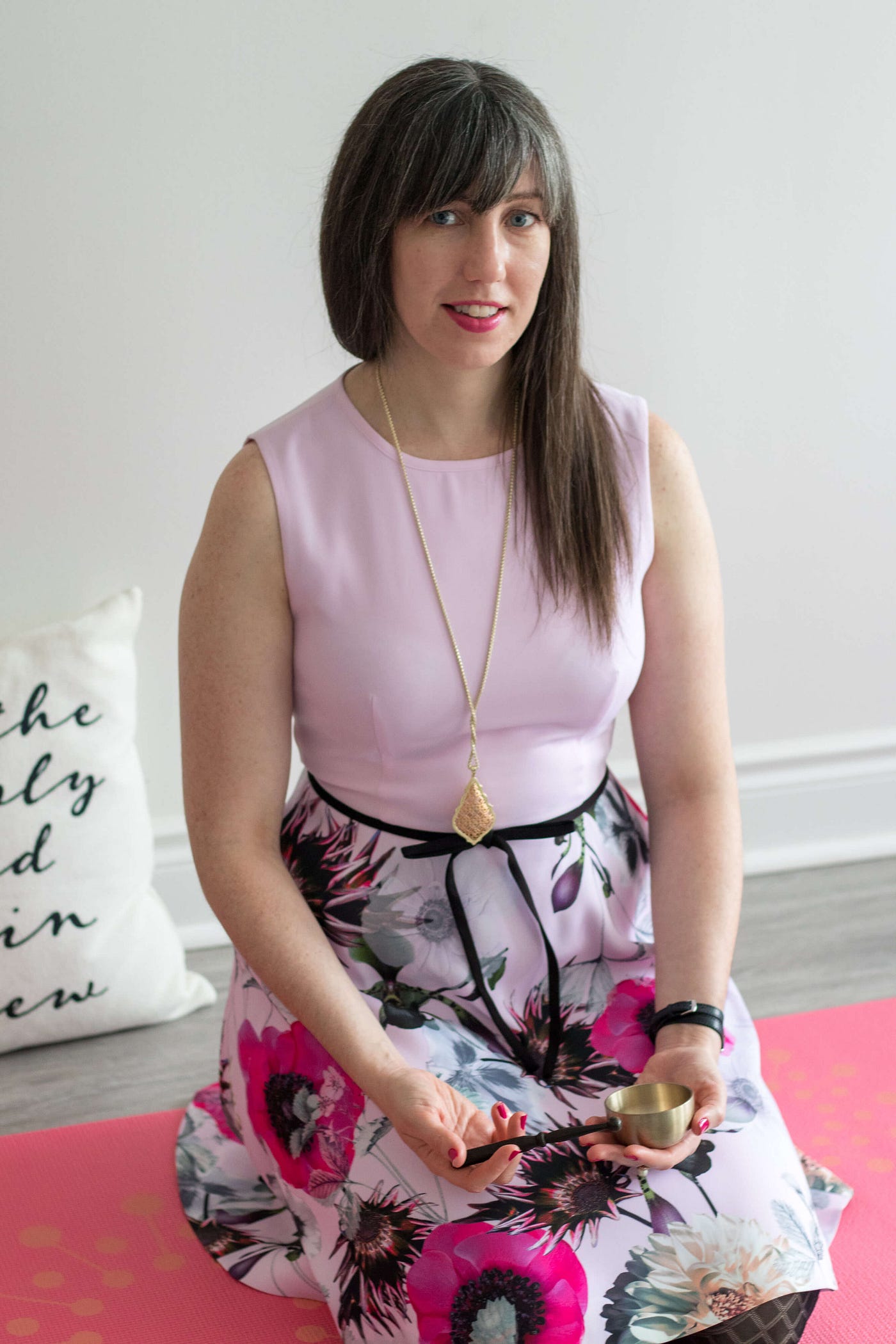
Charlene is a mindfulness meditation teacher, psychotherapist, entrepreneur, and coach. After sustaining a traumatic brain injury in 2013 when she was hit by a bus, her life was changed in an instant. During the long and protracted recovery, Charlene first started practicing mindfulness which ultimately led her to start her own business, The Mindfulness Journey, where she provides teaching/coaching to others on how to use the practices of mindfulness to transform their lives. These days Charlene teaches a combination of mindfulness practices and therapeutic strategies to help support people with brain injuries and she teaches entrepreneurs with chronic illnesses how to create sustainable practices that support their lifestyles without letting imposter syndrome take over.
Thank you so much for joining us! Our readers would love to “get to know you” a bit better. Can you tell us a bit about your ‘backstory’?
I’m a mindfulness meditation teacher, coach, and psychotherapist. I’m also someone who has struggled with lifelong anxiety, that was exacerbated when I was hit by a bus as an adult. The accident left me with a traumatic brain injury and chronic illness and it’s what led me to eventually start my own business, The Mindfulness Journey, to help other entrepreneurs with chronic illnesses learn how to let go of imposter syndrome by working with their thoughts so that they can get out of their heads and into their lives.
I started learning mindfulness after my accident to help me manage my anxiety and depression and it changed my life. I went from being someone who was incredibly shy and ruled by her inner critic to finally feeling confident in myself to the point that I could lead workshops and group coaching programs without mentally beating myself up. Before learning mindfulness I struggled with speaking with anyone, even friends, and now because I’ve learned how to work with my thoughts I’ve been able to completely transform my life in this way. It’s why I started my business because I knew that this was something that everyone needs to learn and that I was meant to teach them.
Since starting my business, I’ve had the pleasure of leading workshops around the city of Toronto, where I live, on how to use mindfulness meditations to calm your mind and to reduce feeling overwhelmed. I’ve also worked for the past few years in the brain injury community teaching my fellow brain injury survivors how to use mindfulness to promote their healing on their recovery journeys. In the last few years I’ve added online courses and programs to empower entrepreneurs with chronic illnesses to work with their inner critics to learn how to reduce their feelings of overwhelm so that they can create more ease in their life and their business.
Can you share with us the most interesting story from your career? Can you tell us what lessons or ‘take aways’ you learned from that?
The most interesting story from my career would be the time that I, as someone who teaches strategies on working with your feelings of imposter syndrome, finally noticed one more way that imposter syndrome was showing up for me! I’ve always been introspective and I do a lot of inner work and sitting with my thoughts and feelings to notice what’s coming up for me. So I was surprised to notice recently that I had completely missed one area where imposter syndrome was showing up for me. It was definitely an eye-opening moment for me.
It all started a few years ago when I had a health setback with my chronic illness. After the accident I required a number of neurosurgeries due to infections and complications. It was a long recovery and I had finally come out the other side - until I sustained a concussion on top of my existing brain injury. Suddenly everything shifted for me and I needed to, once again, change my life and how I ran it. Unfortunately for me, this was shortly after starting my business, The Mindfulness Journey, and as anyone who’s started their own business knows, the first few years require the most work laying the foundation of your business and finding ways to grow. Only I was experiencing such chronic illness and pain at this time that I struggled with even standing up long enough to make myself dinner!
Despite this, I was so motivated to start and grow my business that I pushed and overworked myself until I ended up burning out and having to make some big changes. All because of imposter syndrome. I tried to “pretend” that I didn’t have a brain injury or chronic illness. I attempted to work and produce as much content as others in my field - most notably people who had been working in this area for 10 years longer than I had, and who had a team of people to help them out. It didn’t matter in my mind that it was just me, if I wanted to be taken seriously, I thought that I had to be just like everyone else because if I didn’t then I wasn’t a “real” entrepreneur.
The moment I realized that this was my feelings of imposter syndrome and that my history of chronic illness was a strength and not a hinderance was when everything in my business shifted and I finally started to see the growth and success that I had been struggling to find. I let go of my thoughts of not being enough as I was and leaned in to being true to myself.
What do you think makes your company stand out? Can you share a story?
Probably that one of the first things people learn about me was that I’ve been hit by a bus and that it was this experience that put me on this journey that ultimately led me to become a coach and online course creator. I’ve shared my story in keynote speeches over the years and every time people have come up to me afterwards to share how my story has impacted them and what they’ve learned from it.
In my experience, being open and vulnerable with my clients on the reality of my life is what sets me apart. From posting photos on my Instagram taken right after my last neurosurgery, to sharing about my anxiety and how it manifests in my life, these stories have helped my clients to realize that they are not alone. Living with a chronic illness that is invisible, most people don’t see what’s going on, hearing my story helps them to imagine what it might be like.
None of us are able to achieve success without some help along the way. Is there a particular person who you are grateful towards who helped get you to where you are? Can you share a story?
I’ve been very lucky in that I have a small group of people who have supported me in my journey as an entrepreneur, one of who is my friend Lindsay (they/them). When I was first starting out, Lindsay was someone I turned to as they had been working as an entrepreneur for over 10 years. In fact their business, The Radical Connector, involves working with new entrepreneurs to help them get started in their business. Lindsay believed in me and my plan for my business. Their support and encouragement as I was starting out meant a lot to me. They would often introduce me to people and they would suggest me for speaking and teaching opportunities which is so important when you are first starting out. Their belief in me and my work has been a huge help in assisting me to overcoming imposter syndome when it shows up for me inside my business.
Ok thank you for all that. Now let’s shift to the main focus of this interview. We would like to explore and flesh out the experience of Impostor Syndrome. How would you define Impostor Syndrome? What do people with Imposter Syndrome feel?
Imposter syndrome is doubting your abilities and feeling like a fraud. People with imposter syndrome question their abilities and accomplishments believing that they are not deserving of any accolades for their work. They feel like a fraud and like they are not good enough to succeed in their work. When they do succeed they tend to feel like a mistake has been made and that any success has been a fluke and that they have somehow been fooling people to think that they belong.
In my work, a lot of clients have shared that Imppster Syndrome for them feels like they’re not ready. That they need to learn more before they can take action in their business, even if they have a degree in this area or having been working in the area for years. There’s a felt sense of “who do you think you are?” that often comes up for them which can feel challenging to circumvent in the moment.
What are the downsides of Impostor Syndrome? How can it limit people?
The downside of Imposter Syndrome is that it can keep you playing small and if you believe the messages that it’s telling you, you might never take chances or put yourself up for opportunities. Imposter Syndorme can be very limiting. In my work, I have worked with people who believe that they aren’t skilled enough, or far enough in their careers to make the move to put out the online course that has been living in the back of their mind. They’ve shared with me how they get 80% of the way through creating something for their business before stopping because they’re “not ready”. Imposter Syndrome keeps people stuck and in their own way.
How can the experience of Impostor Syndrome impact how one treats others?
It can either make you think that everyone around you is better and smarter than you so that you defer to them, or, it can cause you to hide because thoughts of “who do you think you are?!” keep popping into your head. Lacking confidence in yourself and your abilities can lead to constantly judging yourself via your inner critic which ultimately leads to resentment towards yourself and others. If someone gets an opportunity that you feel you should have received you will most likely judge and resent that other person - even if the reason that they received it was because they put themselves up for it while you didn’t because you didn’t feel “good enough”. Unpacking Imposter Syndrome and where and how it shows up for you can be challenging. We’re not used to paying attention, to really pay attention, to our thoughts and when and how judgements arise. Inside The Mindfulness Journey I help people learn how to start this process in just 10 minutes a day. Paying attention to your thoughts without attaching to them is the first step to stop letting Imposter Syndrome run your life.
We would love to hear your story about your experience with Impostor Syndrome. Would you be able to share that with us?
I know that when I was first starting out in my business, seeing others get opportunities that I would love would cause me to question myself and my abilities - until I sat down and took a good long look at myself and the way that I was running my business. I realized that I was judging myself and telling myself that I “wasn’t ready” and therefore wasn’t promoting my business in the same way that my peers were. It’s really hard for people to sign up for your programs if you don’t let people know about them. This shift in my thinking was the result of letting go of excuses and judgments and instead paying attention with kindness and curiosity. This mental shift is important to make.
Did you ever shake the feeling off? If yes, what have you done to mitigate it or eliminate it?
The number 1 thing that has helped me to shake off the feeling of Imposter Syndrome was my mindfulness meditation practice. It’s what has helped me to 1) notice what thoughts I’m having that contribute to imposter syndrome and 2) how imposter syndrome shows up in my life. By noticing and paying attention to my thoughts I can do something about them. Mindfulness is about paying attention, on purpose, with an attitude of kindness, curiosity and non-judgement. When we slow down, sit and practice, we’re able to notice what’s going on. When we know what’s here we can work with what’s here.
In your opinion, what are 5 steps that someone who is experiencing Impostor Syndrome can take to move forward despite feeling like an “Impostor”? Please share a story or an example for each.
Thoughts are just thoughts - Our thoughts are connected to our feelings which means that they can feel true. But the thing about thoughts is that they are just thoughts - they’re not facts. Just because I think something doesn’t mean that it’s true. So, I might think that I’m an Imposter or that I’m not “good enough” but that doesn’t mean that it’s true. Noticing the thoughts that I’m having and letting them go, like we do in a mindfulness meditation, is the number one way to start to eliminate Imposter Syndrome when it shows up.
People aren’t thinking about you as much as you think they are - This is connected to the first step. I might think that someone is judging me but I am not a mind reader so I don’t actually know. Thoughts are just thoughts. Sometimes our thoughts are full of all the ways that we think that other people find us lacking only everyone is so caught up in their own lives and thoughts that they don’t have the space or energy to spend that much time thinking about anyone else. It sounds harsh to hear but the moment that I learned this and realized that it’s true is the moment that I was finally able to step out of my shy shell and to start speaking to others which helped me to become more confident.
Imposter Syndrome = Feeling like a fraud - Imposter Syndrome is a belief that you’re not smart or skilled enough compared to someone else. It makes you feel like a fraud. Noticing this when it shows up, and that it’s not necessarily true can be helpful. For me, it shows up in my business when a peer gets more course sales than I do. So, I sit, I notice my thoughts, feelings and actions. It’s in this practice that I’ve noticed that Imposter Syndrome shows up for me in hiding and avoiding. Meaning that I’m not talking about my services as much as someone else. How can I get hired or get more students if they don’t know that I’ve got courses or services that they would be interested in?
How to get out of your own way - When I feel like an imposter or a fraud then I hide. Which means that I get in my own way. I don’t tell people how they can work with me, I don’t publish the sales page, I don’t take action because “now’s not the right time” or “I’ll do it tomorrow”. These thoughts keep me stuck because I start avoiding taking the next step.
Avoid avoiding - One of the biggest ways that Imposter Syndrome shows up is in procrastinating and avoiding. It’s time to avoid avoiding. I regularly review my productivity and I will notice when avoidance starts showing up. It’s always when I’m wanting to do something that’s outside of my comfort zone. When I notice this happening I sit down and write what I call an avoidance list. It’s a list of all the things that I’ve been putting off or avoiding. Then I sit down and do them.
You are a person of great influence. If you could inspire a movement that would bring the most amount of good to the greatest amount of people, what would that be? You never know what your idea can trigger. :-)
It would be teaching more people how to get out of their heads and into their lives. I constantly hear people sharing ways that they feel like an imposter or how their inner critic shows up in their lives. They’re caught up in their thoughts of what might happen that they feel to afraid to take action. This is a big reason for why I created The Mindfulness Journey. Before learning mindfulness I would struggle going to a work party if I didn’t know that the people that I worked the closest with would be there. Now, I’ve traveled around the world to attend retreats where I didn’t know anyone and have come home with new friends. It’s like a whole new world opened up for me and I want this for more people.
We are blessed that some very prominent leaders read this column. Is there a person in the world, or in the US, with whom you would love to have a private breakfast or lunch, and why? He or she might just see this, especially if we tag them :-)
I’m a big fan of Gabby Bernstein and her work on helping people let go of judgements. I would love to have the chance to sit down with her over lunch and to chat about our different experiences in the meditation space.
How can our readers follow you on social media?
The best place to find me on social media would be my Instagram, The Mindfulness Journey, where I regularly post different meditations and mindfulness practices, to help people work with their inner critic so that they can let go of their Imposter Syndrome in 10 minutes a day.
This was very inspiring. Thank you so much for joining us!