Engaging with students in a college classroom felt so natural, so fluid and fun. As did being on campus among other people who like to — as one of my colleagues recently said — “think for a living.”
As a part of this series, we had the pleasure to interview Brooke Carnwath.
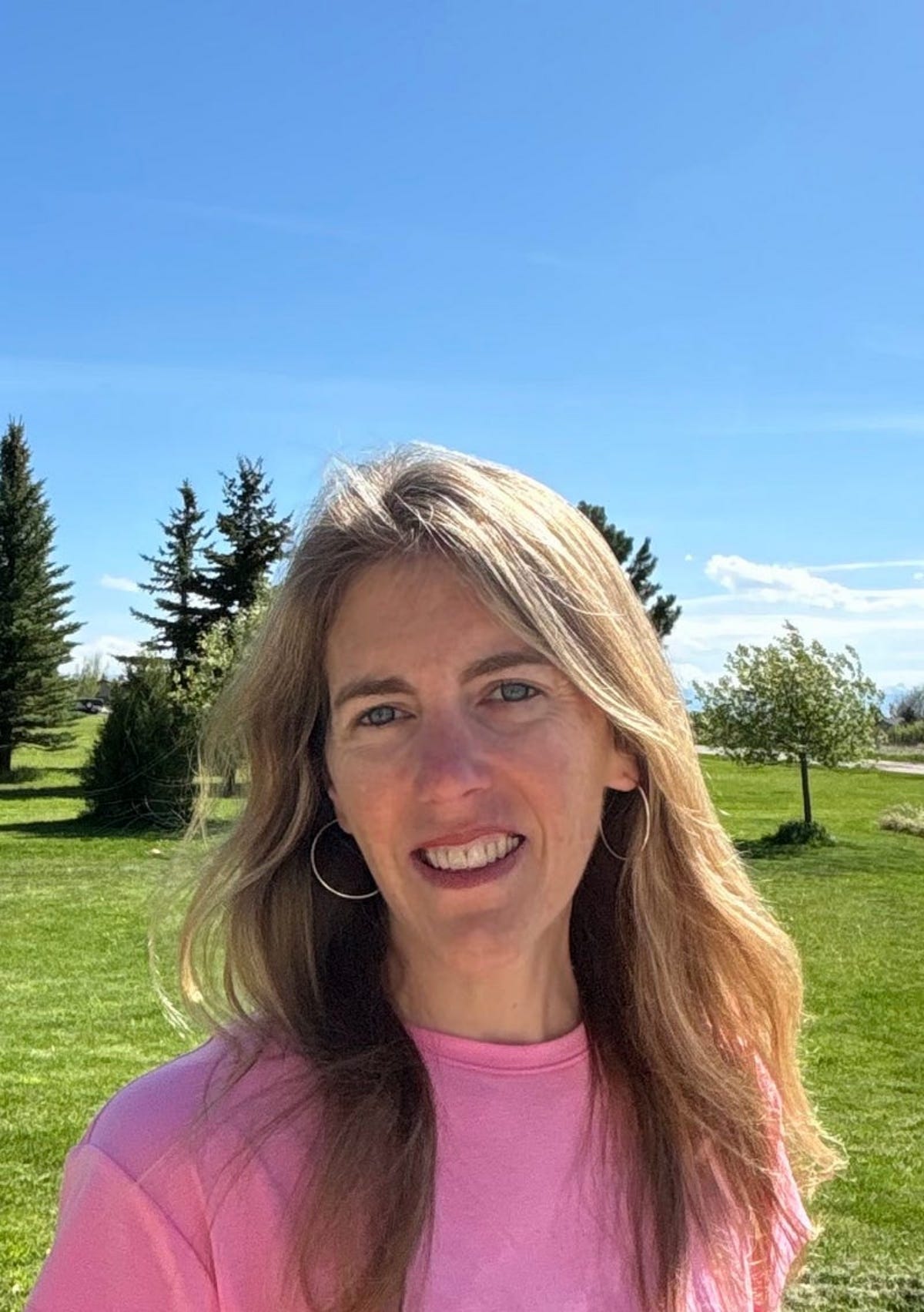
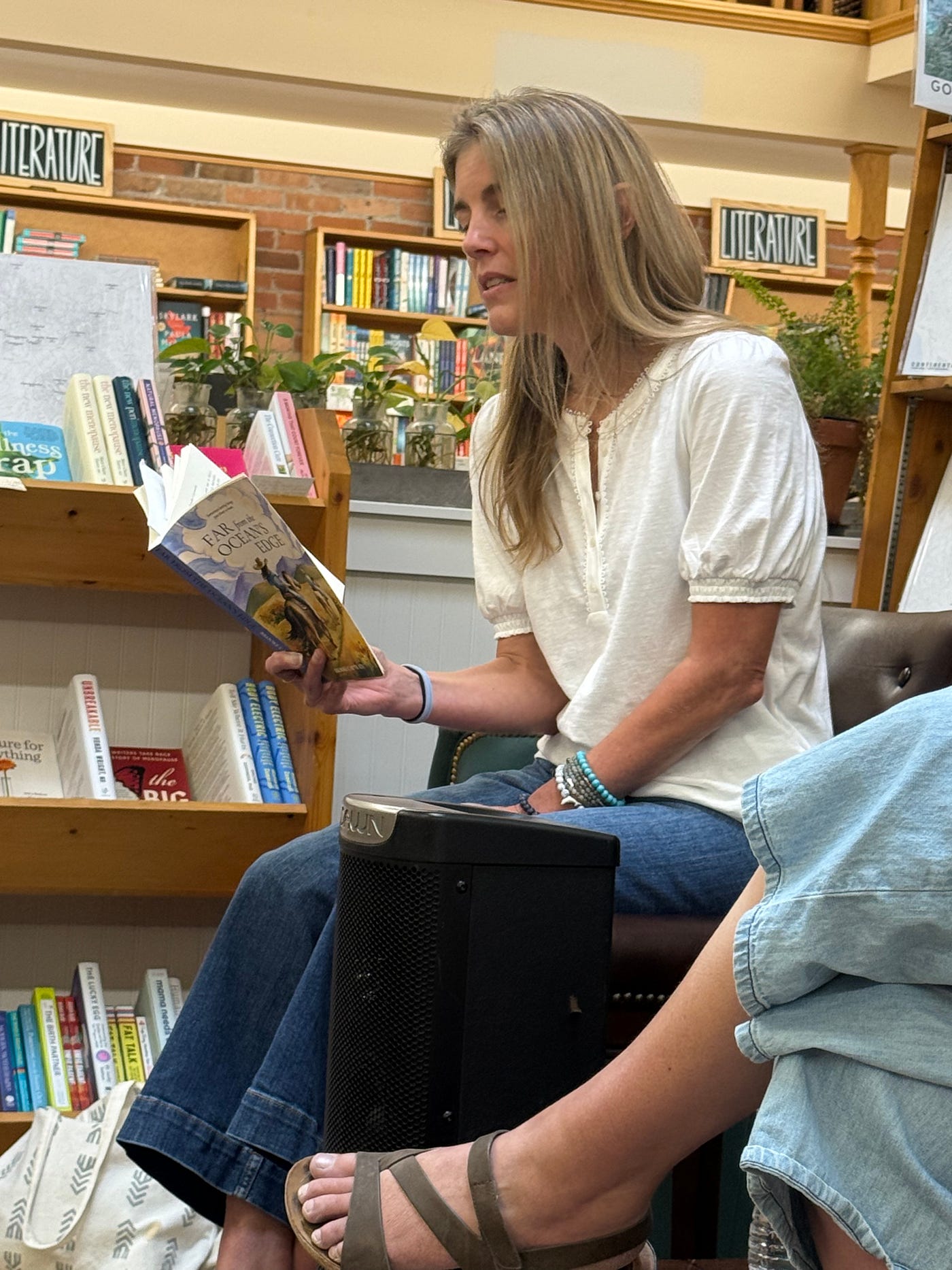
Brooke Carnwath teaches writing at Montana State University in Bozeman, where she lives with her husband, kids, and cats. Her debut novel, Far From the Ocean’s Edge, was published September 1, 2026, by She Writes Press; she has written two additional novels for young readers as well as a creative nonfiction project inspired by the Yoga Sutras. Brooke and her oldest daughter, Grace, coauthored the picture book Scout & Lucy. Finally, her flash fiction has appeared in Women on Writing and the Elk River Writers Workshop anthology Voices Elevated. When not teaching or writing, Brooke loves being by water with her daughters or on her yoga mat alongside her lady friends.
Thank you so much for joining us in this interview series! Our readers would love to “get to know you” a bit better. Can you share the “backstory” behind what brought you to this particular career path?
Well, I’ve always loved writing. And reading. And the goal was to somehow get paid for both. Initially, I started my career as a journalist; but after one year of working for an online magazine, I decided my skin was too thin, my heart to tender, for the onslaught of comments (which were often critical and full of complaints). During that time, a friend invited me to speak to one of her WRIT 101 classes about my master’s thesis — and I had blast! Engaging with students in a college classroom felt so natural, so fluid and fun. As did being on campus among other people who like to — as one of my colleagues recently said — “think for a living.” So, teaching writing and discussing literature in the college classroom became the dream. And when the opportunity to teach at the local technical college arose, I jumped on it. And here I am, nearly twenty years later and still loving what I do.
Can you share the most interesting story that happened to you since you started your teaching career? Can you tell us what lesson you learned from that?
I’ve had my share of interesting stories in 19 years of teaching. Some embarrassing — like the time I tripped in front of my class while lecturing and had to lie flat on the floor until I caught my breath some five minutes later. Some endearing — like the time a student from my first-ever Technical Writing class emailed after ten years to thank me: following my enthusiastic grammar lessons, she’d fallen in love with punctuation and now worked as a copyeditor. But two years ago, a mistake evolved into a generative gift I continue to integrate into my creative writing classes today. I’d arranged for a substitute to cover a class I had to miss. Unfortunately, the sub never showed up. This particular class spanned three hours once a week so missing one was significant in terms of content. The sub was meant to kick off the poetry unit; to make up for the mishap, I decided to read aloud a Poem of the Day for the next two weeks and share myself doing so on Canvas, our teaching platform. Not only did I expose students to a broader variety of poems and poets than I’d planned to, it expanded my appreciation — as reading poems aloud allowed me to relate to the language and form in a manner inherent the genre.
Are you working on any exciting new projects now? How do you think that will help people?
Yes! This summer I was lucky enough to receive a grant from the The Ivan Doig Center for the Study of the Lands & Peoples of the North American West at MSU, where I teach. They provided summer salary to support the writing of my next middle-grade novel, which features an eleven-year-old girl who spends a month travelling with her grandmother, a death doula. My story intends to expose young readers to conversations about death and dying. Ideally, kids will read this book in community so they aren’t alone in grappling with this subject — and so they can ask an adult the hard questions all children have about death and grief but so often don’t have the space or opportunity to. My hope is to facilitate conversations and reduce fear around these natural processes in ways that support and enhance life and living.
Ok, thank you for that. Let’s now jump to the main focus of our interview. From your point of view, how would you rate the results of the US education system?
Well, with two daughters in the public school system locally (and having spent time in their classrooms as a volunteer for eight years), I can only really speak experientially about schools in my area. And we are blessed with passionate teachers who — despite too-low pay and limited resources — show up with great ideas, patience, kindness and care. However, I know this is not the case across the country — particularly in low-funded rural and inner-city schools where students simultaneously face a disproportionate number of social-emotional and economic challenges outside the classroom and therefore need more (not less) resources inside. So, my answer is: It depends. Which isn’t satisfying, I know. But if we have honest and generative conversations about how to shift the dominant paradigm of government funding and economies of scale to honor kids, learning and equal opportunities across race, gender and economic status, all schools will benefit.
Can you identify 5 areas of the US education system that are going really great?
It’s difficult (if not unfair) to answer on behalf of a national system with such demographic variety; funding across school districts is as variable as the landscapes they span — and, as we know, money drives schools’ access to highly qualified teachers as well as their opportunities to pursue continuing education. Funding also drives students’ access to enrichment opportunities So, some areas of the country have robust funding for public schools while others don’t and school systems that could be really great aren’t given the chance. Still, I can reflect on what I see working well from my experience as a parent in the K-12 public school system.
- Opportunities for parents to volunteer in classrooms. When schools encourage and invite parents to engage and support teachers, everyone wins.
- Experiential learning, including artists in the classroom. When the community can share its thought leaders and creatives, inspiration abounds.
- Social emotional learning curriculum in schools. These programs are so helpful and hopeful. Students need to learn about emotions — we all have them and kids need to understand the rise and fall in their bodies and how to respect their peers’ emotions, too. This fosters better humans — and we need those, no matter the age.
- OTs working with students who bear the strain of sensory challenges. Where my girls went to elementary school, there was an occupational therapist working with kids to help them regulate and therefore better engage with their peers, teachers and, most importantly, themselves. The positive effects were profound — and visible even to a visitor like me.
- Funded Preschool! Head Start programs across the country are invaluable services to young children and their families. But, they’re only available to a certain percentage of the population living under the poverty line and, even then, require navigating bureaucratic hoops. If preschools were funded using the same tax dollars as K-12 education and were guaranteed in every state, the investment would pay off by standardizing healthy, safe learning environments where free-and-reduced breakfasts and lunches are available; exposure to social dynamics to support emotional regulation and conflict resolution; instruction in pre-K literacy and math. Also, working parents wouldn’t have to choose between the extra expense or leaving the workplace to afford preschool, which can cost upward of $1,000/month for three days a week where I live.
Can you identify the 5 key areas of the US education system that should be prioritized for improvement? Can you explain why those are so critical?
Pay for teachers is too low. Dismally low. This reflects a value system in the country that has historically prioritized male-dominated industries like business and finance, where pay reflects a long-standing patriarchal bias and is complicated by demanding work schedules less amenable to working moms. It makes sense, then, that K-12 classroom education has largely been the domain of women. According to the Pew Research Center, nearly 90 percent of elementary school teachers were women in 2024. That’s not to say, however, it’s fair: The same report cited dissatisfaction from teachers due to low pay, low support and too few opportunities to improve their skills. So, I say the key areas that should be prioritized are pay for teachers; benefits for teachers; opportunities to engage students in active, experiential leaning; incentives to integrate community artists, leaders and entrepreneurs in public school classrooms. These investments are critical to ensure students stay engaged and interested. Also, they will level the playing field across socioeconomics. Where I live, private schools offer far more experiential learning opportunities than their public counterparts. This inequity sustains the status quo of lifting up those with resources and keeping educational opportunities proportionate to wealth. This is part of the poverty cycle that needs to be addressed alongside other barriers to success for low-income students.
Can you please share your “5 Things You Need To Know To Be A Highly Effective Educator?” Please share a story or example for each.
1. Empathy. Students are humans and all humans deserve patience and empathy, particularly — I feel — if they spend the hours outside the classroom in homes (or shelters) where adults aren’t emotionally or physically available or stable. So, I believe effective educators must assume the best the students who occupy their classrooms. Yes, it’s essential to model and expect respect and inclusivity. But it’s likewise essential to model kindness and caring — and trust until it’s broken. For instance, my youngest daughter attended elementary school alongside a boy whose home life was full of abuse and neglect. Of course, this showed up in the classroom as disruptive behavior that often required para-educators to support the classroom teacher — for both the safety of the other students as well as the young boy. In five years, five teachers handled this differently. The most effective I had the privilege of witnessing, both in terms of supporting the boy’s psychosocial-emotional wellbeing as well as the learning environent for the rest of the class, were those teachers who first regulated themselves — who responded rather than reacted; who had frequent discussions with the whole class about compassion and self-reflection; and who spoke “to” not “down not” his/her students.
2. Flexibility. My language, class plans and grading adjust to the students in ways that allow for their curiosities (when relevant; when appropriate) to lead discussion. To let our thinking and conversations wander to the unanticipated or unplanned for.
3. Consistency. While this may seem antithetical to being flexible, it’s not. Both are necessary, though in slightly different contexts. For instance, while I feel it necessary to be flexible in my thinking and planning, I likewise consider it necessary to be consistent with grading and behavior policies. Establishing such boundaries from the start and consistently upholding them sets the stage for mutual respect. When I first started teaching, I wanted all my students to like me — even consider me a friend. That didn’t work. It left me feeling vulnerable and them confused. So, I’ve learned to be friendly while not being attached to their approval. Spelling out and sticking to my syllabi regarding classroom expectations and etiquette as well as evaluation allows me to strike an effective balance of both — being clear makes from for me to be kind. Of course, there will be (and should be) expectations for certain circumstances, but holding all students responsible to the same standards demonstrates equity.
4. Integrity Around AI Use. To say the educational landscape has shifted since I started teaching twenty years ago is an enormous understatement. In the last five years alone, the ubiquitousness of AI has forced me to reevaluate writing pedagogy as well as which writing class I want to teaching. So far, I’m find it essential to set clear and sound limits on AI use. Also, to explain its dangers and drawbacks, relative both to the loss of critical thinking and more broadly its impact on privacy and the environment. In several classes, I’ve gone back to handwriting in blue books. It’s novel, so students don’t hate it — not yet anyway. It’s also revealing for me about knowledge gaps in sentence grammar and spelling when Grammarly isn’t there to rescue poor syntax and misplaced commas.
5. Engagement. Rather than simply answering students’ questions about content and process, I try to reflect their question back; I ask students lots of open-ended questions that encourage critical thinking — and that help them to think for themselves and discover their own resourcefulness and creativity. The less passive educators, the richer educational systems. When I first started teaching, I considered myself an instructor in the sense that it was my responsibility to impart knowledge. I would fill every section of my classes with content: with all the rules and lessons I wanted to land and them to learn. My methodology has fundamentally shifted. I schedule less, leave more room for them to lead the way — a posture is consistent with Norman John Berrill’s famous quote: “A great teacher is not simply one who imparts knowledge to his students but is one who awakens their interest in the subject and makes them eager to pursue it for themselves. An outstanding teacher is a spark plug, not a fuel line.”
As you know, teachers play such a huge role in shaping young lives. What would you suggest needs to be done to attract top talent to the education field?
Increase the pay and benefits for teachers — and not just in K-12, but in preschools and higher ed, too. It baffles me how little we value educators when they spend so much time and have such deep influence over young people.
Can you please give us your favorite “Life Lesson Quote”? Can you share how that was relevant to you in your life?
Mary Oliver wrote in The Summer Day, “Tell me, what is it you plan to do with your one wild and precious life?” This quote, as a question, consistently raises goosebumps on my arm. It is simultaneously a call to action and a grounding statement. Stop. Pay attention. How am I spending my days? Where am I placing my attention? It all matters. Life is magical and short and worth intention and attention, joy and wonder. That’s the kind of hope I feel in these words. This quote fills me right up!
We are blessed that some of the biggest names in Business, VC funding, Sports, and Entertainment read this column. Is there a person in the world, or in the US, with whom you would love to have a private breakfast or lunch, and why? He or she might just see this if we tag them :-)
Kate DeCamillo! She’s my hero, a master of her craft. I would delight in visiting over lunch with her and asking about her journey as a writer. I’d try to glean as many tricks of her trade as possible, as my dream is to fill a bookshelf at my local bookstore with novels bearing my name. And she’s done that! She’s simply incredible.
How can our readers follow you on social media?
brookecarnwath.com Instagram: brooke.carnwath Facebook: Author Brooke Carnwath
Thank you so much for these insights! This was so inspiring!