
Being in that business — the tire industry — as a female and the boss’s daughter, I had to prove myself even more. People would make fun of me, saying, “Oh, you’re just the boss’s daughter; that’s how you got that.”
I had the pleasure of talking with Bridgetta Tomarchio. Bridgetta has spent much of her career figuring out how to get through doors that were supposed to stay closed.
One of the earliest examples came in New York, when she waited roughly 13 hours for a Britney Spears and MTV audition while thousands of other hopefuls cycled through the line. Her mother was ready to drive home to Baltimore. Tomarchio was not. She told her she would take a bus or train back if necessary and stayed until she was among the final people called into the room. Two weeks later, the family phone rang. She had gotten the job.
“See, I told you!” she remembers telling her mother.
Persistence became something of a professional signature. But Tomarchio’s story is more interesting than a string of doors kicked open. The publicist, book coach, editor, author, and former performer has built a career around visibility while remaining preoccupied with something more intimate: voice. How do people discover their own? How do they communicate it? And how do you help someone tell a story without sanding away the parts that make it theirs?
Long before she worked in entertainment or publicity, Tomarchio was a quiet Maryland child who preferred bookstores and reading contests. She remembers once reading 300 children’s books over a summer simply because the challenge was there. At the same time, she was getting an unusually early education in business. Her father had started working for himself at 14, eventually growing one store into several, and Tomarchio began helping him at conventions when she was 11, handing out flyers and calling strangers over to the booth.
By her late teens, she was working in his tire business and confronting the assumption that the boss’s daughter had been handed her position. Her response was characteristically competitive. “My numbers have to be stronger, and I have to bring in more sales than anyone else,” she remembers thinking.
Entertainment gave that instinct a bigger stage. She worked in front of the camera and behind it, from acting and television to casting, producing, and pitching projects. On DirecTV’s Project MyWorld, she arrived at an audition with a large snake wrapped around her, reasoning that anyone frightened by it was probably not going to make a convincing “adventure girl.” She got the part.
Yet one of the most consequential relationships of that period taught her something almost opposite to constant motion. While working in North Carolina, she met Val Kilmer, who became a friend, client, and mentor. Tomarchio later helped manage his Cinema Twain tour. In meetings, Kilmer taught her the value of withholding rather than pushing.
“Read the room, Bridgetta!” she recalls him telling her. Sit quietly, he advised, and let the awkwardness do some of the work. People often reveal more when someone resists the urge to fill the silence.
That lesson sits neatly beside the other half of Tomarchio’s business personality. Kilmer also called her a “pit bull,” she says, because once she decided what a client needed, she did not easily let go.
Her move into publicity followed the same pattern of persistence mixed with improvisation. In 2007, while appearing on Project MyWorld, Tomarchio wanted access to Sundance events and was told by the show’s publicist that she had been declined. Skeptical, she began pitching herself. Using the name of her production company, Wadget Productions, as the basis for what became Wadget PR, she secured access to nearly every event she pursued and helped get her co-stars onto lists as well. A business emerged from what had begun as a workaround.
By 2012, she had stepped away from pursuing an on-camera career and concentrated more fully on publicity, management, and eventually books. The transition made sense. To Tomarchio, these were never entirely separate professions. “Stories are my life,” she says. “Publicity is storytelling. Branding is storytelling. Editing is storytelling. Even determining a book’s audience begins with a narrative question: “Who is sitting there at night reading it?”
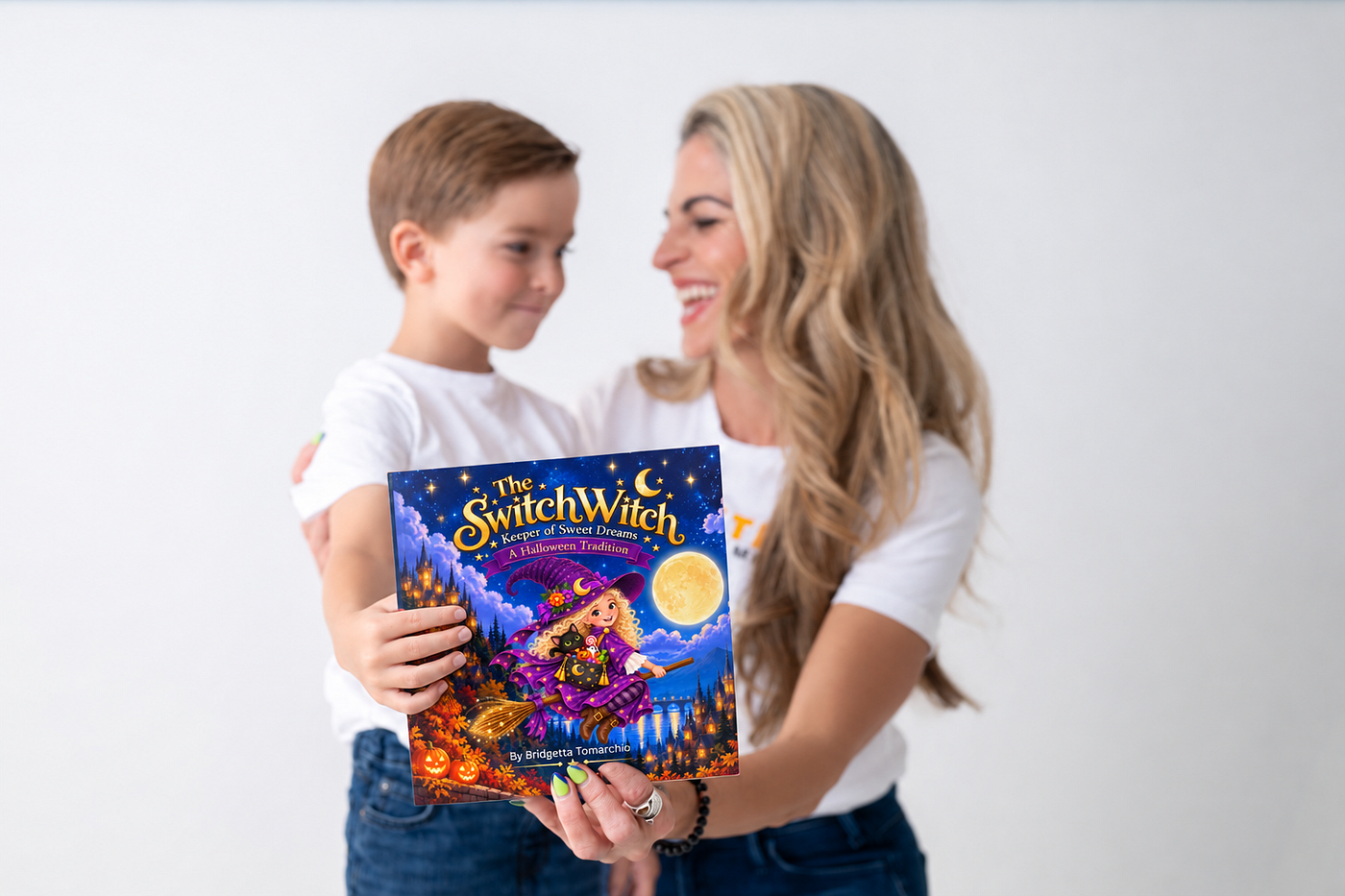
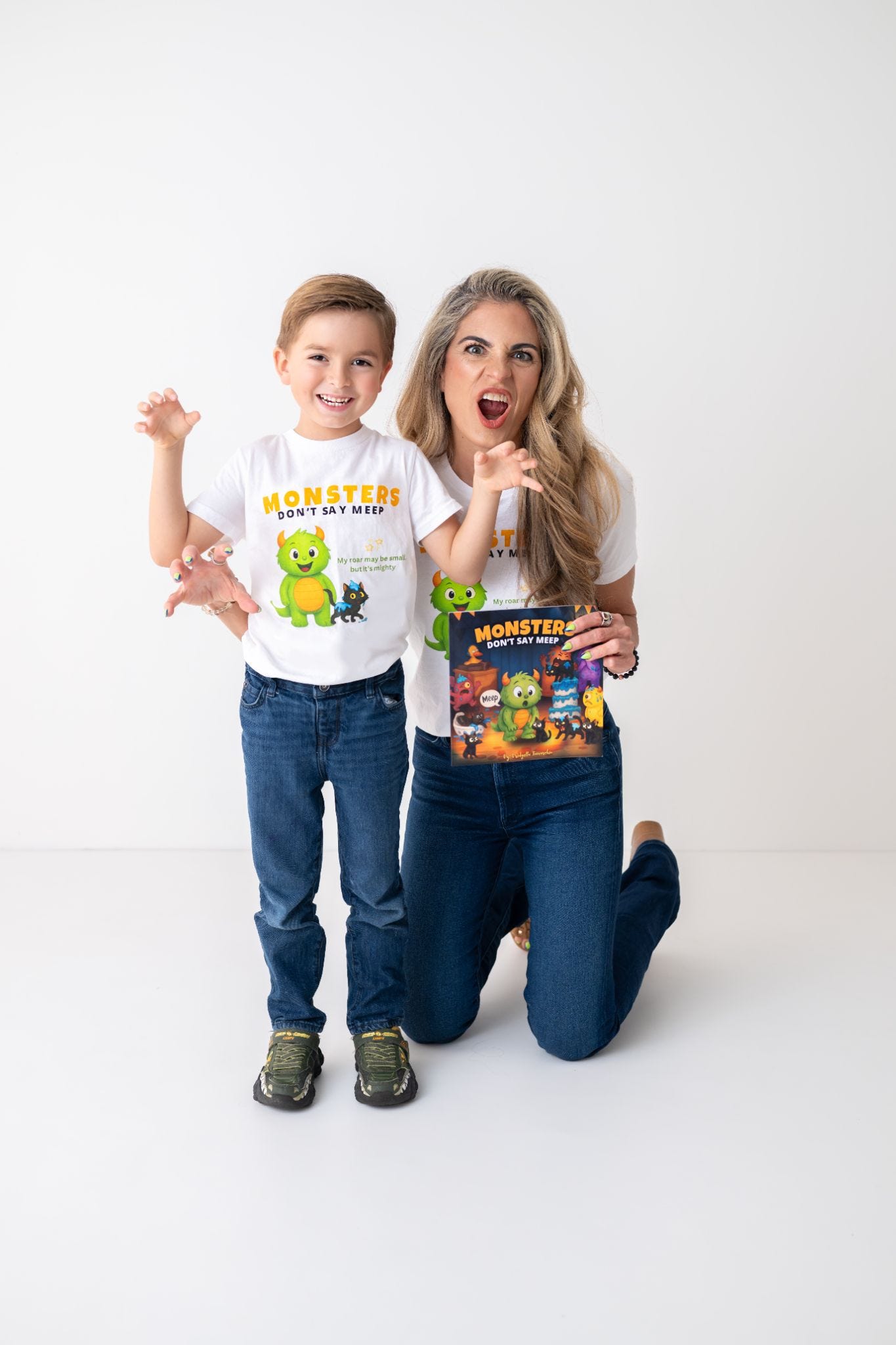
Her own children’s books have brought that idea closer to home. Monsters Don’t Say Meep follows a little monster whose voice differs from everyone else’s and who eventually discovers the value of that difference. Her newer book, The Switch Witch: Keeper of Sweet Dreams, A Halloween Tradition, reimagines a familiar Halloween practice through a gentler character designed for young children, combining Tomarchio’s interest in social-emotional learning with her instincts as a marketer and storyteller.
She now gives aspiring authors advice that is almost aggressively simple: “Start writing.” Before agents, publishing models, marketing plans, or bookstore distribution, she wants people to get the story onto the page. Her coaching becomes more strategic after that, from identifying readers to evaluating traditional, hybrid, and self-publishing routes, but the first act remains personal.
It is a curious progression for someone whose early career rewarded being louder, bolder, and harder to ignore. Tomarchio learned to work the room, then learned from Kilmer when not to speak. She spent years helping public figures attract attention and now works with authors and children on finding a voice that actually feels like their own.
The industries have changed. The central question has not. For Tomarchio, the work keeps coming back to who gets heard, what makes a story worth remembering, and how much persistence it sometimes takes to tell it.
Yitzi: Bridgetta, it is so good to talk to you. Before we dive in deep, our readers would love to learn about your origin story. Can you share the story of your childhood, how you grew up, and particularly the seeds for all the amazing work that has come since then? Please feel free to be as elaborate as you like.
Bridgetta Tomarchio: Sure. I grew up in the Baltimore area in an entrepreneurial family. My father started his business at 14 years old and has worked ever since; he is now 70 and still working, just opened up a new store in June after being ‘retired.’ I look to him as an inspiring entrepreneur; I always wanted to do what he did. He created this business, growing one store into many stores from nothing. I actually started working for him at 11 years old at conventions, which was really interesting. He would have me stand there with flyers and hand them out. I would say, “Hi, come to our booth, check this out!” I started working conventions at a really young age, learning marketing tools. Eventually, I wound up working for him around 17 or 18, through high school and a little bit after. It was funny because I was one of the youngest working for him. Being in that business — the tire industry — as a female and the boss’s daughter, I had to prove myself even more. People would make fun of me, saying, “Oh, you’re just the boss’s daughter; that’s how you got that.” I would reply, “Nope, I have to prove myself; my numbers have to be stronger, and I have to bring in more sales than anyone else.” I worked fleet sales for him, and I outdid everyone who had been there for years. That was interesting and fun, and from there, I caught the entrepreneurial bug.
I was also always a bookworm. I was really quiet as a child. Growing up in Maryland was great, but in school, I was the quiet child who was made fun of a lot. I was a nerdy bookworm; I was the one who would say, “Oh, there’s a book contest? I’m going to enter, and if you’re doing 40 books for the summer, I’m going to do 300.” I actually did that, by the way. I read 300 books in a summer once. They were not novels — they were kid books — but I did it. It was always a thing; I used to find myself in bookstores, just reading books. It is what I loved to do. Stories were always a part of my life. Now my life is PR, books, marketing, and branding, but it is all a story. It all comes from a story because every single one of us has a story that we have to tell, no matter what it is. Stories are my life, and that is kind of where it got started.
Then I caught the entertainment bug. It was big in Baltimore, and I was in a few movies and local TV commercials. Eventually, I danced for Britney Spears, which was another thing I was told I couldn’t do and would never get. My sister is 11 years younger than me, but she was on Team USA for figure skating. She was hardcore into what she did. I remember being in New York when she went there to get her skates sharpened. That was the same day of the Britney Spears and MTV tryouts. I waited all day long — I’m talking 13 hours. As a young kid, I was determined to do it. I had a pager back then, which dates me. My mom told me, “You’re never going to get it. I don’t know why you’re doing this; there are thousands of people in line.” It got to 8 o’clock at night, then 9 o’clock, and she said, “We’re driving back; we’re going.” I replied, “That’s fine, I’ll just take the bus or the train back to Baltimore, see ya!” I stayed there and was one of the very last people to go in. When I went in, I nailed it. Lo and behold, two weeks later, my mom got the phone call because I gave them the house number. She answered it, and it was Britney Spears’ team saying, “She got it, and she has to be in New York for rehearsals next week.” I told her, “See, I told you!” It proved to me that no matter who tells you that you cannot do something, or how many people are in line, if your mind is made up, it is your dream, and it aligns, go for it. Follow those dreams and don’t let anyone tell you otherwise. I did it, and that was living proof. It was an amazing experience. I still have the plaque on my wall down the hall from MTV and Britney Spears. I also got to be a VJ for a day, which I booked from the same audition. It gave me the spark that anything is possible. Whatever I put my mind to, I am going to do it.
From there, it blossomed into moving to North Carolina, working background on Dawson’s Creek, and becoming a stand-in. That is where I met Val Kilmer, who changed my life. I wound up working for him on and off for years until he sadly passed away last year. He was a mentor in my life and an incredible example of what to do and what not to do. He guided me in many ways in business, even teaching me how to be in meetings and how silence is sometimes the best approach. He would tell me, “Read the room, Bridgetta!” He taught me to sit there and not say anything; the awkward silence would prompt the other person to respond, and you would learn so much from that. This was especially helpful when doing business deals and contracts, which I do now, and which I specifically did for him. It would reach an intimidating point where the other party would reveal everything, and then I would know their budget and what stipulations I could work with. I have weaved in and out of the industry and worn so many hats. I have worked in literary, casting, producing, in front of the camera, and behind the camera. I have pitched TV shows and been on TV shows. Writing in all aspects has been a part of the big story.
When I switched in 2007 to creating my own publicity firm, it was a funny story in itself how that happened. That is where I have been ever since; I still have that same company. I was on DirecTV’s first TV show called Project MyWorld. I beat out a ton of girls in a nationwide search to find the “adventure girl.” I came in for that role with my own snake, who sadly died a year and a half ago. I walked into the audition with the snake wrapped around me and said, “Adventure girl, here you come!” The room parted like the Red Sea. They were terrified of the snake, and I said, “I just did your casting for you, because how can these people be an adventure girl if they are scared of a snake?” I did my whole audition with the snake wrapped around me. She was a big snake, too. They thought it was hilarious. It was also right after Tom Cruise had jumped up and down on the couch with Katie Holmes on Oprah, so I jumped up and down on their casting couch with the snake and said, “You have to choose me!” It was a funny thing, and I got the role.
They had their own PR person. One of the many things I wanted to do was to go to Sundance; it was a dream. I had friends high up in PR or brands who were going, but I didn’t want to ask them if I could go. I asked the PR person to get me in, and she told me I was declined. I knew if they saw my name come through, I would be on there. I had a production company at the time called Wadjet Productions, which I shortened to Wadjet PR. I made up a fake name and a fake email, and I pitched myself to all of the places at Sundance. I told my friends on the side that my publicist pitched me, and they saw it come through. I got into every single party except one that year. Then I wrote back to the PR person and said, “That’s funny, not only did I get myself in, but I got my co-stars in too. We are on every list. Thanks!” I realized then that she didn’t really do anything. From my experience back then, I wasn’t a big enough name for them, I wasn’t paying enough, or they just didn’t care. That became my motivation. I am really good at what I do, and my network in the entertainment world is vast. I am a people person; I meet friends in elevators or trains. I have a huge rolodex of people I know all over the world.
I stepped into this space and realized I could own it. I used to just get my friends into parties, especially in LA. I was the person who would walk in, even if I wasn’t on the list, and find my way in. In 2007, when I went to Sundance, I met a girl who became my business partner for the PR company. If I hadn’t gone to Sundance, we wouldn’t have formed our PR company that is still here to this day. Everything happens for a reason.
In 2012, I decided to fully step back from being in front of the camera, go behind the scenes, and do PR full force. I left LA, went to San Diego, and went back to school for holistic medicine and yoga. Then, I got sucked back into the industry. Val Kilmer called me and said he had a one-man play and would love my help. He was going through health issues at the time, and I told him, “I know holistic medicine; let me come up there and help.” I went up as a dear friend to help get him back to health. It worked, and we traveled. I became the tour manager for Cinema Twain, his one-man play that was previously filmed, and he went on tour to meet people and show the film. We traveled across the US for the tour, Comic-Cons, appearances, and signings.
PR and management have always been what I am great at. Val used to call me a pit bull because I wouldn’t stop. He said I would just keep plunging through and finding my way in. When negotiating contracts, my attitude was, “It’s the way that I want it, or too bad, we’re leaving.” When working with celebrities or any clients, you have to be that way. I am friendly until it is contract time, and then I stand firm for my clients.
When you work in media or publicity, you are weaving stories. You weave them for your clients, navigating the ups and downs and the press. I have always been a story weaver to my core. It does not matter whether I am writing physical books, ghostwriting for clients, coaching them on their stories, or weaving their stories in the media. Even branding is a story. It is creating the mark that people are going to remember you by. Branding is the first step. You cannot just throw something at the wall and hope it sticks. Your branding, colors, logos, and slogans are who you are. How can you get a logo out that everyone recognizes? We have to start there and go behind the target market. People always say they want to appeal to everyone, but it is not true. Niche-ing down and deciding who your market is first will dial in your fan base. The more niche you get, the smarter it is, and the more you can own that space.
Dialing in the target market is the first thing I do. If someone comes to me and wants to write a book, I ask, “Who is the book for? Who is sitting there at night reading it? What do they do during the day? What drives them to pick up a book? Where do they live?” Diving into all of that is knowing your target market. That is how books and products sell. You need to know who you are and who you are selling to first, and then your products can expand from there.
Yitzi: Please tell us about the exciting projects and new initiatives you are working on currently. We would love to hear all about it.
Bridgetta Tomarchio: Believe it or not, I have a new book releasing tomorrow, and I am really excited about it. It is my second children’s book. I like to focus on the theme of SEL — social-emotional learning — because there are not many books out there for kids learning about big feelings, how to navigate them, and understanding who they are. I find that work really important.
This new book is a little different; it is called The Switch Witch. For those who do not know me, I am very health-conscious. I do not give my child anything with food dyes, and we eat organic and even kosher. I am very particular about what my child eats because I believe we are what we eat.
That said, every parent chooses their own path. It is interesting because other parents will say, “Your child never has meltdowns or temper tantrums.” I tell them, “Give him non-organic lemonade and watch what happens.” One day we were at a birthday party, and he asked for some. As a parent, I do not believe in saying “no” without explaining why. Growing up, it was always “too bad, so sad; that is just the way it is.” You have met my dad, so you understand. I never received explanations, and I felt that was unfair. Ever since my son was a baby, I have always explained things to him.
I told him, “You can have the lemonade, but I want you to pay attention to what happens in your body.” I warned him that in about ten minutes, he might not feel very good. Sure enough, almost on the dot, he had a complete meltdown and was crying hysterically. He did not know how to handle the sudden rush of sugar and artificial dyes, and he felt sick to his stomach. I asked him, “Doesn’t feel good, does it? This is what food dyes and artificial ingredients do. Do you like feeling this way?” He said no. I asked, “Do you want to have unnatural dyes and sugars again?” He said, “No, Mommy, I don’t.” Since then, food choices have never been an argument between us.
That experience connects directly to the new book, The Switch Witch: Keeper of Sweet Dreams, A Halloween Tradition. I want to be clear that I did not invent the core concept, as a couple of early reviewers mistakenly thought. What I did invent was a non-scary version for children ages three to ten, offering a different way to enjoy Halloween, along with a complete backstory explaining why the character does what she does. The existing books featured frightening witches, which are not books I would buy for my child. When I was researching, I bought a few, and honestly, the illustrations were poor. We love engaging, vibrant books that capture a young child’s attention, especially when they are too young to read fluently.
For those unfamiliar with the tradition, the Switch Witch collects candy on Halloween night. Children leave their trick-or-treat candy outside — whether a few pieces or their entire bucket. We have always had my son leave the whole bucket because the rule in our house is: the more candy you leave out, the bigger the toy. He trick-or-treats just like everyone else, leaves his bucket outside with a wish attached, and the next morning, that wish comes true. The original concept was featured on Shark Tank around 2015 with a doll and book set, but that company eventually folded. My version is the first non-scary adaptation for kids.
In my backstory, she is actually called the Sweet Witch, and she turns bad dreams into sweet dreams all year long. By Halloween night, her magic runs low. Her magic is fueled by sweet candy, so the more candy children collect and leave out, the sweeter their dreams can be throughout the year. In the story, she has a large globe that alerts her when a child is having a bad dream. She swoops in and transforms scary things into playful ones — like turning a scary spider into a dancing spider on roller skates, a touch I borrowed from Harry Potter. It provides fun, laugh-out-loud moments, beautiful artwork, and a fresh perspective on Halloween.
It also gives parents a practical alternative. Many parents either throw the candy away secretly, eat it themselves out of guilt, or let their children consume unhealthy amounts of sugar. With childhood obesity levels where they are today, this tradition offers a healthier option without ruining the magic of the holiday. Families do not have to give up the entire bucket either; they can choose to leave just a couple of pieces.
The book hits stores tomorrow, and I have a signing at Barnes & Noble in Delray Beach, where every child receives a bucket to decorate after storytime. I will also be sharing my previous children’s book from last year, Monsters Don’t Say Meep, which tells the story of a little monster who cannot roar like the others and tries everything to fit in until his unique voice ends up saving the day. It teaches children self-acceptance and celebrating who they are.
Beyond my own titles, a client’s book that I edited came out last week: a true crime thriller called Phantom Ranch. It follows estranged brothers who enter the Grand Canyon to confront childhood trauma and cross paths with a serial killer — who turns out to be Robert Durst. It is an intense, true story exploring deep family dynamics. For the launch in Dallas, my client built an immersive walkthrough set filled with dirt and mulch that made visitors feel like they were standing in the Grand Canyon.
Monsters Don’t Say Meep won fourteen awards last year — thirteen literary awards and one cover design award. We will see how The Switch Witch performs; award season is just starting, and announcements usually roll in by the spring. My client’s book, Phantom Ranch, actually started as a screenplay that placed as a finalist at the Atlanta Screenplay Awards, and we worked backward from that script to develop the book.
Yitzi Weiner: Many people dream of having their books published and sold in stores like Barnes & Noble, but they do not know where to start or feel intimidated by finding a literary agent. What insights can you share on how to navigate that process?
Bridgetta Tomarchio: As a book coach, my first piece of advice is simply to start writing. The primary hurdle aspiring authors face is overwhelm; they get paralyzed by options and never begin. Writing is deeply therapeutic. My client’s true crime project played a major role in healing his strained family relationships because putting the story onto paper unlocked emotions he had never addressed directly. Writing allows you to express turmoil you might never voice aloud. Start writing your ideas without self-judgment. No one else has to read your early drafts.
Writing can simply serve as emotional release, like therapy. However, if you believe your story has the power to help or inspire others, pursue it. Everyone has a story worth telling, and someone out there is experiencing the exact struggles you have overcome. For example, the motivation behind my first kids’ book was when my son entered kindergarten; he unexpectedly began speaking in a baby voice despite having a very high IQ and being in Mensa. I wanted to help him find confidence in his natural voice, which became the emotional foundation for Monsters Don’t Say Meep.
For writers with completed manuscripts who do not know the next step, be extremely cautious when researching services online. The market has predatory companies masquerading as ghostwriters that charge thousands of dollars only to deliver generic, AI-generated drafts lacking emotion and nuance. Prompting an AI tool does not make someone an author; it makes them a computer programmer. I have had clients come to me after losing significant money to these outlets, forcing us to rebuild their projects from scratch. Many of these entities operate under multiple front names and claim US addresses while being based overseas, making legal recourse nearly impossible.
Before hiring anyone, do thorough due diligence. Work with established professionals whose identities, client testimonials, and published portfolios you can verify on platforms like Amazon or Instagram. Community platforms like Reedsy are helpful resources that host weekly writing prompts where you can receive constructive feedback. Facebook writer and critique groups are another good way to swap feedback. Have at least twenty objective readers review your manuscript. When you live and breathe your own story, you may leave out context or emotional clarity that outside readers need.
Clarify your primary objective early. Publishing a single book rarely generates significant direct wealth right away. If you are an executive or entrepreneur, a book establishes authority that secures high-paying speaking engagements, allowing you to monetize on the backend.
Authors generally have three paths: traditional publishing, self-publishing, and hybrid publishing. In traditional publishing, the publishing house covers all production costs, but securing an acquisition almost always requires an agent. Finding an agent takes patience. You are evaluating them just as much as they are evaluating you; you need someone who genuinely believes in your vision. Build a curated list of around fifty target agents. Rather than querying all fifty at once, send queries in smaller batches of four or five. Wait for responses so you can adjust your pitch or manuscript if consistent feedback emerges. Pay close attention to patterns: if your advance readers and several agents pinpoint the same issue, revise it. If an agent offers an isolated critique, do not rush to rewrite your work.
Self-publishing gives you complete control, but you bear all production, formatting, and marketing costs. You must build your own platform and marketing strategy, or the book will struggle to find readers.
Hybrid publishing sits in the middle. Be careful, because many low-quality companies label themselves hybrid publishers. True hybrid publishers often operate as imprints under major publishing houses. Under a hybrid agreement, you cover an upfront book buy-in, but the publisher handles editorial, production, and distribution. Because production costs have increased — author copies through print-on-demand services can run seven to twelve dollars per unit — authors end up purchasing their own inventory for signings anyway. A quality book coach or agent can often negotiate that initial purchase requirement down from 2,000 copies to 500 copies, which can then be offset through presales. Hybrid publishing also provides distribution access to physical bookstores like Barnes & Noble, which is difficult to secure through purely self-published routes.
I offer a quiz on my website that walks authors through these three options and generates an extensive report outlining the best publishing route based on their specific goals and resources.
Yitzi Weiner: You mentioned compiling a list of fifty literary agents. Where do you find a reliable repository or list of agents?
Bridgetta Tomarchio: Platforms like QueryTracker and Publishers Marketplace are valuable resources for researching active agents, seeing what genres they represent, and monitoring recent deals.
Beyond databases, start with your own bookshelf. Look at your favorite books in your genre, check who published them, and see which literary agents represented them. If you write children’s picture books, study publishers that specialize in that style; my style is similar to what Flashlight Press publishes, whose books are vibrant, humorous storytelling and illustrations I admire.
Connect directly with librarians as well. When I inquired why certain quality titles were difficult to locate in public libraries, librarian friends walked me through their internal purchasing databases, showing me the specific review sources, awards, and metadata fields that influence acquisitions.
AI can also assist with market research. While AI should not write your book, you can provide it with your book’s synopsis, target demographic, and audience reach, then ask it to identify smaller publishing houses and literary agents representing debut authors in that category. Once you have target names, review their social media profiles and agency manuscript wishlists. Agents regularly state the exact themes they want and do not want. Pitching an agent a premise they explicitly dislike will only land your query in the rejection (slush) pile. Tailor your outreach to professionals actively seeking your exact topic.
Yitzi Weiner: If you could spread an idea or inspire a movement that brings the greatest amount of good to the most people, what would that be?
Bridgetta Tomarchio: Start writing. Writing has the power to spark meaningful personal and community change.
In our community, my son and I built neighborhood micro-libraries under his Lucian’s Little Library initiative. As a child, I spent hours reading at libraries and bookstores. For children who lack easy transportation to a public branch, these neighborhood book exchanges provide direct access to books. We set them up across South Florida, including in lower-income neighborhoods. Initially, our local HOA resisted the idea, but today the community keeps those shelves constantly stocked. Seeing children pick up books and reading them makes the effort worthwhile.
For anyone holding onto an idea: start writing. As motivational speakers often say, the challenges and trials you endure happen for a reason. If you survived difficult experiences, your story can provide guidance and comfort to someone walking that same path today. Begin writing directly from those experiences.
Yitzi Weiner: How can readers follow your work, engage your coaching services, purchase your books, and support your initiatives?
Bridgetta Tomarchio: Everything connects through my primary website, Bridgetta.com. Information on my titles can also be found at theswitchwitchbook.com and monstersdontsaymeep.com. I offer a lot of advice for authors on YouTube: bridgetta713, and on Instagram at @realbridgetta.
Yitzi Weiner: It has been a true joy speaking with you again.
Bridgetta Tomarchio: Thank you so much, Yitzi. I truly appreciate you and your support.