You can’t look at others through the lens of yourself. I was unusually aggressive and driven when it came to sales, but David helped me understand that people with very different strengths and approaches were making equally valuable contributions to the company.
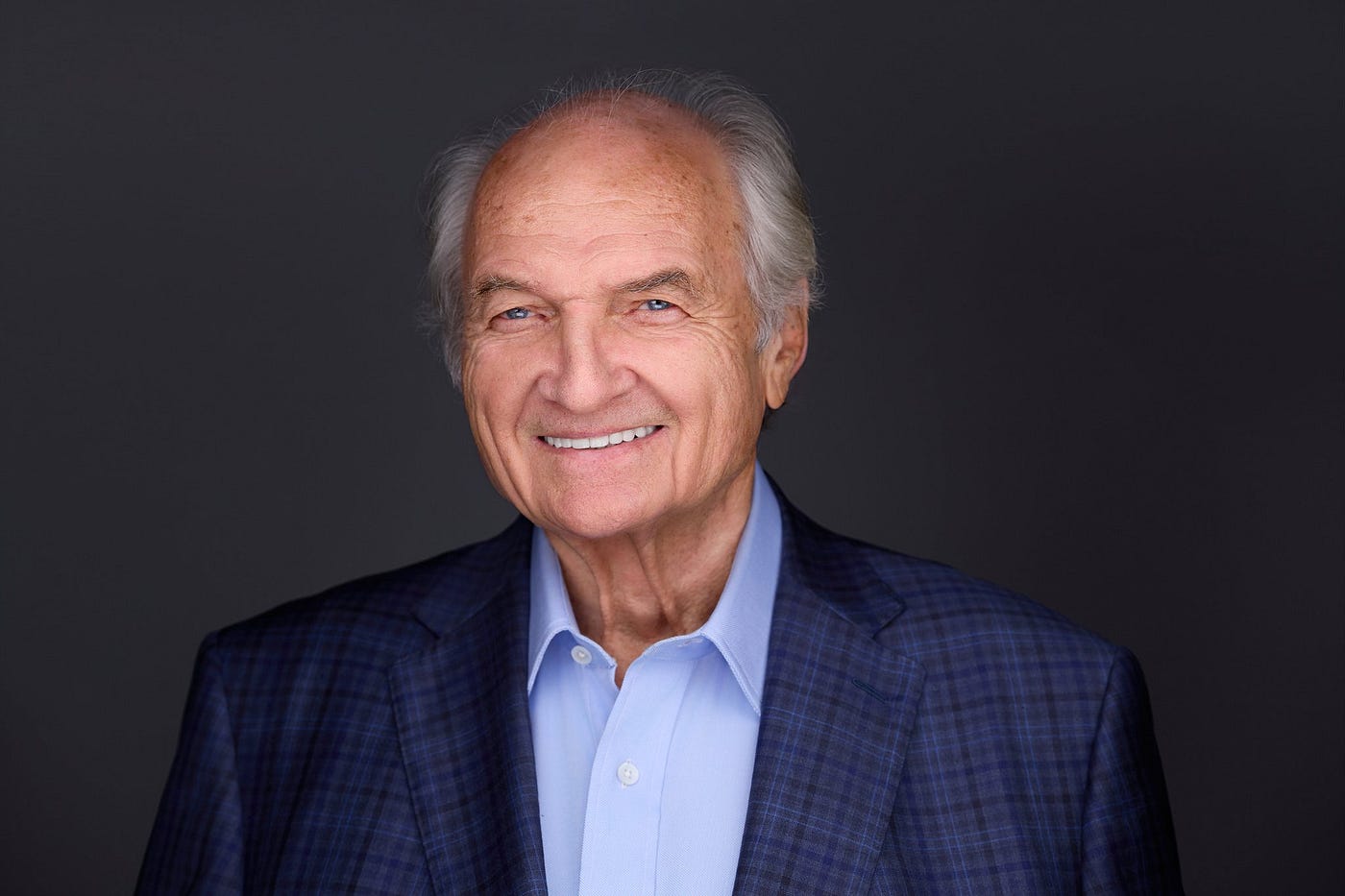
As a part of this series, we had the pleasure to interview Bob Carter.
Bob Carter is a globally recognized philanthropic advisor, philanthropist, fundraising leader and founder of Carter: Advancing Philanthropy Worldwide. Across more than five decades, he has helped raise billions of dollars and advised some of the world’s most respected institutions and leaders, including National Geographic, Harvard Medical School, World Vision, C-SPAN, the National Aquarium and Education Above All. A past Chair of the Association of Fundraising Professionals International Board, Bob currently serves on the boards of the WHO Foundation and Bridge Philanthropic Consulting and is chair emeritus of the National Aquarium. He is the author of Unfinished: Lessons in Recovery, Leadership, Philanthropy and Purpose. When he’s not advising organizations around the world, Bob can usually be found in Sarasota, FL, with his wife, Carol, and two miniature donkeys who remain thoroughly unimpressed by his résumé.
Thank you so much for joining us in this interview series! I know that you are a very busy person. Our readers would love to “get to know you” a bit better. Can you tell us a bit about your ‘backstory’ and how you got started?
I started my career as an English teacher, with absolutely no grand plan to spend the next five decades helping organizations raise billions of dollars. One opportunity led to another, from education to fundraising to eventually leading a global consulting firm and founding my own company in my 60s. Along the way, I’ve had the privilege of working with extraordinary people and organizations around the world. But my career is only part of my story. I got sober at 51, after years of professional success that often masked considerable personal struggles. That experience changed how I understood leadership, relationships, and what it means to live a meaningful life. Now, at 80, I’ve written my first book, Unfinished, because I’ve come to believe that the most valuable lessons aren’t necessarily found in our accomplishments. They’re found in everything we learn along the way- and I’m still learning.
None of us are able to achieve success without some help along the way. Is there a particular person who you are grateful for who helped get you to where you are? Can you share a story?
I’ve been fortunate to have many mentors throughout my life, some intentional and others entirely accidental. David Ketchum, who was CEO of Ketchum during part of my career there, taught me one of the most important leadership lessons I’ve ever learned. I’d been promoted to national sales manager after several years as one of the company’s top salespeople, and I was convinced everyone should be producing at the same level I was. After visiting our offices around the country, I presented David with a lengthy report recommending we let nearly half our salespeople go. He listened patiently before telling me something I’ve never forgotten: “You can’t look at others through the lens of yourself.” I was unusually aggressive and driven when it came to sales, but David helped me understand that people with very different strengths and approaches were making equally valuable contributions to the company. It wasn’t fair to measure everyone against my own abilities or expectations. That conversation fundamentally changed how I evaluated, developed, and led people for the rest of my career.
Thank you for all that. Let’s now turn to the main focus of our discussion. Can you share with our readers a story from your own experience about how you lead your team during uncertain or difficult times?
One of the most important things I learned about leading teams is that my job isn’t to make every decision. It is to create an environment where we can make the very best decisions together. That means making sure everyone has a voice, especially those who see things differently than I do. I’ve always had a pretty strong personality, and I know how easy it can be for a leader’s opinion to dominate the conversation. So I made a conscious effort to listen, encourage disagreement, and give people the confidence to challenge my thinking. Ultimately, I was responsible for the decisions we made, but I believed we’d make far better ones when we drew on the experience, judgment, and perspectives of the entire team.
Did you ever consider giving up? Where did you get the motivation to continue through challenges? What sustains your drive?
Of course. There have been plenty of moments where walking away seemed easier than pushing forward. I came frighteningly close to giving up on life itself. At 51, I was a successful executive, closing multimillion-dollar deals and appearing to have everything under control. Behind closed doors, I was losing a battle with alcoholism. I was drinking a quart and a half of vodka a day, and I had reached the point of contemplating suicide. I had written a note and imagined ending my life by crashing my car into a bridge abutment on the way to the Pittsburgh airport. I remember lying on my kitchen floor, physically sick, with only my dog beside me. Something had to change, and eventually I made the decision to ask for help. Recovery taught me that surrender isn’t the same as giving up. Sometimes it’s the bravest decision you’ll ever make. I had to rebuild trust, relationships, and ultimately my life.
Leadership often entails making difficult decisions or hard choices between two apparently good paths. Can you share a story with us about a hard decision or choice you had to make as a leader?
One of the hardest lessons I’ve learned is that doing what’s right and doing what’s comfortable are rarely the same thing. During my years leading consulting firms, I encountered situations where maintaining a valuable business relationship meant overlooking behavior that conflicted with my principles. Walking away could mean losing revenue, damaging relationships, or creating uncertainty for my team, but I’ve always believed that trust is the foundation of any successful organization, and once you compromise your integrity to protect a business relationship, you’ve already lost something far more valuable than the account itself.
What process or toolset can a leader use to make a choice between two difficult paths?
I’ve never believed there’s a formula that can make every difficult decision easier, but I’ve learned to ask myself a few important questions. First, do I have all the facts, or am I making assumptions? Second, who will be affected by this decision, and have I listened to their perspectives? And maybe most importantly, which choice can I look back on years from now and feel good about, even if it doesn’t work out the way I hoped? I also believe in surrounding yourself with people who are willing to challenge you rather than just telling you what you want to hear.
Do you have a mentor or someone you can turn to for support and advice? How does this help? When can a mentor be helpful? When is this not helpful?
I’ve had wonderful mentors throughout my life, although many of them probably never realized they were mentoring me. I call them my accidental mentors, and I’ve devoted an entire chapter of Unfinished to what they taught me. Some offered professional guidance, while others taught me about character, generosity, and how to treat people. A handful also showed me exactly what not to do and who not to be. I’ve also learned that mentorship doesn’t have to come from someone older, wealthier, or more accomplished. Some of the most valuable lessons I’ve received have come from people who simply saw something I didn’t. A good mentor helps you see your blind spots, asks the tough questions, and gives you the benefit of their experience without making your decisions for you. Where mentorship becomes less helpful is when you start relying on someone else’s judgment instead of developing your own. Ultimately, you have to be willing to listen, but you also have to take responsibility for the choices you make.
What would you say is the most critical role of a leader when faced with a difficult decision?
Character matters most when the choices are hardest. Anyone can make a popular decision. The real test is what you do when the right decision might cost you money, a relationship, or your own comfort. I’ve had to let good people go, confront unethical behavior, and acknowledge mistakes I’d much rather have quietly swept under the rug. None of that gets easier with experience. But a leader’s job is to face the uncomfortable without losing sight of the people involved. You can make a difficult decision and still treat someone with dignity. You can stand firm without being cruel and you can admit you were wrong without surrendering your authority. That’s the kind of leadership I’ve tried to practice, even when I haven’t gotten it right.
Do you ever look back at your decisions and wish you had done things differently? How can a leader remain positive and motivated despite past mistakes?
Of course there are decisions I’d make differently knowing what I know today, but I’ve never believed there’s much value in dwelling on what you can’t change. I’ve always looked at it this way: If you’re walking across the street and you fall down, you don’t go all the way back to the curb and start over. You pick yourself up, learn from what tripped you, and finish crossing the street. Leadership works much the same way. Every mistake, setback, and unexpected obstacle teaches you something that can help you get where you’re trying to go. The important thing is to take that lesson with you rather than allowing the mistake to stop you in your tracks.
What is the best way to boost morale when the future seems uncertain? What can a leader do to inspire, motivate and engage their team during uncertain times?
I’ve always believed transparency is essential, especially when things are difficult. People deserve to know what they’re facing, and trying to sugarcoat the situation only undermines trust. I also had a personal rule: Don’t let them see me sweat. As the leader, I needed to be a steady hand at the wheel, even when I didn’t have all the answers. I tried to keep our conversations focused on recovery and what we could do to make things better. One question I often asked my team was, “How can we use this difficulty to our advantage?” What could we learn, what needed to change, and what opportunities might we discover that we wouldn’t have considered otherwise? I found that giving people something constructive to work toward helped turn uncertainty into a sense of shared purpose.
Can you share 3 or 4 of the most common mistakes you have seen other businesses or leaders make when faced with a hard decision? What should one keep in mind to avoid that?
I’ve seen four mistakes repeated throughout my career. The first is waiting too long. Leaders often know something isn’t working, whether it’s an employee, a client relationship, or an entire business strategy, but they postpone the inevitable because the conversation will be uncomfortable. Second is confusing loyalty with looking the other way. You can care about someone and still hold them accountable. Third is letting ego get involved. I’ve had front row seats watching otherwise intelligent people make terrible decisions because they couldn’t bear to admit they were wrong or ask for help. And fourth is forgetting the human consequences. The way you deliver a difficult decision can matter almost as much as the decision itself. My advice? Don’t wait until a problem becomes a crisis, don’t sacrifice your principles to protect your pride, and never forget that the people affected by your decisions have lives beyond your boardroom.
Here is the primary question of our discussion. Based on your experience and success, what are the five most important things a leader should do when making difficult decisions? Please share a story or an example for each.
1. Face the facts, even when they’re ugly. When Ketchum started struggling in the 1990s, nearly half our revenue was tied to hospital fundraising, and changes in the healthcare industry were devastating our business. We came frighteningly close to bankruptcy. I learned that you can’t lead your way out of a crisis by pretending the numbers will magically improve. You have to understand what’s happening, make adjustments, and sometimes make decisions that break your heart.
2. Never sacrifice your integrity to protect the bottom line. I once discovered that a consultant on my team had fabricated much of a feasibility study by copying material from an old report of mine. Worse, a draft had already gone to the client. I called him into my office and terminated his employment. I’ve always believed in giving people opportunities to improve, but dishonesty is different. Our clients trust us with their missions and their money. Without that trust, we have no business.
3. Remember that every decision affects real people. During Ketchum’s financial crisis, I had to let hundreds of employees go in a single day, followed by nearly 85 more a week later. It remains one of the most painful experiences of my career. You can explain the financial necessity of a decision all day long, but that doesn’t make it any less devastating to the person receiving the news. Leaders should never get so comfortable with authority that they forget the human cost of exercising it.
4. Know when to ask for help. At 51, I was a husband, a father, and running a very successful business while alcoholism was destroying my life. I had convinced myself that if I could keep all the balls in the air, surely I could manage my drinking. I couldn’t. Recovery began when I finally admitted that my own thinking wasn’t going to save me. That experience changed how I lead. There’s a dangerous arrogance in believing that being in charge means having all the answers. Sometimes the smartest decision you can make is to admit you need someone else’s help.
5. Remember that knowing when to say no is just as important as knowing when to say yes. I’ve had the pleasure of working with Clint Eastwood on several philanthropic projects over the years. Occasionally, he’d call and ask me to evaluate a charity he was considering supporting. Sometimes my research confirmed it was a worthwhile opportunity. Other times, I had to advise him to be cautious. Just because something sounds like a good cause doesn’t automatically make it a good decision. Whether you’re investing money, choosing a business partner, or deciding where to devote your time, enthusiasm has to be balanced with good judgment. Sometimes the most valuable advice you can give someone isn’t where to invest, but where not to.
Can you please give us your favorite “Life Lesson Quote”? Can you share how that was relevant to you in your life?
“Now, what can I do for you, Bob?” Those words came from Fred Rogers, and I’ve never forgotten them. My wife and I lived in Mister Rogers’ neighborhood in Pittsburgh for 24 years, and one morning I ran into Fred at the Pittsburgh Athletic Association. I casually mentioned that I’d love to speak with him sometime about an event for one of our clients. Instead of telling me to call his office, he stepped off the elevator, took off his coat, sat down, looked me in the eye, and gave me his complete attention. As it turned out, he couldn’t attend the event, but that wasn’t what mattered. He taught me something about leadership that I’ve carried ever since: when you give someone your time, give them all of it. Fred wasn’t performing for a camera that morning. He was just being himself. Character is simply who you are when nobody’s watching.
How can our readers further follow your work?
At 80, I’ve just written my first book, Unfinished: Lessons in Recovery, Leadership, Philanthropy and Purpose. It’s a collection of stories and lessons from a life that has taken me places I never could have imagined, including some I’d rather not have visited. My hope is that readers will find something in those experiences that helps them navigate their own lives with a little more courage, compassion, and purpose. You can follow my work through Carter, the philanthropic consulting firm I founded, and connect with me on LinkedIn. And, of course, I hope you’ll read Unfinished. I may be 80, but I have no intention of being finished anytime soon.
BobCarterBook.com Carter.Global Bob Carter LinkedIn
Thank you for these fantastic insights, Bob. We wish you continued success with your book and your future endeavors!