When you bring that diverse thinking together, that’s when something powerful happens! It’s not unusual for me to ask people to tell me about their first jobs or the early days of their lives, because I am a firm believer that your first points of reference impact who you are and how you think as a professional.
Business
Barbara Yolles of Ludwig+: Inside the Strategy to Transform Corporate Marketing Departments Into Independent Creative Agencies
The veteran agency CMO and CEO shares how she spun an internal mortgage marketing team into a thriving, female-owned enterprise that drives high-stakes acquisitions.
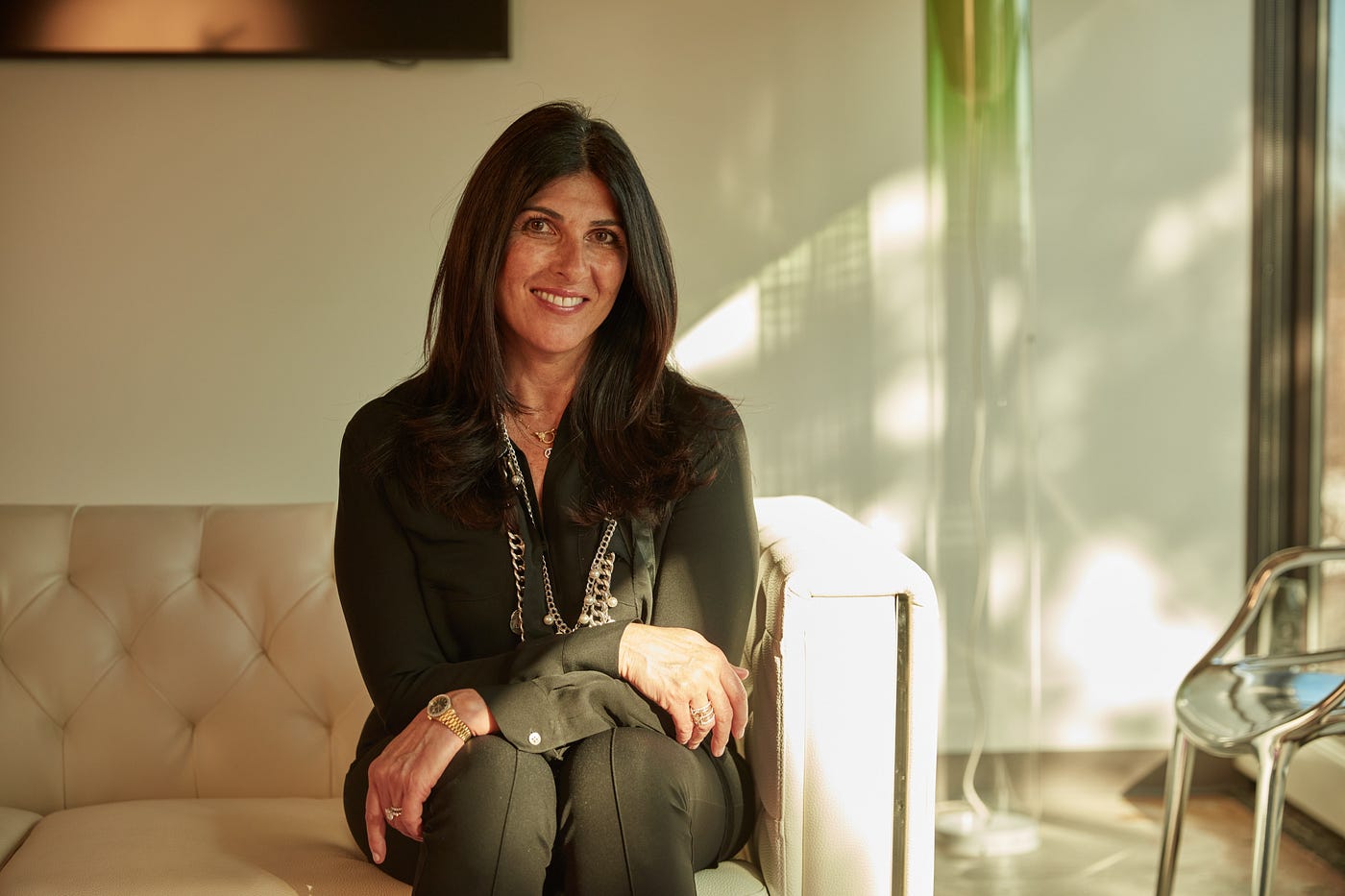
As a part of our series called ‘Five Things I Wish Someone Told Me Before I Became A CEO’ we had the pleasure of interviewing Barbara Yolles.
With a marketing career that spans the realm of fast-food giant McDonald’s to major ad agencies McCann North America and Campbell Ewald (as CMO at each), Barbara Yolles, CEO of Ludwig+ is best known for architecting brand and business solutions that change the destiny of a company.
Barbara built in-house marketing teams, and comprehensive marketing programs and business strategies for financial giants TMS and United Wholesale Mortgage, both realizing significant multiples in revenue growth. In the agency world, Barbara led the marketing and advertising for major brands, including PNC Bank, Vanguard Mutual Funds, Johns Hopkins Medicine, TJ Maxx Corporation, Zipcar, World Gold Council, and many other nationally recognized companies.
The Ludwig+ CEO Barbara Yolles discusses her unique approach to being a CEO and tells us the 5 things she wishes someone had told her before she got started.
Thank you so much for joining us in this interview series! Before we dig in, our readers would like to get to know you a bit more. Can you tell us a bit about your “backstory”? What led you to this particular career path?
I have a degree in film, but I have always loved the process of coming up with solutions that can help a company thrive. I’ve spent most of my career in the advertising world, first growing up on the account management side of the business and ultimately becoming the pitcher at a variety of different agencies — McCann, KBS and Campbell Ewald — I even did a brief stint at McDonald’s Corporation where, in the late 1990s and early 2000s, I was a part of the team that created the Dollar Menu.
I eventually left the agency world and took a job as the CMO of an unknown, 8-billion-dollar mortgage company. I was enamored with their culture and the notion of building a brand from the ground up. Although a mortgage is one of the most important purchases a person can make, it’s so often treated like just another transaction. I was inspired by how the auto industry frames buying a car — it’s such an emotional purchase, and I wanted to insert some of that emotion into my work in marketing and strategy for the mortgage industry. That’s what I did for a few years — at both that company and another mortgage firm.
When the organization I was working for had an acquisition, they no longer needed the robust operational infrastructure I had built in the marketing department. I’d assembled an amazing team of people who could compete at the highest level at any top ad agency. But we weren’t an agency — we were a marketing department inside a mortgage company. Ad agencies are so brilliant in so many ways, but I’ve worked at enough of them to know creatively minded people aren’t always the best on the business side of things. I realized if I could take the team I had and create an independent marketing company, we could use what I learned from the corporate world and marry that with our incredible expertise in creativity and media.
I approached the owners of the mortgage company I worked for and said, “I know you want me to lay people off, but if you give me 90 days, I will recruit clients and we will pay for this marketing department.” They agreed, and we ended up winning five clients in 90 days — clients in healthcare, fintech, retail and more — all served within this mortgage company.
Ultimately, we decided to set off on our own. We opened the doors of LUDWIG+ in August 2019 and became incorporated as a female-owned enterprise. Today, we have just over 50 employees and we’ve diversified: we have a big financial services practice, and we also have clients in healthcare, technology, and a variety of other categories.
Can you share the most interesting story that happened to you since you began leading your company?
I lost two clients because they were acquired based on the work we did for them. I’m very proud of this! We were able to take one company from bankruptcy to a 1.5-billion-dollar acquisition in 11 months. For the other company, we drove an acquisition in under 12 months.
Can you share a story about the funniest mistake you made when you were first starting? Can you tell us what lesson you learned from that?
I’m the mom of eight boys — four of my own and four stepsons. I was in a meeting and my phone was ringing. It was Alex, one of my youngest. After repeatedly silencing the phone because I was in a big important meeting, I finally answered out of concern. Everyone in the Zoom room could hear what was so urgently important: “Mom, where did you hide my gummy bears?” The lesson: Hit mute on Zoom.
None of us can achieve success without some help along the way. Is there a particular person who you are grateful towards who helped get you to where you are? Can you share a story about that?
I’m so grateful for our inaugural clients. They had the vision to understand that a shared marketing department with a proven track record, albeit inside a mortgage company, could support one of the world’s largest healthcare networks, a leader in real estate services and a retail chain. That is amazing to me. Because they were open-minded, we were all able to succeed. I’m forever grateful to these clients who were critical to my ability to begin this journey!
As you know, the United States is currently facing a very important self-reckoning about race, diversity, equality, and inclusion. This may be obvious to you, but it will be helpful to spell this out. Can you articulate to our readers a few reasons why it is so important for a business or organization to have a diverse executive team?
I’ve always been a champion of diverse thinking. Big, powerful ideas and business building initiatives come around because you combine different ways of thinking, different mindsets, and different life experiences. When you bring that diverse thinking together, that’s when something powerful happens!
It’s not unusual for me to ask people to tell me about their first jobs or the early days of their lives, because I am a firm believer that your first points of reference impact who you are and how you think as a professional. Whether it’s race, diversity, equality, or inclusion, it is also about diverse thinking.
As a business leader, can you please share a few steps we must take to truly create an inclusive, representative, and equitable society?
Every organization needs a core set of values. To me, that is a critical ingredient in being inclusive. You also need to bring people together with clear expectations and behaviors. While we may come from different walks of life, if we can come together with a common set of values, we can drive inclusivity and create an equitable and high performing environment.
At LUDWIG+, we have employees take the Gallup StrengthsFinder to better understand who they are as individuals and what their potential is. There’s a series of exercises we go through, and one of them is defining our personal core values. We give everybody a list of 50 potential core values and have them narrow in on what is important to them — things like family, integrity, winning or opportunity — then we look at who we are as a company to see how individuals match up and identify opportunities to bridge the gaps.
Most of our readers — in fact, most people — think they have a pretty good idea of what a CEO or executive does. But in just a few words can you explain what an executive does that is different from the responsibilities of the other leaders?
I don’t know if I’m the typical CEO because I’m hands-on and in the trenches with my team. I’m a firm believer that everyone should come to work to play hard every day. On one end, I must set the vision for the company — I’ve spent a lot of time trying to shape the way people understand how to achieve our vision as a company. On the other end, if I need to jump in and assist with a deck presentation or document, I will always roll up my sleeves and help.
My leadership style is that of an active participant. I do set a very clear vision for the company; we have a business plan and goals one to three years out that we are always coming back to. I think that’s part of why we’re successful — you can’t just have a vision without having a plan and you’re not going to realize the vision if you don’t work the plan.
What are the “myths” that you would like to dispel about being a CEO or executive. Can you explain what you mean?
You can never be ready to be a CEO until you are one. There’s a lot that comes with it! Attention to every detail, every move, and every word that I say! The impact I can have on individuals is far greater than I imagined. I’ve had to learn a lot and I’ve made mistakes where I’ve said something, and it was interpreted the wrong way. I have massive respect for others who have done this before me, and I’ve been lucky to have some great examples of CEO leadership throughout my career. It is a big responsibility because it’s not just about the business at hand, it’s also about the people and their families.
What is the most striking difference between your actual job and how you thought the job would be?
There is a lot more to the operational infrastructure of running a company than you might expect, and it can be a challenge to run a business while helping other businesses transform and actualize their brands.
The other thing I never anticipated as CEO is the sheer weight of responsibility that comes with the job. Being responsible for the livelihoods of the 50 team members who are depending on this business to take care of their families — the gravity of that is massive, and I do not take it lightly.
Do you think everyone is cut out to be an executive? In your opinion, which specific traits increase the likelihood that a person will be a successful executive and what type of person should avoid aspiring to be an executive? Can you explain what you mean?
Outside of having the core competencies of your craft, being an executive requires the ability to coach people, bring them into your organizational culture and get them to buy in. That takes a special type of individual because you must have a clear set of values. You must have an incredible work ethic and a sense of positivity. You must have transparency and great communication skills.
In my case, I have also learned that being an executive of an established company is different than building something from the ground up. So, I’ve learned to make sure that the people I bring in at the executive level have a builder mindset and can be visionary and inspirational at the same time.
What advice would you give to other business leaders to help create a fantastic work culture?
Take care of your people every single day and find ways to coach them up, and give feedback so they can be the very best versions of themselves. When employees feel good about what they are doing, that has a ripple effect on your customers or clients. Taking care of your team helps to take care of your clients.
How have you used your success to make the world a better place?
I was featured in an article in Adweek when I was leading new business growth for various ad agencies. My job was to drive revenue and inspire others to join me in that effort. A lot of the agency environments I worked in were incredibly political and backstabbing. When I set out to create my agency, I wanted to create an environment where people can be their best selves and unleash their full potential. If you’re around people who are positive and focused on the same purpose, then you are unstoppable.
The biggest impact I’ve made is the success of the people, and the success of their respective clients and businesses. One of the things I’m most proud of in my career is seeing former interns succeed in business — one former intern is now the CMO of the #1 wholesale lender in America. She followed me through the years and now she’s CMO. I had another intern who became very high up in government affairs at McDonald’s. Those stories are where I’ve made the most impact — it’s all about the people.
Fantastic. Here is the primary question of our interview. What are your “5 Things I Wish Someone Told Me Before I Started” and why? (Please share a story or example for each.)
- Visionaries need a great operations person. I’m the visionary and I need that operations person to make the machines work. If you ever read the book Traction, there are visionaries and there are integrators. Visionaries shouldn’t be focused on the operations of a business; they should be focused on being visionary.
- People really matter, and you should hire smarter. Surround yourself with really smart people who are bringing value to the growth and destiny of your business.
- Create an environment in which greatness thrives and then get out of the way and let it happen.
- “The millennials are coming! The millennials are coming!” Each generation has a very different work ethic and priorities in life. You must understand your people and their motivations and strengths. It is a very different working world than it ever has been. Someone in my generation works a certain way and not everyone works that way. As the leader of a company, I found that I underestimated people’s work ethic.
- Lean into your mentors, have a network and invest in yourself. I’m very lucky to have had a lot of wonderful mentors in my life that I still turn to. I am now a member of Chief, a C-level women’s network, and I have found that when you find the right network, you can turn to others for wisdom and guidance. There are going to be challenges and you will need your mentors and network to help navigate those ups and downs of your business.
You are a person of great influence. If you could inspire a movement that would bring the most amount of good for the greatest number of people, what would that be? You never know what your idea can trigger.
I would inspire a happiness movement! I think people need to be happier. I read a lot about how people think and what motivates them and drives them to do what they do. I recall learning early in my career that approximately 85% of every subconscious thought is negative. You must work hard to be positive. And when you’re positive, your output is better and you feel fulfilled.
A few years back at my former employer, we did a campaign around “Growing Happiness.” We gave team members $20 and asked them to go into the community and do random acts of kindness. It was awesome! People took the $20 and bought someone groceries or went into the city and allowed people to walk through the subway turnstiles for free. Others stood at a carwash and paid for everyone’s car wash that day. Pizza was delivered to a firehouse. It was so wonderful to see random acts that delivered happiness!
I think the world is under a lot of pressure right now. There are a lot of wonderful things that could happen as a result of human kindness.
Can you please give us your favorite “Life Lesson Quote”? Can you share how that was relevant to you in your life?
“Perfection is not attainable, but if we chase perfection, we can catch excellence.” — Vince Lombardi
I love that quote because there’s always room to improve and be even greater than you were the day before. Whether it’s your behavior or an idea. We push ideas here all the time. In a previous professional role, I set a goal that I was going to bring my boss a big new idea every Friday. I told him that some were going to be great, and some were going to stink. There turned out to be some gems in there and that CEO is still running those ideas four years later. He’s now the #1 wholesale lender in America.
We are very blessed that some very prominent names in Business, VC funding, Sports, and Entertainment read this column. Is there a person in the world, or in the US with whom you would love to have a private breakfast or lunch with, and why?
Serena Williams. She’s not just the top woman athlete, she’s the top athlete. She’s an entrepreneur. And she’s an elegant badass.
Thank you for these fantastic insights. We greatly appreciate the time you spent on this.
CK
Written by
Charlie Katz
Editor & Journalist · Authority MagazineCharlie Katz is a senior columnist at Authority Magazine covering Business and Tech, conducting primary-source Q&A interviews with founders, executives, and industry leaders.

Published inAuthority MagazineTop Lessons, Top Authorities · 42K Followers
Exclusive, curated interviews with the leaders and changemakers shaping tomorrow. Leadership lessons, industry deep dives, and executive profiles.