Being a chef in the niche world of ultra-luxury, it becomes harder to get surprised with odd requests. Quite frankly the extraordinary becomes the ordinary on a daily basis.
Business
Anthony Marazita: Why Cooking for Standard Poodles in the Desert Taught Me to Expect the Unexpected in Ultra-Luxury Hospitality
Amangiri Executive Chef Anthony Marazita shares how honoring Native American culinary traditions and mastering ultra-luxury hospitality shaped his unique culinary journey.
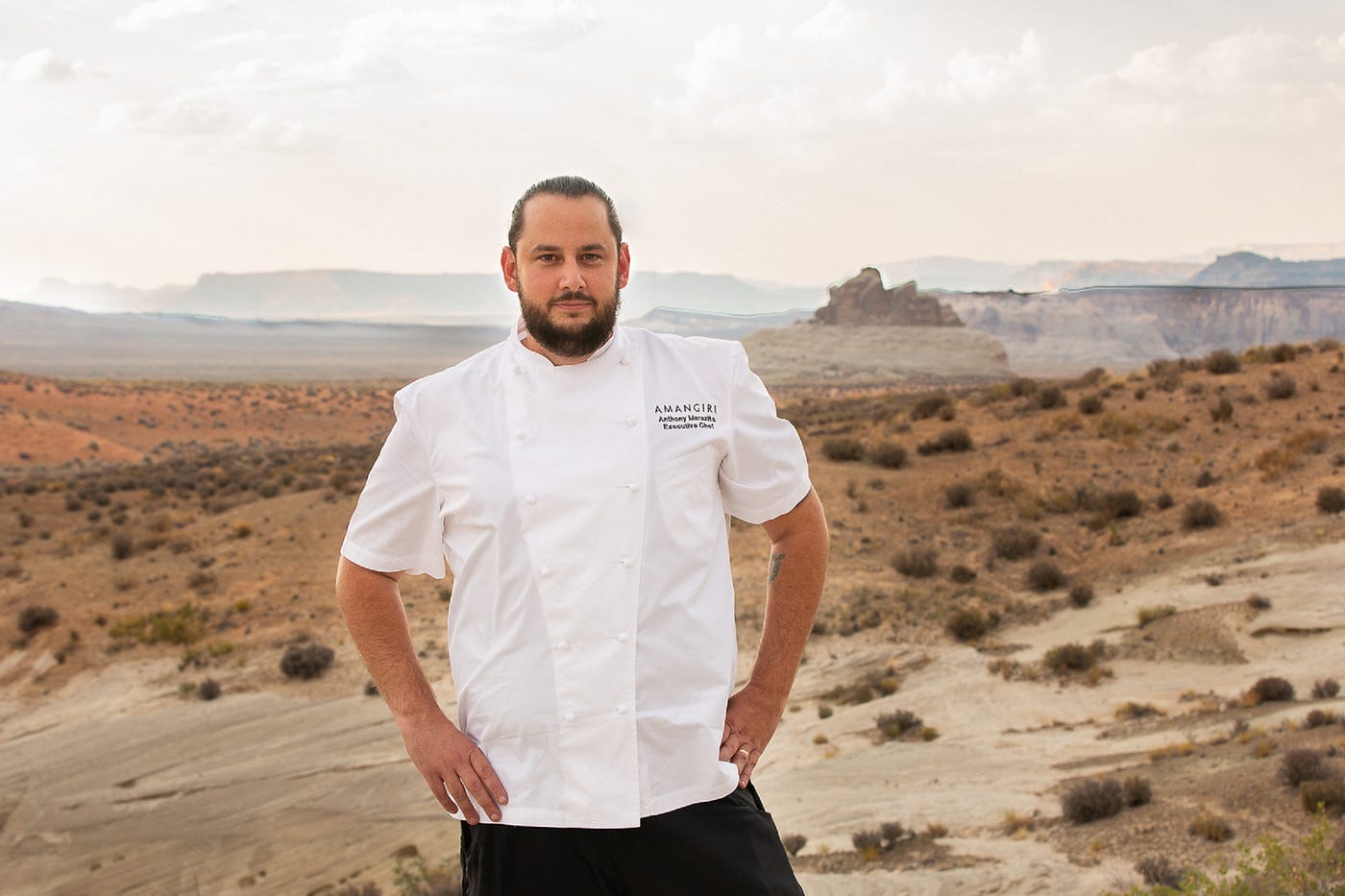
As part of our series about the lessons from influential ‘Tastemakers’, I had the distinct pleasure of interviewing Chef Anthony Marazita, the executive chef at Amangiri.
Anthony Marazita celebrates Native American culture and cuisine as the Executive Chef at Amangiri, a resort in one of the world’s most dramatically secluded settings in the heart of the Utah desert. In his role Marazita is responsible for curating sustainable, seasonal menus inspired by the culinary heritage of the Navajo and the American Southwest for the property and its sister luxury encampment, Camp Sarika.
Marazita’s cuisine style is best described as “Native American with a global accent,” a collaboration of indigenous ingredients and techniques with a refined twist designed to celebrate the numerous tribes located in the region. Utilizing his first-hand expertise and innovative interpretations of classic recipes, Marazita treats guests at Amangiri to an elevated culinary journey that allows them to connect more intimately with Native culture.
Hailing from northern Nevada, Marazita developed a passion for service at his family’s coffee shop, where he worked every day throughout his childhood before graduating to fine dining apprenticeships in Napa Valley and San Francisco as a teenager. It was there that he became exposed to various worldly cuisines and was given the unique opportunity to observe skilled and knowledgeable chefs from all backgrounds. Marazita found himself more inclined to expand his gastronomic experience with this type of hands-on approach versus the traditional culinary school route and opted to spend the next few years working his way up through the kitchen ranks of luxury hotels and restaurants along the West Coast.
At the age of 24, he was offered his first executive chef position at a private country club in Nevada that catered to an esteemed clientele including the likes of past presidents. After a five-year tenure, Marazita left to join the Starwood Hotels & Resorts where he served in a number of chef roles at properties like the Palace Hotel in San Francisco, the Princeville Resort in Hawaii and the Sheraton Grand at Wild Horse Pass in Scottsdale, Ariz. over the course of eight years.
Always looking to challenge himself and advance his skill set, Marazita accepted Amangiri’s offer to lead their culinary program in 2017 and has spent the past four years developing personalized dining experiences that honor and commemorate Native culture.
Thank you so much for doing this with us! Our readers would love to ‘get to know’ you a bit. Can you share with our readers a story about what inspired you to become a restauranteur or chef?
Other than stating the obvious of my love of food, creativity, or that one special dish that truly burned a memory in my brain, it really comes down to the people in this industry. One person that I’ll never forget who took me under his wing is “Roger”, who was the chef of the fine dining restaurant within the casino I worked at in my hometown.
Considered the best restaurant in town, it was a huge opportunity for me to be recruited to work within the steakhouse, even though I was just slinging early bird specials off the grill to start. Roger was a very grumpy man in his late 50s who held the highest standards for his food and carried himself with great style as he wore slim-fitted uniforms that were always crisp and never complete without his huge gold Rolex.
Although Roger was known for his bad temper and crass vocabulary at a very impressive level, he really liked me and began taking his time in order to show me everything in the kitchen, even though it certainly caused resentment from the older chefs and cooks on the team. Being a teenager in that situation, I always thought of Roger as a Rockstar and he is the one that inspired me to become a chef at the highlight level as he was able to look past my age and invested in someone who wasn’t afraid to work hard.
Do you have a specific type of food that you focus on? What was it that first drew you to cooking that type of food? Can you share a story about that with us?
It’s important to have a well-rounded background as a chef and study all cuisines. However, you also need to have that “go-to specialty” and for me, I wanted that focus to be something a little more unique.
When I first moved to the Southwest, I worked for a hotel that was owned by the Native American Tribe in that region and their focus was showcasing Native foods. I found this so unique and I wanted to immerse myself in the culture and community in order to learn as much as possible while understanding their ingredients and dishes. Although I’m not of Native American-descent myself, I wanted to do this with the utmost respect. I would ask the community members if I can learn some family recipes and I would often find myself making fry bread with the housekeepers from the hotel who grew up on the reservation so I can truly understand their method.
So, all of that to say, my big focus in cooking is Native American with global accents where I pull together elements of luxury on traditional native dishes, all while celebrating the story of these unique native ingredients.
Can you share the funniest or most interesting story that happened to you since you became a chef or restauranteur? What was the lesson or take away you took out of that story?
Being a chef in the niche world of ultra-luxury, it becomes harder to get surprised with odd requests. Quite frankly the extraordinary becomes the ordinary on a daily basis. However, one thing comes to mind as I was challenged to prepare a private six-course dinner for four people in the middle of the desert, which is a rather normal request in my world, but when it came time to greet the guests and begin the dinner, I noticed two of the four guests were large standard poodles sitting proper in their chairs at full attention.
The lesson to be learned here was to expect the unexpected every day at this level of service and to take on wild requests like you’ve done them a million times. In ultra-luxury travel, you will cook for the most interesting people in the world but we will never name names.
Can you tell us a story about the hard times that you faced when you first started your journey? How did you overcome this obstacle?
Falling into leadership roles at a young age always presents challenges when it comes to earning the respect of older team members, especially when different cultures make doing this even tougher. Over the years, I have learned that if you make personal connections and truly show that you care about the people around you, it helps you reach your goal of getting them to have confidence in you as a young leader. I always like to ask about their family, know what they like to do outside of work and I’m never afraid to get on the line with them in the trenches of busy dinner service. It’s also important to show your team you’re not afraid to have an uncomfortable conversation or coaching moment when the opportunity presents itself.
In your experience, what is the key to creating a dish that customers are crazy about?
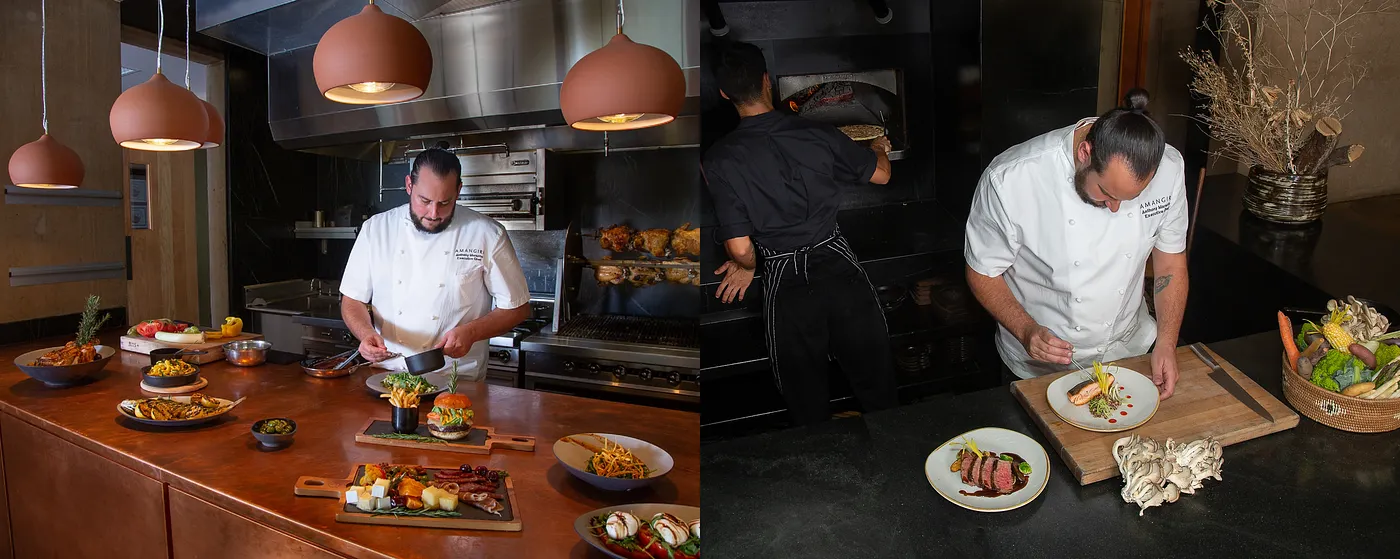
When creating a dish, it’s important to keep your finger on the pulse of trends in the industry in addition to where the guest is traveling from as people from the Midwest eat very differently than people from Los Angeles and the European traveler eats differently to Americans. At
Amangiri I find the biggest trend these days that really gets people excited is preparing simple foods with the best quality of ingredients or even dishes that tell a story of the local region.
Personally, what is the ‘perfect meal for you’?
Whether it’s a perfectly executed Foie Gras Torchon in a bistro in Paris to a greasy breakfast in a grimy casino coffee shop in Reno, my perfect meal depends on what I’m feeling or where I’m at as I don’t discriminate when it comes to food.
Where does your inspiration for creating come from? Is there something that you turn to for a daily creativity boost?
For me, inspiration can really come from anywhere. I’ve had times where I was putting a children’s puzzle together with my four-year-old and the shapes sparked a cool presentation for a new plate. I’ve also had times when creating classic and simple dishes where I brainstorm ways to add a refined twist to them whether it’s an Indian butter chicken or taking a simple meatloaf to the next level. From the shapes of the canyons surrounding Amangiri to the smell of wild sage, I’m constantly thinking how we can put that on a plate to tell the overall story.
Are you working on any new or exciting projects now? What impact do you think this will have?
Although we are constantly working on new food ideas and projects, I think the main focus for us is practicing responsible sustainability by finding very disciplined ways to recycle and source seafood. As chefs, we take so much from the environment so we have a huge responsibility to do what’s right. I truly feel that having a good amount of your menu being plant-based is very important for the long term of the environment in addition to the wellbeing of our guests.
What advice would you give to other chefs or restauranteurs to thrive and avoid burnout?
Overall, I feel that stress and burnout totally depend on the person as some can take a beating more than others. Building a strong team and giving them a chance to earn your trust is a huge part of it. If you invest in your staff, they will see that and will not want to let you down in your absence, thus — giving you time to balance your outside work life. Keep your standards high, however, don’t be afraid of letting the little things go as long as it doesn’t affect the guest experience. If you’re running the kitchen, save those coaching moments for the end of the night instead of letting it stress you out in the moment. Finally, travel to always re-inspire yourself.
Thank you for all that. Now we are ready for the main question of the interview. What are your “5 Things I Wish Someone Told Me When I First Started as a Chef in Ultra Luxury Hospitality “ and why? Please share a story or an example for each.
- Menus are just guidelines. At this level, it’s key to have a fantastic menu with a great theme that hits all the “finger on the pulse food trends”. However, it’s also important to be flexible and be able to creatable whatever the guests want when they order it. At Aman, the guest experience is at the center of what we do so we always need to stay flexible to special requests which will make their stay more memorable.
- Simple Wins. Well-executed dishes with great quality is what’s expected. The times of over-tweezered, 12-coursed meals are what guests of this caliber are looking for as they’ve probably been there and done that already. Like Leonardo da Vinci said, “Simplicity is the ultimate sophistication.”
- Vegetarian & Plant-based Diets are not a Trend. When you’re a young chef with lots of passion for food, you don’t quite understand why people want to limit themselves into one culinary avenue. However, when you start taking care of higher-end clientele, it starts to make sense. Our guests simply want to live longer and be healthy, just like everyone else. So, it’s important for us to chefs to make their dietary needs our top priority.
- Celebrities Are Nice. When you first get a culinary job at a place like Amangiri, you’re often faced with cooking for some big names in the technology, entertainment and sports industries and I’ve never once had a negative experience. Arriving at Amangiri is like being welcomed into a home of a close friend, and every guest is important to us no matter who they are.
- You Will Cook Everything for Everyone. One thing I’ve learned about cooking within an ultra-luxury resort-like Amangiri is that people want what they want. Most of our guests are well-traveled and have enjoyed some of the best culinary experiences around the world. So, when they come and stay with us, we want to cater to any and all cuisine they are looking for. That’s why, it’s so important to be well-versed in all aspects of culinary. I’ve had people request everything from fried chicken to super intricate Indian dishes all in the same night. You have to be prepared and you have to make quick decisions in order to keep the guest satisfied.
What’s the one dish people have to try if they visit your establishment?
The one dish people have to try at Amangiri is the Navajo Blue Corn Polenta with Juniper ash-infused 60-day blue corn polenta with local goat cheese & black truffle finished with fry bread popover. This is a luxury twist on a beloved Navajo dish that is a tableside staple in homes on the reservation.
You are a person of enormous influence. If you could inspire a movement that would bring the most amount of good to the most amount of people, what would that be? You never know what your idea can trigger.
Believe in science and be nice.
Thank you so much for these insights. This was very inspirational!
CV
Written by
Chef Vicky Colas
Editor & Journalist · Authority MagazineChef Vicky Colas is a contributing interviewer at Authority Magazine covering Business and Tech, conducting primary-source Q&A interviews with founders, executives, and industry leaders.

Published inAuthority MagazineTop Lessons, Top Authorities · 42K Followers
Exclusive, curated interviews with the leaders and changemakers shaping tomorrow. Leadership lessons, industry deep dives, and executive profiles.