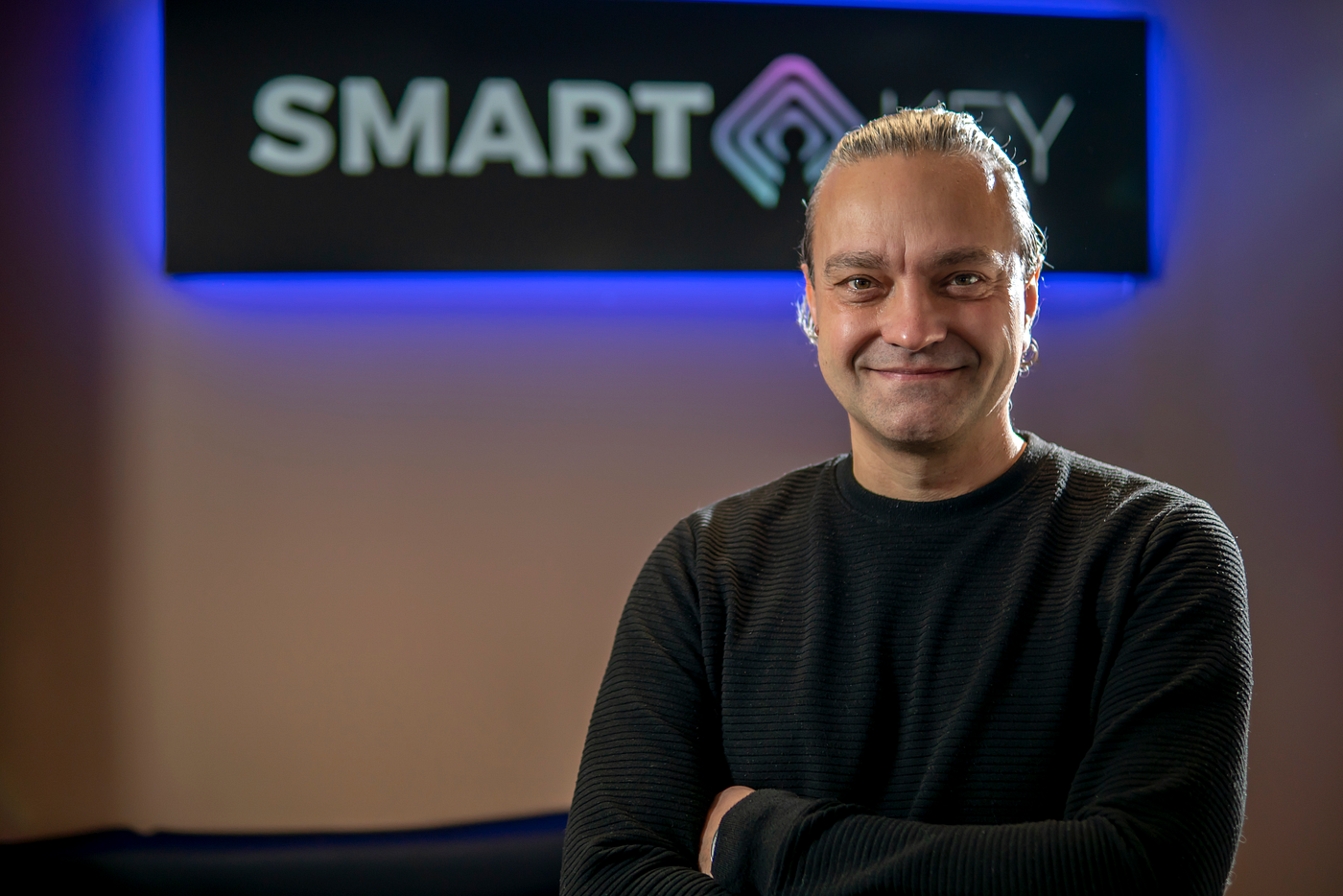
In my role, I have to make decisions knowing technology could be used to shortcut rigor. However, I elect to uphold high standards because anything less would shortchange students. Acting with integrity, even when uncomfortable, is important for the work iteach does and those we serve.
Andrew Rozell, CEO of iteach
EdTech: On How Their Technology Will Make An Important Positive Impact On Education
Video link: https://youtu.be/4J0CRBkoRZ4
INTERVIEW QUESTIONS:
In recent years, Big Tech has gotten a bad rep. But of course, many tech companies are doing important work making monumental positive changes to society, health, and the environment. To highlight these, we started a new interview series about “Technology Making An Important Positive Social Impact”. We are interviewing leaders of tech companies who are creating or have created a tech product that is helping to make a positive change in people’s lives or the environment. In this particular installment, we are talking to leaders of Education Technology companies, who share how their tech is helping to improve our educational system. As a part of this series, I had the pleasure of interviewing Andrew Rozell, CEO of iteach.
Bio: Andrew Rozell is the President of iteach, an online alternative teaching certification program. He holds a Master of Business Administration in strategic management from the University of North Texas, Bachelor of Business Administration in finance from the University of North Texas, an active teaching license in grade 6-12 Mathematics. He is currently pursuing a doctorate of business administration with a leadership cognate. He can be reached at andrew.rozell@iteach.net or via LinkedIn.
Thank you so much for joining us in this interview series. Before we dive in, our readers would love to learn a bit more about you. Can you tell us a bit about your childhood backstory and how you grew up?
I grew up in Memphis, Tennessee, and later moved to Denton, Texas in second grade. I came from a family of four boys. Growing up, we experienced different types of schooling including public, private, and homeschool. My mother worked as a flight attendant, so I traveled a lot as a child, which gave him an appreciation for other cultures and places. After going to college in Tennessee, I moved back to Denton with my wife.
Can you share the most interesting story that happened to you since you began your career?
About seven years ago, our company, iteach, was operating in Louisiana. There was a conflict over which entity had authority over our teacher certification program: the state Department of Education or the Board of Regents. When we examined the actual legislation, there was a conflict between laws that gave both entities authority at different times.
In order to gain clarity, not just for our program but for other similar programs in Louisiana, I began pursuing legislation to clear up the conflicting laws. I was able to testify before the state Senate Education Committee, which passed the bill to the full legislative body. It then went to the governor's desk, where I had the opportunity to sit with him as he signed the new legislation into law.
The process gave me a fascinating look into how laws are made. It felt good that I was not trying to add special interests or "pork" to the bill, but rather aimed to simply codify clarity about authority over teacher certification programs. While this law may have been inconsequential to most, it provided needed resolution for a handful of impacted programs. Going through the legal process and seeing how it works was a memorable experience.
None of us are able to achieve success without some help along the way. Is there a particular person who you are grateful towards who helped get you to where you are? Can you share a story about that?
One person who has been particularly helpful in getting me to where I am today is my high school math teacher, Bill Finch. I had him for math classes all four years in high school. He was by far my favorite teacher.
While many teachers focus solely on measurements and outputs, Mr. Finch took a curious approach in the classroom—not just about numbers, but why we were learning concepts. His lesson-planning, homework approach, and even assessments made me want to perform in a way that I believe fostered real student learning. I aim to be perceived in the same way by those around me: as someone who genuinely cares about all individuals and feels they can learn and succeed.
I didn’t fully appreciate it at the time, but Mr. Finch's example has stayed with me. Looking back, I see someone who brought energy, humility, and genuine care for students each day. He left a profound impact on me and the way I aim to lead others.
Can you please give us your favorite "Life Lesson Quote"? Can you share how that was relevant to you in your life?
"Be curious, not judgmental." This phrase, made famous by the television show Ted Lasso, reminds me to ask questions before making judgments in all that I do.
I find it helps me greatly both professionally and personally. In work, it allows me to have more productive conversations by genuinely asking questions rather than making assumptions. Even in casual interactions with people I may never see again, it’s easier to make small talk by learning about others rather than judging them.
The quote has become more impactful to me recently as I consciously aim to enter all relationships, difficult or not, with an open and curious mindset rather than preconceived notions. Taking a disposition of curiosity has proven effective for me in navigating conversations and relationships in a positive, helpful manner.
You are a successful business leader. Which three character traits do you think were most instrumental to your success? Can you please share a story or example for each?
Three character traits that I believe were most instrumental to my success are curiosity, servant leadership, and integrity.
Curiosity has served me well both personally and professionally. Just last week at a leadership offsite, one of my colleagues pitched an idea that did not fully resonate with me at first. However, by asking thoughtful questions rather than judging, I allowed him to expand on his idea in a way that gained significant buy-in from our team.
I also aim to lead through a posture of servant leadership. I find that modeling hard work for others and getting my hands dirty alongside team members inspires collaboration. Small acts like taking out the trash communicate to staff that there is nothing I won't do with and for them.
Finally, maintaining integrity is crucial. In my role, I have to make decisions knowing technology could be used to shortcut rigor. However, I elect to uphold high standards because anything less would shortchange students. Acting with integrity, even when uncomfortable, is important for the work iteach does and those we serve.
Ok super. Let’s now shift to the main part of our discussion about the tech tools that you are helping to create that can make a positive social impact on our educational systems. To begin, what problems are you aiming to solve?
The main problem we are aiming to solve through our work at iteach is making the teaching profession more accessible without reducing the level of rigor and expectations placed on learning.
We want to see more and more people enter the teaching field to help address teacher shortages. However, we do not want increasing the number of new teachers to dilute the standards we hold for instructors and the impact they have on students. Our goal is to deliver quality teaching to more places while still ensuring robust training and maintaining high standards.
How do you think your technology can address this?
Our technology aims to address this issue through leveraging tools and systems in a way that keeps costs low. If we didn’t use technology to the extent that we do, we wouldn’t be able to manage expenses at the level needed to achieve our mission.
By delivering teacher training affordably on our online platform, we’re making the profession more accessible to those for whom traditional routes may not be feasible due to financial barriers. A lower-cost option in education can promote greater diversity and inclusion in the classroom. At the same time, technology allows us to uphold rigorous standards through customized learning experiences and real-time support for teachers.
Can you tell us the backstory about what inspired you to originally feel passionate about education?
My passion for education was inspired from a young age by watching my mother's career path. After working as a flight attendant, she became a math professor at a local college. When she took on that role, my father lost his job, leaving my mother as the primary breadwinner for our family of four boys.
To make ends meet, my mom began tutoring students on the weekends. I have vivid memories from my childhood of seeing a constant stream of kids from all over the area come to our home to receive extra help from my mother. Even in the toughest of times, she found a way to support our family through education.
Her example showed me how schooling could help both individuals and families. I saw firsthand how much she enjoyed teaching and the difference she was able to make. Her entrepreneurial spirit and dedication to students, even in the face of challenges, has always stayed with me. It planted the seeds for my own career in education.
How do you think your technology might change the world?
I believe our technology has the potential to truly change the world by delivering quality teaching to any child, regardless of their location or background.
Through leveraging tools and systems, we are able to scale up accessible, affordable teacher training in a way that has never been possible before. Our platform can reach students living in remote areas with no other options for instruction. It provides a pathway into the profession for those who might not otherwise have the means.
Most significantly, by removing barriers to entry, we aim to get high-quality teachers in front of more classrooms and impact even more young lives. If we can help address shortages and diversify the makeup of instructors, the ripple effects could be felt for generations to come as more students have access to excellent education. That is the kind of global change I hope to see our technology help bring about.
Keeping “Black Mirror” and the “Law of Unintended Consequences” in mind, can you see any potential drawbacks about this technology that people should think more deeply about?
While I am generally optimistic about the benefits our technology provides, there are some potential drawbacks we must consider carefully to ensure students receive the best possible education.
One concern is maintaining rigor as online options continue advancing. If assessments or training become too simplified solely for the sake of convenience, it could undermine true teacher development. We need to find the right balance of accessibility without compromising quality.
Representation in the classroom is also important to consider. As we scale up the number of new instructors, we need to examine how our systems either support or potentially hinder diversity in the teaching force. Ensuring underserved populations feel empowered to join the profession is an area meriting ongoing attention.
I believe we can maximize the positive impacts of our technology while mitigating any risks of unintended consequences over time, but continuous self-examination will be key.
How do you envision the landscape of education evolving over the next decade, and how does your technology fit into that future?
Over the next ten years, I believe one of the most significant changes we will see in education is the growing ubiquity of artificial intelligence in classrooms and learning environments. As technologies like AI assistants become even more advanced and affordable, they are poised to play an increasingly prominent role.
However, AI will only truly benefit students if properly implemented alongside highly trained, knowledgeable teachers. At iteach, we aim to equip new instructors not only with awareness and understanding of emerging edtech tools, but also the skills and confidence to leverage AI effectively in their instruction. We model exemplary uses of technology that empower, rather than replace, great teaching.
Here is the main question for our discussion. Based on your experience and success, can you please share “Five things you need to know to successfully create technology that can make a positive social impact”? (Please share a story or an example, for each.)
Based on my experience leading iteach, there are five key things needed to successfully create technology that drives real positive change:
First, thoroughly understand the problem you aim to solve and the needs of end users. After conducting deep research, we focused on teacher shortages and accessibility of training.
Second, gather ongoing stakeholder input to continuously improve. We solicit regular feedback to enhance support for instructors.
Third, build with an eye towards scalability and sustainability. Our systems were designed for expansion while maintaining affordability.
Fourth, prioritize equitable access. All students deserve excellent education, so we work to remove barriers such as cost and location.
Finally, commit to upholding the highest standards of quality. Rigor, credentials, and student outcomes must not be compromised for the sake of convenience.
Adhering to these tenets has helped us effectively train new teachers and maximize technology's power to positively shape lives through education.
In the realm of EdTech, there's often data collection involved. How do you ensure the ethical handling of user data, especially when it concerns students?
Ensuring ethical data practices is and always has been a top priority, especially when handling sensitive and proprietary information. When iteach was in its infancy, we took a hands-on approach to developing our systems. In fact, my mom, who played a pivotal role in our startup, created our initial database using Microsoft Access. From the outset, our ethos centered around creating our own software and systems, driven by a combination of necessity—where solutions didn't exist elsewhere—and a desire for customization and autonomy.
Throughout our journey, we underwent multiple iterations of databases and evolved our text systems. A distinct advantage iteach accrued is our comprehensive understanding of each system we currently employ, as we developed them ourselves. While we may not use all these in-house systems today, having built an Learning Management System (LMS), a student portal dashboard, and a backend database provided us with profound insights into the technological requirements for delivering a top-tier experience to our teacher candidates.
Our operational approach shifted from relying solely on in-house solutions to a 'build versus buy' mentality. We use a commercially available LMS with open-source capabilities to customize the learning experience. Similarly, we adopted Salesforce as our database, redefining the community experience on their platform. Our history of building systems informs our decisions on when to opt for commercial solutions or retain full customization, ensuring top-quality experiences. Even with Salesforce's out-of-the-box features, we extensively customize the platform, striking a balance between leveraging existing capabilities and crafting tailored solutions.
We write significant custom code on the Salesforce platform, building components in-house to maintain control over the user experience and quality. Our innovations on Salesforce earned us an invitation to speak at their annual conference, highlighting our unique customizations to account executives unfamiliar with such implementations.
In essence, our journey has found a dynamic balance between building and buying, leveraging our legacy of system development to make informed decisions that ensure the best outcomes for students and the institution. We have stringent security protocols and access controls in place. Our database is encrypted using industry-standard 64-bit encryption, and any sharing of customer information between parties requires the same level of protection. Login credentials also require two-factor authentication for added security. When using data for research or product improvement, we aim for anonymity by not collecting or requiring direct identifiers, like names. Aggregate findings are used to enhance support tools without compromising privacy.
As technologies evolve, I am also engaged in ongoing conversations with stakeholders to examine expanding legal protections for student data - as everyone deserves safeguards.
If you could tell other young people one thing about why they should consider making a positive impact on our environment or society, like you, what would you tell them?
I would encourage them to embrace a legacy mindset. In the rush to experience all that life offers, it's easy to lose sight of the fact that our actions have the power to reverberate for generations.
Each small act of service, each innovative idea realized, can have ripple effects far beyond what we immediately see. The young people of today have the potential to set whole new patterns of positive change in motion through their efforts, even if they never witness the full results themselves.
I would tell them that choosing impact over indifference is about so much more than any one individual. It's about the collective good that can be achieved when each person strives to leave the world a little better than they found it. Their contribution matters, and history shows the true scale of what seemingly "small" acts of courage and compassion can accomplish when joined with others.
Is there a person in the world, or in the US with whom you would like to have a private breakfast or lunch, and why? He or she might just see this, especially if we tag them. :-)
If I could have a private meeting with any one person, I would choose Secretary of Education Miguel Cardona (@SecCardona). In his role leading the US Department of Education, he has tremendous influence over the future of edtech integration and policy.
As a leader in the teacher training space, I am constantly evaluating how regulations and initiatives will shape our work of getting more qualified instructors into classrooms. A discussion with Secretary Cardona would be tremendously valuable for understanding his vision and gathering insights I could apply to better serving both students and teachers.
His perspective on advancing educational opportunities through technology while safeguarding standards could also help inform my own strategic thinking.
How can our readers further follow your work online?
The best starting point is our website at iteach.net, where visitors can explore our teacher certification and professional development programs in depth. We also maintain an active social media presence on platforms like Twitter, Facebook, and LinkedIn under the handle @iteachUS.
In addition, I regularly contribute to conferences, articles, and commentary related to edtech, teacher training trends, and innovation in K-12 education on iteach’s website and industry-related publications.
No matter the channel, iteach’s goal is to foster meaningful discussion about ensuring all students have access to excellent, diverse educators. I welcome engagement from any readers interested in continuing the conversation.
Thank you so much for joining us. This was very inspirational, and we wish you continued success in your important work.
Thank you for allowing me to contribute to this important education technology series. As an edtech leader and father, I genuinely feel the burden of equipping, empowering, and producing quality K12 teachers. The ability to play a small part in the bigger world we call education is fulfilling, and my calling. I hope my input was valuable to other edtech leaders and entrepreneurs!