The genesis of my journey into this field was largely due to being in a small town. I was just grateful to have friends and was always looking for things to stimulate my dopamine.
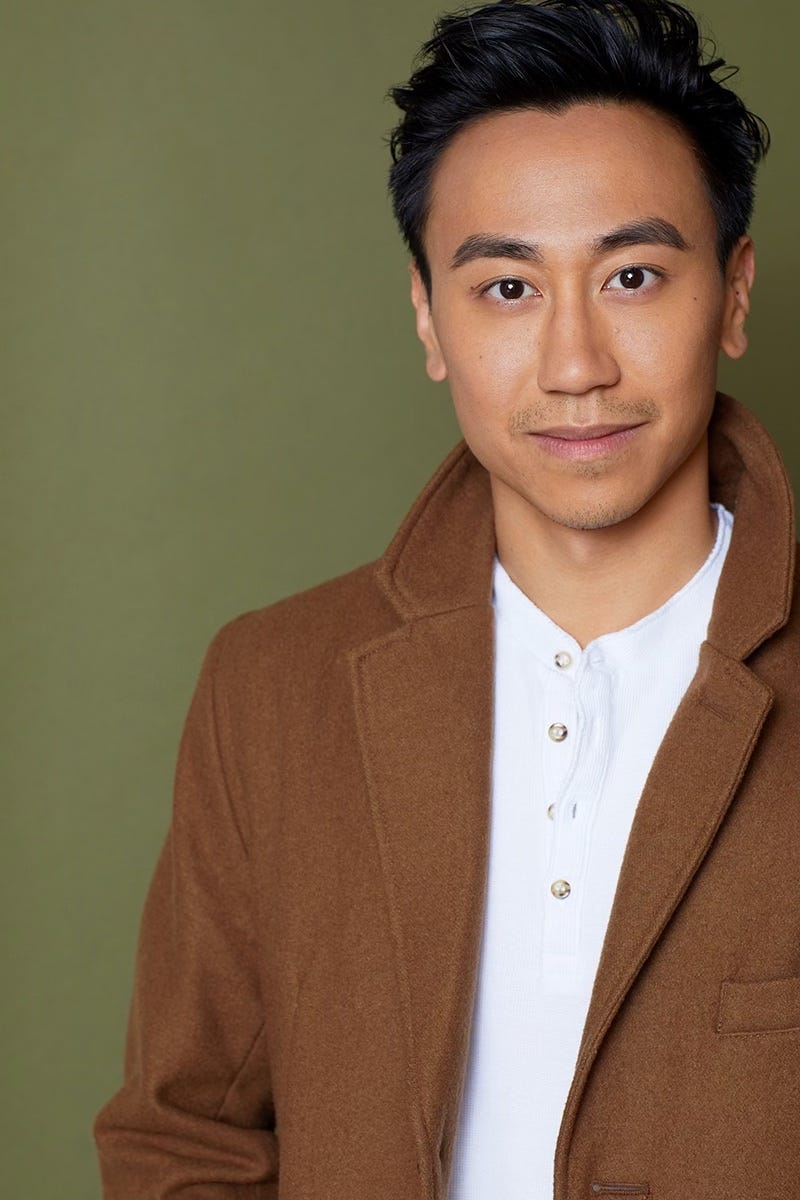
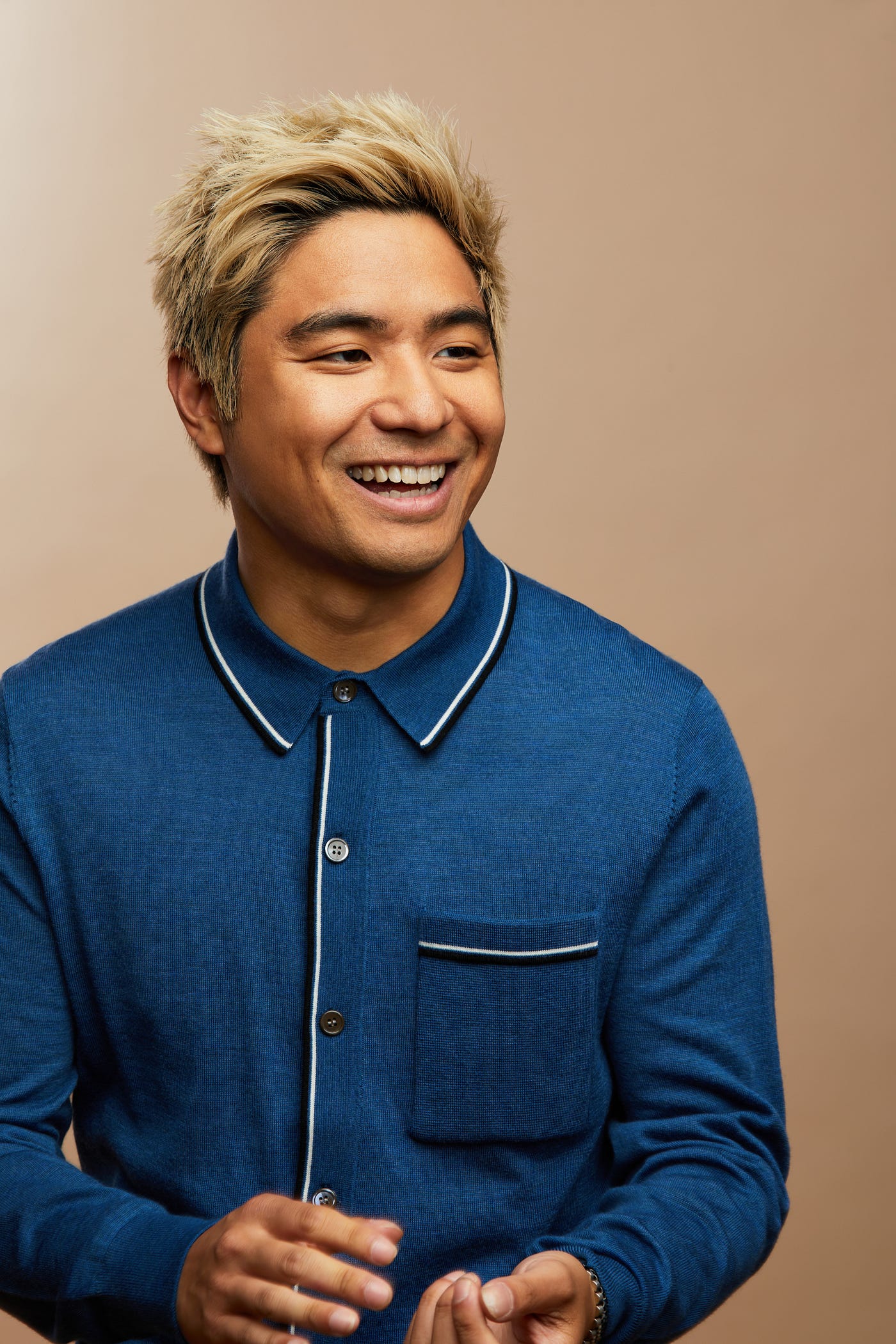
I had the pleasure to talk to Andrew Lopez, a dynamic and multitalented figure in Hollywood. Best known for his roles as a Filipino and Korean comedian, actor, and writer, Andrew is currently capturing the spotlight in the highly anticipated AppleTV+ comedy series “PLATONIC,” starring alongside renowned actors Seth Rogen and Rose Byrne.
Dubbed one of Hollywood’s “best-kept secrets,” Lopez is not just an actor, but a creative powerhouse. He effortlessly switches hats between writing, directing, producing, and performing, making a substantial mark in the industry. His noteworthy talent was recognized by Vulture in 2022 when they listed him as one of the “Comedians You Should Know.”
Currently, Lopez is penning the globe-trotting romantic comedy “SLOW BURN” for Amazon. He’s also contributing his writing talents to an original high-concept thriller for New Republic Pictures, set in the music world and involving collaborations with distinguished director David Michod and producers Brad Zimmerman and Brian Oliver. His diverse portfolio also includes a live-action feature developed in conjunction with Chernin Entertainment and Masi Oka.
Beyond his writing and acting exploits, Andrew’s talent for stand-up comedy is noteworthy. He has opened for the world tours of eminent comedians Jo Koy & Hasan Minhaj and has been featured in Netflix’s “JO KOY: IN HIS ELEMENTS,” for which he also received a producer’s credit. Furthermore, Andrew is scheduled to tape his 10-minute set with Don’t Tell Comedy on June 2nd, promising more laughs to come.
Lopez’s directorial prowess is evident in his work for Comedy Central digital, which has garnered over one million views across platforms. He directed, wrote, and produced a horror/thriller short film featuring Jefferson White, Sarah Yarkin, and Jorge Lendeborg Jr.
Yitzi: I’d love to hear about your origin story. Could you share about your childhood and how you grew up?
Andrew: I grew up in a small town called Pella, Iowa. It’s the greatest place on earth. I loved it. I was one of the few people of color there. It was an incredible experience. My parents were immigrants who settled there, and I was born and raised in Pella. After that, I attended Iowa State. I’m an Iowa boy through and through.
The genesis of my journey into this field was largely due to being in a small town. I was just grateful to have friends and was always looking for things to stimulate my dopamine. We did everything from talking about wild fantasies like blowing up cars with grenades or shooting paintball guns at mailboxes, to watching movies like “Knocked Up” in my friend’s basement.
Through all of these experiences, I think I began to build up stories. I had really funny friends — funnier than me — and my family is funnier than me too. It was all about the community I was part of. This eventually led me to wanting to tell those stories, and being around my funny friends helped shape my sense of humor.
I remember when I was seven, I saw “Men in Black” and thought, “I want to make movies like Men in Black.” I’m not the most intellectual guy, but because of where I grew up, when I saw “Men in Black,” I resonated with it on another level. I saw Will Smith as the ‘alien,’ infiltrating an all-white agency. He’s the cool, young black guy who’s judged but does things differently. And all the aliens in the world are just looking for home. I related to that — I felt that being the only Asian kid in Iowa. After that, I realized I wanted to make movies like “Men in Black” — fun, big, and entertaining, but also able to speak to a specific underdog feeling.
Yitzi: So, how did you go from Iowa to Hollywood?
Andrew: It was an interesting transition. I always knew I wanted to pursue this. I was obsessed with movies, TV, and culture, so it was kind of my lifestyle. It was just what I enjoyed, and I simply loved it.
When I went to college, I didn’t know anybody in Hollywood. I studied journalism, but I wanted to write movies, act, and direct. However, the closest thing to Hollywood in Iowa was stand-up comedy. Around that time, there was a comedy boom in 2008 with a lot of Chicago guys like Kumail Nanjiani, Aziz Ansari, Pete Holmes, and Amy Schumer, just to name a few. They were the younger, internet version of stand-up, and I sort of rode that wave.
I began to book comedians at Iowa State on the student union board, and I would book myself to open. This gave me a chance to meet them and learn about the industry. I opened for people like Donald Glover before he became the renowned Donald Glover we know today. I also opened for Hannibal Burris and Kyle Canane, and would always ask them questions.
This interaction led some of them to help me land my first job in Hollywood, which was as an assistant at CAA. I moved to LA with a job interview lined up, worked at a coffee bean shop initially, and then landed the job at CAA. So that’s how I made the leap.
Yitzi: Amazing. Wow. So, you already knew all the managers and agents before you started.
Andrew: Well, it’s interesting to think about. At that time, I was really into the TV show “Entourage”. I think “Entourage” was the show that educated regular people about the world of Hollywood management and agencies. So, when I was booking comedians and I saw names like CAA or UTA, it made me think, “Oh, this is like Lloyd or Ari Gold from ‘Entourage’.”
In a sense, it was a mixture of “Entourage” and my own hustle that connected the dots for me. However, it was a strange experience because I didn’t truly know what I was doing. I was just trying everything I could.
I remember the first time I did stand-up, I naively thought I should be on Comedy Central the next day, even though I didn’t get any laughs. The first time I emailed an agent to book a comedian, it was some small agency, and I think I asked them, “Will you represent me?” I was completely clueless.
Yitzi: That’s great. You probably have a lot of fascinating stories from all the parts of your career. Can you share one or two of the most interesting or the funniest stories that have happened so far in your professional career?
Andrew: Certainly, there are several stories, but one of my most memorable experiences happened when I first moved to LA. I was such a nerd back then. The first thing I did was perform at an open mic at this rather unassuming place. There were only four people there, and unfortunately, my performance was a complete flop.
Feeling dejected, I decided to find something to cheer myself up. So, I went to see the movie “Attack the Block” at the world-famous Arclight. I thought, “You know, this is Hollywood. Despite the rough start, I’m here, and I’m watching a movie at the Arclight.”
I purchased a large popcorn and entered the movie theater, which was almost empty except for one row. Sitting in that row were all the writers for “Parks and Recreation” at that time, including the late Harris Wittels and Megan Amram, who were big names for a Twitter nerd like me in 2011–12.
As soon as I spotted them, I stumbled over my feet and dropped my popcorn right in front of everyone. They all gasped, and I just thought, “I need to move back to Iowa. I’ll never make it. Everyone despises me now.”
My first day in LA was a series of disappointments. The next morning, I woke up in a converted mansion with nine roommates and cockroaches all over my bed. And to add to the misery, my car broke down on my way to my first job.
However, I consider that my first professional step because part of being a professional in entertainment or writing, I believe, is about handling rejection. So, in a way, those first rejections were my initiation into the professional world of entertainment.
Yitzi: That’s a great story. Hopefully, that was the most challenging part and it only got easier from there.
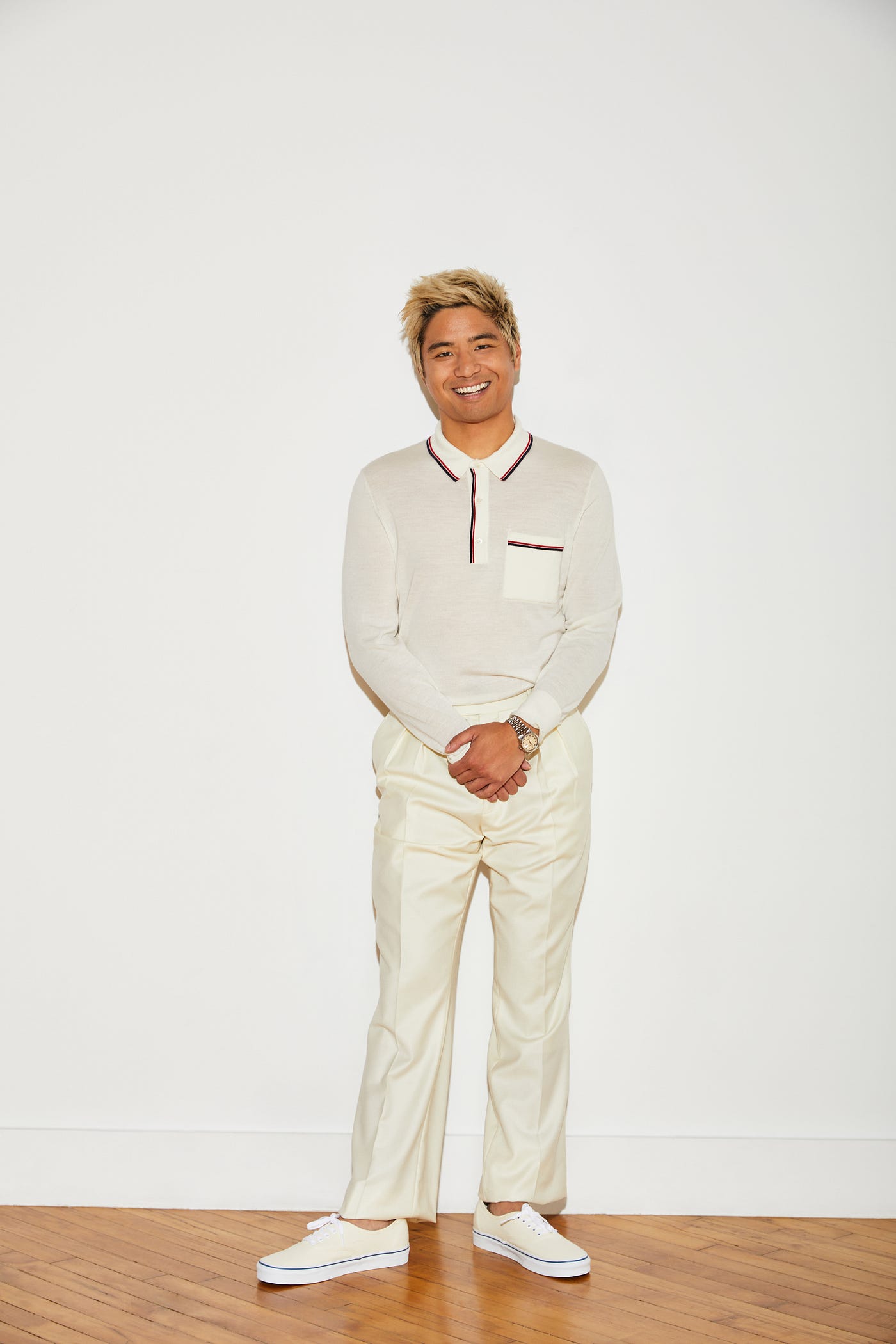
Andrew: Well, not exactly. I then went through four more breakups and dyed my hair blonde, which was another setback in my journey. (laughs)
Yitzi: That leads to my next question. It’s often said that our mistakes can be our greatest teachers. Do you have a story about a mistake you made when you first started and the lesson you learned from it?
Andrew: You’re good at this! These are excellent questions. I’ve made countless mistakes. One that stands out and still has significant meaning to me is neglecting to keep in touch with my friends back in Iowa during my initial struggling period. I recall missing some of my best friends’ weddings, birthdays, and even a bachelor party. I even missed my family’s birthdays at times.
I remember skipping a friend’s wedding, where I was a groomsman, to open for a bigger comedian at a comedy club. At the time, I rationalized it as prioritizing my career, and they would understand. And they did, which showed me their grace and empathy.
In hindsight, you could argue that I am where I am today because of those decisions. But the more I think about it, the more I believe I’ll miss and regret not attending those events more than I value this career.
I’m trying to slow down a bit now, be present, and choose those moments over work more often. There are times when sacrifices are necessary, but they should be more thoughtful choices.
It’s easier to say this now, and I’m not sure how well I’ll apply it when I’m in the thick of things. But that thought has been on my mind a lot lately.
My friends and I have started playing this introspective game. We ask, “If I found out I had one year left to live with an illness, would you spend your life savings to go on a trip with me, or would you spend half of your money to let me go wherever I want without you?” It has sparked some fascinating conversations.
Yitzi: Can you share about a person who has profoundly impacted your life? If so, could you tell us a story about that person?
Andrew: Absolutely, can I mention two people, though?
In my professional life, two individuals stand out: Jo Koy and Brendan O’Brien. Jo Koy, a very famous comedian, significantly influenced my start in standup comedy. He was the only Filipino comic I had seen who was so personable and hilarious. His art invoked a kind of creative envy in me that made me wish I had come up with his material.
I remember sitting in my dorm room for hours before my first set, just engrossed in Jo Koy videos. My parents loved it. One day, while at a Filipino restaurant, I ran into him. At the time, I had a small role in the movie “Blockers” and felt somewhat confident. I approached him, confessing that he was my comedy idol and thanking him for his influence. To my surprise, he invited me to tour with him.
The next few years saw me on an international theater tour with him, during which he became one of my best friends and mentors. He taught me everything about comedy, from caring for the audience to taking my family on the road with me. I am incredibly grateful for the way he took me under his wing, like a comedy father figure. As another Filipino comic, his acceptance meant a lot to me.
The second person who greatly influenced my life is Brendan O’Brien. I began my career as his assistant. He wrote “Neighbors,” and I was his and Andrew Cohen’s assistant during the making of that film. As a successful screenwriter, Brendan demonstrated the importance of being a family man first, then a friend, and finally a professional. He taught me how to write, be professional, and navigate the world.
Eventually, I ended up working with Nick Stoller and Seth Rogen, the “Neighbors” crew, as an actor, which I believe was thanks to the universe orchestrating things in a peculiar way. So, Jo Koy and Brendan O’Brien are my two significant influences, my two “dads.”
Yitzi: What amazing stories! They give me a new appreciation for Jo Koy.
Andrew: He’s a fantastic man. Just thinking about it makes me emotional. And it all ties back to your earlier question about our mistakes being our greatest teachers. I don’t want to go through my life, regardless of my career or family situation, with the regret of not helping others. I believe both Jo and Brendan will rest easy knowing they’ve positively impacted many lives.
Yitzi: Let’s imagine for a moment that you’re the king of Hollywood. What changes would you like to see in the industry? What developments have you observed over the past few years, and what would you alter if you were in charge of Hollywood’s operation?
Andrew: Well, I have many thoughts on this. As a big fan of Hollywood and being an ‘Entourage’ kid, I love everything about it. I’m fond of the fact that there are now countless platforms to tell specific stories. From small town stories, city stories, to tales about college or high school students, there are numerous spaces to share these narratives, and I think that’s fantastic.
However, I find that everything is simply too long. If there were one thing I’d like to change, it would be the length of the content. Not to the extent of TikToks, but not all things need to be three hours long. I value impactful shorts. As a rabbi, I’m sure you can understand the effectiveness of cutting the fat, as Jo Koy taught me.
Secondly, I would push for equal pay. Everyone should receive equitable compensation for the work they do, irrespective of their role. Those are the two main things I would change if I could.
Yitzi: Your point about equitable pay is particularly relevant now, considering the writers’ strike. The discrepancy in salaries between lead roles and supporting characters can amount to millions of dollars. It’s quite astonishing.
Andrew: Absolutely, it’s not just astonishing but also a bit unfair. Sometimes I’m sitting at the video village with other actors, and I’ll see a gaffer risking their safety to make me look good. In such moments, I think they deserve my paycheck. I’m grateful for what I get to do, but I strongly believe everyone should receive fair compensation for their work.
Yitzi: Andrew, your work is so impressive. Could you share with our readers some of the exciting projects you’re currently working on and what you hope to tackle in the near future?
Andrew: I’m currently collaborating with an incredible writer and director named Chris Storer. Chris is another person who’s had a transformative impact on my life. He’s the kind of person I aspire to be, an amazing director. Being on set with him and watching him direct has inspired me in ways I haven’t felt in a long time. We’re working on a TV show together, which he’s producing for me.
This TV show is a love letter to small towns, a homage to where I grew up. I’ve noticed that many stories about small towns often involve people wanting to leave or reluctantly returning. However, our script, titled “Iowa,” is about a family that was born and raised in Iowa, and they love it there. They have no intention of ever leaving. We aim to show that small town stories can be as exciting as any other narratives that don’t revolve around crime.
It’s akin to a Richard Linklater movie adapted into a TV show. Imagine Richard Linklater meeting “Atlanta.” I’m genuinely excited about this project and deeply grateful to work with Chris, who has reignited a creative fire within me that I haven’t felt in quite some time.
Yitzi: That sounds exciting. Can you tell us a bit about Platonic? Why should we tune in and what makes it so intriguing?
Andrew: Platonic is a creation by Nick Stoller and Francesca Delbanco. They’re incredibly talented individuals who brought us “Friends from College,” a show I genuinely enjoyed. Nick also directed “Forgetting Sarah Marshall,” which ranks among my top five movies of all time. I’m immensely grateful to be collaborating with them.
The series is as hilarious as it is poignant, revolving around two best friends who experienced a falling out and are now attempting to rekindle their relationship in midlife. The storyline explores whether their friendship holds them back or propels them forward.
This resonates with me, and I believe it will resonate with many as we age and realize that we are shaped by the company we keep — our friends and our families. We’re delving into a universally relatable theme, one that speaks to every demographic and every type of individual. While the narrative carries profound insights and revelations, it remains light-hearted, ensuring you’ll laugh all the way through.
In essence, it’s a comedic take on a situation we all encounter, making it both enjoyable and effortless to watch. The talent involved is remarkable. What else are you going to do? You can catch up with TikTok later.
Yitzi: That’s great. So, what would you say are the lessons we could take from the themes and motifs of Platonic? What can our society learn from it?
Andrew: Absolutely. I believe the key takeaway is the importance of communication. If you aren’t effectively communicating with the people you care about, the onus falls on you. Platonicdeeply explores themes of communication and trust, and these are the elements I’ve personally absorbed from it. In fact, it’s a continuous learning process in my life. It’s enjoyable to be part of a show, and at the same time watch it as a fan. Observing how the lack of communication affects relationships, as portrayed by Nick, Francesca, and the other writers, has been particularly intriguing.
Yitzi: How would you compare and contrast your personal character with Reggie, the character you portray? In what ways are you similar, and how are you different?
Andrew: Reggie, the “VC bro”? It’s interesting because I believe that everyone contains multitudes. We’re not just one-dimensional, we embody many facets. Just like Reggie, who’s a venture capitalist, there are aspects of his character I can relate to. I’ve dabbled in stocks like Robin Hood, GameStop, and AMC. Back in college, I owned a couple of Patagonias, and Bud Light was my preferred beer when I used to drink. I can relate to Reggie and I have friends exactly like him, who are some of the most cherished people in my life. Reggie might come across as abrasive, but he’s our abrasive guy. He’s that friend who is loyal to a fault, but that fault is also very outspoken and conspicuous. And I can relate to that as well, given that I’m a stand-up comic, a profession where being loud and somewhat annoying is part of the job. So yes, there are parts of Reggie that I don’t identify with, but there are many aspects that I do. If I were to be completely candid, I see a lot of myself in him.
Yitzi: Okay, we’re nearing the end of our interview. This is our signature question, Andrew. You’ve been blessed with a lot of success over the years. Looking back, can you share five things you believe are necessary to succeed in Hollywood? If someone said, “Andrew, I want you to be my mentor,” what five things would you advise?
Andrew: Firstly, faith. Secondly, honest friends. Thirdly, a lot of emo music to cry to. Fourth, sufficient sleep. And fifth, Adderall, Just kidding.
Yitzi: Andrew, given the platform you’ve built, you are a person of enormous influence and many people look up to you. If you could spread an idea or inspire a movement that would bring the most good to the most people, what would it be?
Andrew: This might sound unusual, and I’m not the expert, but my instinct wants to say that tampons should be free. My girlfriend just called me this morning, saying she was on her period and needed tampons, and it made me think, why do women have to pay for this? It should be a free necessity.
But on a more practical note, I believe Wednesdays should be half-days. This could serve as a reminder for people to take some time for themselves. Imagine how much happier people would be at their jobs if every Wednesday was a half-day. They’d probably think, “This is the greatest place in my life. I’m never quitting.”
Yitzi: OK, this is our last question. This is what we call our matchmaker question. Sometimes it works. We’re blessed that prominent leaders read this column. Is there a person in the world or the US with whom you would like to have coffee or lunch, or collaborate with? Because we could tag them, and maybe we could connect you.
Andrew: Oh, wow. I love this. These questions are incredible. They resonate with me so well. They’re hopeful and insightful. I would really like to work with Michael Bay. I feel like we need another Bad Boys movie. I’ve always thought of Bad Boys 2 as one of the best things ever. So yeah, Michael Bay.
I read Crazy Stupid Love once a year. I’d love to sit down with the writer, Dan Fogelman. I also love Bon Iver. Whenever I listen to Bon Iver, I just feel so many things. I write to it. I’ve been to so many concerts. I love Bon Iver, and I just feel like a cross-medium thing with them or even just getting to learn about the soul that his music emerges from would be really insightful for me.
Yitzi: How can our readers best continue to follow your work online? How can they support your work?
Andrew: Support my work by shopping at Hot Topic. And you can follow me on Instagram at TheAndrew.
Yitzi: Beautiful. Andrew, this has been a pleasure. It’s been a delight talking to you.
Andrew: Seriously, these were incredible questions. Thank you so much. You were amazing. You’re such a joy to talk to.
Yitzi: It means a lot coming from a fellow journalist.
Photographer: Chris Shintani
Groomer: Kiki Heitkotter
Stylist: Madeleine Kennedy