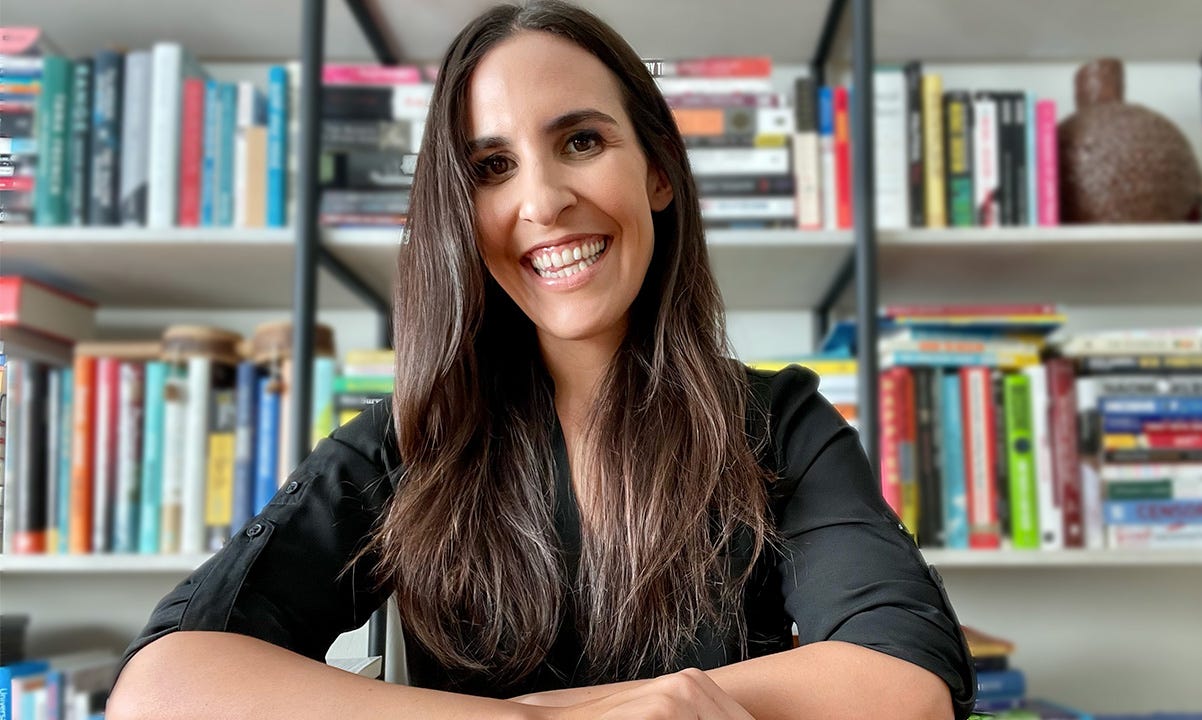
When I see something I don’t like, I change it. Those experiences compelled me to seek a career where I could advocate to improve parts of healthcare that are not always championed.
As part of our series called “5 Things I Wish Someone Told Me Before I Began Leading My Company” I had the pleasure of interviewing Aisha Barry.
About Aisha Barry
Aisha Barry is the President of Advanced Sterilization Products (ASP), a Fortive company, where she oversees strategic alliances, global sales and building ASP’s digital expertise. Aisha has nearly 30 years of cross-industry innovation and operations experience, ranging from beauty products and heavy/agricultural equipment to more recent experience with medical devices, software and digital solutions – a career change that was inspired by her own chronic conditions and personal experience navigating the healthcare system. Before ASP, Aisha held VP and general manger positions at Philips and Medtronic overseeing patient monitoring and management solutions. Prior, she served in leadership roles at John Deere and more than 12 years of marketing and product development roles at Procter & Gamble. Aisha holds an MBA from Tuck School of Business at Dartmouth and a degree in chemical engineering from The Ohio State University.
Thank you so much for joining us in this interview series. Before we dive into our discussion, our readers would love to “get to know you” a bit better. Can you share with us the backstory about what brought you to your specific career path?
Even very early in my career I knew I wanted to make it here to the C-suite, but doing so within the healthcare industry wasn’t always my plan. In fact, only a decade or so ago I was on a pretty different trajectory, leading operations for heavy equipment manufacturer John Deere. It was the combination of two major life transitions that drove me to make a shift. The first came when I was working for Procter & Gamble and living abroad in Beijing, China. I woke up one day and had largely lost my vision due to a progressive eye disease none of my physicians had ever caught. After I moved back to the United States, it wasn’t an easy road to find the right doctor and diagnosis, but eventually I made a full recovery. Then, just a handful of years later, at John Deere, I was diagnosed with rheumatoid arthritis, an autoimmune disease. Today I live free of symptoms, but the journey was incredibly scary and my experience navigating the healthcare system was tumultuous and lonely.
When I see something I don’t like, I change it. Those experiences compelled me to seek a career where I could advocate to improve parts of healthcare that are not always championed. Leading me first to Medtronic, then Philips and now Advanced Sterilization Products (ASP), a Fortive company, where I lead our efforts to protect patients during their most critical moments.
Can you share the most interesting story that happened to you since you started your career?
Rather than one interesting story, I think about the many professional transformations I’ve undergone in my 30-year career journey. When I look at who I was at 28, at 32 and at 40 years old, I realize there are versions of “Aisha” who truly don’t exist anymore.
A major point of transformation in my story occurred when I was 28 years old. I distinctly remember the moment I transitioned from an individual contributor to being recognized as a people leader among higher ups within my organization. At the time, I didn’t think I wanted to be accountable for being a people leader, because I understood at a deep level what a profound impact a manager can have on the employees who work for them; I was nervous about taking that on. But it was in that moment I transformed and entered into the next professional phase of my life – a people leader. I can distinctively look back to this turning point, and what I learned in taking on this role is that if you want to achieve the impact you really want to make in the world, you scale it through the people who work with you. This was a significant lesson for a 28-year-old to learn, and it defined how I still see my role as a leader and my accountability to people today.
Can you please give us your favorite "Life Lesson Quote"? Do you have a story about how that was relevant in your life?
"Do the best you can until you know better. Then when you know better, do better." Maya Angelou. For me, this quote drives home that learning is life-long, as well as the importance to have grace with yourself. As a leader I really hold myself accountable for the mistakes I’ve made, or the things I wish I would have known, especially because of the impact you can have on so many people. But I recognize there is a limit to everyone’s knowledge, and once you know better, you can do better. I keep this in mind every day and apply it to how I work with and coach my teams.
Is there a particular book that made a significant impact on your leadership style? Can you share a story or an example of that?
“The Alchemist” by Paulo Coelho completely transformed how I think about coaching people. I love the concept that “every child has a dream.” It’s true, but for many their dream becomes somebody else’s dream, or it gives way to other concerns and they’re not on that path any longer. This resonates with people. I’ve personally spent a lot of my time getting clear on my dream, and what I want. When I coach others, identifying that dream is the first place we start.
For me, I had a dream and now I am living it. I think back to when I was 23, and there were times people may not have understood it, but because I was clear on what I wanted to do I kept putting myself in positions to help me get here. It all comes from that dream. I have a very strong connection with this ideal.
What do you think makes your company stand out? Can you share a story?
Advanced Sterilization Products (ASP) stands out because we serve to protect patients during their most critical moments, in any healthcare setting, through sterilization and disinfection. We marry that mission-driven mindset with the culture of our parent company Fortive, which is centered on a commitment to kaizen, meaning continuous improvement. Think: driving to be 1 percent better each and every day. And not just talking about it, but a philosophy that’s embedded in the work that we do together every single day.
Putting these two forces together has created an active problem-solving culture. ASP actually created the market we serve by pioneering low-temperature sterilization technology, and we continue to be a leader in the space.
We’re fueled by people who fight for our customers and try something new every day, all with a laser focus on protecting more patients and elevating the standard of care – from developed markets to geographically-isolated populations.
You are a successful business leader. Which three character traits do you think were most instrumental to your success? Can you please share a story or example for each?
Integrity – When I give my word to something, I will overcome obstacles to see it through completion. I am also a transparent business partner. I know my partners count on me to put the hard facts on the table, but they also know I always come with a plan to address them.
Willingness to learn from others – Related to building partnerships, I am a product manager at my core. By that, I mean I take the principles of good customer research, which are listening and paying attention, to ensure the insights of others are understood and considered. I have found the best business solutions come from applying those same skills. Further, you will seldom see me take sole credit for an idea or action. I am intentionally always learning from others and bringing the best thinking – theirs and mine – forward to drive success.
Willingness to change and evolve – I have another favorite book called “The 21 Irrefutable Laws of Leadership” by John C. Maxwell. What always stands out to me is “The Law of the Lid,” meaning the leader becomes the gating function on the organization. During my career I’ve seen that chapter play out over and over again, so I’ve observed this foible and I work really hard not to be the lid on my organization. It has allowed me to lead at increasingly higher levels.
Leadership often entails making difficult decisions or hard choices between two apparently good paths. Can you share a story with us about a hard decision or choice you had to make as a leader?
This brings me back to that first really pivotal moment for me early on in my career. I was living in Beijing, China with my daughter— I am a single mother – and had been in the country for about 2 years when I was diagnosed with a progressive eye disease that had left me functionally blind. I was on track to get a promotion and to stay in Beijing, where we loved living, but ultimately I needed to make the difficult decision to step away from my career, to return to the United States and take care of myself. I realized that prioritizing my health and being brave to make this tough decision was the kind of leadership legacy I wanted to have.
Ok, thank you for that. Let’s now jump to the primary focus of our interview. Most of our readers—in fact, most people—think they have a pretty good idea of what a C-Suite executive does. But in just a few words can you explain what a C-Level executive does that is different from the responsibilities of other leaders?
The truth is you never ever get to stop. In the C-suite when it looks like there is no way to get through something, in this role, it’s your duty to keep going. You set the pace for the rest of the company, and that is a responsibility you must value if you want to serve at this level. The C-suite must have the drive and power to always take the next step.
What are the “myths” that you would like to dispel about being a CEO or executive? Can you explain what you mean?
I think there is a myth that we are too far removed to understand and know what employees are doing. Dispelling this myth is one of the things I am most proud of. I personally know so many of the 1,800 team members at ASP, and even more within Fortive. Our team members are more than just a name in an org chart. I want readers to understand that good leadership begins with good people management and getting to know your people and what they do. So, yes we do know what’s going on with our people and we actively talk and care about it.
What are the most common leadership mistakes you have seen C-Suite leaders make when they start leading a new team? What can be done to avoid those errors?
One of the biggest mistakes I have seen – speaking from experience – is trying to make a difference too quickly without taking the time to learn the culture you’re operating in. Even if you’re making great parallels in your head, you can’t bombard a new team with a slew of questions or try to compare them to your previous teams, especially if you haven’t taken the time to listen and learn the ins and outs of the culture and environment.
This is what I love about Fortive leaders, it’s this expectation that if we meet with a group of people – for example, we hold regular kaizen events – we prioritize the time to be very present, responsive leaders with our sleeves rolled up participating on the inside with the team.
Every culture is different but for Fortive, and ASP, our people want a leader who is with them on the journey.
In your experience, which aspect of running a company tends to be most underestimated? Can you explain or give an example?
It’s the importance of having a plan that can be executed. People tend to talk at a strategy level and big ideas, but you need to have the discipline to walk through understanding how every portion of your business will contribute to your annual operating plan – from putting everything together into a budget to understanding how it unwinds through workstreams, what the KPIs are, who the right people are for each role and what they need to be successful. That’s the only way you deliver.
It’s interesting because back when I was a general manager, I received this very feedback from a manager and I didn’t quite understand it at the time because I was focused on the big picture. But the point was, he was looking for a plan he could follow – that anybody could follow – prescribing if you do these things, at this time, you will be successful. I think people underestimate the value of that exercise, but it’s one of the biggest keys to success.
Ok super. Here is the main question of our interview. What are your “5 Things I Wish Someone Told Me Before I Began Leading From the C-Suite”? Please share a story or an example for each.
You have a new level of accountability to shareholders – and there’s really no formal training to get you ready for that. In my prior roles I certainly had exposure to the board of directors, so I was playing in that realm, but it’s completely different than being able to design your business and annual operating plan so it actually links to what Wall Street is talking about. I want people who aspire to this job to know that is a skillset you need to learn. It’s taking how you manage your organization, how you think about the financials and how you think externally about the company to a different level, one that a job preceding a C-level role may not directly prepare you for – it is going to be on you personally to spend your time to get ready for it.
Every exposure counts – I learned this early in my career, but it’s magnified at this level. Before the C-suite, every exposure still counted but more from the lens of magnifying myself and being set up for opportunities. Now, exposure is about the impact you have on people – including the unintended impact and their expectations of you as a leader. The key here is recognizing that people in your organization have a strong emotional connection to the leader. Personally, I fully began to understand and experience this when I was able to start visiting our offices around the world in-person this year. During one visit in particular, I was taken aback by the outflow of positivity and joy from the team to be able to spend even a short amount of time face-to-face. Seeing their reaction reinforced that accountability to people and impact leadership can have.
Make time to connect – and I mean this on so many different levels. Whether it’s people from your industry, your customers but especially peers. That latter connection is so powerful, especially at this level, because it can sometimes feel like you’re alone in your experiences and feelings. In my own conversations with other C-level leaders I’ve had these wonderful epiphanies where I realize there are others who not only understand exactly what I’m going through but also share many of the same thoughts and emotions. Taking time to connect with, and making an effort to learn from, those peers is critical. This really applies at every level, and I wish I would have started doing this even earlier in my career.
Prepare to reorganize your life – My life is this job. Unpopular opinion, I know! We all want to focus on balance, but at this level – for me - the job comes first. That said, it is possible to be deliberate about your time, and I actually don’t think you should wait to get to the C-suite to do that. Speaking from experience as a single mom I know I didn’t always arrange things so it worked for my life, even earlier in my career. That’s why I am passionate about encouraging the people who work with me to think about their personal plans to take care of themselves, their families and their jobs so they can actually mesh.
When you’re ready for the job, believe it – I’ve actually been ready to do the job for a while, but I don’t think I believed I could do it until I got the job title. Looking back at how I was showing up in previous titles, I wasn’t that different. It was how I was framing what I would do, how I was choosing to lead and how I was contextualizing the content of my job that shifted. I think that concept of believing you can do something applies to anyone at any level in their career journey.
In your opinion, what are a few ways that executives can help to create a fantastic work culture? Can you share a story or an example?
It’s easy to see creating culture as a set of activities vs. being your job. What I’ve noted at Fortive is there are critical key elements called out in the Fortive 9 – our core leadership behaviors – about building capabilities, systems and processes, and developing people. That, right there, is building a culture. Your culture is really the processes and systems that define who you bring in, how you build extraordinary teams and how you collaborate to get work done. When I think about what drove some of the best cultures I’ve been a part of, from the beginning of my career at Procter & Gamble to now Fortive and ASP, it comes down to those core disciplines. At the C-level, you will struggle if you don’t own those disciplines like it’s your job. Understand that is what you should be continually working on. If we’re not looking at building the right systems, capabilities and talent for the organization, then it doesn’t happen. That is our job as C-suite leaders.
You are a person of great influence. If you could start a movement that would bring the most amount of good to the most amount of people, what would that be? You never know what your idea can trigger.
Speaking from a leadership perspective, the thing that resonates with me from building companies and organizations is the power of giving people rituals and shared experiences. After all, we are communal people.
For example, when I started my career, I didn’t know how to relate to my peers in a corporate setting, but I could make a mean pot of greens and pork chops! So that’s what I did. Coming together to enjoy a meal became a core part of our team ritual.
I’ve taken that ritualistic approach my entire career. Even recently, during the pandemic, we had to find new ways to come together as a team, virtually. I ordered matching jackets and mugs for everyone, and it sounds silly but after just a few meetings and without prompt, everyone started donning their jacket and using their matching mugs. It started with a few people which gave this idea of, “I can do that too.” It takes so much to connect and when you can make a short cut for people to do it, it’s appreciated, and it makes people feel like they belong.
My movement is around ritual and bringing people into community – we do great work when we collaborate and move together.
How can our readers further follow you online?
You can follow me on LinkedIn. I look forward to connecting with any readers!
You can also follow ASP and Fortive on LinkedIn for company updates.
Thank you for the time you spent sharing these fantastic insights. We wish you only continued success in your great work!
- End -