My purpose with Magic Hour is to inspire people to sit down and stop for a moment to have a cup of amazing, soul-stirring, beautiful and inspired tea.
Business
Zhena Muzyka of Magic Hour: Self-Love and Daily Ritual Drive Sustainable Million-Dollar Enterprise Growth
The founder of Magic Hour shares how losing her first company forced her to rebuild entirely from scratch, prioritizing integrity, self-esteem, and mindful connection.

Some people were born with the proverbial silver spoon in their mouth. Even then, becoming a millionaire is still quite an accomplishment. But people who start from nothing, and especially women who start from nothing, who make it to the top to become millionaires, despite the pay inequalities based on gender, the confidence gap, with nothing but grit, hustle, resilience, and “stick-to-itness”, are on a whole new level. We want to share those stories and inspire other women. In this interview series, we’re talking to “Self-Made” women leaders who started with nothing (i.e. started without investors or trust fund or capital or even people believing in them) and have become millionaires.
As a part of our series, I had the pleasure of interviewing Zhena Muzyka.
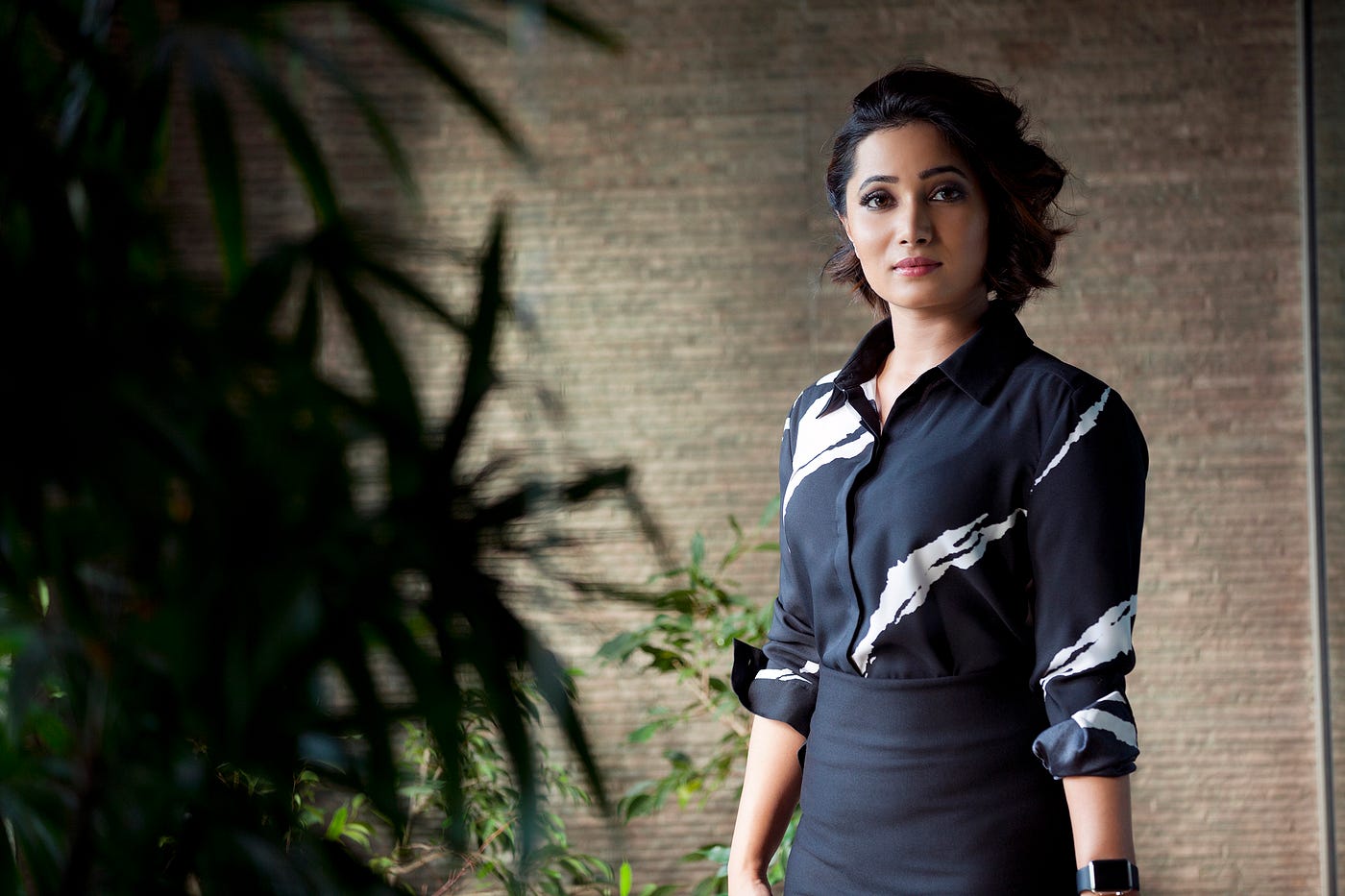
Zhena Muzyka, founder of Magic Hour, a multimillion-dollar enterprise, is a brilliant businesswoman and entrepreneur with more than 25 years of experience in the health and wellness industry. Zhena has instilled a supportive and caring workplace environment, and acts as a conduit for connection from garden to cup, cutting out the middle man, and providing product straight to consumers.
Thank you so much for doing this with us! Can you tell us a bit about your “backstory” and how you grew up?
My grandmother was Roma (gypsy) from Ukraine. She taught me as a child that botanicals could heal any woe — in the mind, body, and spirit. I carried forth her passion for herbs, teas, flowers, and spices well into my adulthood. I studied herbal medicine throughout college and beyond. I studied indigenous herbal medicine with a group of shamans and ethnobotanists in Peru when I was 20. I saw indigenous plants’ power to heal the body and create sustainable income for tribal peoples. Later, as a single mom with single digits in my bank account, I needed to make income to support my newborn son; I started selling tea off a cart in a local marketplace. I called them “Zhena’s Teas” to shout out to my grandmother and my great aunt, who I was named after that still live in Eastern Ukraine. Cultures worldwide sip tea and herbs as a way to be well and connect — with no boundaries or prejudice. Now, I’ve created a second successful business built by my love of tea called Magic Hour.
Growing up, what were your early experiences and perspectives about money? Or we could say, what was the “money consciousness” in which you were raised? Can you please give an example of what you mean?
I grew up in a lower-middle-class family. My father’s family had immigrated from Ukraine and was a proud firefighter, and my mom was a waitress in her parents’ diner. Their parents had raised them to believe that their work was how they earned their right to be an American. Thus, my parents instilled in me from a young age that hard work will ultimately keep you safe in a culture that might not value you outside of not being a “burden” on the economy but by being a contributor. Working hard was how they expressed their love for me in that sense. For example, my father would always tell me that when he was away from home working long hours, seven-day weeks, it meant we would have a great Christmas. My mom worked extra shifts to send me to private school. Their way of showing their love for me provided for me through their tireless effort. I grew up believing that sacrificing time with family to work was how you show your love. It took me losing my first company (where I’d worked 70–80-hour weeks) to understand that showing love does not equate to how many hours you work; it’s centered around my presence and how I can be fully involved in my children’s lives. Sure, money makes life easier, but when you sacrifice your connection to your beloveds for it, it’s a hollow victory.
Let’s talk about what you are doing now, and how you achieved the success that you currently enjoy. Can you tell our readers about the business you’ve created that helped you become a millionaire?
The last company I started became dominated by male investors. After a couple of fundraising rounds, I had to sell the majority of the stock, and they eventually hired a CEO who wanted to launch a line of weight loss teas called SLIM ME by Zhena’s Tea. The pitch was “Lose 10 pounds in 10 days for $10 bucks!” I was like, “WHAT?!” I was so triggered because I was a founder of the fair-trade tea movement with women workers worldwide, and I’d had an eating disorder growing up and terrible body image issues. I drew the line, refused to support the products, and got fired. I’d worked so hard to empower women to love their bodies — my marketing was based on belly dancing tea parties with women of all sizes — and now I’d be known as the “Lose ten pounds in ten days for ten bucks” lady? Oh, hell no! My products are created to help women connect to their bodies and improve their self-esteem, not try to lose ten pounds in ten days. I mean, who loses that much weight healthfully without illicit drugs?
I was left with $70k in debt, devasted and broken to bits, but by then, I had a daughter and was fortified, knowing I would be a model for her. So — sell out and keep the paycheck or get canned and keep my dignity?
Years later, I got a letter that the company was folding. I felt both crushed and oddly elated. Could this mean I would be free to make tea again?? I missed tea more than anything in the world. While unemployed, I’d gotten hired to head up my own publishing imprint at Simon & Schuster, which was so exciting and fun, but secretly I’d always mourned not making tea on a daily basis. The minute I heard Zhena’s was over, I tried to buy my name back, but the investors told me no after they said I’d “gloated.” Well, maybe I did a little? Sorry, not sorry.
Then, I worked my ass off and built Magic Hour from scratch. I’m proud to say that within two years, we are connected to tens of thousands of customers worldwide, and we are 100% women-owned, operated, and managed. Rebirth never tasted so good.
What was your vision when you started this business? What’s the WHY behind the work that you do? (Please share a story about this if you can.)
My purpose with Magic Hour is to inspire people to sit down and stop for a moment to have a cup of amazing, soul-stirring, beautiful and inspired tea. In the West, we have so few rituals. Happy Hour in the age of COVID isn’t so appealing but having a cup of tea mindfully with your heart or connecting with those you love through tea is profound, simple, and accessible. Daily ceremony is life-affirming and changing. In my heart of hearts, I want to connect the world through tea ceremony. I’ve sat on the floors of small houses in Sri Lanka, India, and China sipping tea with my tea workers — while there was little wealth, there was true riches — connection and tea. I want the western world to see that you don’t need to build a bigger house. You need to stop and sip a cup of tea with those you love. Make eye contact, talk about what matters to you, draw a map of your dreams with conversations that mean something. Stop watching a screen and watch the face of a lover while sipping healing potions — your whole world will make more sense, I promise.
Can you share the most interesting story that happened to you since you began leading your company?
When I decided I would start my new company, I had a hard time coming up with its name — I mean, I’d lost my actual birth name to investors, so this was a total sticking point for me.
Finally, I figured out I’d have to “bury the dead” and have a “funeral” for Zhena’s Tea in the spirit of ritual. I invited friends and family to bring their old tins of my tea, and we had a procession with guests wearing all black and led the procession down to the bottom of my backyard. I read a teary eulogy and said goodbye to the tea company, then threw the tins in a big grave and shoveled dirt until the past was gone. We then gathered in a tea circle, sipped some tea, and had a ceremony to talk about endings — the goal was to heal. The following day, I woke up, and “Magic Hour” came to me. “AWWW MAGIC HOUR IS THE NEW HAPPY HOUR!” I thought. The subconscious mind understands symbols rather than words; that’s why that funeral ritual was crucial for me to move on. I now teach funerals for bad habits and negative thoughts to our Magic Hour Tea Circle — it works, trust me!
Can you share a story about the funniest mistake you made when you were first starting? Can you tell us what lesson you learned from that?
We were shooting our first video for Magic Hour with my videographer, John that I’ve worked with for years. We were doing a tutorial on how to prepare Ceremonial Matcha. I’m the clumsiest, most foul-mouthed person I know (in private, ha), and John has always edited out my spills and cursing. That day, I dropped the tea straw into the iced Matcha latte and yelled, “Sh*t!” Then cracked up so hard I snorted. Things like this happened in every tutorial I’d ever done, but I’d always had John edit them out so I wouldn’t embarrass the company. I never watch my videos before they get loaded onto the platforms (I can’t watch myself). And when our Ceremonial Matcha started selling 100 times more than usual, I wondered what was going on — I finally went to watch the video and realized the real me was all there in pure clumsy authenticity. Well, then I knew being myself wasn’t a liability but a real asset — after losing my last company, I had zero self-esteem, but this brought it back for me. I mean, how cool is it to get to be yourself and not be edited, and people love it? It’s a relief. For all the people who tell you to be a certain way, know it’s not true — be yourself, and you’ll rock.
We’d love to explore the traits that help you achieve your success. What were the mindset obstacles that you had to overcome in order to reach the place of consistently earning a million dollars a year and more? Can you tell us what you did to overcome them?
When I started Magic Hour, I needed to break down and confront this lingering and overwhelming feeling of the fact I’d failed, been seen as a failure, and been told I was a failure. Debilitating self-doubt ruled me. I’d literally wake up at night in cold sweats over failing again — “for God’s sake, it’s tea, it’s my passion, and I’ve done this before!” I’d tell myself, but I couldn’t shake it. However, I did have some evidence it was my calling — the tea workers. They’d thrown my wedding; they’d made me their family, they’d shared their lives with me — all from the fields of Sri Lanka — they were my beloved soul family, and to support them again was bigger than my self-doubt — my love for them grew me past my pity party.
What were the external obstacles you had to overcome in reaching these milestones? And how specifically did you overcome them? (Please share a story or example.)
When I lost my last company, I didn’t just lose something I had built from the ground up — I also lost the relationships I had so carefully created with my customers, employees, and tea workers. I was fired so quickly and quietly that I was scared to reach back out to those I loved so much. They were my chosen family. While my publisher at Simon & Schuster had hired me to head up an imprint and I was publishing amazing books, tea was always the thing that made me cry in private. I blended teas in my kitchen, and I couldn’t stop for my friends. I knew that I needed to come back to what I loved most. I also knew that if this were going to work, I would need to reconnect with our tea workers, customers, and suppliers I’d worked with previously, which resulted in an extended mission to regain the trust of these beautiful people. I had to work hard to expel their doubts in me so we could create a new relationship based upon the new vision of Magic Hour.
Was there ever a point where you wanted to give up on your journey to becoming a multimillionaire? How did you work through that panic point? Please share a story.
Once I had enough to pay the bills, money wasn’t a big motivator. I’m passionate about creating. I create new blends every month, create new tea accessories, jewelry, you name it — that is wealth to me. To create is to be inspired. My beloved muses — my customers — I always think about them — Are they happy? Are they fulfilled? By helping them find these things, I feel rich and fulfilled in return. This might sound cloying, but I am passionate about helping people feel beautiful, strong, healthy, and connected — when I’m doing that, I’m the richest woman on planet earth. For Magic Hour and me, money follows the mission. After losing my first company, I doubted that I would ever create something so beautiful again. I would look at other successful entrepreneurs who own multiple businesses and think, “how can they care so wholly about each of their ventures?” It took a long time for me to understand that feeling, and I realize now that my companies are like my kids, both so purely unique and delicate. They have different things that make them what they are, but they are equally perfect. It turns out I did have another company in me. The passion and the grit were there all along; I just had to summon them.
None of us can achieve success without some help along the way. Is there a particular person who you are grateful towards who helped get you to where you are? Can you share a story about that?
Yes, my dear friends and investors, Gay and Katie Hendricks invested in me intellectually and monetarily. They helped me get started, and I paid them back the second year of Magic Hour. Before I had even decided on a name for my new company, they had the confidence that whatever I did next would be a success. They gave me the gift of replenishing my dignity. They trusted me in my decisions and supported me fully. I see Katie and Gay as my chosen parents; they are my mentors and beacons. Their belief in me allowed me to believe in myself again. So many nights, I would wake up in a cold sweat that I would lose their money, but they never once doubted me. The fortitude and trust they had in me gave me the confidence to trust myself again.
What were the most important resources, tools, affirmations, mindset strategies, or practices that you used to build your business to where it is today?
My mantra is, “If I could do what I wanted every day and be myself, what would it look like?” Number one, drink tea. Number two, make people laugh. Three, gather people in community. I love bringing people together — it makes me so happy. I also love perfume, candles, incense, body and skin products, sparkles, and tea accessories. All I do every day is create those things that I love, and it turns out our customers love what I love — hallelujah! Every day, I have fun knowing I am creating delicious wellness rituals for front-line workers, moms, and those who have never been empowered to understand the power of mindfulness and tea.
Are there any books, podcasts, apps, tech, or other types of products that helped you reach your goals? Are these still used today? Please share specifically and why.
I got certified as a coach when I realized I didn’t know how to manage people in my first business. Then, I went to Gay and Katie Hendricks Institute and became certified in their program, which helps you somatically heal fear — it is the best resource I can recommend. I am also a meditator, I do TM (Transcendental Meditation). I also studied under Clarissa Pinkola Estes for several years, writing: “Women Who Run with the Wolves.” These three resources — along with tea — will make you a powerful goddess, ha!
Out of all of the things you listed earlier, if you only had one resource to help you grow your business and reach your next financial milestone, which would it be and why?
The ritual of tea ceremonies. A silver lining of COVID was being able to expand this practice. Before COVID, we could only fit around thirty to forty people in our tea salon in Ojai. When we went into lockdown and had to close the salon, I put the tea circles online, and now we include thousands of people from across the world in our tea ceremonies. It is fantastic to see the process of love and support this has created. We have had hundreds of circles now, and we are a close-knit group that has never even met in person!
What do you think is the greatest challenge for women and creating wealth/abundance? What advice would you have for someone that is feeling blocked by that obstacle?
You do not imagine the obstacle — it exists. The blocks are tangible and go into the process of obtaining funding, knowing that will be your best reality-facing moment. Realize that only a tiny percentage of venture capital funding goes to female founders, so go into the process headstrong and be prepared to run a lean operation — you will be better for it in the long run — remember cash is queen. Also, I don’t hire a resume; I hire people. I look for heartfelt, conscientious people to grow with who have a heart for our values of connection and love. If I were hiring the most experienced people on paper, I wouldn’t be able to create such a learning environment. Not a single person on my team had e-commerce experience before we started, yet we ship thousands of boxes every month and hustle with heart. I teach my team exactly how I want the company to be run and empower them to grow from there — be curious, connected, compassionate, and kind. It has been a gift to grow and learn together. If you think that other people have more grit or ability than you just because they have a fancy resume, that’s simply not true. I am a college dropout who started her first business as a single mom with $6 to my name — if I can do it, so can you.
Here is the main question of our interview. What are your “5 Things I Wish Someone Told Me Before I Started” and why?
- You don’t need an MBA. The best business happens in real-time.
- Ask yourself this — “If I got paid to be myself, how would my day look?”
- Money is basically the law of attraction. If you look for ways you might fail, you’ll get them. If you look for ways to win, you will win. Money is a measure of your creativity and enthusiasm. Don’t think it’s anything other than a means to expand, grow, and be more you in every way.
- Self-love is the source of your wealth. If you love yourself, you can be yourself in such a way that it becomes a magnet for good things. Being you is the spell breaker — it’s how you crack the code to the Matrix.
- Cells are either growing or protecting — know when to do one or the other by trusting your gut. Your gut will tell you what to do next. I always ask, “Dear God, show me what to do next that will be in the highest good of all.” Then, I do the next thing I am drawn to do. It works. You can ask yourself too, “Dear higher self, dear soul of mine, what should I do next that will be in the highest good of all?” You only get great answers with great questions.
We are sure that you are not done. What comes next? What’s your next big goal and why? What plan have you put in place to achieve it? Why is it a stretch for you? What will achieving it represent for you and for others?
I want to host tea circles all over the world — I want to bridge the divide through tea. Tea is a potion that helps us heal, and I’m up for that. Being Ukrainian, I even (perhaps naively) envision myself hosting a tea circle for Putin and the Ukrainian president, Zelensky. We need ceremonies of connection to stop destroying what is precious in life — and tea seems like an honest yet straightforward means to do so.
How can our readers further follow your work online?
Please visit ClubMagicHour.com and follow us on Instagram @clubmagichour and at Facebook.com/ClubMagicHour
Thank you so much for taking the time to share with us and our readers. We know that it will make a tremendous difference and impact thousands of lives. We are excited to connect further and we wish you so much joy in your next success.
SC
Written by
Sara Connell
Editor & Journalist · Authority MagazineSara Connell is a contributing interviewer at Authority Magazine covering Business and Pop Culture, conducting primary-source Q&A interviews with founders, executives, and industry leaders.

Published inAuthority MagazineTop Lessons, Top Authorities · 42K Followers
Exclusive, curated interviews with the leaders and changemakers shaping tomorrow. Leadership lessons, industry deep dives, and executive profiles.