When I first played in the Pan-Am games with Team USA, I saw international competition for the first time.
Business
Will Rosellini: Why Making Decisions With Less Than One Percent Of Information Is The Ultimate Start-Up Superpower
Former pro baseball player turned serial biotech entrepreneur Will Rosellini shares how he transitioned from sports to earning six advanced degrees and building successful life science companies.
Many successful people reinvented themselves in a later period in their lives. Jeff Bezos worked in Wall Street before he reinvented himself and started Amazon. Sara Blakely sold office supplies before she started Spanx. Dwayne “The Rock” Johnson was a WWE wrestler before he became a successful actor and filmmaker. Arnold Schwarzenegger went from a bodybuilder, to an actor to a Governor. McDonald’s founder Ray Kroc was a milkshake-device salesman before starting the McDonalds franchise in his 50's.
How does one reinvent themselves? What hurdles have to be overcome to take life in a new direction? How do you overcome those challenges? How do you ignore the naysayers? How do you push through the paralyzing fear?
In this series called “Second Chapters; How I Reinvented Myself In The Second Chapter Of My Life “ we are interviewing successful people who reinvented themselves in a second chapter in life, to share their story and help empower others.
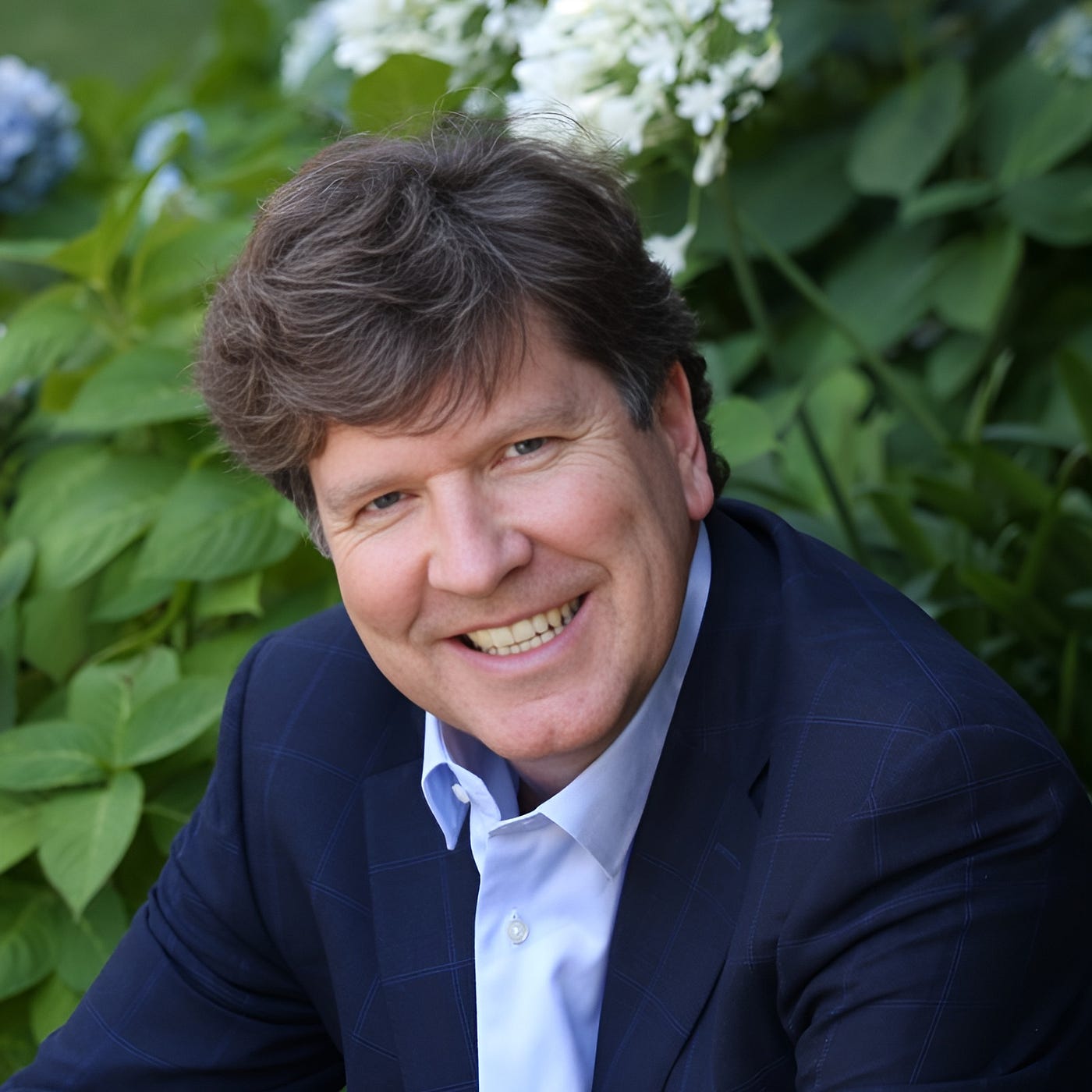
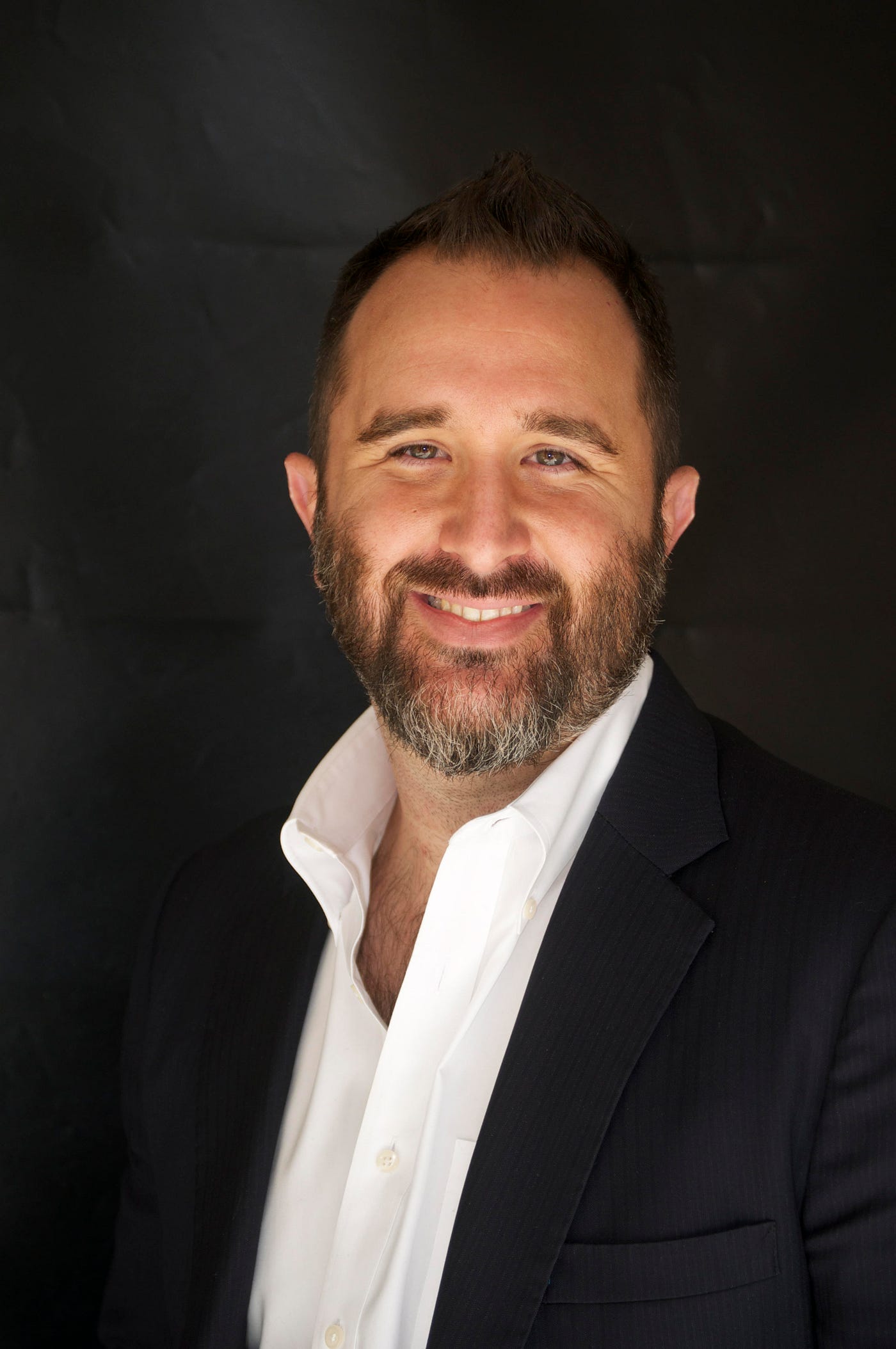
As a part of this interview series, I had the pleasure of interviewing Will Rosellini.
William Rosellini is the President of CytoImmune Therapeutics, Inc, a clinical stage biotechnology company. Previously, Mr. Rosellini has been the founding CEO of 4 life science companies, exiting 4 of them. He is also the co-founder of Microtransponder which has recently received FDA OMA approval for an implantable vagal nerve stimulator to be used in stroke rehabilitation. He holds a JD, MBA, MS of Accounting, MS of Computational Biology, MS of Neuroscience and MS of Regulatory Science. He is a former minor league pitcher for the Diamondbacks of the Arizona League.
Thank you so much for doing this with us! Before we start, our readers would love to “get to know you” a bit better. Can you tell us a bit about your childhood backstory?
I grew up in Texas, my father is a dentist and my mother was a science teacher. I went to all boys Catholic schools and received a division 1 scholarship to play baseball at Vanderbilt. I was drafted my Junior year and went to play for the Arizona Diamondbacks. I retired when I couldn’t figure out how to throw my curveball for a strike in the big leagues. I went back to school to find out why and ended up getting 6 advanced graduate degrees. I became the graduate student that professors and academic doctors trusted to license their technology to and from companies.
Can you please give us your favorite “Life Lesson Quote”? Can you share how that was relevant to you in your life?
If it was easy, then everyone would do it. My dad used to tell me this all the time. When I first played in the Pan-Am games with Team USA, I saw international competition for the first time. I realized that everyone who played was the best player on their high school team. You need to train as if you will face international competition everyday because one day you will.
You have been blessed with much success. In your opinion, what are the top three qualities that you possess that have helped you accomplish so much? If you can, please share a story or example for each.
I wasn’t the most gifted athlete and neither the most gifted student, but I’ve found out that having the right mentor is the most important part. Having someone to teach you all the failure modes and help you navigate to work on the right things at the right time is critical. To be honest I’ve failed more than I’ve succeeded, and it’s more painful than people realize. The only way I’ve been able to recover from those moments was due to the support I received from my friends and family. Failure is “celebrated” now but it is terribly difficult to go through and has real consequences.
Let’s now shift to the main part of our discussion about ‘Second Chapters’. Can you tell our readers about your career experience before your Second Chapter?
Since I was 14 years old I had been focused on playing professional baseball. I would practice 2–3 hours outside of team training, travel extensively and focus 100% on baseball. I played in 2 Pan Am games, was a Division 1 college athlete and pro player with the Diamondbacks. Then one day, my career was over.
And how did you “reinvent yourself” in your Second Chapter?
I was fascinated with the biomechanics of pitching, and when I saw a presentation from the DARPA Revolutionizing Prosthetics program, I knew I wanted to learn about science. I didn’t want to do benchtop science but liked the practical and translational aspects of it. I went to business school to learn the business side but discovered that lawyers drive most deals, so I went to law school. Then I discovered that they also need a technical background to understand the business. I felt like neuroscience and computational biology would be the biggest drivers of change in the next 20 years, so I studied that and then got a Reg Science degree to help me navigate FDA.
Can you tell us about the specific trigger that made you decide that you were going to “take the plunge” and make your huge transition?
I was working on my first business, which was a mobile dental business that provided onsite dental care to nursing home residents. In that environment, I saw firsthand that we have 30 million patients with cognitive issues that don’t have a voice to complain, to know how big a problem this is. But most importantly, how exciting would it be if the entire human race got 30% smarter? We’d start to solve bigger, harder problems. We’d get off this planet. So I’m really excited about the prospect of Human 2.0 driven by the combination of neuroscience and gene editing. And so I’ll stay working on this for the rest of my life.
What did you do to discover that you had a new skill set inside of you that you haven’t been maximizing? How did you find that and how did you ultimately overcome the barriers to help manifest those powers?
In school, the best students were able to internalize information and manipulate it into proper answers with near 100% accuracy. In life, some decisions need to be made with less than 1% of the information available. People that are good at making decisions without enough information tend to be leaders of organizations. I realized I was pretty good at making decisions without all of the information. This was an important skill in the start-up world. As the companies got more and more established, the work required more precision, since the information existed.
How are things going with this new initiative? We would love to hear some specific examples or stories.
My involvement in CytoImmune was similar to how most of my companies are formed, I am generally available to help doctors solve hard problems and do so for some years. Eventually, some of the innovations require full-time support and turn into a start-up company. I met Dr. Caligiuri (the co-inventor of the technology) through the Ohio State Technology Transfer office. I have a lot of experience getting IP licensed out of Universities and in company formation. Dr. Caligiuri is the most decorated and accomplished physician-scientist I’ve ever met, he is also the most integrated servant leader I’ve ever known. The relationship grew from there as I helped him license out the technology. Currently, CytoImmune has completed its Phase I manufacturing facility in Puerto Rico and will translate 5 cell therapy oncology products into the clinical stage in 2021.
Is there a particular person who you are grateful towards who helped get you to where you are? Can you share a story about that?
I’ve always struggled with ego and didn’t do a good job balancing the need to be confident and resolute in facing challenges as CEO. Rich Santulli, the CEO of CytoImmune sat down with me and helped me understand what servant leadership really was. I am very lucky to have Rich as a mentor since he is considered one of the best models for this (rumored to have been in the running to take over for Warren Buffett). I am also fortunate to be able to watch Dr. Caligiuri lead the organization. I’ve learned a great deal and now understand the Zig Ziglar quote, “You can get everything in life you want if you will just help enough other people get what they want.”
Can you share the most interesting story that happened to you since you started in this new direction?
In the last 10 years, I’ve worked on an implant that can help your brain learn at a superhuman pace, machine learning to help a medical imaging device help clinicians treat cancer, and am working with cells taken from umbilical cords that are gene-edited to kill cancer.
Did you ever struggle with believing in yourself? If so, how did you overcome that limiting belief about yourself? Can you share a story or example?
Nexeon Medsystems represented my biggest gamble and biggest initiative; I went all-in to help develop a closed-loop deep brain implant. We were unable to raise the financing to launch this product, and the Company failed. Not only did my vision not work, but I let down all of the employees and investors who had believed in the Company and its vision. This failure was the most difficult to overcome because it took years to finalize. I spent a lot of energy just trying to take small steps forward and focus on being a better version of myself than I was the previous day. It sounds cliche, but taking it one day at a time adds up.
In my own work I usually encourage my clients to ask for support before they embark on something new. How did you create your support system before you moved to your new chapter?
I read the book “Never Eat Alone” and learned the power of networking. In business school, I thought networking was schmoozing at a conference. However, what I realized is that networking is about connecting with people and trying to be helpful. Now, whenever I meet someone new, I focus on what would be the most helpful thing I could do for them in the near term. By creating value for your network, you end up creating dynamic support for yourself in the network.
Starting a new chapter usually means getting out of your comfort zone, how did you do that? Can you share a story or example of that?
I enter areas of very complex science and rapidly changing disciplines. I’m always out of my technical expertise. The primary benefit of attending school and receiving so much education was to realize that technical competence comes from being immersed in the literature and reading intently about the space. There are no magic bullets when you are out of your comfort zone, you must put the work in to get the knowledge.
What are your “5 things I wish someone told me before I started leading my organization” and why? Please share a story or example for each.
I joined an organization, Vistage CEO coaching that provides a coach and a group of CEO’s that meet regularly. I learned so much there about the tools needed to be a successful CEO. I believe anyone trying to be a CEO for the first time should get a coach.
I believe that setting 90 days for every person in the organization is the best element to implement while being a leader. I wish someone told me how important this was for my first CEO job.
I also believe that employee engagement and servant leadership are very important factors in being a leader. By picking the right people and empowering them to make decisions, to not be afraid to fail and aim to succeed, you will have a much easier time as a leader. Your job as CEO is to remove obstacles for their success.
I wish I had studied Charlie Munger before launching my first company. His focus on incentive alignment and inversion would have prevented a lot of heartache for me. Inverting focus on what you don’t want to happen, is as important as setting goals.
You are a person of great influence. If you could inspire a movement that would bring the most amount of good to the most amount of people, what would that be?
Instead of people lining up to get the latest Apple phone, I envision a future where they’re lining up to get upgrades to their implanted systems. That sounds way far off, but it’s not. It’s in a 10–15 year time frame; it’ll be in our lifetime. And here’s the reason why: The brain naturally wants to be part of a social network. So the reason you actually cannot pay attention to your phone is that your brain is addicted to being connected to this social network. But it’s actually frustrating for your brain to have the delay between a thought, cognitive activity, and your fingers doing typing. So just like the cell phone and Facebook have driven the adoption of new technology, we all want to be closer and more networked, more information needs to get into our nervous system. If we make the devices minimally invasive enough, there’s not much difference between carrying a cell phone in your hand 24/7, sleeping with it, and having that same technology implanted directly into the nervous system. That’s where I think it’s going to go. Then it becomes a software upgrade to get to new capabilities for your nervous system. This convergence will forever change humankind.
We are very blessed that some very prominent names in Business, VC funding, Sports, and Entertainment read this column. Is there a person in the world, or in the US with whom you would love to have a private breakfast or lunch with, and why? He or she might just see this if we tag them. :-)
I’d like to meet with the Wachowski’s, the creators of the Matrix trilogy. I think they have created a very intriguing world and I would be curious to hear their thoughts on how humankind changes with technology in the next 50 years.
How can our readers further follow your work online?
I keep https://williamrosellini.com/companies/ up to date.
Thank you so much for sharing these important insights. We wish you continued success and good health!
PJ
Written by
Pirie Jones Grossman
Editor & Journalist · Authority MagazinePirie Jones Grossman is a senior columnist at Authority Magazine covering Tech and Business, conducting primary-source Q&A interviews with founders, executives, and industry leaders.

Published inAuthority MagazineTop Lessons, Top Authorities · 42K Followers
Exclusive, curated interviews with the leaders and changemakers shaping tomorrow. Leadership lessons, industry deep dives, and executive profiles.