The poverty mentality that runs through so much of creative culture isn't noble. It's a cage. And I had built mine so carefully that I almost couldn't see the bars.
(If you are unable to download it, please click File-Download or simply copy and paste to a word doc)
Please answer the questions, and leave the questions formatted as they are in the document. We may schedule a follow-up call or skype to round things out.
Wendy Colonna On 5 Reasons Why Women Build Great Companies
Women-led businesses are on the rise, and the data shows they often outperform their peers. From fostering strong company cultures to driving innovation and long-term success, women bring unique strengths to entrepreneurship and leadership. What are the key reasons behind their success? As a part of this series, I had the pleasure of interviewing Wendy Colonna.
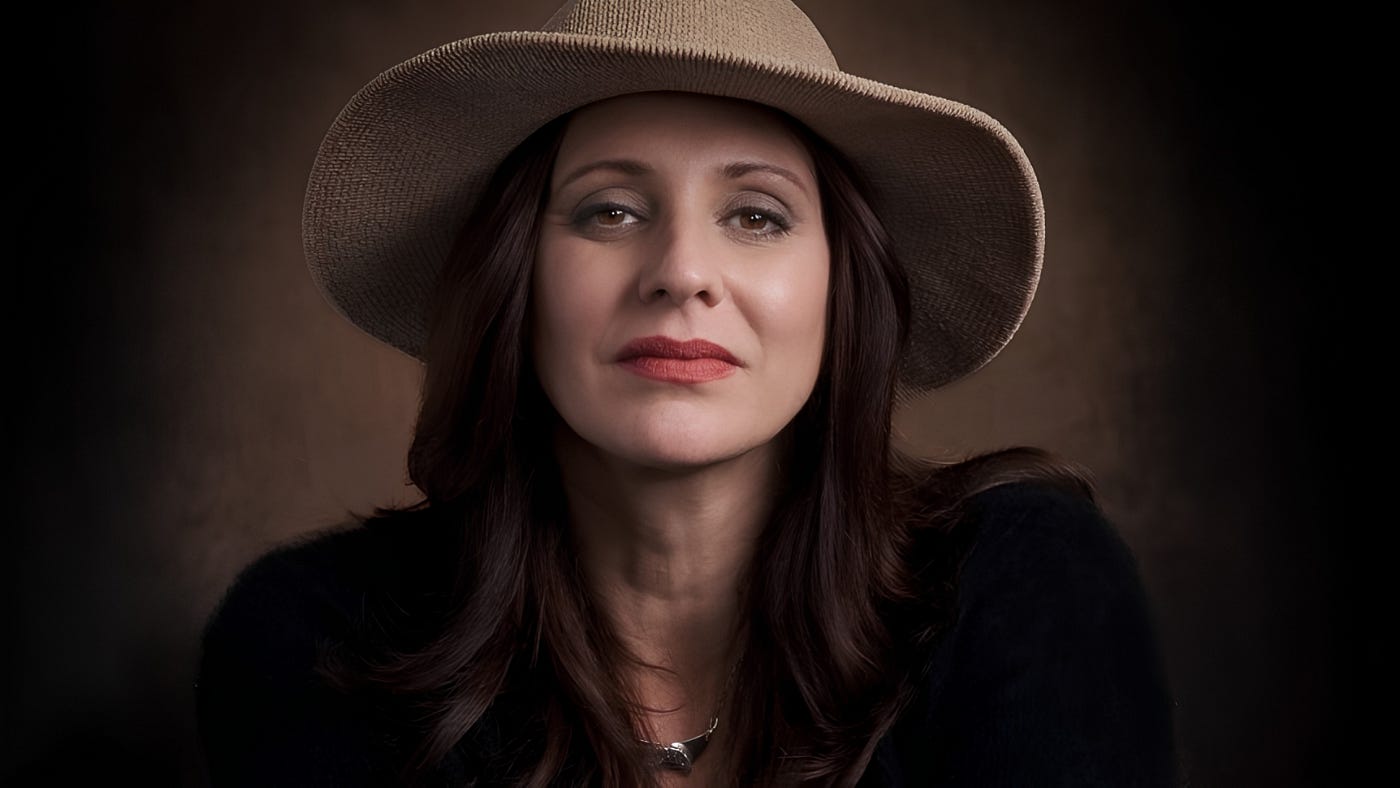
For nearly three decades, Wendy Colonna has written songs that explore the intersections of humanity, culture, and resilience. A graduate of Louisiana's Scholars' College, she has released nine studio albums, toured nationally and internationally, earned a Coca-Cola sync placement reaching millions, and shared stages with legendary artists. From performing for 60,000 people at the Women's March to singing at hospice bedsides, Colonna believes every performance is an act of connection. Beyond the stage, Colonna is Chief Cultural Officer of Wavemakers Women + Music, where she helps amplify women artists over 40, and founder of the Lyriculture™ Artist Development program, where she has spent a decade mentoring creatives.
Thank you so much for doing this with us! Before we dig in, our readers would like to get to know you a bit more. Can you tell us a bit about your “backstory”? What led you to this particular career path?
I've spent my entire adult life inside the music business, as an artist, an educator, a coach, and a community builder. The shape of that has shifted a lot over the years, but the power of music has always been a driving force.
It started my sophomore year of college, performing in Natchitoches, Louisiana with another emerging songwriter. We had great harmonies, a shared DIY punk rock sensibility; I'd worked at a nonprofit punk club back home in Lake Charles, and we just started writing songs and booking gigs. This was the mid-90s, right before Lilith Fair, and the music economy was incredibly healthy. Labels were signing artists by the dozens. We recorded a five-song cassette over Christmas break on a 4-track, and somehow that cassette got us asked to open for Jeff Buckley, play festivals, and sign to a small label the following spring. We were basically thwarted into the music business before we knew what was happening.
We recorded an album together, then split up the duo and each made our own records. I was living in Europe on exchange that year, flying back and forth to LA and Louisiana to finish mine. I spent my senior year completing it, graduated, and moved to Austin, a city I'd fallen in love with as a teenager and couldn't stop thinking about. Twenty-six years later, I'm still in Central Texas.
Nine albums. World tours. Opening slots for legends. And in 2014, a licensing firm commissioned a custom song that landed at the center of a Coca-Cola campaign and hit the top of Ad-Week. It’s been a wild ride!
I've watched the economy of music shift and collapse and reinvent itself more times than I can count. What I've learned is how to keep music central, as medicine, as magic, as spiritual enterprise, regardless of what the industry is doing around it.
In 2017 I started a family, settled into a less nomadic life, and became a certified career coach so I could pay forward what twenty years of figuring it out had taught me. I work with artists and founders who feel genuinely called to their work but haven't been handed a business framework to support it.
In 2024, Lurleen Ladd, founder of Wavemaker Women & Music, who had a vision that women musicians 40+ deserved to be elevated and amplified, not pushed out of the music world, invited me to join her team. What we've built together since then is something none of us could have fully imagined at the start. Our team, Lurleen, Michele Martell, Pamela Benson Owens and I began exploring every possible way to make that vision real, and what we discovered quickly was that it wasn't just musicians who needed this — it was women founders, leaders, healers, makers, coaches. Every woman in this season of life who has been underestimated by systems that weren't built for her.
We've grown the team along the way, Liz Deering, Beatrice Kimmel, Javiera Corea, each of us bringing our own experience and talents to build something genuinely new. A community and business model grounded in reciprocity, deep listening, collaboration, ecosystem over empire. We are walking the walk. And what's revealing itself is exactly what we hoped: that when you build with feminine principles instead of against them, something extraordinary becomes possible.
Can you share the most interesting story that happened to you since you began your career?
The Coca-Cola story is the one that changed everything, not because of what it did for my career, but because of what it forced me to reckon with inside myself.
I was at the home of Suzanne Koga, Roberta Flack's manager and at the time also my manager and mentor, when the call came in asking for a song. I recorded a demo in her guest room, sent it over, and honestly didn't think too hard about whether I'd get it. I just did my best. When I got the job, I had the enormous gift of Suzanne's guidance to help me understand what it could mean to have a song reach that scale.
The ad ran that summer, on television, in front of blockbuster movies, in front of millions of people, at the exact same time I was releasing Nectar, what I considered my most artistically aligned record. And instead of celebrating, I hid.
I was terrified my artist peers would find out. Because the old version of me had a very clear idea of what "selling out" looked like, and a sweet, happy song about the joy of being together on a Coca-Cola ad fit that definition perfectly. Artists are supposed to suffer, right? Commercial success meant you'd compromised something sacred. So even though it was impossible to actually hide, the song was everywhere, I tried. I minimized it in conversations. I changed the subject. I carried this good thing like it was something to be ashamed of.
And that shame taught me something I couldn't have learned any other way.
What I eventually had to face was that I was my own biggest saboteur. I had internalized a story about what a "real artist" looks like, broke, struggling, untouched by commerce, and I was protecting that story even when it was actively working against me. The poverty mentality that runs through so much of creative culture isn't noble. It's a cage. And I had built mine so carefully that I almost couldn't see the bars.
But that cage has a very specific shape for women. We don't just get the "don't sell out" story. We get the whole stack. Too much. Too loud. Too ambitious. Too visible. Too confident. We are handed so many versions of that story from so many directions that by the time we're adults, we've become fluent in shrinking. We do it automatically. We do it preemptively, before anyone even asks us to. I wasn't just afraid of what my peers would think. I was afraid of taking up the space that success would require.
The magic of a song is not diminished by the container it lives in. A song that touches millions of people through a television screen is doing exactly what songs are supposed to do. Reaching people. Moving them. Reminding them of something true. That is not selling out. That is the whole point. And a woman who lets her work be heard at scale is not too much. She is more than enough.
Coming to terms with that, really sitting in the discomfort of how hard I had worked to be my own obstacle, changed me permanently in the best way.
It's the reason I can sit across from an artist who is tangled in their own version of that story and recognize it immediately. The fear of success dressed up as integrity. The confusion between staying pure and staying small. The very human tendency to sabotage the thing you most want because wanting it feels dangerous. And for women, that tendency has often been cultivated and reinforced our entire lives.
I know that terrain from the inside. I lived in it. And without the pain of that reckoning, I would never have been able to walk beside other artists the way I do today, or build the kind of business I have, or show up with Wavemakers and mean it when I say that women's work deserves to be valued, compensated, and heard at scale. I had to believe it for myself first. That's always how it goes.
Can you share a story about the funniest mistake you made when you were first starting? Can you tell us what lesson you learned from that?
The funniest mistake I made in my career is the one it took me the longest to stop making: saying yes to con men. (Maybe not so funny.)
The music industry has an endless supply of them. The middleman who shows up with all the right names to drop and all the right doors he claims to have keys to. "Baby, I can make this happen for you. I see something special in you that nobody else sees. Let me take this where it needs to go." It's a seduction aimed directly at the ambition of a young artist who wants to believe there's a shortcut to the thing she's been working toward her whole life. You can feel the slime underneath the shine. And you say “yes” anyway because wanting it badly enough can make you betray what you already know.
Every single time, without exception, the first part was right.
The contrast that taught me the difference was having a mentor like Suzanne Koga, who never once led with hype. Her energy was simply I believe in you and I will walk this with you. No gilded promises. No making herself the hero of my story. Just genuine investment in where I was going. Once you've experienced that, you can smell the other thing from across the room. She’s still one of my most trusted allies decades into our friendship.
The wisdom was always there. It never left. I just kept talking myself out of trusting it. Which, if you think about it, is a very specific kind of comedy.
I rarely do this anymore. When it happens it's brief and I course-correct fast. But the gift of having taken so long to get here is that I have enormous compassion for every artist and founder I work with who is in the middle of that same journey. Because I know exactly how it feels to have the answer already living inside you and just need someone in your corner saying “yes, that. Trust that.”
None of us are able to achieve success without some help along the way. Is there a particular person who you are grateful towards who helped get you to where you are? Can you share a story about that?
Two people come to mind immediately, and they share something essential: they both saw a horizon for me that I couldn't yet see for myself.
Suzanne Koga has been one of the great mentors of my life. She never led with hype or made herself the hero of my story. She just consistently pointed me toward what she believed I was capable of, even when I was nowhere near ready to believe it myself. Her investment in me was genuine and it changed the trajectory of everything.
The other person is a therapist, Karen, I worked with years ago who asked me, in the most matter of fact way, why I didn't have a goal of making six figures in a year. Just like that. No preamble. And I was floored. Because the honest answer was that it had never occurred to me that I was allowed to want that. I was an artist. In a struggling economy. The story I had internalized was that financial ambition and artistic integrity didn't belong in the same room.
And here's the thing that still makes me laugh: she was my therapist. We were in there untangling heavy things, and somewhere in the middle of all that she just pivoted and held me accountable like a coach. No warning. Just "so why aren't you making a hundred thousand dollars?" I was not prepared for that question in that space. But I needed exactly that, because that's where the money stuff and the self worth stuff were actually living together.
We did a lot of work and what came out of it was something I carry into every client relationship I have now. The belief that artists are worthy of naming and claiming their value. That there is no ceiling on what a creative life can generate when you stop apologizing for wanting it to sustain you.
I am so grateful to both of them. Because of the horizons they held for me before I could see them myself, I get to do that for other people now. That kind of thing ripples out.
Is there a particular book that made a significant impact on you? Can you share a story or explain why it resonated with you so much?
When it comes to leadership, Creativity Inc. by Ed Catmull was the first business book that made me feel like I was allowed to be in the room. I came to it in 2020, right when I was forming my company, Lyriculture, and also deep in a Pixar rabbit hole with my kid. Watching the films and reading about how they got made at the same time was so good for me at that point in life.
Most business books felt foreign to me, like they were written for a club I wasn't in. But Pixar was built on creativity and imagination and human connection. That was my world.
What got me first was the vision. Catmull had a dream so far ahead of its time that most people couldn't see it yet, and he had the creativity and dedication to see it through iteration after iteration without abandoning it. That kind of long game thinking was something I needed to witness.
But what really gave me permission to trust myself was watching him learn to lead by leaning into the strengths of the people around him. There's a scene where Steve Jobs gets this long, expensive table for meetings. As soon as Catmull realized it created hierarchy just by its shape, who sat nearest to the producers etc., he wanted to ditch it. He wanted everyone the same distance from one another so creativity and contribution could come from anywhere in the room. That image has never left me. The table you choose tells everyone in the room what you think of them.
As an indie artist you spend so much of your career in a silo, desperately trying to make sense of systems that were rarely built for you, reinventing the wheel alone because the mainstream script doesn't fit and nobody handed you another one. The “brain trust” concept was revolutionary to me. The idea that you could gather people around a creative problem without hierarchy getting in the way, just talent and truth in service of the work, and that those people could become your compass.
That is exactly what we are building at Wavemakers. Not top down, not patriarchal, not one person's ego driving the whole thing. Real spirited collaboration where everyone's gifts make the whole thing more alive. I didn't have the words for that when I first read that book. But I recognized it. And we've been building toward it ever since.
Do you have a favorite "Life Lesson Quote"? Do you have a story about how that was relevant in your life or your work?
Not so much a quote but a mantra I picked up in high school.
“Pourquoi pas?”
It means “Why not” in French (I grew up in Cajun country).
It started as the name of a punk rock nonprofit music club a group of us built in Lake Charles because we wanted kids in our community to have somewhere cool to hang out and not get into trouble. We put on shows, hosted DIY touring bands from all over the country, grew our memberships and sold colas, and eventually raised enough to get our own building. Nobody gave us permission. We just went for it because “why not?”
That question has been my compass ever since. When something feels too big or too risky or too far outside what I'm supposed to do, that's where I go first. It cuts through the fear and the overthinking and gets me back to what's actually possible. When I started my record label years later, I asked my old buddies for their blessing to name it Pourquoi Pas. They basically answered, “Pourquoi pas?”
How have you used your success to make the world a better place?
The work I do is pretty simple at its core. I help artists build sustainable careers so they can keep making music and sharing stories with the humans who need it. I write anthems with organizations that need their people to feel something together. And through Wavemakers I am part of a team building real infrastructure for women musicians and founders over forty whose wisdom and creativity are remedies for the world’s tragic divides.
When artists are resourced and valued they make more work. When that work reaches people, something shifts. I have watched people feel less alone because something they had been carrying privately was suddenly named out loud by a song. I have watched communities form around music that had no other reason to find each other. I have watched women step into their power in a room full of other women who already believed in them.
Does any of it change the world? I don't know. But as Bono says, "Music can change the world because it can change people." That ripple is what keeps me showing up and giving my best.
Ok, thank you for that. Let’s now jump to the primary focus of our interview. What unique strengths do women bring to leadership that give them an edge in building successful companies?
Women bring collaboration, resourcefulness, creative problem-solving, legacy thinking, and an instinct for keeping a village alive. These are not soft skills. They are the architecture of sustainable leadership. And they are exactly what builds successful companies.
But here's what few folks say out loud enough: these strengths don't disappear in women. They get trained out of us. The systems most of us grew up inside were built on competition, hierarchy, and scarcity, designed to pit us against one another. When women are fighting for the same limited seat at the table, the collaboration and the village-keeping go underground. That's not a flaw in women. That's patriarchy doing exactly what it was built to do.
And those systems are crumbling. You can feel it everywhere, in business, in politics, in the natural world. The top-down, extract-and-move-on model is showing its limits in ways that are getting harder to ignore. What's emerging in its place, what has to emerge, is something older and wiser. Something more reciprocal. Something that looks a lot like how women have always known how to lead when we were actually given the space to do it.
When women feel safe, genuinely safe and not performing safety, something else emerges entirely. And that something builds companies that last.
Women are collaborative by nature. We actively seek and benefit from the gifts of all contributors. That orientation can produce cultures where people bring their whole selves to the work, where contribution is valued over ego, and where the best idea wins regardless of who had it. That is not just good ethics. That is good business.
Women are resourceful and creative in ways that go bone deep. Our bodies have been weathering complexity, uncertainty, and physical transformation our entire lives. We are practiced at adapting and finding the path forward when the map runs out. That capacity to improvise, to problem-solve, to keep going is exactly what companies need when the market shifts or the plan falls apart.
Women are biologically invested in legacy. The research backs this, oxytocin, the tend-and-befriend stress response, our neurological orientation toward protecting and sustaining what we love, all of it points toward long-term thinking over short-term profit. Women founders tend to ask early: is this built to last? Is this good for the people inside it? Those questions produce companies with genuine staying power.
And women know how to tend a village. When the people around us are well-resourced, seen, and connected, everything functions better. That village-tending instinct applied to a company produces cultures where people actually want to show up. And culture is the whole competitive advantage.
That is the model we are building at Wavemakers. Watching it work in real time has only deepened my conviction that these strengths are not liabilities. They are exactly what this moment is asking for.
Can you share a moment in your entrepreneurial journey where your perspective as a woman helped you solve a major challenge?
The moment that changed everything was not a business decision. It was a health crisis.
I had spent years trying to make it the way you were supposed to make it, trusting the wrong people, following systems that were not built for me, betraying my own instincts over and over again in the hope that someone with power in this industry would finally open the right door. And my body eventually said “nope”. I got seriously sick. I was broke. The promises that had been made were as gone as the people who had made off with my money. And lying there, I had to reckon with something I had been avoiding for a long time: the self-betrayal was making me ill. Literally.
What came out of that was a reclamation. Not a rebrand, not a pivot, a genuine rebuilding of my life and my career on my own terms. I stopped trying to fit the mold and started forging a completely different path. I formed bands in different cities, in different countries. I toured solo and linked up with musicians along the way. I built something that looked nothing like the traditional model because the traditional model had nearly taken me out.
Part of that reclamation was also stopping the hiding. I had a producer once tell me I needed to hide the fact that I was a yoga instructor because it wasn't cool or on brand. And for a while I believed him. Now I see my many talents as facets of a strong gem. The multiplicity is not a liability. It is what makes me wise and strong.
And something remarkable happened every time I trusted my gut and leapt. Doors opened that I hadn't known existed. Connections formed that no industry middleman could have manufactured. The audience I had been trying to reach through the approved channels found me when I stopped chasing and started building on my own terms.
That experience is the foundation of everything I bring to my clients now. When a woman comes to me exhausted from trying to make a system work that was not really designed for her, I know that feeling in my body. I know what it costs to keep betraying yourself in hopes that someone else will finally validate your worth. And I know what becomes possible on the other side of letting all of that go. So when we work together I am not handing her a template or a formula. I am sitting beside her, helping her find the path that is actually hers, the audience that is actually waiting, the version of her career that does not require her to shrink or hide or perform a version of herself she has outgrown. I have been there. I am here for her.
What role do mentorship and networking play in the success of women-led businesses, and how have they influenced your own path?
Women thrive with mentorship and community who have their backs. Without it we are often isolated, reinventing the wheel alone, and vulnerable to every con-artist who shows up with a gilded promise.
For me that has looked like mentors, coaches, and accountability partners who could see a horizon for me that I couldn't yet hold for myself. An incredible husband who has never once flinched at a wild idea. A music community in Austin built on real collaboration. And over time, the gift of learning how to ask for what I need and helping other women do the same. That last one took the longest and has mattered the most.
What I know from my own path and from walking alongside many artists and founders is this: get a great mentor or coach. Find a community that feels like both freedom and accountability, where people of varying experience show up fully and are genuinely open to sharing what they know. And find your wing-women. Learn their gifts. Let them learn yours. Walk into rooms together and make sure those rooms know what you both bring.
At Wavemakers we try to create that space. Intentionally built, carefully held, designed so that everyone who walks in leaves more resourced and with considerably fewer F’s given about the things that were never worth their energy in the first place.
What misconceptions still exist about women as business leaders, and how do you push back against them?
Oh gracious. The list is eternal. And it comes from a very insecure and sad source.
But honestly? I am frankly tired of fighting and pushing back. Because fighting is exactly how the misconceptions perpetuate. We get painted as emotional, erratic, difficult and meanwhile we are exhausting the most precious resources we have, our time, our energy, our joy, trying to convince people who are not interested in being convinced.
I think there is another way. The martial arts thing where you are so agile your opponent wears himself out because you are simply not standing still long enough to be hit. You are too occupied with thriving and too agile.
So that is where I put my energy - investing and aligning deeply and deliberately in the humans I believe in. Creating gathering spaces where their talents and leadership are not up for debate. Asking the questions I love most: how can this be easier? How can this be fun? How can we do this together so we are not weary at the end of it? So we still have time to dance and play and take good care of our bodies.
Because a well-resourced, happy, vibrant, wild woman is the revolution. Joy is an act of rebellion. Not because we don't need space to heal and recover from the real blows of this world, but because we also get to have the lightness. The delight. The many hands taking turns lifting one another so no one carries it alone. When we are living with joy and autonomy, when we are thriving and not just surviving, we show our kids and the generations coming up behind us that we are greater than the sum of our challenges. Because we are.
Stack enough evidence of that and the misconceptions take care of themselves.
Ok super. Here is the main question of our interview. Can you please share “5 Reasons Why Women Build Great Companies”?
If you can, please share an example or story for each.
1. We build ecosystems, not empires.
Women tend to think about the health of the whole: the relationships, the culture, the long game. That orientation produces organizations with roots, not just reach.
Wavemakers is building this in real time. We are not constructing a brand and pushing it out into the world with gimmicks and fear tactics and overnight promises. We are tending a living ecosystem where artists, community members, and brand partners all circulate value back into the whole. Artists get booked at brand events. Brand partners find the sonic identity they have been searching for. Community members discover collaborators they didn't know they needed. Nobody mapped this in advance. It grew because we built with reciprocity at the center instead of extraction. That is what an ecosystem does. That is what women build when they are given the room to lead the way they actually know how.
2. We lead through lived and shared wisdom.
Women don't just accumulate experience. We metabolize it and pass it on. Our stories become mirrors. Our hard-won knowledge becomes someone else's shortcut. That is not soft currency. That is WEALTH.
Every mentor who changed my life did it through story and lived truth. Not a manual. Not a formula. The truth of what they had actually been through, offered generously, landing in me like permission. And underneath all of it is trust, the kind that builds slowly and holds. Trust in ourselves. Trust in our bodies. Trust in the stories of the women who came before us. When we build from that place, the people around us can feel it. That is why we say at Wavemakers that we “build at the speed of trust”. It is not a metaphor. It is the pace that works.
3. We lead from curiosity and receptivity.
Women don't have to know it all. And the ones who are honest about that tend to build the best things.
There is enormous power in the receptive stance, in asking, in listening, in staying genuinely open to what people have to offer before deciding what the answer is. I bring this into each coaching relationship and Wavemakers gathering. Not there to prescribe. There to listen until something true surfaces. That posture creates the conditions where the best ideas actually emerge. It is also the opposite of how most top-down organizations operate. They mistake certainty for leadership. Women tend to know that some of the best leadership often looks like a really good question held long enough to actually answer itself.
4. We believe there is enough when we are creative, collaborative, and solution focused.
The extractive model is built on scarcity. Only so much market share, only so many seats at the table. Women tend to operate from a fundamentally different premise: that creativity expands the pie. That collaboration produces more than competition. That when we are genuinely invested in solving the problem rather than winning the negotiation, something opens up that the scarcity model never finds.
At Wavemakers instead of pitching brands on audience size the way a traditional agency would, we asked a different question: what does this leader, brand rep, or artist need, and which members of our community are the living expression of that? That reframe turns a transaction into a relationship. And relationships produce outcomes that transactions never could.
5. We are wired for reciprocity & all flourishing is mutual.
Robin Wall Kimmerer writes in The Serviceberry "The currency in a gift economy is relationship, which is expressed as gratitude, as interdependence and the ongoing cycles of reciprocity. A gift economy nurtures the community bonds that enhance mutual well-being; the economic unit is 'we' rather than 'I,' as all flourishing is mutual."
I think about this constantly. Because that is not a soft philosophy. That is the most sophisticated and sustainable business model on earth.
Women often understand this in our bones. We tend what we love. We steward rather than extract. We believe that what is good for the people around us is good for us. Companies built on that belief build something the extractive model never can, genuine lasting loyalty, cultures where people actually want to show up, communities that hold together even when things get hard. And at Wavemakers our belief is simple: when we gather we are better together. That is not a tagline. It is the operating system. And it works because it is true.
What are some underrated strategies women entrepreneurs use to secure funding and scale their businesses?
I have watched too many women lose their dreams and their creative capital to people who didn't deserve their trust. Find the people who genuinely get your vision before you hand anyone access to it. That part matters more than the pitch deck.
If you could change one systemic barrier that makes it harder for women to build companies, what would it be and why?
I would change the assumption that “scale” is always the goal. The whole economy of scale is built on the idea of unlimited expansion, eternal supply, more more more. And that model has never served women, the planet, or honestly most of the people inside it.
What I would love to see is a shift toward right-fit investment. The idea that a well-resourced company serving the right people with depth and integrity is a success, full stop. That you don't have to be trying to take over the world to be worth backing. That impact, wealth, and shared prosperity can all live together without requiring infinite scale.
Women tend to build this way naturally. The barrier is a system that doesn't yet know how to value it.
You are a person of great influence. If you could inspire a movement that would bring the most amount of good for the greatest number of people, what would that be? You never know what your idea can trigger.
I want to live to see a world where this more “feminine” equitable business model is just the standard business model. Where reciprocity, stewardship, and building at the speed of trust are not alternative ideas but the standard ones. I don't have a grand manifesto for how we get there. I just keep doing the work, investing in the women around me, and trusting that it compounds. I think it does. I have seen enough evidence of that to keep going.
We are very blessed that some very prominent names in Business, VC funding, Sports, and Entertainment read this column. Is there a person in the world, or in the US with whom you would love to have a private breakfast or lunch with, and why? He or she might just see this if we tag them.
Robin Wall Kimmerer, Barbara Kingsolver, Alice Walker, Isabel Allende, Isabel Wilkerson, MacKenzie Scott, Melinda Gates, Michelle Obama, and Jacinda Ardern. Different tables, different conversations, but the same thread running through all of them, women who are using their gifts and their resources to share true stories about what is possible.
Barbara, Alice, and both Isabels- Allende and Wilkerson - are writers after my very heart. The way they use story to move through you and change something permanently is the kind of storytelling I aspire to in my own work.
I would want to sit with Robin and talk about what the natural world is trying to teach us about how to build economies that actually sustain life. I would want to sit with MacKenzie and Melinda and ask what they are learning about what becomes possible when resources flow toward the people who have been building with the least for the longest. And I would want to sit with Michelle and Jacinda simply to listen.
I have a feeling I would leave every single one of those conversations changed.
How can our readers further follow your work online?
Thank you for these fantastic insights. We greatly appreciate the time you spent on this.