Before the incident, I was an overachiever, possibly even a people pleaser and perfectionist. Highly motivated, extremely organized, naturally artistic and always went above and beyond to move up in my career.
AUTHORITY MAGAZINE INTERVIEW
Taryn Lewis On Strategies for Rebuilding Life After Trauma
Trauma can arrive dressed in many different circumstances. You may be the victim of a criminal act. Your house may be destroyed by fire, flood or tornado. You may be fired from a job you loved. An illness or accident may change what you physically can do. Someone you dearly love may reject you or die. Even good things require us to explore a different version of who we are. We fall in love, marry, have a child, start a new career. No one gets through life without a trauma or two changing the trajectory of your future. At those junctures in life, we have to reimagine who we are now. What changes must I make in order to live the life I now have? Today I have the privilege of interviewing Taryn Lewis.
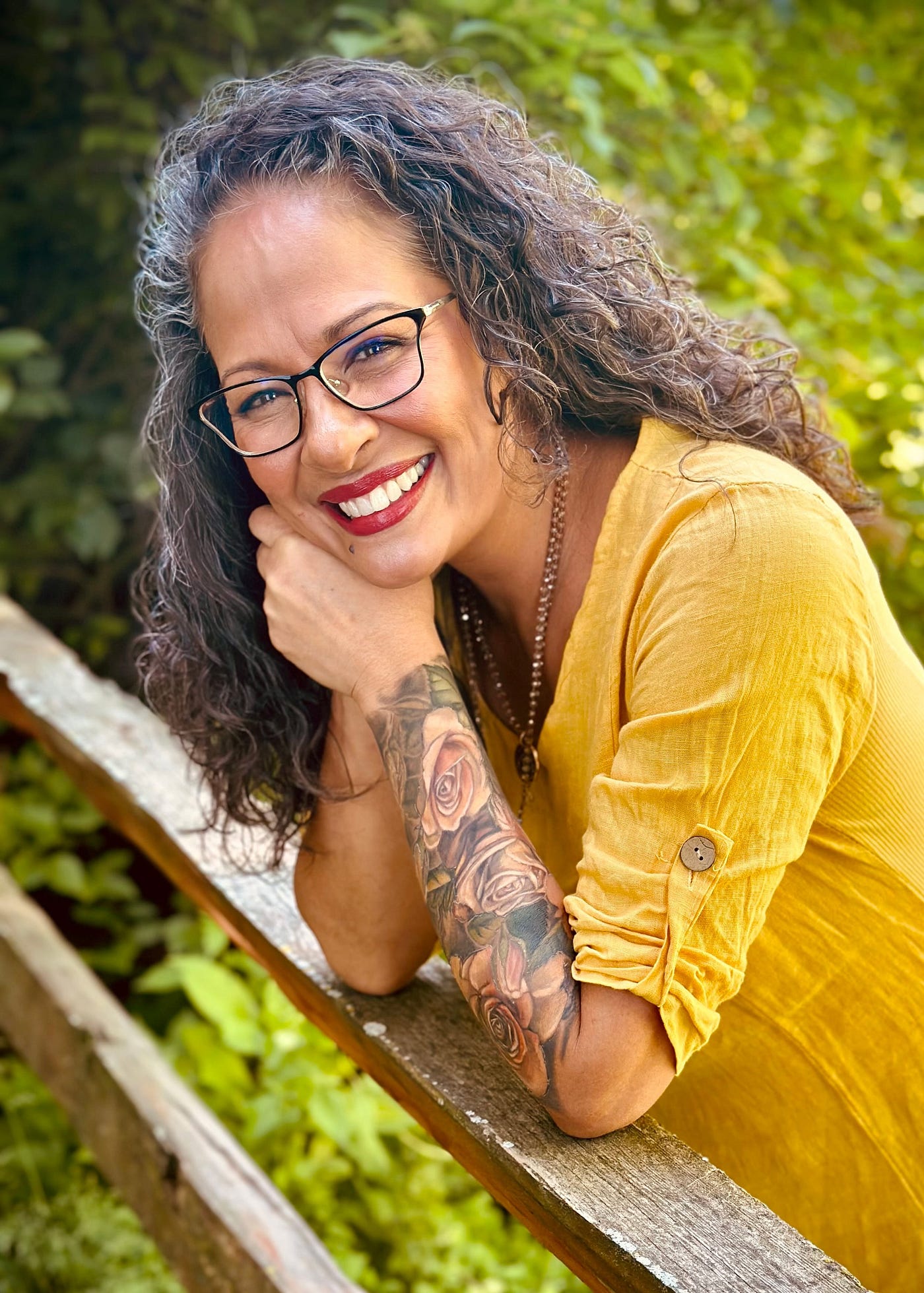
Bio: Taryn Lewis (@tiktoktare) is a Digital Creator, Actress, Creative Strategist, and former FBI employee with an M.A. in Forensic and Legal Psychology. After surviving a shooting that claimed the lives of two colleagues, she turned to content creation as part of her healing and reinvention. Now a full-time Creative and TikTok Partner, Taryn blends her psychological insight with experience to explore resilience and create space for others to rebuild life after trauma. Learn more about Taryn’s journey and her work online at tiktoktare.com.
Thank you so much for joining us in this interview series! Before we dive in, our readers would love to “get to know you” better. Please describe who you were before circumstances required you to change.
Before the incident, I was an overachiever, possibly even a people pleaser and perfectionist. Highly motivated, extremely organized, naturally artistic and always went above and beyond to move up in my career. I actively sought hands-on experience, said yes to every opportunity and prioritized job stability over my creative spark.
Growing up, I’d always imagined myself in a creative field like film or digital photography. Creating came naturally to me. You’d catch me drawing after school, dancing at home, painting ceramics, dabbling in photography and acting through college. But once I started undergrad, I found myself questioning whether my creativity could sustain me long-term. Is it secure? Can I make money from “art”? Maybe it should just be a hobby? Over time, those questions replaced my confidence in pursuing content creation as a career.
So, I studied psychology instead. I’ve always been fascinated by people; their motivations, contradictions, their stories of why they are the way they are. I especially loved watching crime shows; so much so that I’d fall asleep to Forensic Files and wake up convinced I could become a “Criminal Profiler”. And for a while I chased that dream. I earned my B.A. in Psychology and Sociology then my M.A. in Forensic and Legal Psychology. During grad school, I interned with the Behavioral Analysis Unit (BAU), getting a glimpse of my dream job.
I spent the next two years applying to entry-level law enforcement positions before finally securing a job with the FBI. I was in my mid-20s and felt like I finally got my foot in the door to hopefully return to the BAU one day as a Crime Analyst. While there, I provided operational support to a variety of investigative units including tactical command and ultimately crimes against children. Due to the sensitive and confidential nature of my work, I am limited in the details I can disclose.
Outside the office, I maintained a good work-life balance. I hit the gym regularly, made friends in the area, dated intentionally, took care of myself, and started creating again as a hobby. It took a lot for me to get angered or irritated; I always strived to be kind, adaptable and transparent. I loved my job, worked with people I considered family, lived in a stunning apartment and state that quickly became my second home. I was living the dream… until it became a nightmare.
I never expected to meet the version of myself I’d later become. The girl who flinched at fireworks, who cocooned instead of creating, who couldn’t sleep without nightmares of survival. The one who on the outside may have looked ‘fine’ but inside was quietly flinching, fuming, and fighting flashbacks.
Was the life change something you chose, or was it thrust on you unexpectedly?
Definitely unexpected. In hindsight, working in law enforcement or any public service field, I think the worst-case scenario tends to linger in the back of our minds – but we never think it’ll happen to us.
A couple years into my federal career, I survived a shooting that took the lives of two of my colleagues I considered family. Several others were physically injured but all of us were emotionally traumatized. Close friends became complete strangers. PTSD was (and still is) a daily battle.
The irony isn’t lost on me having studied trauma through undergrad and grad school. I’m familiar with the Diagnostic and Statistical Manual of Mental Disorders (DSM) criteria, the symptoms, and the treatments. However, it’s one thing to read about PTSD, but it’s another to experience it. To live it. Even though I’m rebuilding a life I’m learning to love, I’ll never be the same.
With that said, I want to acknowledge that while the trauma was out of my control, my career wasn’t. For me, leaving the Bureau was also a significant life change that I didn’t take lightly. It wasn’t until a year after the shooting that I chose to distance myself from the source of my PTSD in hopes of reducing my daily triggers.
What were your initial feelings about this change in circumstances?
Initially, I was in disbelief and dissociating often. It was disorienting to go from a normal Tuesday morning to witnessing something most people will never experience. It happened on an unusually cold, dark morning.
I remember second-guessing the smallest decisions down to the jacket I wore. Walking out of my apartment, feeling the icy air and running back inside for a heavier coat “just in case.” Little gut instincts that later felt heavier in hindsight.
When I heard the first pop, I thought it was just a knock. With almost no sunlight, I was relying on my other senses sharpening. My hearing especially became hypersensitive. The longer the shots went on, the more my brain scrambled to find a logical explanation, refusing to accept what was happening. Flash bangs? Fireworks? No, that’s when I realized it was gunfire.
Survival mode kicked in and time twisted in the most distorted way. Everything happened in slow motion, yet my brain could hardly keep up. I later learned that everything unfolded within a matter of minutes, but in that moment, it felt like it was never-ending. Before I knew it, we were surrounded by additional law enforcement, ambulances and emergency services. What started as a cold morning was now a crime scene.
Returning to the office later was a blur. I was in shock, unable to comprehend what we witnessed and survived. Talking about it felt surreal as if I was sharing someone else’s story other than my own.
That first week was filled with funeral ceremonies, memorials, meetings and other obligations that required us to still be “on”. Strangely, it was the closest I ever felt to my squad mates. But then came the internal debriefs, Employee Assistance visits, and emotional support animals all back-to-back because protocol couldn’t pause our PTSD.
Looking back, I see how far out of our depth we all were. Our administration abided by basic procedure while the rest of us tried to process the trauma. It’s one thing to have operations in place for something like this, but it’s another to execute them. Much like studying PTSD versus being traumatized or watching crime shows versus being on a crime scene.
Over the next few months, I found a safe haven in my squad, behind closed doors due to the nature of our work. We shared an unspoken trauma bond as we all navigated the loss in our own way. It was nearly impossible to walk through the office without being triggered for one reason or another – our friends’ faces memorialized in the lobby, lingering looks from coworkers and untouched desks with everything exactly as they left it thinking they’d return.
Even now, I still wonder if I fully processed our loss; if I grieved properly because I was on autopilot. Not to mention, the aftermath almost overshadowed the incident entirely. It changed us and the people around us were flooded with curiosity, concern, and questions.
Outside of our unit, the support offered felt more intrusive or insensitive and less like concern. Even the best intentions sometimes felt like salt in the wound. It seemed like my trauma defined me. Did people sincerely care or did they just want the ‘story’?
Paranoia crept in. I stopped trusting everyone outside my therapist, family, and squad mates. It got to where I didn’t know how to talk to most people without feeling extremely angry or irritated. I started withdrawing completely because my emotions were either magnified or non-existent.
Life at home was even harder because I stopped taking care of myself entirely. I went to work, attended therapy weekly, opted out of the gym and ordered fast food often. I started dating as a distraction and stopped creating content altogether for multiple months. The simplest chores felt next to impossible; I was lucky if I showered or even cleaned once a week.
Flashbacks hit me every time I heard a door knock or loud pop. I couldn’t sleep without waking up drenched in sweat from intense recurring nightmares in survival scenarios. I stopped watching my favorite crime shows and scary movies because I flinched at any scene with shots. To this day, if I’m not avoiding them like the plague, I instantly mute the sound. I still can’t hear sirens or see flashing red and blue lights without dissociating or having flashbacks.
How long did it take to see how you could survive or thrive in your new circumstances?
It took me about a year to realize something needed to change - that my dream job became a nightmare. In the beginning, I was numb to it all and adjusting on autopilot to being in a fishbowl. I took advantage of time off before I quietly returned to work. My goal was survival, so if I could get through the day without getting triggered, that was a win in my mind.
Living on my own far from my family amplified the isolation. Most days, I felt lonelier surrounded by people than I ever did by myself. I ended up dodging people throughout the day, going out of my way just to feel a little less suffocated anywhere outside the sanctuary of my squad area.
Four months after the incident, I requested a temporary duty assignment (TDY) in my hometown to see if a different environment would help, and it did for a while. Although I missed my squad, being closer to family in a considerably smaller office gave me glimpses of a new normalcy.
Six months in, I decided to apply for a hardship transfer to make the change permanent. The process was nearly as taxing as the incident itself. Recounting the shooting in technical detail not only retraumatized me, but it also became a turning point. I was already imagining a future outside of law enforcement.
Eight months after, my transfer was approved. I moved back home and continued working while slowly finding a new normal. But at the office, I was still unraveling – crying in the bathroom, numb behind my desk daily. I kept telling my mom “Something ridiculously small and stupid is going to push me over the edge.” (Spoiler: it did).
Right before the one-year trauma-versary, I received an email about advanced training to take on additional duties at the main Field Office. Under normal circumstances, pre-trauma Taryn would’ve jumped at the opportunity to expand her skillset in hopes of upward mobility. But when it hit my inbox, I knew I couldn’t give anymore. I’d given enough. My mind, my body, and my nervous system physically couldn’t handle another day of fight or flight. Even with the change in scenery, I was still too close to the source of my PTSD.
That email was the final straw. I didn’t like the employee I was becoming doing the bare minimum. I didn’t like the avoidant friend I was becoming isolating myself. I didn’t like the shell of a person I hardly recognized when I looked in the mirror. So, I put in my two weeks’ notice and never looked back.
What are five important choices you made that helped you adjust to the change in your life?
I redefined my boundaries and sense of belonging. I became extremely selective about who had access to me – my time, energy and emotional capacity. I said “no” more often and started saying “yes” to rest. I gave myself grace if I wasn’t motivated or making as much progress as I hoped. I cocooned as form of self-protection. However, I learned that while boundaries are a necessary coping mechanism, they could easily turn into a detrimental crutch if I wasn’t careful.
I relocated and changed my environment. I recognize that not everyone may have this luxury but the TDY, the hardship transfer and ultimately leaving the Bureau allowed me to distance myself from the source of my PTSD. In doing so, I experienced fewer daily triggers and rediscovered who I was outside of law enforcement. Relocating stabilized my environment because I was in closer proximity to my family. I didn’t make any of these decisions lightly and felt like I’d tried everything I could to continue working within law enforcement. Now, I’m able to look back with no regrets.
I reconnected with people and found comfort in my community. At work, I leaned into the sanctuary of my squad and few friends who understood the aftermath. Outside of work, therapy and fellow trauma survivors became lifelines. I found connection in creator groups like Her Campus Media (HCM), Canopy Creators and Truly Beauty. My family and even my furbabies grounded me because they gave me something to care for when I couldn’t care for myself.
I rediscovered my creative inner child and reinvented myself. This may sound backwards, but returning to childhood comforts was instrumental in rewiring my brain to find joy. After my identity collapsed, I focused on what once made me feel safe, such as my favorite movies, colors, foods, songs, hobbies. I painted my room glitter pink, dyed my hair rainbow for months, devoured romantasy novels and rewatched Jurassic Park one too many times. Eventually, I started making my silly little TikToks again. Honoring my inner child helped me reinvent myself into the adult I am today.
I reframed my self-worth while releasing self-doubt. The more I found little things that made me happy and feel more like… me - the less I cared what others thought. What may have started as exhaustion evolved into an executive decision. I had survived the worst and I knew nothing could hurt me as much as my PTSD. I learned to get comfortable being ‘cringe’ through creating on TikTok - whether it was a dance trend, a transition or acting audio, I filmed for fun.
Have you been able to flourish in your new circumstances?
Yes! And honestly, flourishing almost feels like an understatement. Never in my wildest dreams did I imagine becoming a TikTok Partner or Cheer Choice Nominee with features in magazines like this one.
After leaving the Bureau, I pursued content creation full-time leaning heavily into my inner child. I became self-taught in filming, editing, pitching, negotiating, digital design and business management. I started my own LLC, earned my HCM Certification and watched what started as a creative outlet during my 9–5 at the DOJ turn into my dream job.
Over the past three years, 100K+ beautiful humans joined me on this wild ride through every pivot, pause and plot twist and I’m endlessly grateful. I’ve been fortunate enough to flourish because I found community. You inspired me to embark on this journey, and it’s been my greatest honor to be part of yours as much as you’ve been part of mine.
One of my biggest “pinch me” moments was my very first long-term paid partnership with American Eagle (AE). I had to reread the email multiple times to make sure I wasn’t hallucinating. Since taking the leap, I’ve partnered with 130+ industry giants including Amika, COVERGIRL, YSL Beauty, Victoria’s Secret (VS) and even served as an Event Host for Aerie/Offline’s flagship Georgetown activation.
But I also want to acknowledge that while I’m proud of my accomplishments, flourishing after trauma isn’t linear. Becoming a full-time Creator hasn’t always been this highlight reel. PTSD was (and still is) my most significant daily challenge. These successes don’t erase any of that, but they do ease it.
Creating full-time has, shockingly at times, amplified my triggers and pushed me back into survival mode. Like many creators, I’m learning to navigate inconsistent income, imposter syndrome, comparison traps and fear of missing out (FOMO). Even now, I try to reevaluate my coping mechanisms and make it a priority to protect my mental health by decluttering and digitally detoxing.
Despite these challenges, I wouldn’t trade this journey for anything because it has allowed me to reclaim my life and reinvent myself regardless of my trauma. I’m no longer just surviving but thriving, too. I have flexibility and the freedom to travel or work in the comfort of home with my furbabies.
But most importantly, I’ve been able to give back to my community. I’ve mentored fellow creators, hosted giveaways, gifted extra products and taught others how to pitch and nurture long-term partnerships. The best part of flourishing after near fatality has without a doubt been finding myself and paying it forward.
What do you like or value about the new you that has emerged as a result of these circumstances?
Some of these may coincide with my 5 choices that helped me adjust, but overall, I’m learning to like the new person I’m evolving into. I value my time, energy and relationships more deeply. I’m far more intentional with how I spend my time and who I spend it with.
Professionally, I’ve rediscovered my motivation and reignited my spark for learning. Having been on autopilot in the office post-trauma to starting my own LLC remotely, I’ve become much more proactive. With fewer daily triggers, I was able to stop doing the bare minimum and start taking initiative, especially when it comes to networking with both brands and creators. As a result, I’ve secured some of my biggest partnerships and best friends that I wouldn’t have otherwise.
I also like that I’ve found new ways to spend my time learning new skills over the past few years. I’ve become self-taught in Showit web design, Notion systems, meta/search engine optimization (SEO) and user experience/interface-adjacent (UX/UI) creative tools. I’ve even converted my digital designs into templates to help fellow creators secure brand opportunities and organize their own workflows.
Personally, I’m now more adventurous in the kitchen; I’m less selective and more curious about trying new recipes and ingredients. Cooking and baking have surprisingly become one of my favorite forms of grounding. It not only requires me to focus, keeping me in the moment, but it also gives me a sense of accomplishment.
With regards to whom I spend my time with, I like the fact that I have the freedom and flexibility to travel more and make time for the ones who matter most. When I’m not working, I try to make it a priority to attend get-togethers, put my phone away and really cherish moments with my loved ones no matter how big or small.
If some time has passed, have you found things about the original trauma for which you now feel gratitude?
I’d never call trauma a gift, but it has taught me to find gratitude over time. First and foremost, I’m grateful to be alive. I’m blessed that I can say I’ve had the time to rediscover joy and reinvent myself, even amid healing. Being able to share my story and inspire readers like you? I can’t tell you how honored I am for this opportunity on behalf of five-year-old me.
This next part is a strange blessing and a curse, but I’m grateful that I’m more attuned to my surroundings. When I’m out, I scan for cover, exits and the people around me. The downside is my brain often feels like a fire alarm going off with no actual fire – so my body flinches at false alarms. The upside is I now have a better sense of how I respond under pressure and trust myself more in high-stress situations.
And lastly, not to get mushy but I’m endlessly grateful for the connections I’ve made, both old and new. Trauma revealed who my true friends and family are, but it also brought survivors into my life who have shown me strength and softness in ways I aspire to.
What are the best outcomes that are a direct result of the personal growth that was forced from you as a result of this trauma? Describe.
Without being too repetitive, many of the outcomes I mentioned earlier have been the best I could hope for considering everything.
Most recently, I’ve been re-emerging as an Actress, actively building my resume and scouting workshops to eventually expand into film and TV. My IMDbPro STARmeter recently placed me in the top 0.5% of profiles which was a surreal reminder that people are taking notice and that I’m on the right path.
However, the biggest outcome has been my leap to content creation and cultivating a community online. I don’t know if I would’ve pushed myself to pursue it otherwise. Had it not been for my PTSD, I probably would’ve stayed at the Bureau chasing upward mobility – maybe even landed in the BAU like I once planned.
But I grew up as an artist and creating has always been my first language. Subconsciously, I would’ve always wondered ‘what if’.
What if I could get paid to do what I love? What if I could work with my favorite brands? What if I could host events, mentor creators or advocate for PTSD awareness? What if my story could help someone else feel seen?
The wildest part is I now know the answer. Yes, I could. I can. I did. I am!
Those outcomes became real because I stopped avoiding pain and chose to start aligning with my purpose. My childhood dreams manifested as my reality because I finally made space for them. And my hope in sharing all of this (if you’re still reading) is that yours can, too.
Was any particular person, or book instrumental in helping you formulate who the new you could be following this trauma?
I can’t credit a particular person or book because multiple people impacted me in ways they may never realize.
First off, my therapist was instrumental in my healing. She validated my feelings but also challenged me when I needed it. Her “three daily gratitudes” exercise slowly rewired my neural pathways and shifted my perspective.
My squad was equally important in my healing. Our unit became a strange kind of sanctuary. We were the only ones who truly understood each other because we were surviving the same trauma. I am eternally grateful for them along with the few friends who kept me sane in a suffocating environment.
My TikTok friends especially inspired me to explore my inner child and accept new pieces of myself. Even as ‘strangers’ they were a few of the first to show more support in ways people in real life didn’t know how to. Some of them have even become my good friends in person. Without them, I wouldn’t be sitting here sharing my story with you today.
Last but certainly not least, my family showed an incredible amount of unconditional support and grace through every stage of this transition. They not only encouraged me to come home but they fully embraced my rest and reinvention. My pets helped me rediscover peace and practice being more present. Because of them, I’ve been able to honor my inner child and continue finding a new normal with them by my side.
Have there been opportunities to encourage or support others who are going through similar traumas? Please describe.
Yes! It’s been one of the most meaningful parts of my journey.
I first experienced this within my squad. We relied on each other daily and were already close-knit given the nature of our work, but surviving the shooting created a sacred bond. Being together, we not only encouraged and validated one another, but we were also able to support each other in unspoken ways that others simply couldn’t. I think we learned a lot by watching each other evolve over time and navigate the loss in our own ways.
I’ve also met countless survivors on social media, who have experienced similar traumas. Sharing my story online helped me slowly start healing pieces of myself while inspiring others to do the same.
I’ll never forget the first time I posted about my PTSD on TikTok and my comments were flooded with fellow trauma survivors. People shared their experiences of gun violence, loss to suicide, murder and other unimaginable grief. What shocked me the most was that several comments came from people I’d known online for years - the sweetest souls on my social media and I had no idea they were carrying that pain.
I’ve been overwhelmingly impressed and inspired by strength and softness of strangers who have endured things no one should ever face. Their journeys remind me daily that none of us are alone and they reinforce my own mission to create a safe haven on social media.
As my audience has grown, so have opportunities like this to share my story in hopes of encouraging and inspiring others. My work has been featured in Entrepreneur, CanvasRebel, Socially Powerful and more to normalize healing and recovery. My wish is to make sure whoever finds me, whoever is reading this, feels safe, seen, heard and a little less alone.
And if that’s you… you are ALWAYS, always welcome to my corner of the internet.
Is there any particular person with whom you’d love to share a meal or a conversation about the lessons learned through trauma?
There’s not a specific person that comes to mind. I’d rather share a meal with fellow survivors; people who can relate or who maybe want to learn how to support. Not necessarily as a therapy session, but an opportunity to connect. One where we can laugh and learn from our loss or sob and sit in silence just to share a space where you’re seen just by showing up.