If you have sufficient resources, I would suggest bootstrapping to maintain the most amount of say in how your company is run.
Tech
Taras Bobrovytsky on First Principles Thinking, Blockchain Fundamentals, and the Future of Decentralized Finance
The software engineer and angel investor discusses blockchain disruption, first principles reasoning, and how modern startups can navigate funding and product stagnation.

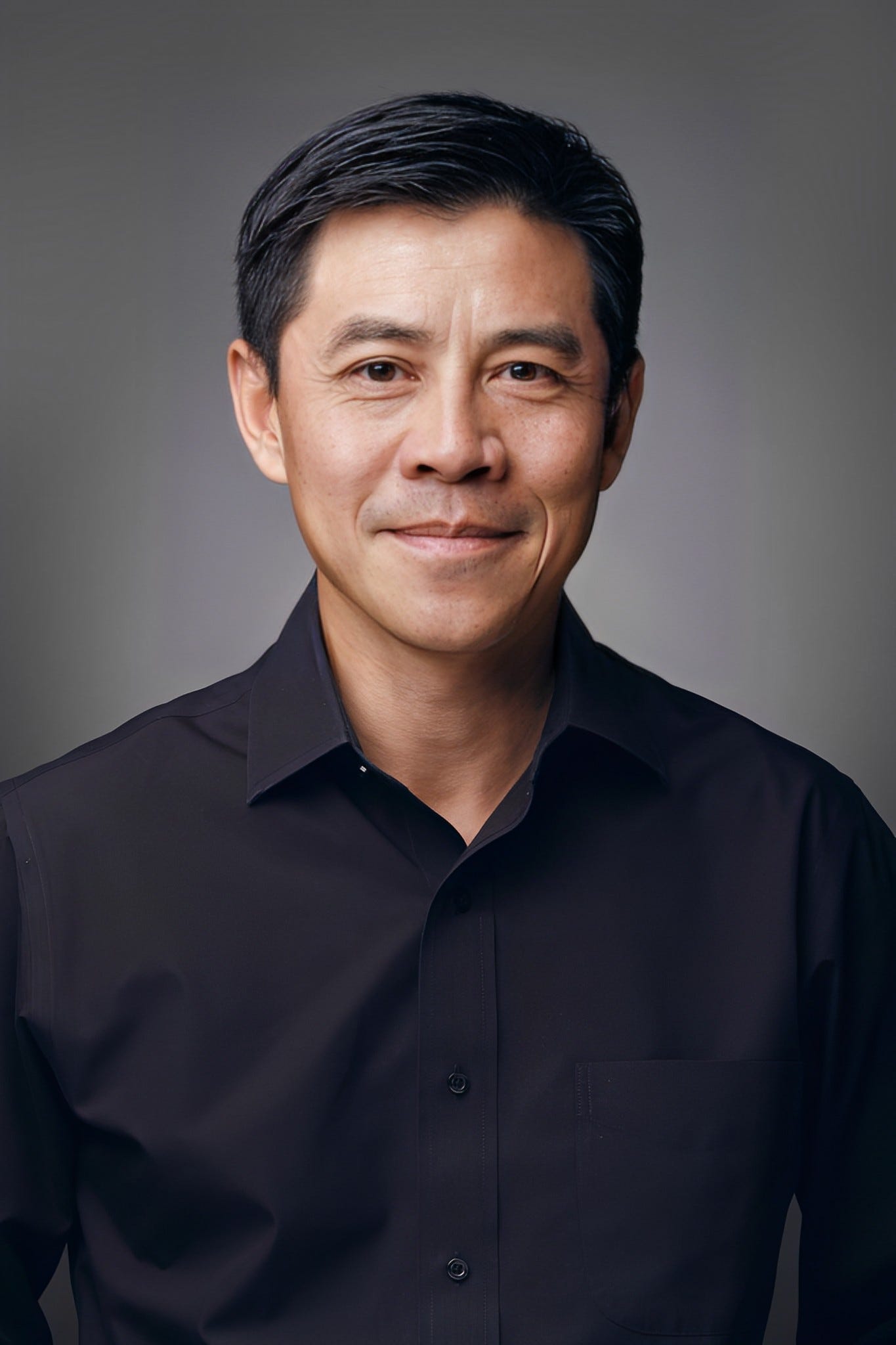
As part of my series about the “How to Navigate and Succeed in the Modern World of Finance”, I had the pleasure of interviewing Taras Bobrovytsky.
Taras was born in Ukraine and grew up in Toronto. He studied Computer Science and worked in San Francisco for 6 years as a Software Engineer on distributed systems and natural language AI. Over his career, Taras has received job offers from Google, Facebook, Uber and others. Recently Taras moved to Austin and started to angel invest and advise over 100 tech start-ups.
Taras made several successful investments with outsized returns into Tesla and different blockchain projects. He is an Ethereum L2 Bull, which is why he built Random Walk NFT on Arbitrum.
Taras considers himself to be a part of the rationalist movement and is a big fan of Eliezer Yudkowsky. He also finds Behavioral Psychology fascinating. Taras likes the intersection of math and art, which led him to create his NFT Project. He enjoys various strategy games such as Go and poker, especially how it relates to AI.
Thank you so much for your time! I know that you are a very busy person. Our readers would love to “get to know you” a bit better. Can you tell us a bit about your ‘backstory’ and how you got started?
Of course! I have extensive hands-on experience in computer science, software engineering, and most specifically AI technology. With my fascination with Behavioral Psychology, I am also part of the effective altruism & rationalist social movements and support causes such as education and AI safety.
Can you share a story about the funniest mistake you made when you were first starting? Can you tell us what lessons or ‘take aways’ you learned from that?
At one point when looking for a job in college, when asked why should we hire you for a sales position, I answered “because I’m funny and dynamic”. I learned to choose my interview responses A LOT more carefully!
Are you working on any exciting new projects now? How do you think that will help people?
With my background in computer science and AI, I brought my passion for Random Walk mathematics to life with Random Walk NFTs. I enjoy trying to predict the future by participating in prediction markets and inventing new games and interesting mechanisms, so naturally, the Random Walk process is of great interest to me. Most simply put, Random Walk is a mathematical process that illustrates a random sequence of steps that yield a randomized path on a 2D plane. When digitalized and remastered by the Random Walk NFT team, this complex concept is beautifully brought to life!
Thank you for that. Let’s now shift to the central focus of our discussion. Extensive research suggests that “purpose driven businesses” are more successful in many areas. When your company started what was its WHY, its purpose?
I have believed for a long time that art based on random walks should exist. The necessity for the intersection between mathematics and NFTs was very clear to me and I wanted to be the one to create the first type of NFT of this kind. Also, being that I am incredibly passionate about strategy games, I wanted to create a community-funded game, where all mint proceeds go directly towards sustaining the game.
Do you have a “number one principle” that guides you through the ups and downs of running a business?
In investing, don’t sell early. Be unreasonably patient and do your research. In regard to Random Walk NFT, our team believes strongly in the idea of NFT immutability & storage of NFTs on-chain. We are driven by the idea that we are creating a valuable, much-needed digital asset and social game, that runs completely autonomously and is never-ending.
If a fellow business leader would ask you for advice about whether to bootstrap or to look for VC capital, how would you help them weigh the pros and cons of that decision?
If you have sufficient resources, I would suggest bootstrapping to maintain the most amount of say in how your company is run. If you are going to look for VC support, make sure you are partnering with a strong VC. Do some research into their success metrics! Have they funded successful companies? These are key indicators of whether you are speaking with a strong VC or a weak one. The stronger the VC, the higher the success metrics, and thus higher the success potential for your team. Also, strong VCs should have extensive networks, which is incredibly important if you’re running a B2B company. A big thing to keep in mind is some VCs can be intense and attempt to overmanage, and thus interfere with you and your team’s original mission. If this is the case, it may be wise to find funding elsewhere.
What measure do you use to determine the value of a company? What advice would you give to other leaders about how to get an optimal evaluation of their business?
Revenue, revenue growth, and user growth.
Make sure the above success metrics are strong pre-evalutation. Also, ensure data is presented in an extremely digestible way that illustrates the high potential of success for your company.
What would you advise to a founder who initially went through years of successive growth, but has now reached a standstill. From your experience do you have any general advice about how to boost growth and “restart their engines”?
Product is key- If your company is at a standstill, you should start by accessing your product, its engineering & UX, as well as its value proposition. If your product isn’t consistently being updated to adjust for market trends, you are likely losing clients to your competition.
Sales & Marketing needs to be reworked- It is also important when your company is experiencing a standstill to look into sales and marketing strategies and find ways of making drastic adjustments to the current strategy. Do a deep dive into sales and marketing data and let the data guide your decision-making. This is especially important when running B2B businesses.
What are the most common finance mistakes you have seen other businesses make? What should one keep in mind to avoid that?
Mistake#1 : Overextending company funds
How to avoid it? Have a two-year financial plan and fund to sustain the company
Mistake #2: Waiting too long to seek additional funding
How to avoid it? Plan ahead, and seek funding well before you truly need it.
Ok, here is the main question of our discussion. Based on your experience and success, what are the five most important things one should know in order to succeed in the modern finance industry? Please share a story or an example for each.
Crypto is the future of finance. I believe in the future we will not have stock markets, insurance companies, banks, etc. All of these things will be rebuilt on top of a blockchain like Ethereum. Thinking from first principles allows me to reach this conclusion. Let’s imagine a world where everything is built on top of an open, borderless, neutral blockchain, would it make sense to return to what we have now? For example, currently, big players have privileged access to the stock market, it operates only during business hours, and it’s difficult to access for people outside of the US. There is so much friction in these current processes. The whole finance industry is built on top of ancient mainframes from the 1960s.
It’s important to understand the fundamentals. You need to think about things from first principles. A good place to start is by asking yourself “what is money?”. Why are people willing to trade their valuable and finite time for a piece of paper that has $100 written on it? What fundamental problem does the stock market solve? When it comes to crypto, what fundamental problem does it solve? Most people like to look at things at a surface level without digging deep. For example, some people invest by looking at the chart pattern of an asset instead of analyzing the fundamentals. I was able to see the value in Bitcoin and Ethereum relatively early by reading the white papers. I read the Ethereum white paper like 5 times before I fully understood it.
Knowing how to code is critical. I believe everyone in the modern world should know how to code. It’s becoming such an important part of our life that not knowing how everything works around us is a huge handicap. It’s almost like not knowing how to read and write. A story from my life. There was a prediction market on Polymarket about when a certain Ethereum fork would happen. I was able to figure out faster than most people when it would happen by quickly writing a Python script that simulates Ethereum block times to correctly predict this event faster than other people and win a lot of money. Another example is that I made an investment in some Tesla options back in 2019. By putting together a script in 2021 (when the options expired) I was able to tell that based on the option price back in 2019 the probability of the Tesla stock price reaching the levels that it did was about 1 in 100,000. (So it’s unlikely that my profits were due to luck).
Being successful at poker teaches you more than an MBA. I would much rather hire a successful poker player without an MBA than an MBA who has never played poker. Poker teaches you about psychology, probability, money management, risk assessment, and many other skills. I’ve been playing poker all of my adult life (but not professionally).
When trading or investing it’s important to understand the Kelly Criterion. If someone offered you a deal that you could wager some amount of money and if you win, you get 100x the amount you wagered, otherwise you lose the amount wagered. There’s only a 10% chance that you will win. You can wager any amount. How much should you wager? Most people would wager too much and go broke or not enough and squander the opportunity. It turns out that in this particular scenario, the optimal bet size is about 1% of your bankroll. As mentioned before, you could figure out the answer to this question and these types of questions by knowing how to code. You could, for example, make a script that simulates a scenario many times and gives you the answer. I see young people with like a 50K portfolio manage it way too conservatively. What young people are not taking into account is their future earnings from work when calculating their net worth. You can think of yourself as a machine that gets paid $100k every year from your job. That machine would be worth about $2M. And you own the machine. If you’re young and have no money, you can think about investing as if your net worth is like $2 million. So if some good, but risky investment opportunity comes, it’s not unreasonable to borrow $20k and go all-in on it. (It’s like 1% of your net worth)
Which tips would you recommend to your colleagues in your industry to help them to thrive and not “burn out”?
Get your rest & sleep! Individuals are only capable of pushing at 300% for so long. Take time to breathe and refocus yourself. And always try to remain empathetic and compassionate to your growth.
You are a person of great influence. If you could start a movement that would bring the most amount of good to the most amount of people, what would that be? You never know what your idea can trigger. :-)
I would love to influence a new wave of replacing democracy with futarchy. Futarchy is a governance system where decisions are made based on decision markets (type of prediction market). For example, people would vote on how to measure national wellbeing, then we would use prediction markets to figure out how to maximize this metric. https://mason.gmu.edu/~rhanson/futarchy.html
How can our readers further follow your work online?
Connect with me @TarasBob on Twitter and taras.com. To follow my recent work, you can follow @RandomWalkNFT on Twitter & join Random Walk NFTs Discord!
This was very inspiring. Thank you so much for joining us!
JH
Written by
Jason Hartman
Editor & Journalist · Authority MagazineJason Hartman is a senior columnist at Authority Magazine covering Business and Tech, conducting primary-source Q&A interviews with founders, executives, and industry leaders.

Published inAuthority MagazineTop Lessons, Top Authorities · 42K Followers
Exclusive, curated interviews with the leaders and changemakers shaping tomorrow. Leadership lessons, industry deep dives, and executive profiles.