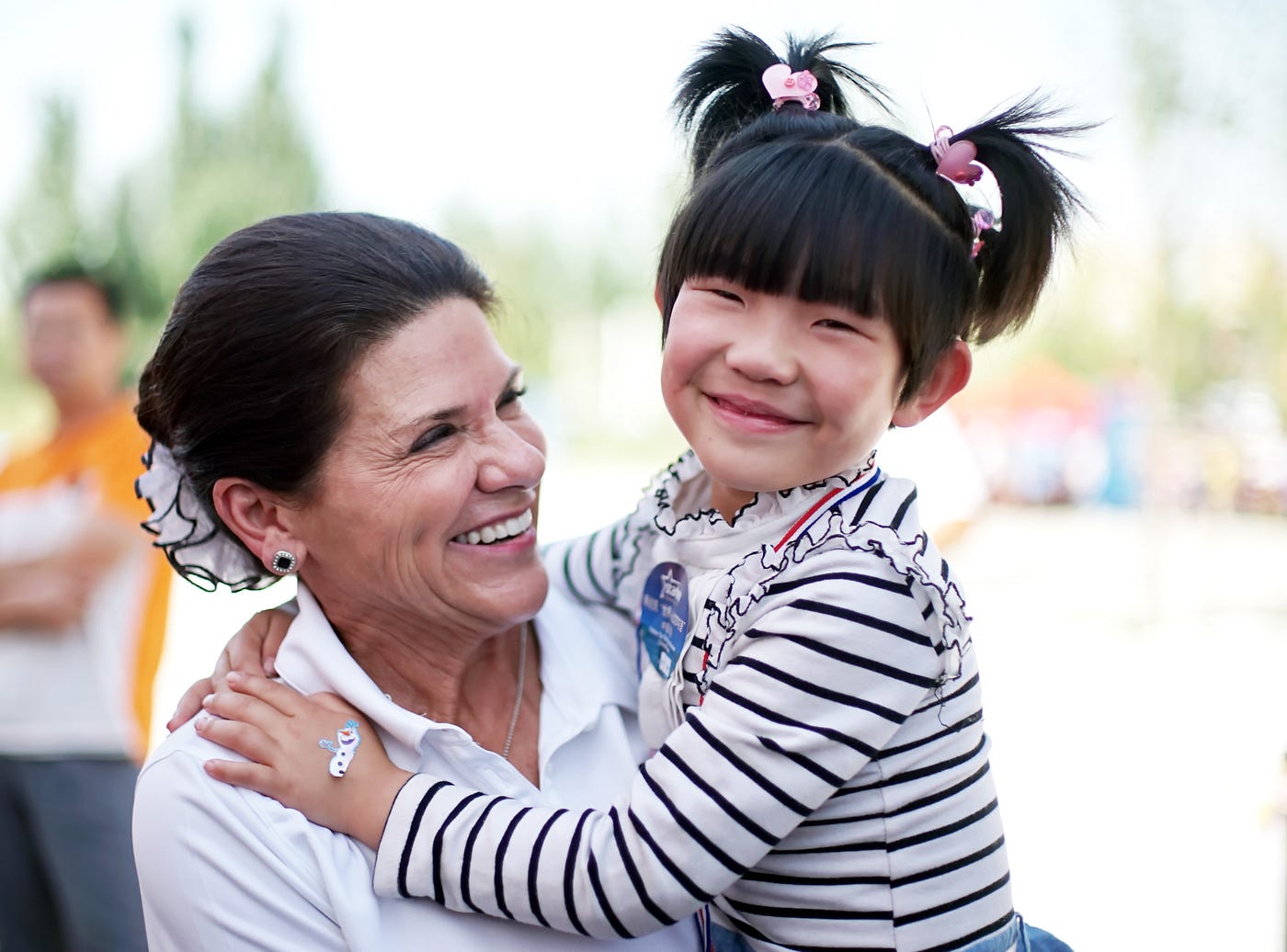
The most exciting project I’m working on now is the Foundation’s effort to mainstream children with hearing loss by blending regular schools with classrooms of children with hearing loss to learn from and with each other.
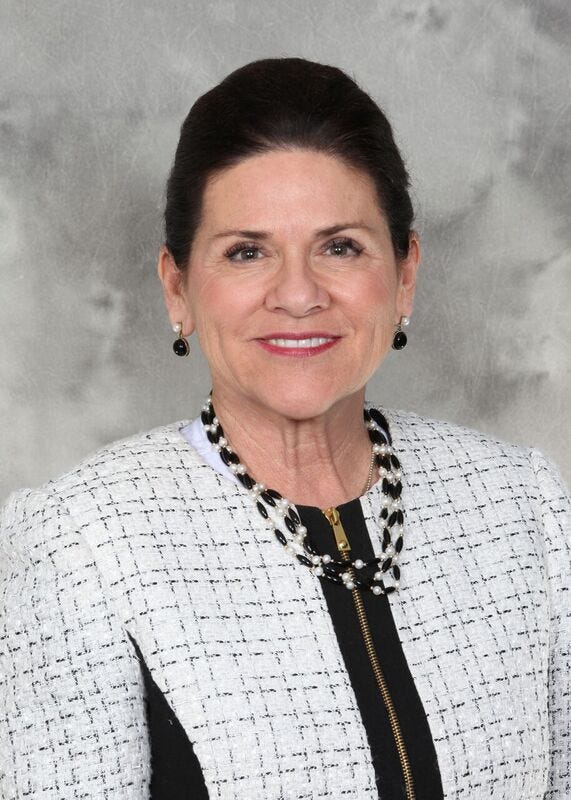
I had the pleasure to interview Tani Austin, the chief philanthropy officer of Starkey Hearing Technologies and co-founder of Starkey Hearing Foundation. For much of the year, Tani travels around the world with the foundation visiting people in impoverished areas to provide them with complimentary hearing aids and hearing care. Tani has been honored at the First Ladies Summit at the United Nations General Assembly and has been named the Female Philanthropist of the Year by the United States Federation for Middle East Peace.
Thank you so much for doing this with us! What is your backstory?
Through Starkey Hearing Foundation, I have helped build a hearing healthcare program that delivers hearing care at no charge to people in need around the world. In order to serve as many individuals as possible, we developed the WFA® Community Based Hearing Healthcare Model. We describe the model as simple, sustainable and scalable and it allows us to continue helping people for many years after they are first fit with hearing aids. We have a presence in 60 countries year-round, which allows access to hearing care all the way to village levels.
Can you tell me about the most interesting project you are working on now?
The most exciting project I’m working on now is the Foundation’s effort to mainstream children with hearing loss by blending regular schools with classrooms of children with hearing loss to learn from and with each other. We are revolutionizing the way we define children with hearing loss and those with hearing. We will teach children with hearing loss to hear with the help of their hearing aids. We are redefining the culture by categorizing hearing loss in eight levels and then training and educating the government ministries, hearing professionals, teachers and parents on hearing, hearing loss and hearing assistance to support blended classrooms instead of segregated classrooms.
Tell me a bit more about your organization.
Starkey Hearing Foundation was created by my husband, Bill Austin, as he entered the business side of hearing technology and began to give many devices to those who could not afford them. His motto, which is now encompassed in the Foundation, is “so the world may hear.” In the early 2000s, I helped the Foundation evolve into a sustainable and global program. Today, it has expanded with teams in eight regions, with programs in 60 countries, and with local workers in 96 percent of the communities we serve. Through our model, we are able to help millions around the globe through service delivery, training and education and policy advocacy. In phase one, we identify patients and create custom ear molds; phase two is when we fit people with hearing aids and teach them how to integrate them into their lives; in phase three we provide after care services where people can get additional batteries, receive on-going counseling on how to use their devices, and get assistance with any issues relating to their hearing aids; in the last phase, four, we employ speech-language pathologists who visit schools and provide additional care.
Can you tell me a story about a person that you helped?
Each facet of the Foundation was driven from a situation when I met someone or saw a need and was inspired with a sustainable solution. For example, there was a little girl named Sang from Cambodia that we fit with hearing aids. As she walked away I wondered what would happen to her. Would she know how to get more batteries or troubleshoot her hearing aid? The next day I visited a school and Sang ran up to me and hugged me. Her mother had immediately put her in school to give her a chance at life. I was so happy for her mother’s decision to change Sang’s life with hearing care. This experience made me realize that I wanted to make sure our patients were fit and trained on the hearing aid care and use so they could experience ongoing success, which ultimately become phase three of our model.
Gladys was a wife and a mother of five in Malawi that I met at one of our aftercare service stations where people can come to receive help after they are fit with hearing aids. We set up this station using our car as an office off the side of a road. We were trying to make sure that our phase three after care model was well-established and I knew that as a busy mother, Gladys was going to need a local person in her country that could help her if a problem arose. So, we decided to create our Foundation programs that would be staffed by team members who live in the communities they serve and just months ago, she was seen by our full-time country coordinator, Gertrude, in Malawi.
In the Philippines two years ago, a woman named Delores was driven to a hearing aid mission in an ambulance. She had been in a coma and suffered with breast cancer. Delores was escorted by over 10 family members and as she was fit with hearing aids and began to wave at her family, they erupted in joyous sounds. Sadly, just three days later, Delores passed away, but it taught me a very important lesson that each day is beautiful and you’re never too young or too old to hear.
This is obviously not easy work. What drives you?
The thing that drives me is seeing the connections that hearing gives to life. It is like a runner’s rush when you see another person hear for the first time. Who you hear, you feel. The first time I experienced that I couldn’t get back to this work fast enough.
None of us are able to achieve success without some help along the way. Is there a particular person who you are grateful towards who helped you get to where you are?
Bill Austin is the love of my life, and also my mentor. He is a visionary and his vision was and is, “so the world may hear.” Because of his idea, I was able to grasp his energy and build the sustainability piece of this. Bill and I don’t compete, we enhance each other’s strengths in this work, as well as allowing each other to be ourselves. The greatest gift you can ever give anyone is the freedom, confidence and respect to be themselves. I consider Bill and me, “together alone.”
What are you “5 things I wish someone told me when I first started” and why? Please share a story or example for each.
- Communicate — Communicate and also listen. The more you update and include staff, the better!
- Completely vet all of your partners — You cannot create or manufacture more time, it’s a precious resource when building a program. Good partners are crucial to success as a nonprofit.
- Delegate — Don’t try to do everything. Keep giving your team the chance to succeed.
- Measure Success — Have a hard deadline even if you change it. This will allow you to measure, push and drive the work.
- Don’t ever let someone else make you think you are inferior. Even if you don’t know something, it’s okay, just find someone that can advise you. It doesn’t matter what someone else thinks of you.
Is there a person in the world who you would love to have a meal with, and why?
I would like to meet Oprah. Society seems to have gone backwards 50 years in one year. I would love to sit down to discuss her vision for getting society to care about one another and to hear what her contribution for peace and understanding in USA and in the world would be for everyone regardless of age, gender, race or sexuality.