When asked by a journalist: “How have you been able to so successfully pick program winners?”. His response: “If I like it…it’s good”. Since then, I always trust my initial feelings about creative matters.
Social Impact
Steve Michelson of The Fund For Sustainable Tomorrows on Creative Intuition, Media Legacies, and the Power of Un-Damming Rivers
A veteran media executive and documentary producer shares how his multi-generational family legacy in broadcasting shaped his philosophy on environmental storytelling and the power of trusting one's creative intuition.
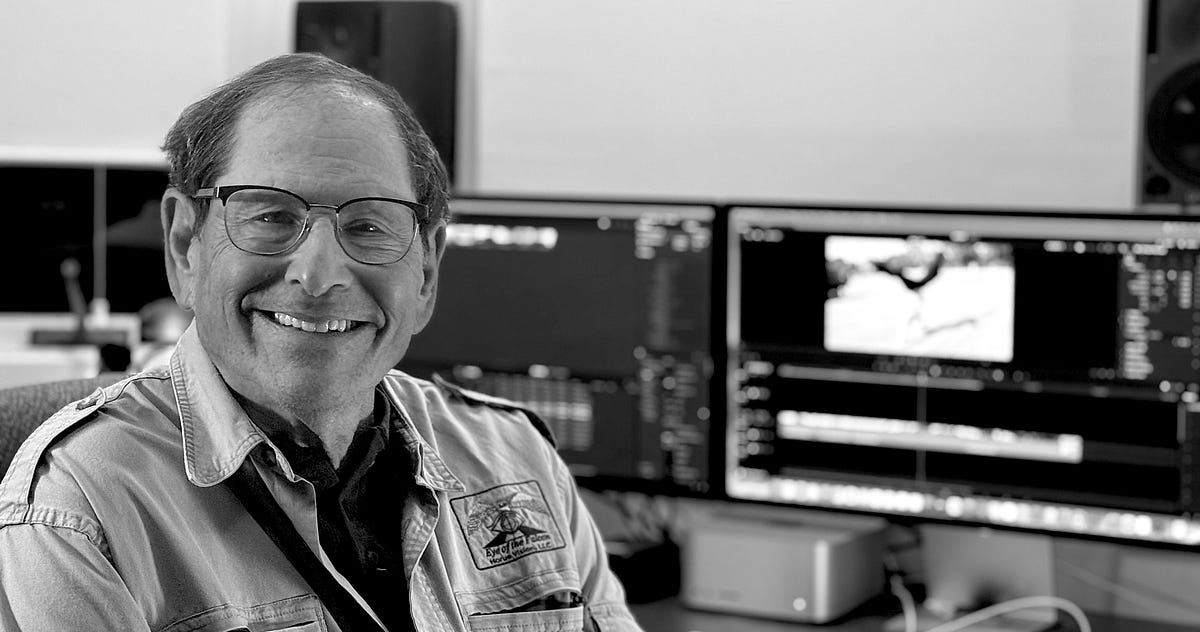
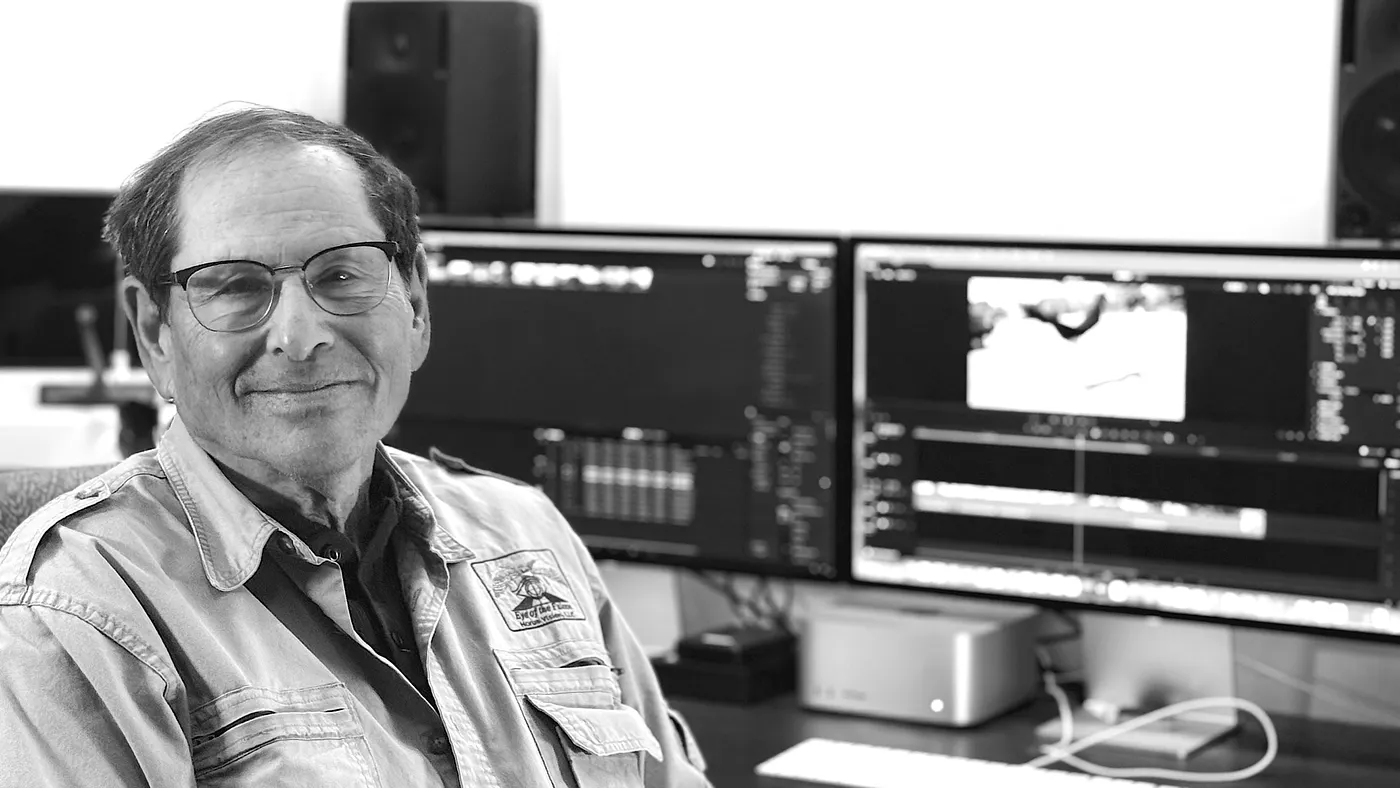
As a part of our series about “Filmmakers Making A Social Impact” I had the pleasure of interviewing Steve Michelson.
Steve is a seasoned executive with extensive experience in the media and communication industry, currently, Executive Director at the Fund for Sustainable Tomorrows. Their goal, “We are singularly focused on inspiring social change. Our currency: Documentaries. Documentaries that tell a story. Documentaries that make a difference.” Previously: Co-Owner and Executive Producer at the Video Project one of the nation’s largest educational film distributors with a library of 350 films. He is a sought after Exec. Producer as his creative and marketing skills along with his entrepreneurial spirit, have helped independent producers succeed in raising funds and procuring distribution. He formed Steve Michelson Productions where he serves as an Executive Producer on numerous co-productions. He was a Co-Founder and President at One Pass Inc., a film and video production services company based in San Francisco. He was a visiting teacher from 2018–2020 at Ringling College of Design in Sarasota Florida. His course: Making Media That Matters was offered both in class and on-line. He was a Governor at NATAS (National Academy of Arts and Television Sciences). Steve, and his brother in law Taylor Phelps, were awarded the Gilbert Amard by the San Francisco Bay Area in 1986 as having been leaders in the growth and development of media services throughout the area.
Thank you so much for joining us in this interview series! Before we dive in, our readers would love to get to know you a bit. Can you share your “backstory” that brought you to this career?
I was born into a media family. At this point in my life there are five generations involved with media and arts, two before me and two after. My grandfather was exporting radio dramas on RCA Vinyl Phonograph discs in the 1950s. The business was taking off and my father took it over and built an international network of countries that wanted these radio dramas. He acquired the rights to over 50 programs including: The Shadow, Dragnet, The Lone Ranger, Green Lantern, Fibber McGee and Molly and many more. Back then; those programs were recorded live on stage at Radio City Music Hall in New York City. The actors were on stage left, and a person with some sound effects was on the right. My father felt these radio dramas would be much improved if they had real, recorded sound effects. He owned one of the first reel-to-reel tape recorders, a Wollensak made in Poland, and as a family we spent many years recording sounds. By 1956 it had become one of the largest libraries of sound effects at the time.
It has been said that our mistakes can be our greatest teachers. Can you share a story about the funniest mistake you made when you were first starting? Can you tell us what lesson you learned from that?
Looking back, I knew my media career started as a teenager when my father asked my advice about children’s programs for world audiences. Without hesitation I said: ”Hey boo boo….it’s Yogi Bear”. What I thought was a joke turned out to be a worldwide hit…my first as a “programmer”. When I meet people from overseas my age these days, I ask them what they watched as a child….with out fail, they all seem to remember Yogi. The lesson, that resonated with me when I read the biography of Fred Silverman, the iconic television executive and producer who helmed all three networks and went on to form his own production company, was a comment he made about himself. When asked by a journalist: “How have you been able to so successfully pick program winners?”. His response: “If I like it…it’s good”. Since then, I always trust my initial feelings about creative matters.
Who are some of the most interesting people you have interacted with? What was that like? Do you have any stories?
I started my professional career in Sydney Australia in 1972. First as an editor then as a producer of the top rated program: A Current Affair. At one point we were doing a story of what we thought was the “dumbest job in all of Sydney”. We were convinced that it had to be whoever painted the Sydney Harbor Bridge… since when you were done, you had to start all over. Who would have guessed that we would discover Paul Hogan painting the bridge that day! Many will remember him as Crocodile Dundee. Paul became an instant sensation from that story and we brought him onto the show many times after that. It may have been a dumb job, but he was one of the smartest people in Australia, eventually rising to become a super star in his own right.
Writer and historian Roderick Nash was the host of a series about the National Parks that I produced with US News and World Report for the Disney Channel in 1995–6. Rod was the author of one of the most influential environmental books called: Wilderness and the American Mind. His ability to translate the “deep time” of the Grand Canyon and the origins of Yellowstone, Yosemite and other places we have preserved was life changing for me. Rod was also a Grand Canyon River guide and had his own dory for river rafting. As an avid white water kayaker myself we enjoyed traveling together down some great rivers. He always kept the good stuff for late night drinking in the bottom of the dory to stay cold.
Also during that series I met several of my enduring environmental heroes. We got to float down Glen Canyon with Martin Litton who more or less saved the Grand Canyon from becoming a series of lakes. His quote: “The river is a living thing, and it is our responsibility to protect it” became a passion for me on numerous films that I worked on. That included River of Renewal that was instrumental in un-damming the Klamath River. Martin was a resident of Palo Alto and I stayed in touch with him for many years.
We filmed an interview with David Brower in Yosemite Valley. David had been the President of the Sierra Club and also the founder of Earth Island Institute in Berkeley. He had a legendary environmental career. Looking out on the valley he could recall historic destinations and trails that no longer existed. In his eighties at the time, he and his wife Anne did not want to add to the pollution private automobiles were bringing to the valley so they took public transportation to get there.
Which people in history inspire you the most? Why?
Ted Turner was an inspiration for me. I met him in 1979 at a dinner when he was on a roadshow in San Francisco speaking to the broadcast community. His presentation of an international 24/7 global satellite news network was jaw dropping. With the launch of CNN in 1980 it became a reality. While I was amazed by his work ethic, what really inspired me was his early and vocal support for the environment. Ted was one of the first corporate executives to recognize that we had to protect the earth, as our future would depend on it. I regard him as a model for my own beliefs about social issues and impact.
Orson Wells also inspired me in a different way. He became renowned for so many things: as a writer, an actor, director and narrator. My dad worked with him on the worldwide distribution of the War of the Worlds radio broadcast that he directed and narrated in 1938. As my dad recalls, after a recording session at ABC in New York City, he and Orson were on the street when an ambulance with sirens blazing pulled up and Orson jumped in. “Have to go Charlie” he said. Ever on the go, that was how Orson Wells defied the New York traffic to get to his next appointment. I think back on that moment from time to time when I recall the wisdom I once learned: “Sometimes you have to ask for forgiveness instead of permission”. If you’ve been in the media for any length of time you eventually learn this lesson.
Let’s now shift to the main focus of our interview, how are you using your success to bring goodness to the world? Can you share with us the meaningful or exciting social impact causes you are working on right now?
Healthcare has been a subject that I care deeply about. I first became involved with the subject of cancer in 1998 when my production company was chosen by The Breast Cancer Fund of San Francisco to produce a film called: Climb Against the Odds. It’s the story of eight women, who climbed North America’s highest peak, Mount McKinley, to bring attention to the scourge of breast cancer. It was the second leading killer of women in the world and there was neither funding nor awareness.
26 million people saw the documentary in 1999 when it was released in Prime Time on ABC network and Public Television. Much has changed since then but more is needed. Today I’m working on a project called Moving Through Cancer. It’s a 25-minute film produced by my foundation: The Fund for Sustainable Tomorrows featuring Olympic figure skating star Scott Hamilton. The film, and the campaign we have launched, recognizes that only 15% of people who contract cancer today are informed that exercise is a critical part of their ability to survive and beat cancer in spite of decades of robust science on the subject. Here’s a link to see and spread the word about the film on our site: https://thefundforsustainabletomorrows.org/moving-through-cancer/
Many of us have ideas, dreams, and passions, but never manifest it. But you did. Was there an “Aha Moment” that made you decide that you were actually going to step up and take action for this cause? What was that final trigger?
While it was my dream and passion to create meaningful programming, my early career had been focused on the craft and tech side of the media industry. After college, in 1975, I Co-founded my company One Pass Video which turned into a remarkable success with about 600 employees when we sold it to a public printing and publishing company in 1988.
In the 2000’s, with a lawyer/partner we acquired the Video Project, a distinguished educational film distributor.
It was during that time that, in 2008, I was presenting my workshop called: Making Media That Matters that I met Alice and Lincoln Day at American University. It was a mutually inspirational moment. They were impressed with the content and success stories of impact that I was presenting and I was impressed that these two 80-year old sociology PhDs from Yale and Columbia had made their first film and were looking to make an impact with it. Their film: Scared Lands and Wounded Lives: The environmental footprint of war was impressive covering all wars starting with WWI and the recent Middle East wars. Over the next 10 years our team at the Video Project helped lead worldwide acclaim for this film appearing in film festivals and screenings all over the world.
The trigger for me came a decade later in 2018 when Alice, in her 90’s now, asked me to take over her Foundation: The Fund for Sustainable Tomorrows. They had accomplished everything that they set out to do and she felt my leadership to carry the Fund into other areas would be the best next step. As Executive Director of that Foundation today I am extremely proud of the work that we have done creating impact in the fields of: health care, the environment and social justice.
Can you tell us a story about a particular individual who was impacted or helped by your cause?
In 2019 when we took on the distribution, and impact campaign through the Fund for Sustainable Tomorrows, of the award winning short film: Phil’s Camino I met Phil Volker the star of the film. Phil’s story, chronicled in the film, as a pilgrim known worldwide had: “crafted a remarkable response to his diagnosis of colon cancer”. Our impact campaign gave Phil an expanded platform both on line and for those who had the opportunity to meet him. I remember screenings in particular we arranged at Cedars-Sinai hospital in Los Angeles where Phil presented his story and took questions from doctors, nurses and administrators of the hospital. The staff at the hospital was moved.
The night before Phil died in October of 2021 he texted his friend Arash Asher, Director of Cancer Rehabilitation & Survivorship, at Cedars-Sinai with the message: “we did good!”
Are there three things that individuals, society or the government can do to support you in this effort?
Of course one thing is that we always can use philanthropy, donation and grant funding to support our various projects. Secondarily, we work best with filmmakers or activists who already have a clear view and have started on the journey of creating impact. And yes, we need a government that stops making it so hard on its citizenry… a government that supports media arts. We need people who are committed to change, both personally in their own behavior and as influencers and teachers of others to do the right thing.
What are your “5 things I wish someone told me when I first started” and why? Please share a story or example for each.
1. Don’t believe all the hype: It’s easy to convince yourself of all the aspirational ideas you have as a young person. One thinks that people who try to nail your feet to the floor, just don’t get it. But the reality almost always lies somewhere in between the lofty goals and the possibility of failure. It’s good to shoot for the moon but if you decide to go there be aware that you only have so much rocket fuel.
2. Don’t forget your family or yourself: It’s also easy to become obsessed with one’s work, especially when all the feedback you receive is how successful it’s becoming. None of this is as important in the long run as remembering that you have but one life to lead and that creating time for yourself and your family is certainly more important than even the work that inspires you. As you get older you will realize that your strength and personal power is a reflection of your upbringing and family experience. Don’t lose sight of it.
3. Expect the unexpected: When our video company started to experience success my Co-Founder and I had a very different approach towards the future. We were still a small family corporation but his vision was enormous… to expand into multiple cities with a franchising agenda. It caused a crisis in our young company. This is the proverbial “I didn’t see that coming” story that many entrepreneurs will experience.
4. Your time will come: Often entrepreneurs with a vision like mine have to take a detour to reach the goal. For me, building the resources that our Bay Area film community needed became a passion that was a necessary detour from my primary goal. After a decade of successful growth I realized that I was now on a treadmill that demanded my full attention. The detour had become it’s own destination.
5. Be direct: So many things in the media are nuanced….every good story benefits from a little beating around the bush. Throughout the many years and projects that I have participated in I have seen how important it is now to state things clearly as they are. Achieving a vision, creating an expectation are powerful tools but they need to be balanced by being direct so that people understand what might happen as a result of pursuing an opportunity.
If you could tell other young people one thing about why they should consider making a positive impact on our environment or society, like you, what would you tell them?
I’ve been reading a few books recently about healthy aging and even the secrets of becoming a centenarian. In almost all of these books the social science boils down to a handful of items. Many we all know like getting exercise, eating well and having good family relationships. But one factor seems overlooked which is to create a passion about giving something back to society. The devotion to a cause or a campaign is a good thing on it’s own, but when you couple that with the life affirming health aspects provided it’s truly a win-win.
We are very blessed that many other Social Impact Heroes read this column. Is there a person in the world, or in the US, whom you would like to collaborate with, and why? He or she might see this. :-)
A social media hero whom I have worked with and continue to support is Elizabeth Bonker. I met her when she was in high school in Maitland FL during filming of the documentary In Our Own Hands: How patients are reinventing medicine. At the time, she was an autistic non-speaker learning how to type on a letter board. Fast forward to today when Elizabeth is widely regarded as a force of nature reaching millions that you can follow on the website our Fund created for her: Communication4all.org.
In the early days Elizabeth always said that she wanted to become the Malala Yousafzai of the nonspeaking world. If you were reading this Malala I would love to connect you with Elizabeth. I think you would find her as inspiring as she finds you.
Can you please give us your favorite “Life Lesson Quote”? Can you share how that was relevant to you in your life?
My father always used to say about the early radio dramas that: “A story well told will live forever”. That wisdom has always resonated with me as a guide to make my work emotional and interesting…to try to live up to that promise.
How can our readers follow you online?
Best to follow me at: linkedin.com/in/steve-michelson-98776a8/
This was great, thank you so much for sharing your story and doing this with us. We wish you continued success!
About The Interviewer: Tavares Beverly ( www.tavaresbeverly.com ) is the Founder and CEO of Beverly Boy Productions, a national video production company that has helped organizations tell their stories through video for more than two decades. Over the course of his career, he has worked with everyone from Fortune 500 executives and healthcare professionals to politicians, nonprofit leaders, educators, and artists, gaining a unique perspective on the role communication plays in leadership, business, and human connection. A frequent contributor on topics including communication, entrepreneurship, leadership, and personal development, Tavares believes that the ability to communicate effectively is one of the most valuable skills a person can develop. His work is driven by a passion for helping organizations connect with their audiences and helping individuals unlock their potential through mentorship, perseverance, and meaningful relationships. To learn more, connect with Tavares on LinkedIn or visit www.BeverlyBoy.com . If you’re interested in using the power of storytelling and communication to grow your organization, strengthen your brand, or inspire your audience, he welcomes the opportunity to connect.
TB
Written by
Tavares Beverly
Executive Contributor · Authority MagazineTavares Beverly is an executive interviewer and contributor covering leadership, culture, and business for Authority Magazine.

Published inAuthority MagazineTop Lessons, Top Authorities · 42K Followers
Exclusive, curated interviews with the leaders and changemakers shaping tomorrow. Leadership lessons, industry deep dives, and executive profiles.
More from Authority Magazine
See all stories →
A
Authority Magazine Editorial StaffAngelica Garcia of Constitutional Psychology: How Applying Attachment Theory to Civic Life Repairs Our Fractured Relationship with Government
Social Impact20 min read
A
Authority Magazine Editorial StaffKeri Mangis: The Power of Noticing the Status Quo to Break Unconscious Cycles of Societal Limitation
Social Impact16 min read
A
Authority Magazine Editorial StaffA.P. Singh of Lions Clubs International Foundation: Shared Global Commitment Is the Primary Engine of Sustainable Humanitarian Recovery
Social Impact10 min read
A
Authority Magazine Editorial StaffNoah Beshto of Noah’s Diary: Inside the Strategy of Using Wildlife Documentary Filmmaking to Drive Global Conservation Awareness
Social Impact12 min read