My dad was an entrepreneur and completely related to my feelings of wanting to be independent, and after hearing me out, only had one question: “So, are you going to do it again?
Business
Steve Kane of Golden Hearts Games: Why Charitable Promotional Games Will Disrupt Traditional Philanthropic Fundraising
Serial entrepreneur Steve Kane explains how his latest digital platform marries tech innovation with philanthropy to empower everyday small donors.

As a part of our series about what’s around the corner for the toy, game, and video game industry, I had the pleasure of interviewing Steve Kane.
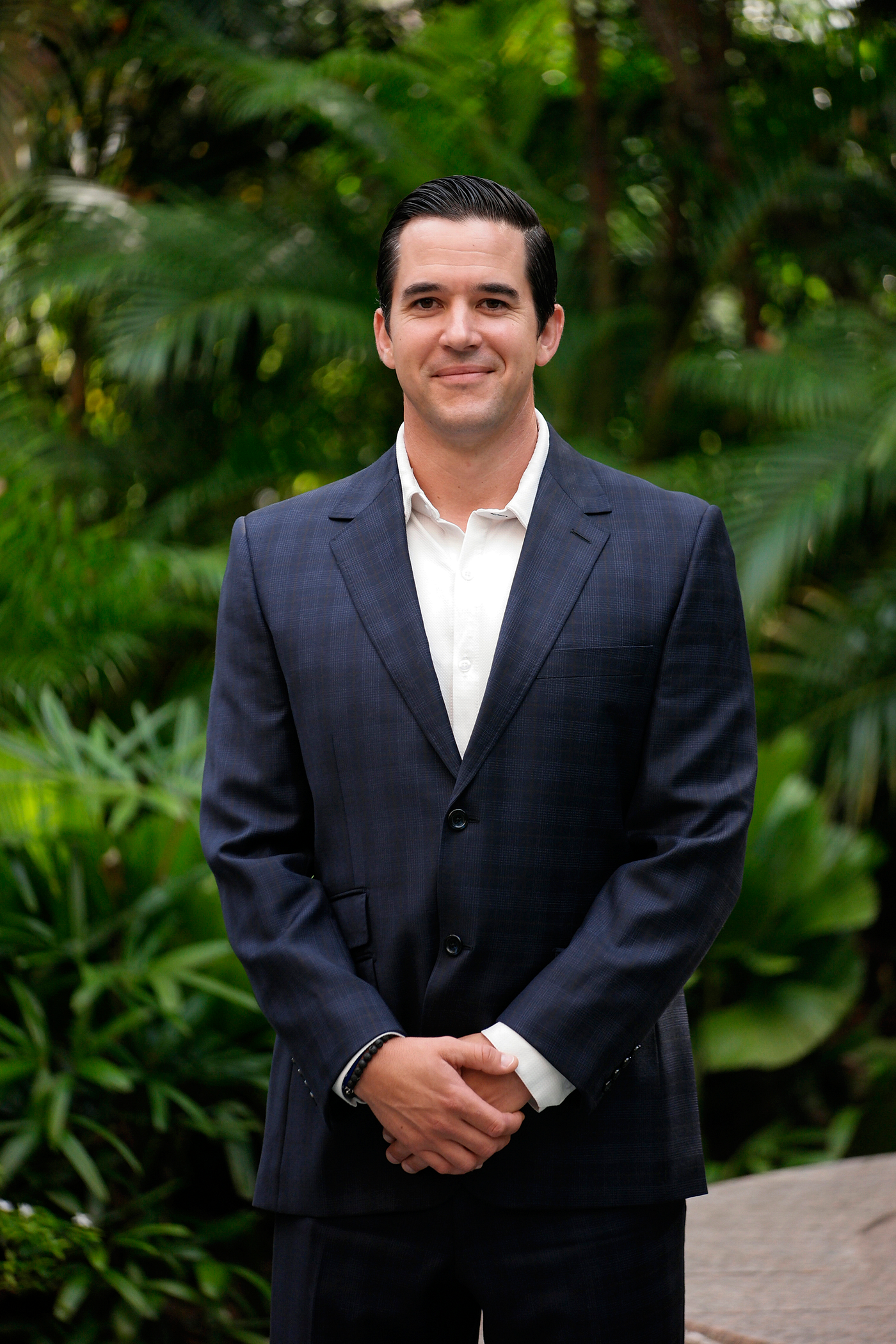
Steve Kane is a Boston-based, serial entrepreneur, investor, author and the co-founder and CEO of Golden Hearts Games. Previously, Steve was co-founder and CEO of Internet games pioneer Gamesville, which was later acquired for $232 million, as well as GameLogic, LuckyLabs, and InterLab. He has been a director, advisor and investor in various finance, media, tech and consumer products companies such as Leader Bank NA in Boston and DraftKings. An active member of the philanthropic community, Steve serves as a board member at NewPolitics.org and Science on Screen. He has served on the mentoring staff at the NYU Entrepreneurship Lab, Harvard University Innovation Lab and TechStars.
Thank you so much for doing this with us! Our readers would love to “get to know you” a bit better. Can you share the “backstory” behind what brought you to this particular career path?
As early as high school, I was always interested in two things, mainly: art/design and tech/computers. My career path to where I am today had many surprises, twists and turns. I went to NYU for Film School, and would ultimately, pursue digital games. Largely because I could pursue both of those passions at the same time.
Can you share the most interesting story that happened to you since you started your career? Can you tell us what lesson you learned from that?
The most interesting and most formative story would be the abject failure of my very first startup, a computer graphics software venture. I was in my 20s, with no experience, just a passion to do my own thing and not work for anyone else. So, I left the big company ladder climb path, borrowed a little money from my parents (God bless them, they could not really afford that, but loved me), and started a software venture with two friends.
Within a year the business failed, the friendships were shattered, and I was tearfully on the phone with my parents saying every penny was gone. My dad was an entrepreneur and completely related to my feelings of wanting to be independent, and after hearing me out, only had one question: “So, are you going to do it again?” Sniffling back sobs, I hesitatingly answered, “Well, failing stinks but I loved the rest of it. So yes, I would if I could.” And he simply replied, “Good answer. That’s what I said when the same thing happened to me. OK, let’s figure out how you can do it again.” And I’ve been doing it ever since.
None of us are able to achieve success without some help along the way. Is there a particular person who you are grateful towards who helped get you to where you are? Can you share a story about that?
First and foremost, my father. I have also been blessed with some very excellent mentors along the way. Too many to list! And while I really don’t believe in the supernatural, even an angel or two. When I was in my 20s, just walking down the street in NYC, very confused as to what to do with my life and pretty upset that things just weren’t going my way, a complete stranger stopped me on the sidewalk and said, “Excuse me, I don’t know you, but I just want to tell you, no matter what, it’s ok to smile. Look up at the sky instead of your feet. Smile, you’ll be glad.” And then he just walked on and disappeared into the NYC crowded streets. Been taking that advice ever since!
Around the same time, I was still trying to climb the corporate ladder and had an interview for a junior executive job at a big company. The meeting started uneventfully but then the woman interviewing me abruptly stopped, and just looked me in the eye for a moment. I was weirded out. What was going on? Then the woman said, “Look. Sorry but I’m not going to interview you. You’re not going to get this job. And I think someday, you’ll thank me. Because I can just tell by looking at you, you don’t want this job. Or any job like it. This isn’t a criticism. Seriously, I’m saying this because I like your energy. You should go find something that really excites you. I think you’ll thank me.” I stumbled out of that office in shock. Driving home I was in a rage. What a presumptuous jerk! How dare she! But eventually I realized, that was an angel, nudging me. I wish I could remember her name — if I could, I would thank her, profusely.
How have you used your success to bring goodness to the world?
I was raised in a family that believed in giving back, and always did, regardless of our financial situation, through volunteering and the like. My whole life, I have always given back, even if only via whatever meager things I could offer at the time. As I became successful, I increased my giving back, both financially and through volunteering, serving on boards and committees, etc. My new venture, Golden Hearts Games, combines my passions for art/design and tech/computers, as well as giving back, all in a hopefully successful triple helix where all three are essential components of the work and the success.
Ok fantastic. Let’s now move to the main focus of our discussion. Can you tell us about the technological innovations in gaming that you are working on?
The principle innovation is what we call Charitable Promotional Games. The novelty is twofold:
First, we take a very old and ubiquitous type of game — promotional games — and deploy them exclusively to stimulate and reward philanthropic giving, specifically, small donors, small donations, small 501c3’s (as long as it is an IRS-recognized 501c3, which includes almost all houses of worship and tiny local organizations etc.) and available 24/7.
Everyone knows promotional games — McDonald’s Monopoly, Coke Rewards and the like. But previously, promotional games were used to stimulate awareness and sales of merchandise. Golden Hearts Games is a for-profit venture, but our Charitable Promotional Games stimulate awareness and “sales” of charitable donations. Put simply, McDonald’s uses promotional games to reward people who buy hamburgers; we use promotional games to reward people who make donations to the charities of their choice.
Second, we bring the business of using games to raise money for charities into the digital era. The very first form of legal gambling in the USA was what’s often called “charitable gambling” — church bingo games, hospital casino nights etc. For many years “charitable gambling” was a powerful fundraising tool — as recently as 20 or so years ago, such games raised more than $20 billion a year for charities. Now that number is under $2 billion a year and shrinking, due to the widespread legalization of gambling, casinos, lotteries, sports betting, etc. The regulation of charitable gambling is antiquated and there is no strong voice in the now-crowded government gambling regulation ecosystem advocating for its modernization, leaving this method of fundraising ignored, in the pre-digital world. However, by structuring our games not as gambling, but instead on the promotional games model, we’re bringing the use of games for philanthropic fundraising online, allowing it too to reap the benefits of the digital world.
How do you think this might disrupt the status quo?
Many ways! But perhaps most significantly by allowing charities to connect with and maintain relationships with what we call the Everyday Heroes of Philanthropy — the small donors! 70% of all charitable giving dollars in the USA come from small donors. But almost no charities have the staff and resources to actively engage with small donors. It’s just too expensive and time consuming. Maybe one direct mail piece a year, at holiday time. With our charitable promotional games, charities can build strong relationships, and continuing donations streams, with even the smallest donors, and with basically zero cost or work.
Along the same lines, we disrupt the whole notion of how and which donors get rewarded for giving. Previously, only big donors received rewards — galas and red carpets, naming rights, plaques and trophies, cool items at auctions, media coverage, etc. But small donors never got any rewards. With us, small donors enjoy fun entertainment and the chance to win cash and exciting prizes, around the clock. We’re democratizing who and how charities fundraise and reward giving.
You, of course, know that games and toys are not simply entertainment, but they can be used for important purposes. What is the “purpose” or mission behind your company? How do you think you are helping people or society?
We’re a for-profit company so I don’t want to ever pretend that our purpose is really anything other than building a successful business. However, I could not be prouder or more excited that our business has incorporated into its very DNA finding support, donors and networks for charities. We do not choose what charities any player supports — they choose whatever charity they like. Our purpose and mission is to build a powerful engine and platform where small charities can get much needed support with little or no cost and effort, and where the essential Everyday Heroes of Philanthropy — small donors — can simply, easily support the causes that matter most to them, and get huge and fun rewards for being kind and generous.
I’m very interested in the interface between games and education. How do you think more people (parents, teachers etc.) or institutions (work, school etc.) can leverage toys or gamification to enhance education?
I’m not really an expert, or even serious amateur, on this subject. But I think it is safe to say, human beings learn more, and have more open minds, when they experience education as being fun.
How would you define a “successful” game or toy? Can you share an example of a game or toy that you hold up as an aspiration?
Well, I think I would define success as popularity, with extra points for long-term sustaining popularity, diversity (meaning popularity in a wide variety of socio and economic and cultural groups) and variability (meaning, the toy or game can be reused or adapted in many ways for many forms of enjoyment.) With that in mind, I would give high marks to, say, Legos. And dice. But as perhaps the most “successful” game or toy ever invented, I would cite the simple deck of cards — more enjoyment for more people with seemingly unlimited cross-cultural appeal and variety of applications.
What are the “5 Things You Need to Know To Create a Successful Game” and why. (Please share a story or example for each.)
That depends on what a creator is trying to achieve. The creator designing a first-person shooter Xbox game is not trying to make a universally beloved game — rather they have very proscribed things they need to focus on — characters, graphics, etc. But in general, a successful game should be fun.
If people feel like a game is work, they flee. Some rules I like to follow are:
- Be challenging… but not too challenging. For example, chess is a huge, successful game, but not with the general public. Incorporate simple rules so people can dive in and start to have fun (no one reads the rule book).
- Add layers of complexity or nuance so that after the initial rush and first blush wears off, there is ample reason for the players to keep playing and receive periodic rushes of satisfaction, achievement or just fun and thrills.
- Include some elements of delight. The unexpected. Maybe through humor or unusual juxtapositions.
- Fairness is important. People HATE games where they feel they have been misled or that despite whatever efforts, it’s impossible to win. Or that, in a multi-player game, the same people always win. Almost all games involve a desire to win — so the game cannot feel rigged or unfair.
- Assimilate some competitive edge or cool factor. All games are fighting for a share of people’s leisure time, and the competition is FIERCE. Nobody will ever play any game unless they hear about it and are sufficiently intrigued to check it out.
You are a person of great influence. If you could inspire a movement that would bring the most amount of good to the most amount of people, what would that be? You never know what your idea can trigger. :-)
I have become a big fan of “direct giving.” Meaning, if philanthropy is to give money, maybe we have too many middle people. Too many filters. Too many strings attached. Why not just give directly to people in need? Do we not trust them to make decisions for themselves? I have no business or other relationship with this organization (which does exactly this), but I do give through them and think they’re on to something important — givedirectly.org.
Can you please give us your favorite “Life Lesson Quote”? Can you share how that was relevant to you in your life?
Can I give three?
“To understand everything is to forgive everything.” — The Buddha
“You don’t need to explain what you don’t say.” — Sam Rayburn
“I never stole a joke I didn’t like.” — Milton Berle
How can our readers follow you on social media?
Twitter: @stevenkane
Instagram: @stevenkaneboston
linkedin.com/in/kanesteven
https://www.facebook.com/kane.steven
Thank you so much for joining us. This was very inspirational.
AM
Written by
Authority Magazine Editorial Staff
Editorial Desk · Authority MagazineThe Authority Magazine Editorial Desk produces, verifies, and edits long-form primary-source interviews with executives, innovators, clinicians, creators, and social impact leaders across Business, Tech, Pop Culture, Wellness, and Social Impact.

Published inAuthority MagazineTop Lessons, Top Authorities · 42K Followers
Exclusive, curated interviews with the leaders and changemakers shaping tomorrow. Leadership lessons, industry deep dives, and executive profiles.