Mentorship is as valuable to entrepreneurship as investment. Your time and expertise make a significant difference in the ability to raise money and to put it to work effectively.
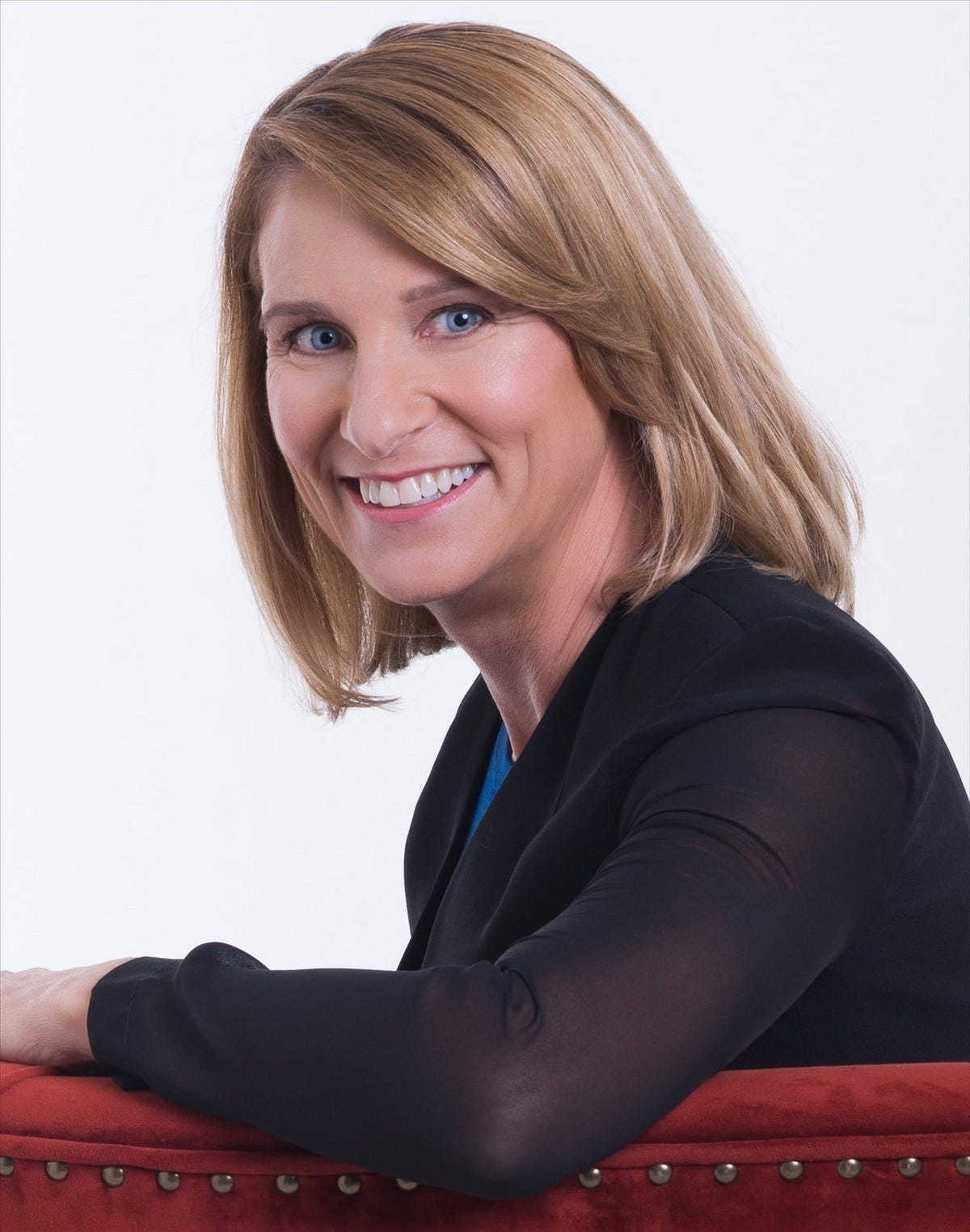
As part of our series about “5 Things I Need To See Before Making A VC Investment” I had the pleasure of interviewing Stephanie Breedlove. Stephanie is co-founder of Care.com HomePay, the nation’s largest and most comprehensive household payroll and tax firm. She is author of All In: How Women Entrepreneurs Can Think Bigger, Build Sustainable Businesses, and Change the World, and is an active angel investor.
Thank you so much for joining us in this interview series! Before we dig in, our readers would like to get to know you a bit. Can you please share with us the “backstory” behind what brought you to this specific career path?
Iam an entrepreneur. I believe it is my calling. This is a big statement given that I leapt into entrepreneurship in 1995 — early in the evolution of women in entrepreneurship and in a time when entrepreneurship wasn’t trendy. After 6 years with Accenture, I left the corporate world to become the first full-time co-founder of Care.com HomePay (previously Breedlove & Associates). We self-funded and were among the fortunate few, as our bootstrap strategies produced growth, scale and leadership. The company is now a part of the Care.com family, playing a vital role in the value offered by the largest marketplace for finding and managing in-home care. Since my exit, I’ve added some new skills: Author of All In — to help women build businesses of scale, and Angel Investor.
Can you share a story of your most successful Angel investment? What was its lesson?
Mentorship is as valuable to entrepreneurship as investment. Your time and expertise make a significant difference in the ability to raise money and to put it to work effectively.
With only 2 years of angel investing under my belt I have yet to experience an exit, and this presents an opportunity to share a different form of success. I was recently a deal lead for an early-stage company raising $500k through Central Texas Angel Network (CTAN). Unfortunately, we raised $250k through CTAN, and $350k was required for an acceptable runway. Outreach to our personal networks was required if the deal was going to make. The founder was “uncomfortable asking her network to give her money,” and our efforts stalled. My job was to shift her mindset that she was actually offering an opportunity to make money, and I engaged at her side as a teammate to increase the probability of success. She is now oversubscribed, largely due to her own stellar efforts and newly-honed fundraising skills. I thought I was teaching her, but it turns out she was teaching me of the profound impact mentorship has on the entrepreneurial ecosystem.
Can you share a story of your Angel funding failure? What was the lesson?
Always adhere to your 5 Things. Don’t let your passion get in the way. Don’t over-prioritize pedigree.
One of my investments has recently failed. This is the nature of angel investing. The risk is high, and failure produces lessons that will enhance your ability to mitigate risk more effectively next time. I have learned that I allowed my passion for the idea to cloud my judgement, and passion-investing is a mistake. I learned that although education and prior experience is important in evaluating a founder, it should not be over-prioritized. There are many other factors that create the ability to make it, and investors need to recognize them. Most importantly, set your core evaluation criteria and do not invest if even one is unmet.
Which person or company do you most admire and why?
USAA is at the top of my list. They have built the foundation of their company on the value of serving a high volume of clients with unparalleled, high-touch service. This is rare, and it is difficult to accomplish. It takes commitment to long-term strategy, development and deployment of training and execution programs, and cultivation of a culture that embraces the value of client satisfaction as central to success. In our current ecosystem of hyper growth and quick exits, USAA stands out as an example of large-scale success and long-term sustained value from doing the hard work to build it right. Companies like USAA are a reminder that allowing for longer horizons and long-term strategies may generate elevated success for investors and new endeavors.
How have you used your success to bring goodness to the world?
I believe that ‘doing well’ enables ‘doing good,’ and I have recently been laser focused on channeling my expertise as a strategy for maximizing the impact of doing good. You know, give of your best talents. In a landscape of 30 million U.S. businesses, there are less than 10,000 women-owned business with over $15M in annual revenue. We are like looking for a needle in a haystack. There should be many more, and economic growth depends upon it. I’ve answered a new calling as an advocate for the progress of women in entrepreneurship. I enjoy efforts focused on systemic change, and I have chosen to pay it forward as an author and angel investor. I’ve written a book, All In, that offers strategies built upon research-based data and transparent sharing of navigating business and societal barriers. Business books are not profitable endeavors, so I have pure hopes that All In helps to fill the gap in lack of female role models, assists in building businesses of scale, and makes a meaningful contribution to smart progress. I am also an angel investor with goals of (1) helping women entrepreneurs to grow skills needed to obtain funding and (2) helping professional women to grow skills needed to become angel investors.
What are your “5 things I need to see before making an Angel Investment.”
I employ a set of business criteria that are a preliminary, high-level litmus test. The litmus test includes: size of opportunity, how well the product or service seizes opportunity, and size of marketplace. If an idea passes the litmus test, I proceed to my “5 Things I Must See to Invest.”
- A core component of the founders’ passion must be rooted in the desire to serve before being served. This means placing a priority on industry, company, clients and team before themselves as a strategy for success.
- Founders must have an intense willingness to do whatever it takes. They must be willing to be the CEO, the janitor, and everything in between. Proof of this is typically exemplified in the early stages by having personal financial investment in the company.
- Founders must display a desire for mitigating risk, rather than taking risk. Good entrepreneurs are problem-solvers, and they usually love it. Successful business development depends on effective problem-solving for mitigating risk.
- Founders must innately prioritize continuous learning. This is a core trait of every successful entrepreneur.
- The founders should demonstrate an understanding that all facets of a business must be prioritized for creating sustained value — finance, operations, efficiency methods, culture, client service, product quality, value-add sales and marketing. The unsexy facets of business are where the magic is made.
We are very blessed that some of the biggest names in Business, VC funding, Sports, and Entertainment read this column. Is there a person in the world, or in the US whom you would love to have a private breakfast or lunch with, and why? He or she might see this. :-)
- Sara Blakely, founder of Spanx. We have much in common as female, bootstrap entrepreneurs who give back to women entrepreneurs. Sara’s level of success is simply astounding, and I’d love to learn from her.
- Ivanka Trump, or the staff member in charge of the Women Entrepreneurs Finance Initiative. Giving to government efforts to craft smart progress for women entrepreneurs would be an honor.
This was really meaningful! Thank you so much for your time.