When I was the Treasurer, our CEO at that time was Stan Lybarger. He asked me to consider moving into the Credit Administration group to transition into a leadership role, as the current leader was moving into retirement.
Business
Stacy Kymes: Why Stepping Out Of Your Comfort Zone Beats Playing It Safe In The Corporate World
BOK Financial COO Stacy Kymes shares how embracing unexpected career shifts, tackling unfamiliar challenges, and prioritizing team collaboration built his path to executive leadership.

As part of our series called “5 Things I Wish Someone Told Me Before I Began Leading My Company” I had the pleasure of interviewing Stacy Kymes.
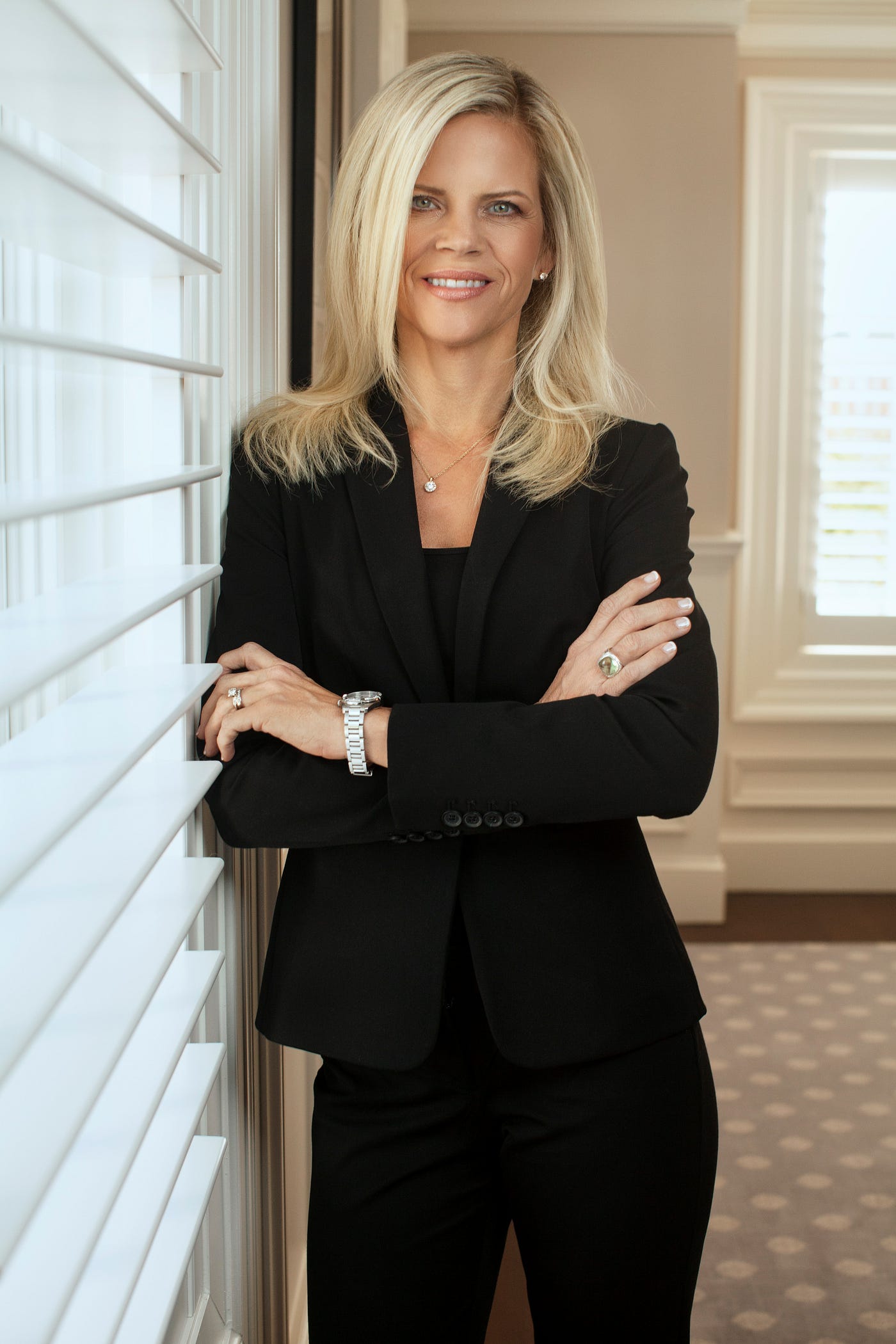
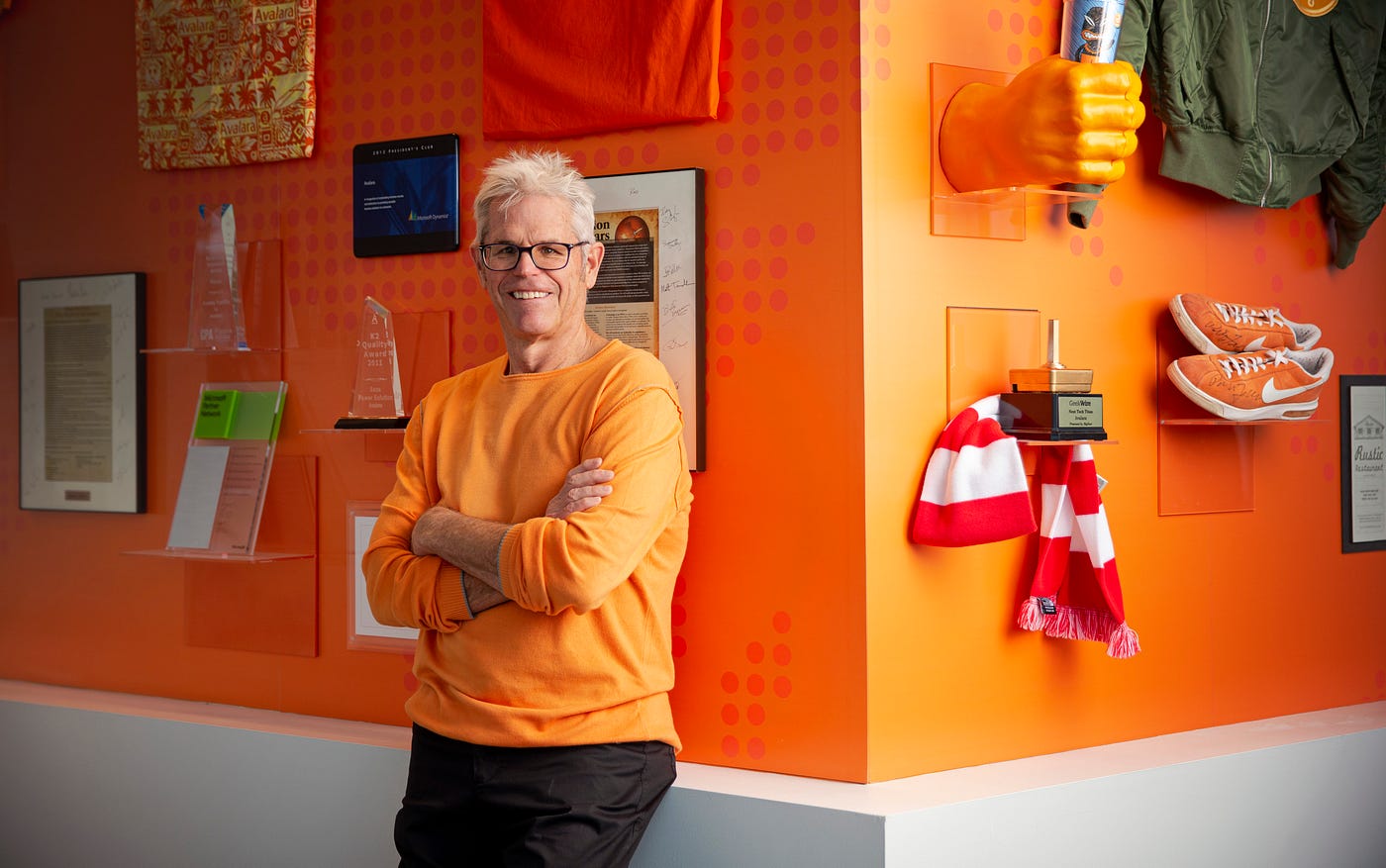
Stacy Kymes is executive vice president, Chief Operating Officer for BOK Financial Corporation. Kymes oversees all of the company’s revenue-generating divisions including the company’s Regional and Commercial banking division, led by Executive Vice President Norm Bagwell; the Consumer banking division, led by Executive Vice President Derek Martin; and the Wealth Management division, led by Executive Vice President Scott Grauer. He also serves as executive vice president over all specialized banking areas, including energy, commercial real estate, healthcare, treasury services, commercial strategies and TransFund.
Prior to his current position, Kymes served as chief credit officer and was responsible for all aspects of credit administration for BOK Financial, including credit approval, policy administration, loan portfolio reporting, loan and appraisal review, and loan workouts.
Kymes joined BOK Financial in 1996 and has held a number of positions in various areas of the company’s finance and credit divisions. He started in internal audit and ultimately served as chief auditor before moving to the corporate controller position. From there, his responsibilities grew to include mergers and acquisitions as well as investor relations.
Thank you so much for joining us in this interview series. Before we dive into our discussion, our readers would love to “get to know you” a bit better. Can you share with us the backstory about what brought you to your specific career path?
I have always had an interest in banking. From the very beginning of my career path in high school and college, I was a teller and learned other parts of a bank’s back-office operations. When I graduated from college and began my career at KPMG, I naturally gravitated toward their financial services group, where I audited banks, thrifts, and credit unions, among others. I always believed that my time as a teller helped me understand the nuances of how a bank operated. After three years at KPMG, I came to BOK Financial as an internal auditor, a phenomenal introduction to learn more about BOK Financial and the entire banking system. I learned that BOK Financial is unique for a regional financial services company. We have a very large and mature wealth management capability and a more extensive mortgage origination and servicing team. That broad foundation auditing diverse areas has helped me enormously as I progressed into the core Accounting and Finance roles like Controller and Treasurer. I ultimately moved to our Credit Administration team, which was well out of my comfort zone at the time. I later moved into the revenue side of the business to lead our specialty commercial industry groups, and now as the Chief Operating Officer for all of our revenue lines.
Can you share the most interesting story that happened to you since you started your career?
When I was the Treasurer, our CEO at that time was Stan Lybarger. He asked me to consider moving into the Credit Administration group to transition into a leadership role, as the current leader was moving into retirement. That leader was extremely successful, and it was so far afield from anything I had even considered myself qualified to do that I actually laughed out loud. I had never even made a car loan, much less the more complex corporate lending we lead for our customers. Stan was a thoughtful leader and mentor and encouraged me to leave my comfort zone. He saw something in me that I did not see in myself at the time. It was an important step in my professional development. I had the opportunity to learn the credit side of banking from a talented team during the aftermath of the Great Recession. The entire industry was impacted; however, BOK Financial had a credit outcome that outperformed most regional banks. I was able to understand how our disciplined approach could lead to outstanding results at a time when many other banks were struggling.
Can you please give us your favorite “Life Lesson Quote”? Do you have a story about how that was relevant in your life?
There is a quote I have seen attributed to Sam Walton that says, “Individuals don’t win. Teams do.” I think that is so true and relevant to my career. The best outcomes are almost always from the best teams who share diverse perspectives and disagree and debate professionally. When we lapse into thinking, “look what I have done,” we really lose perspective, and ego and pride can take hold. I’ve seen that over and over with talented individuals who fail to recognize how vital teammates are to our success. As leaders, if we focus too much on individuals, it ultimately can cloud decision-making. What if, as a result of my decision, a strong revenue-producer leaves? Do you believe in the power of the individual or the team? You need talented people around you to be successful, but if they cannot collaborate and work well as part of a team, they cannot be successful long-term in most industries.
Is there a particular book that made a significant impact on your leadership style? Can you share a story or an example of that?
One of the books I have shared with my team and many of my teammates at BOK Financial is “Grit — The Power of Passion and Perseverance” by Angela Duckworth. The author does an extraordinary job describing how intellect and natural ability are not nearly the predictors of “success” that grit can be. What we do is often difficult. Sales often results in many “no’s” before we get to “yes.” Do we have passion for what we do? Can we persevere through adversity? I think the ideas conveyed have enormous relevance.
I would also be remiss not to point out the North Carolina Women’s Soccer Team Core Values by Anson Dorrance. What a rich and deep set of values that I often find myself going back to for reinforcement personally. It is a powerful roadmap for professional and life skills that we can all utilize to improve our roles and character.
What do you think makes your company stand out? Can you share a story?
I might focus on a couple of core areas where BOK Financial is differentiated. First, we are a public company but have a majority shareholder in George Kaiser who is deeply committed to philanthropy within our communities. His majority ownership allows us to think longer-term and be less focused on meeting analyst estimates for the next quarter. Not that meeting other shareholders and analysts’ expectations is unimportant, but having the latitude to think about long-term returns is critical to our success. We have some business lines that create strong economic returns over time and economic cycles but can have real earnings volatility in the short term. Many would eschew the near-term volatility and miss the underlying core economics.
The second area we are different is our culture. It has been said many times that a great culture is much better than a great strategy. Both are important, but how we achieve success matters a great deal. BOK Financial has a culture that puts our customers at the center and is highly collaborative as we share success. We define success for ourselves when the customer does well. We respect other perspectives because we have the same ultimate objective. I think one of the greatest leadership strengths of our CEO, Steve Bradshaw, is how he has shaped and encouraged the culture we have today.
The road to success is hard and requires tremendous dedication. This question is obviously a big one, but what advice would you give to a young person who aspires to follow in your footsteps and emulate your success?
I often mention to new employees in our training program we call the “Accelerated Career Track” that the most important thing you can do to get the next opportunity is to perform at a high level in your current role. When you are too focused on the next promotion, it is easy to lose sight of the job at hand. I think career development plans and roadmaps can be important, but they are not relevant if you don’t perform well in your current role. We also talk about careers today as more of a lattice than a ladder. You may need to step backward or sideways to learn a new skill to broaden your experience to progress.
Often leaders are asked to share the best advice they received. But let’s reverse the question. Can you share a story about advice you’ve received that you now wish you never followed?
I cannot recall bad advice I was given and followed. I do think people are often advised to choose a vocation or change jobs based solely on monetary considerations. That is such a short-sighted view. Strong trees have deep roots, and consistently chasing the most salary does not allow you to develop deep roots. Choose a vocation that you enjoy and be patient in your career.
You are a successful business leader. Which three character traits do you think were most instrumental to your success? Can you please share a story or example for each?
- Be a good teammate and collaborator and respect the roles of your team. I will never forget that early in my career, I was invited to an audit planning meeting by an audit partner who became a mentor to me. I really had nothing constructive to add to that meeting at that stage of my career, but the fact that I was asked to participate really vested me in the success of that engagement and granted me more ownership in the successful outcome than I otherwise would have felt. On a different engagement that was large in scope and time, I was surprised to receive a handwritten note thanking me for my contribution. Such an authentic expression of gratitude was very motivating.
- Willingness to work hard. I often worry that hard work has been replaced by “work smarter, not harder” culture, while “hard work” is perceived negatively. No one wants to be part of a corporate culture that takes advantage of people, but hard work is how we learn and differentiate ourselves. I tell my kids that no matter what they do, there will be people smarter than they are, and that is ok. You can differentiate yourself if you can work well as part of a team and if you are willing to work hard.
- Be willing to be uncomfortable. I am 50 years old and taking tennis lessons for the first time. It feels awkward, and I don’t look polished like others I see. Sometimes it is even embarrassing. I am grateful that I was willing to get out of my comfort zone at critical points in my career and had to learn a new skill from others. There were days it felt just like that tennis lesson — awkward and even embarrassing. For me, the period of the most professional growth is when you struggle and can learn and grow from that experience.
Ok, thank you for that. Let’s now jump to the primary focus of our interview. Most of our readers — in fact, most people — think they have a pretty good idea of what a C-Suite executive does. But in just a few words can you explain what a C-Level executive does that is different from the responsibilities of other leaders?
I am not sure that leadership changes at the C-level. It is not a light switch that is turned on when you are promoted to that level. The same qualities that help you attain a C-level role will also likely enable your continued success. What changes is the nature and magnitude of the decisions you might make. The easier decisions are made well before they get to you. Most of the decisions are closer calls, and you have to ensure your energy and that of your team is to make it the right decision. Once I was deciding on something as a teenager that seemed a 50–50 call, my dad offered his advice to “make whatever you decide the right decision.” I think that is still good counsel today. Your decisions can have a greater impact on others, and that sense is different at the C-level. In the end, though, using the C-level business card to lead differently than what earned you the opportunity is not a recipe for success.
What are the “myths” that you would like to dispel about being a CEO or executive? Can you explain what you mean?
I have heard people talk about being on an island as an executive. I have never felt that way. We are a team, and in the end, I may be the one to make a final decision, but it is based on thoughtful input and hopefully even some professional debate among my team to ensure we have considered all the ramifications. We share success and failure. You cannot allow yourself to get isolated as an executive; otherwise, you will quickly lose touch with the “real world” and “real people.”
Another “myth” to me is that the leader or executive cannot be friends with people because he or she may have to make a hard decision later. Some of my very best friends are people throughout BOK Financial. I think authentic relationships only enhance your leadership role; relationships are not a detractor. I believe coaching is better received when the recipient knows you only want to help them get better and improve. When you know someone cares about you, it is much easier to receive coaching because you know the coach’s motives are pure and sincere.
What are the most common leadership mistakes you have seen C-Suite leaders make when they start leading a new team? What can be done to avoid those errors?
The most common mistake I see is a new leader’s failure to surround himself or herself with talent. The first move from an individual contributor to a leader is the hardest, in my view. It requires a high level of self-confidence to believe that surrounding yourself with talent only improves your career prospects. Many may begin to feel threatened and vulnerable because if someone else can do the job, they may not be needed. It is really quite the opposite; if you can demonstrate an ability to attract and retain a talented team, the leader has become infinitely more valuable and can begin to scale into additional responsibilities. If you don’t surround yourself with talent and try to compensate by doing more yourself — you’ll drown and never have the scale or ability to do more.
Another common mistake is decision paralysis. The fear of making the wrong decision paralyzes you, and the leader then struggles to make a decision. You continuously need more data and can’t ever seem to quite get to the decision. You see this in times of business adversity. The pressure can paralyze decision-making at the very time quick and decisive action is most needed.
I think you have to look around the room, and if you think you are the smartest person in the room, that is a problem on many levels. I want to ensure I have the most talented team around me. You have to be willing to make decisions based on the best information you have available. Mistakes derived from well-reasoned efforts to grow and progress are different than those from inattention and failed oversight.
In your experience, which aspect of running a company tends to be most underestimated? Can you explain or give an example?
For me, it is the time demands. How do you ensure you own your time and your calendar? Generally, the demands on your time are all for “good things,” but how do you use the scarce resource of time to focus on the “best things?” As an example, I think broad mentorship programs are the lifeblood of professional development and sustaining culture. I have been positively impacted by strong mentors and want to pay that forward; however, if I did that all the time, it would squeeze out other time demands that are also very important. I am constantly seeking to find the balance between access, visibility, and “am I the best person for this time that is being requested of me?”
Ok super. Here is the main question of our interview. What are your “5 Things I Wish Someone Told Me Before I Began Leading From the C-Suite”? Please share a story or an example for each.
As I mentioned before, I have not found a C-Suite leadership role to be like a light switch that is turned on and off. By the time you are in a leadership role from the C-suite, you are a product of your collective experience and develop a philosophy that you believe is critical to follow for success. What follows for me are five things I find most critical for leading over time:
- Do the right thing all the time. Too often, leaders attempt to manage to the least difficult consequences of a decision instead of focusing on making the right decision. There is nothing wrong with understanding the implications of a decision and being prepared, but the driver of the decision should be what is right and not what is easiest. Decision-making really crystalizes when viewed through that lens.
- Value people. We have to strive always to hire the best talent when an opportunity arises. I challenge myself continually to be a good listener and ensure people are confident and comfortable sharing challenges. How can I coach and lead if I don’t know the roadblocks that may exist? Doris Kearns Goodwin is such an extraordinary author and presidential historian. She wrote, “Good leadership requires you to surround yourself with people of diverse perspectives who can disagree with you without fear of retaliation.” People will perform at a higher level when they are confident and don’t allow fear of failing or being ridiculed for failure to paralyze them. I use the term “one team” often because we will sustain success as a team. Individuals can come and go over time, but it is a team that can sustain success.
- Play to win and be dissatisfied when you lose. As a leader, you have to define for your team what “winning” is for them. It is not the same for every group or every team, but people should know what it is like to win. There are no shortcuts, and there is a reason this is number 3 and not number 1 on the list. This often means we must be willing to make hard decisions around people, processes, products, etc. It can also mean being careful not to allow things to distract us from our mission. I also think this relates back to people because it has been my experience that winning players want to be on a winning team. This is critical to attracting and retaining talent over time.
- Be accountable personally and hold our teams accountable for results. As leaders, we have to communicate clear expectations, provide appropriate resources, and hold people accountable. Often those first two are easier than the difficult coaching that can be part of holding people accountable. That is a big part of why we have to value people so that when you have a difficult conversation, your teammate understands your motivation is to help them be their best.
- Be full of grit. Achievement is not easy and can be a grind. Finishing is the hardest thing we do. We leave the most unpleasant tasks to the end, or the things that are hardest to accomplish are the final punch list. We have to be strong finishers. We have to be resilient when we fail and keep trying.
In your opinion, what are a few ways that executives can help to create a fantastic work culture? Can you share a story or an example?
I think providing a culture that allows people to be confident and not fear failure is really important. I always think about when I played basketball in high school. If I was worried that if I missed a shot or turned the ball over, I would be benched. As a result, I played stiff and was more likely to make a mistake. If my coach encouraged me to keep shooting after a missed shot or otherwise encouraged me after a mistake, I played more confidently, and whatever limited natural ability I had was able to surface. If we have hired talented people and give them confidence, it has been my experience their natural abilities will also surface, and they will exceed your expectations.
You are a person of great influence. If you could start a movement that would bring the most amount of good to the most amount of people, what would that be? You never know what your idea can trigger. :-)
I am happy to work hard to make sure the small part of the world I live in is a better place. BOK Financial has long invested in our communities to show we can do well for shareholders and do well for our communities. If we could somehow reintroduce mutual respect back into our domestic culture, that would be a good thing. Professional challenge and diverse ideas are expected and applauded in the business world. If we could somehow turn down the vitriol in our society and introduce greater respect for those whose opinions may be different than our own, I think we could do a lot of good.
How can our readers further follow you online?
https://www.linkedin.com/in/stacy-kymes-718460b6
Thank you for the time you spent sharing these fantastic insights. We wish you only continued success in your great work!
PP
Written by
Parveen Panwar
Mr. Activated · Authority Magazine ColumnistAuthority Magazine Columnist & Contributor

Published inAuthority MagazineTop Lessons, Top Authorities · 42K Followers
Exclusive, curated interviews with the leaders and changemakers shaping tomorrow. Leadership lessons, industry deep dives, and executive profiles.