
Have the right team. Over the last few years, my leadership style has undergone a transformation. I listen a lot more than I used to. I trust people a lot more as well. Back when I was young, that didn’t seem so important. I believe now more than ever in the importance of subject matter experts: if an area is your expertise, then I’m going to value your opinions on it, rather than think I know better.
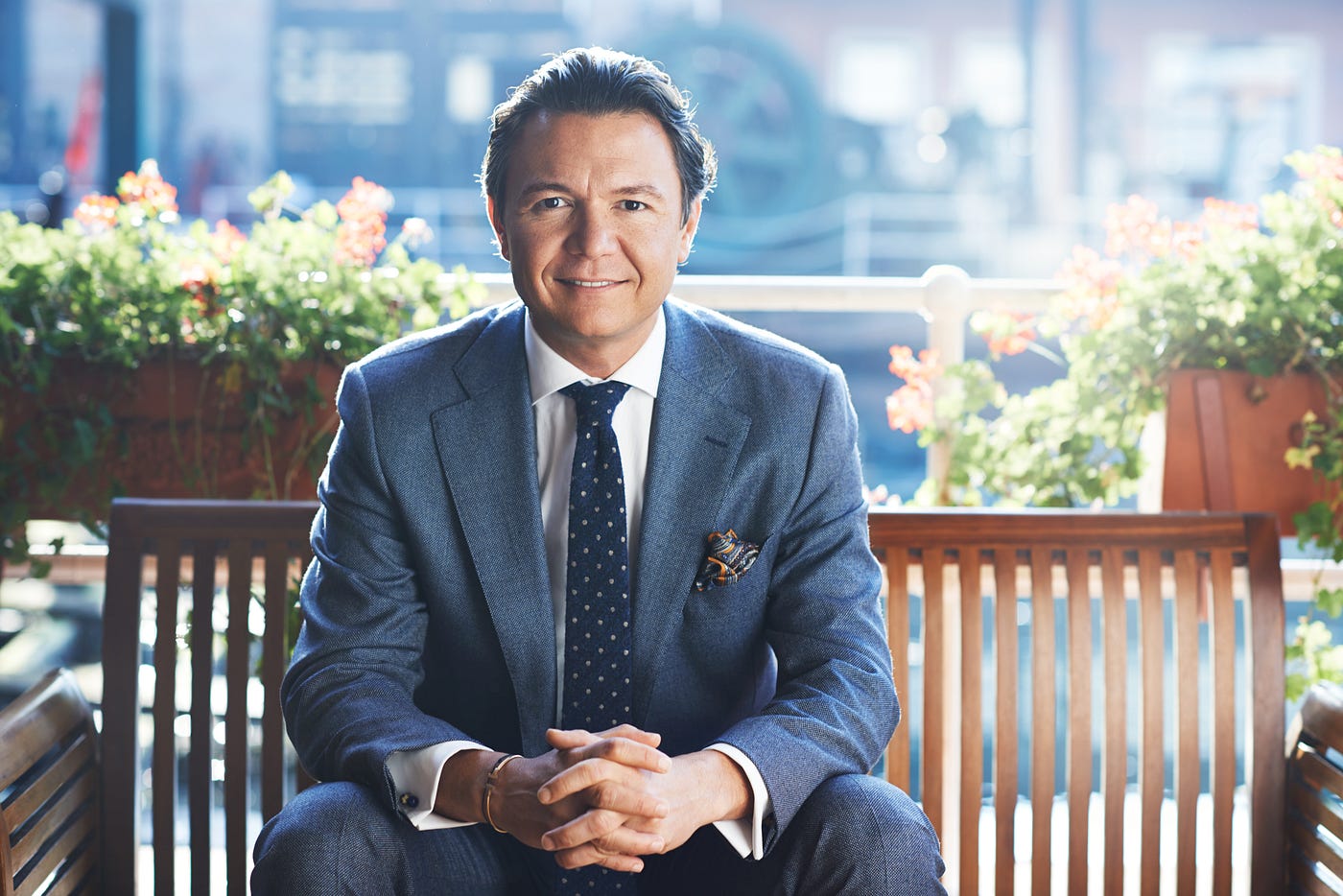
As part of my series about “individuals and organizations making an important social impact”, I had the pleasure of interviewing Hakan Bulgurlu.
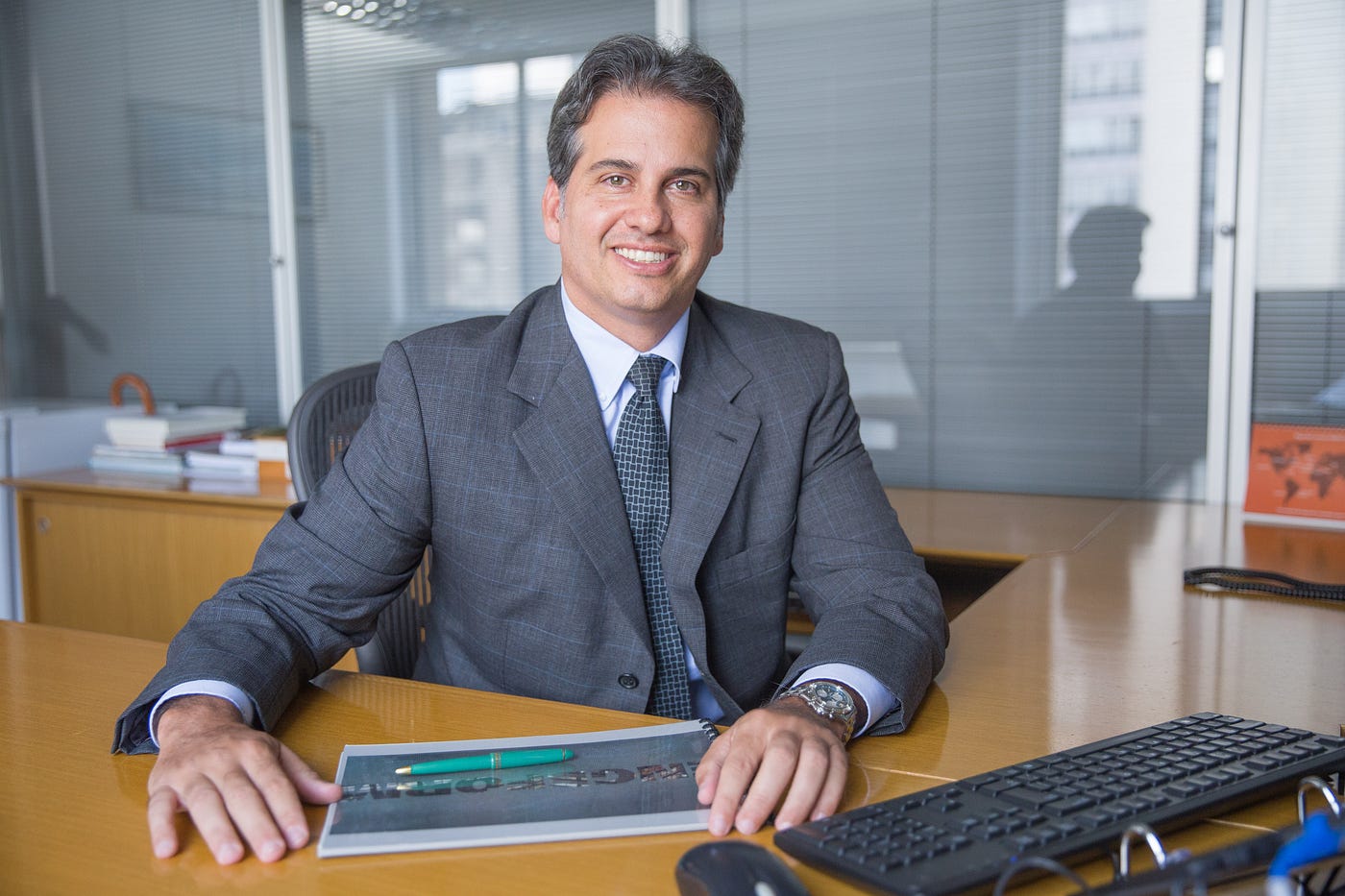
Hakan Bulgurlu is the CEO of Arçelik, a global home appliances company. A YPO member and a 2021 YPO Global Impact Award honoree, Bulgurlu is a leading voice for sustainability in the industry. As an environmentalist, Bulgurlu climbed Everest in 2019 in a bid to raise awareness on climate change.
Thank you so much for joining us in this interview series! Can you tell us a story about what brought you to this specific career path?
I had a multi-faceted upbringing, particularly by my archeologist and environmentalist mother who was a great inspiration and a father who was a successful business leader. These two strong figures shaped most of my values. Earlier in my career, I had the opportunity to work overseas, get to know different cultures in China and Hong Kong, and earned a great deal of experience for doing business in competitive international business hubs. This shaped my perspective of life and helped me become an ambitious and passionate person who is willing to take risks to make an impact.
I was lucky to enough to experience life and education on various global locations — and soon after I got my start with the Koç Group, a Fortune 500 company. My journey took various forms within the group. Today, leading an organization with a global footprint keeps me driven. It also allows me to pursue my sustainability vision and to make an impact in an otherwise slow-to-change industry.
Can you share the most interesting story that happened to you since you began leading your company or organization?
When I was assigned to my first job in Hong Kong, I knew nobody and had no friends. I remember, on one of those early days, I just walked up to a young woman and said, “Hey, I don’t know anybody around here.” I was 21 years old.
She turned out to be a trustable friend in social circles, which opened doors for me. That experience proved to me something I always believed in — you have to widen your network to make things happen. Things will not come to you if you stand around, waiting. If you want to get far, professionally, you can’t be shy or frightened.
This is a small instance, but it taught me that building a network is a key strategy for success. I have applied that to all areas of my life — including my business and my sustainability efforts — and I am still riding on the wave of a strong network of professionals and friends. The world is filled with people with good intentions and right connections. You have to move; you have to talk to people, ask the right questions and join your forces to make an impact.
Can you share a story about the funniest mistake you made when you were first starting? Can you tell us what lesson you learned from that?
During one of my first experiences when I arrived in China, I arrived at a five-star hotel, which was very modern. I was playing billiards in the sports bar. I wanted a cold beer, but I didn’t speak Chinese, so I tried everything to ask for one. I was convinced that I got my point across. Towards the end of the game, I got this beer: what had happened was that they had misunderstood and instead boiled the beer. It was so hot that you couldn’t touch the can, and when we did, it exploded.
This little mayhem taught me the necessity of communication. From then on, I paid attention to and prioritized communication as a star to every demand, every employee engagement.
Can you describe how you or your organization is making a significant social impact?
Sustainability has been in Arçelik’s agenda for some time now, but the total incorporation began with our, “Respecting the World, Respected Worldwide” vision. We have made it our priority to facilitate a transformation for ourselves and our industry — a transformation that calls for a better understanding and improvement of the environmental impact of our production, products and services for the good of the planet.
Our leading efforts have been recognized by multiple international organizations, and we are the Industrial Leader in Dow Jones’ Sustainability Index. We have the unique position of being recognized as the most sustainable home appliances company in the world.
This journey hasn’t always been easy. It takes incredible commitment on a corporate level to reinstate the culture in a more sustainable fashion, to encourage our consumers and colleagues to commit to a better future.
One of the key aspects of our transformation was the ambitious targets we set for ourselves early on. We shifted quickly from a “business as usual” standpoint to a driven, socially and environmentally conscious new model of business. We became carbon-neutral in our global manufacturing operations in 2019 and 2020. Our science-based targets have already been approved in line with the Paris Agreement’s goal of limiting global temperatures well below 2 degrees. We are currently working on how to expand those targets and how to push ourselves further.
We are a purpose-driven company, and we aim to create social and environmental value for all our stakeholders. We are leading various initiatives with a broad impact potential: from food waste to child obesity. from access to sustainable energy to diversity and gender equality.
Can you tell us a story about a particular individual who was impacted or helped by your cause?
Leading a globally connected company, you get a chance to lead initiatives that impact multitudes. But outside of that, I also work, within my means, to provide relief and support to vulnerable communities. A few years back, I led an initiative that provides aid to Syrian refugee children — supporting their physical and mental well-being. We built playgrounds in camps, provided winterwear and worked with an NGO to support their STEM education with science-kits. These are small steps compared to the gravity of the problem, but each small step counts.
Are there three things the community/society/politicians can do to help you address the root of the problem you are trying to solve?
Through our company efforts, we have been forcing a change in our industry, but true, meaningful change requires joint efforts by both business leaders and by governmental bodies.
We have to rewrite the concept of consumption and create innovative, new ways to not only control our footprint during production, but also during the user phase of our products. The business world needs to do what it can to take on the responsibility of carbon emissions rather than passing it on to the user.
All political and business players need to start making climate change a priority. We are seeing great examples of this with increased net-zero targets from several countries, but that is not enough. Becoming carbon-neutral in 2050 is too late. We need action, now. There are effective mechanisms like carbon pricing and stronger regulations that can work to limit the devastating impact we are leaving on the planet.
As for the society, I believe the more we as parents, role models, families and teachers are aware of the climate crisis, the more our children will be as well. Each day, millions and millions more are joining the work force and becoming homeowners; more appliances are bought; more energy is used. We have to educate and inform the next generations. Thankfully, the youth is much more aware of the climate crisis, and this gives me hope.
How do you define “Leadership”? Can you explain what you mean or give an example?
As new challenges arise, communities are looking for people who are willing to take them on. We are witnessing a change in the perspective of leadership. Global organizations are distancing themselves from the dominant, star CEOs of the past, and instead, with the changing qualities of the new generations, they are positioning themselves towards what has come to be known as “servant” leaders.
A “servant” leader focuses on the goal to serve others and works for the growth and well-being of people and the communities that they are a part of. I find this school of leadership the closest to my vision, and the most effective, in terms of results.
The up-and-coming generations, equipped with the awareness of a hyper-connected world, choose to follow leaders that are committed to the urgencies of our time: climate change, gender inequalities and social injustice.
The leader of today is expected to be on the right side of history. To create value in an economic and technological sense is no longer enough; leaders are expected to create value for their communities and for the planet. A true leader today needs to be communicative, collaborative and understanding.
Leadership takes many different shapes — we are seeing a strong wave of young climate activists, seasoned politicians like Germany’s Angela Merkel, and courageous leaders like New Zealand’s Jacinda Ardern, or the Patriarch Bartholomew, the spiritual leader of the Eastern Orthodox Christians worldwide. All these people have leadership qualities that I admire and respect.
What are your “5 things I wish someone told me when I first started” and why. Please share a story or example for each.
Well, there are some major life lessons I wish I knew when I was younger.
You are what your network is. I always believed in building strong, effective connections both in my personal and professional life. You should always be open to new ideas, and the quickest way to get there is to be communicative and collaborative.
Open communication is key. If someone had told me at an earlier to stage the importance of communication in leadership, I would have had a much easier time. You could be the greatest idea man there is — but if you cannot communicate those ideas to your teams and to your public, this will keep you from running ahead in the race.
Have the right team. Over the last few years, my leadership style has undergone a transformation. I listen a lot more than I used to. I trust people a lot more as well. Back when I was young, that didn’t seem so important. I believe now more than ever in the importance of subject matter experts: if an area is your expertise, then I’m going to value your opinions on it, rather than think I know better.
I think a key lesson to us all — help the planet. COVID nearly destroyed us, and that was so small in scale compared to what’s coming with the climate crisis. I wish I had gone on to this journey much sooner — it is vital for us to teach the young about climate risks. We should all be better informed about sustainability, about preserving our resources and about ways to limit our impact. This will not only save the planet but help your well-being and your business to flourish.
And finally — cherish your family. I used to be a non-stop workaholic. It took me a lot of lost time with my loved ones to understand the importance of setting aside time for you family and friends. I am particularly very in tune with my children’s needs because I know these days of their youth will never come back.
You are a person of enormous influence. If you could inspire a movement that would bring the most amount of good to the most amount of people, what would that be? You never know what your idea can trigger. :-)
Anything to help the environment is a worthy cause to me.
The upside to being in charge to a global mammoth of a company is that your influence could bring in meaningful change. At Arçelik, we try every day to make our products more energy efficient and our production lines more environmentally friendly. We are part of people’s lives, and each product we improve has the potential to make that household more sustainable.
The populations of emerging markets are vastly increasing. The energy use in these countries will continue to increase, exponentially. Arçelik is a significant player in these regions, so we are trying to transform these markets to help lessen their negative impact on the planet.
I’d like to think that is a movement worth being a part of. My favorite part about it is that we do not speak of plans and ideals, but actions. We are leading these markets in a green transformation — we are providing experience and information, we are working on regulations where they are missing, and we are creating a structural shift.
I also embrace it as a personal mission to do everything in my power to raise awareness on climate change.
Can you please give us your favorite “Life Lesson Quote”? Can you share how that was relevant to you in your life?
I don’t have a specific life lesson quote, but I do have a poem that carries great significance for me. There is a poem called, “The Man Inin The Glass,” by Peter Dale Wimbrow Sr., which basically says that whatever you do in life, you can’t trick yourself. Others can praise or criticize you, but your key responsibility should be to uphold your own personal integrity. My favorite line in the poem is the one that goes: “The fellow whose verdict counts most in your life/ Is the one staring back from the glass.”
Is there a person in the world, or in the US with whom you would like to have a private breakfast or lunch with, and why? He or she might just see this, especially if we tag them. :-)
Bill Gates, definitely. Gates is the perfect combination of business success and social value. He has transformed his tech wonder persona to one of philanthropy and social efforts. He tackles on the climate issue on all fronts — he works to raise awareness, to fund and endorse new technologies, to encourage international efforts. It would be a pleasure to pick his brain on his climate agenda.
How can our readers follow you on social media?
I use my platforms in service of the causes I believe in. I am active on all big social media platforms. Here are the handles:
This was very meaningful, thank you so much. We wish you only continued success on your great work!