A thought leader is an idea that an entity or a person is a trusted, go-to resource designed to affirm or inspire a new understanding.
Business
Ryan Commerson of Sorenson Communications: Why Thought Leadership Requires Generating Paradigm Shifts Rather Than Merely Influencing
Director of Marketing Ryan Commerson shares how deep passion, continuous adaptation, and meaningful societal paradigm shifts are the true foundations of enduring industry leadership.

As part of our series about how to become known as a thought leader in your industry, I had the pleasure of interviewing Ryan Commerson.
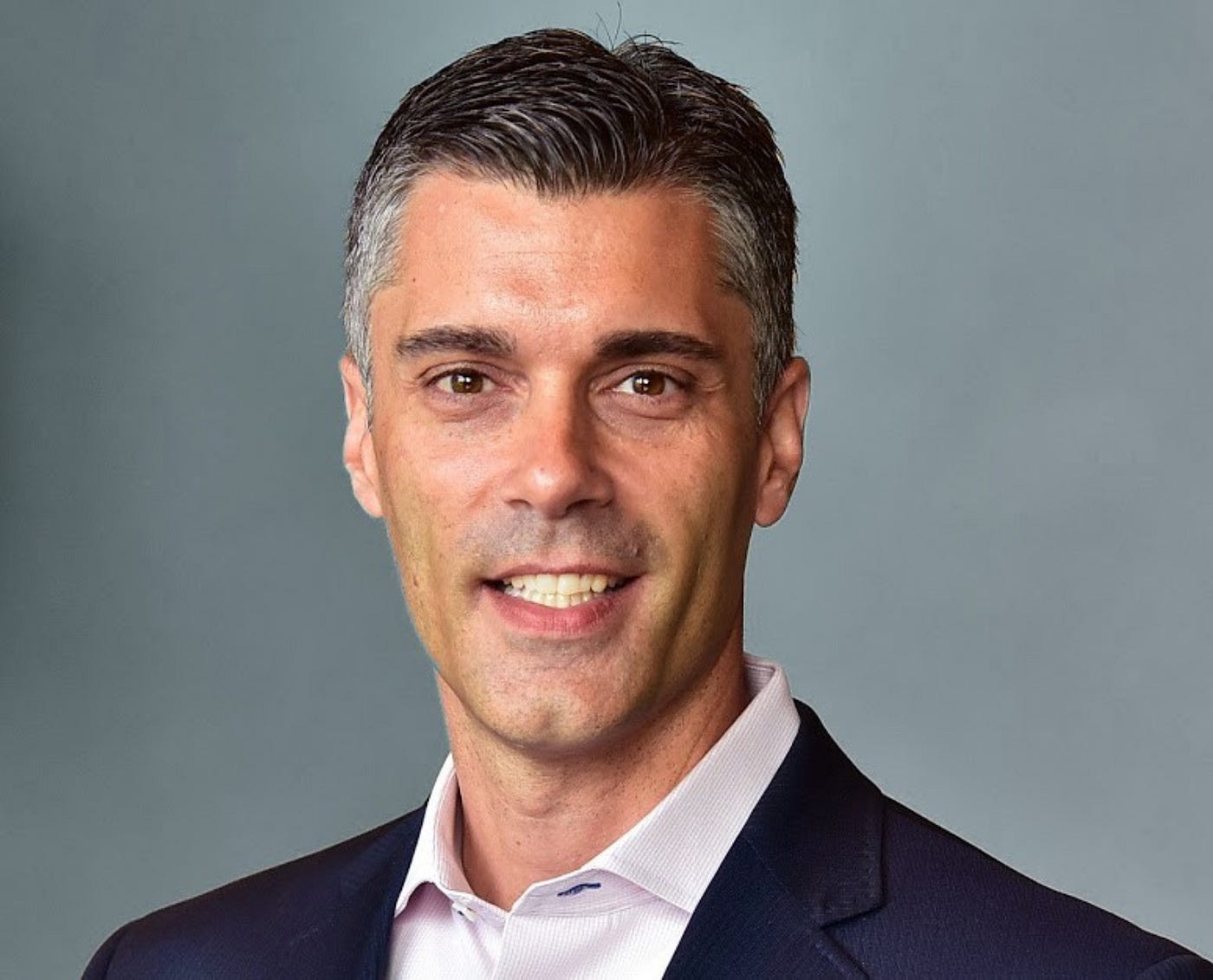
Ryan Commerson, Director of Marketing for Sorenson Communications, resides in Colorado Springs, CO. When he is not working, he is out in the mountains climbing, running, or biking. Every day, he strategizes a variety of ways to re-define what it means to be human and transform the perception of Deaf people.
Thank you so much for doing this with us! Our readers would love to “get to know you” a bit better. Can you share your “backstory” with us?
I was born into a hearing family, which means I am the only Deaf person in the family. My mom, dad, brother, and sister all learned American Sign Language (ASL). My mother got me started learning ASL at four months old when she started taking ASL classes at a local university. At the onset, I developed bilingually, learning ASL and written English simultaneously. My father is a retired U.S. Marine, high school teacher, and coach of more than 30 years. My brother, now deceased, was a high school AP Physics teacher. My sister is a 3rd grade teacher. And my mother, now deceased, was the smartest of us all. A family of educators, we value self-discipline, learning and critical thinking. Growing up, I would ask “why” frequently, and it drove my mother crazy.
Before learning to walk, I ran first. My parents found me on the neighbor’s roof when I was two years old. With an abundance of energy and curiosity, the world was one big playground, and I explored extensively. Both of my parents encouraged us siblings to explore and pursue understanding. My sister traveled to Europe for one month solo. My brother went on a road trip for 90 days and ate salmon straight from the creek in Alaska for a week.
Early on, I understood that I belonged, but I have had to contend with daily messaging that I did not. Messages like: “You are deaf. Accept it. Life was not built for people like you, and you will spend a lifetime dealing with challenges. This is your life. You are smart and strong. Figure it out.” My mother told me this at age 10.
Naturally, fueled by the internal fires, I became an activist at a young age. The world does not exist outside of the mind. We each created the world, thus, we each are the world. I realized and understood that if I wanted the world to change then I must first change myself. When our internal change manifests, the world changes. People and the world are one and the same.
Can you briefly share with our readers why you are an authority about the topic of thought leadership?
Because I think. A lot. I’m not sure I’d call myself an “authority” because the idea of authority is all about perception. If I am perceived to have authority, it is only because of the readers. And leadership is about leading with a vision. If nobody pays attention to my thoughts, then the idea of authority and leadership becomes moot. I have produced a body of work in written English and in American Sign Language (by way of videos), and they are shared publicly across a variety of platforms.
Can you share the most interesting story that happened to you since you started your career?
I grew up. The fastest way to grow up is to start a career. The life of a professional means being responsible and accountable for your ideas and words, for the people you work with, and contributing in meaningful ways to the vision and ideals of the company you signed up for. When I started working, I immediately saw the impact of my words and actions, both good and bad. Impact is constant, whether you are conscious of it or not. The more self-aware you become (more mature), the more positive impact as a result.
Can you share a story about the funniest mistake you made when you were first starting? Can you tell us what lesson you learned from that?
I can’t remember the specifics but when I was in an executive meeting, I was a little nervous and signing at a lightning speed so the ASL interpreters were having a very hard time keeping up — they misunderstood a word I was fingerspelling and that caused a confusion in the room. Immediately, I knew I messed up and asked the interpreter what they thought I spelled. Not even close. I was embarrassed and slowed down my signing. Everyone was a good sport about it, but I learned rather quickly that it was necessary for me to work on my confidence, to come to the meeting more prepared, and most importantly, to slow down my signing so the interpreters can do their job well.
Ok, thank you for that. Let’s now jump to the main focus of our interview. In a nutshell, how would you define what a ‘Thought Leader’ is? How is a thought leader different from a typical leader? How is a thought leader different from an influencer?
A thought leader is an idea that an entity or a person is a trusted, go-to resource designed to affirm or inspire a new understanding. A typical leader can be anyone with influence and doesn’t necessarily inspire transformation. An influencer moves with a deliberate intent to influence. While a thought leader hopes to influence, it is not the core driving force. A thought leader strives to generate paradigm shifts to advance societies.
Can you talk to our readers a bit about the benefits of becoming a thought leader? Why do you think it is worthwhile to invest resources and energy into this?
When you (or an entity) become a thought leader, you become more aware of your mind (or an entity of its vision and purpose) and how it is constantly changing due to elements all around you. You will inevitably realize that change is constant — so it begs the question: If change is constant, what is the direction you want it to go? Because change will happen regardless of your participation.
Let’s talk about business opportunities specifically. Can you share a few examples of how thought leadership can help a business grow or create lucrative opportunities?
Just take a look at the companies that refuse to evolve; they die out. Those that are open to new ideas thrive. Companies must continually adapt and innovate to stay relevant. Adobe is a great example. The company flourished because it knew when it was time to adapt. Adobe not only makes great products, but it also evolved quickly into cloud-based company and became a thought leader (trusted resource) for creating beautiful art.
Ok. Now that we have that behind us, we’d love to hear your thoughts about how to eventually become a thought leader. Can you share 5 strategies that a person should implement to become known as a thought leader in their industry? Please tell us a story or example (ideally from your own experience) for each.
For decades, I wanted to understand why the Deaf Education system was abysmal. I also wanted to know why there is a high unemployment and illiteracy rate among Deaf people, and even with all the latest research demonstrating Deaf people’s worth, the community remained stuck in a cycle. It is something I am passionate about, so I have given this many hours of thought. I’ve read literature on it. I’ve interviewed experts on it. And slowly, bit by bit, I began to detect patterns and started to put together theories and test them out against case studies of other marginalized communities, such as the LGBTQ community. Eventually, I formulated constructive thoughts and made sense of them. The strategy is straightforward:
- Pick an idea that is important to you. You’ll be spending a lot of time on it, so it needs to be something that’ll keep you engaged for a very long time.
- Dissect it, put it back together, dissect it again, and then package it.
- Determine a medium (I picked filmmaking because of my language and audience. American Sign Language is best captured via motion picture)
- Break down your package into parts and make them digestible for your chosen audience.
- Record it and disseminate. And repeat. If you do it once, you’re competing with a cacophony of noise. A leader is expected to be consistent and maintain the vision — so, as a thought leader, you need to keep on sharing your ideas until they take hold in the mainstream.
In your opinion, who is an example of someone who has done a fantastic job as a thought leader? Which specific things have impressed you about that person? What lessons can we learn from this person’s approach?
To name a few: Simon Sinek, Brene Brown, and Dave Chappelle. They made their seemingly simple thoughts digestible and yet they are so profound that you cannot see yourself and the world the same way again. Do not insult the intelligence of your audience. Trust that if you articulate your thoughts and intentions to the best of your ability, with sincerity, your audience will “get you” regardless of your register. Simon talked about the why of the businesses. Brene talked about the power of vulnerability. Dave delivered punch lines about social issues. Use simplicity, wit, or amazingly nuanced and crude humor to get your point across. The sky is the limit.
I have seen some discussion that the term “thought leader” is trite, overused, and should be avoided. What is your feeling about this?
That can be said about a lot of concepts. Ignore and move on. “Thought leader” is only as valuable as we all make it out to be. It’s up to us thinkers to add to it.
What advice would you give to other leaders to thrive and avoid burnout?
Don’t worry about being burned out. It’ll happen anyway. But the good news? When you’re inspired again, you’re up and shouting to the skies. Stay fluid. Avoid dogma. Embrace learning and the pains of growing.
You are a person of enormous influence. If you could inspire a movement that would bring the most amount of good to the most amount of people, what would that be? You never know what your idea can trigger.
I propose that humanity can be fundamentally improved if everyone learned sign language. It is my aim that all people of the world signs. It changes the structure of your brain, making it healthier, and because it requires eye or physical contact, we end up being more connected than ever. Isn’t that what is missing from our lives?
Can you please give us your favorite “Life Lesson Quote”? Can you share how that was relevant to you in your life?
The world does not exist outside of your mind. You are it. You are the world. When you transform, the world changes. Do not underestimate your power and your value.
We are blessed that very prominent leaders in business and entertainment read this column. Is there a person in the world with whom you would like to have lunch or breakfast? He or she might just see this, especially if we tag them. :-)
There are so many people I’d love to have breakfast with but for now, I’ll start with Dr. George Lakoff.
How can our readers further follow your work online?
Google is the best tool ever! Or, try www.ryancommerson.com and www.sorenson.com.
Thank you so much for your insights. This was very insightful and meaningful.
AM
Written by
Authority Magazine Editorial Team
Columnist & ContributorAuthority Magazine Columnist & Contributor

Published inAuthority MagazineTop Lessons, Top Authorities · 42K Followers
Exclusive, curated interviews with the leaders and changemakers shaping tomorrow. Leadership lessons, industry deep dives, and executive profiles.