Let’s jump to the core of our discussion. This is probably intuitive to many, but it would be beneficial to spell it out. Based on your experience or research, can you flesh out why not spending time with your children can be detrimental to their development?
The relationship with their parents is where children learn how to love and trust, and not spending time to build that relationship creates a level of insecurity in a child. In that parent-child relationship, children receive the reassurance that they are loved and experience the feeling of unconditional love. Through their parents’ examples, children learn how to build trusting relationships with others outside their family. I have seen examples where children do not experience that close bond with their parents, and it affects their ability to trust others and build relationships.
On the flip side, can you give a few reasons or examples about why it is so important to make time to spend with your children?
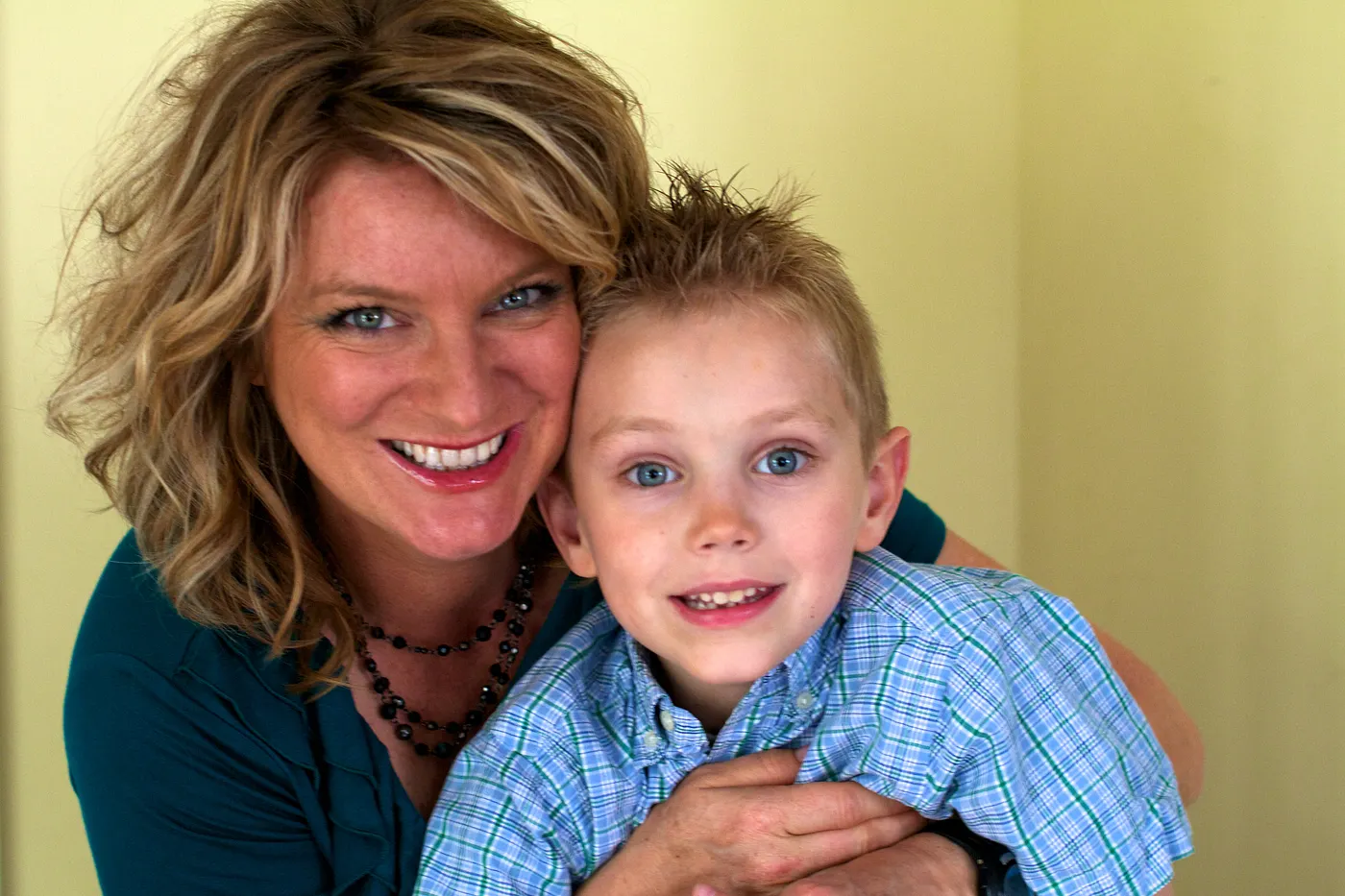
Abram is my second child and, having learned from my experience as a first-time mom that time seemed to move faster every day, I knew that I just wanted to spend time with him. While I knew what I wanted, I did not yet realize that I would need to adapt for each of my children to fit their personalities and specific needs. With his autism diagnosis, Abram didn’t want anyone at the beginning. We worked with many therapists over the years for everything from speech to sensory processing, and I spent as much time as I could observing how the therapists interacted with him so I could replicate that on my own. Abram’s development was directly tied to the amount of time we spent with him. Eventually he wanted to interact with me, then with his dad and siblings, and I have loved every minute I spend with him because I realize how precious it is.
While spending time together is important for my children, it is also important for me as their mother. I want to spend time with my children. They teach me so much about myself and keep me focused on what is important. It took a very long time for Abram to say “I love you,” so I have learned not to take anything for granted. I always prayed for patience, but my children taught me how to actually change and become a better parent. The time I spend with my children gives me renewed strength and allows me to truly appreciate what may seem simple and routine.
According to this study cited in the Washington Post, the quality of time spent with children is more important than the quantity of time. Can you give a 3–5 stories or examples from your own life about what you do to spend quality time with your children?
When I focus on quality time with my children, they understand that it is quality time and they value it more than just the number of hours. We are very intentional about the activities we do, focusing on what is important to us rather than trying to fit in everything we can. On Sunday mornings we go to church, so we don’t choose activities that require commitments on Sunday mornings. We prioritize activities we can do together. When I’m traveling to a conference for work, I find ways for my family to join me. We’re not only spending time and experiencing new things together, but my children also have an opportunity to learn more about what I do and understand why I do it. In the special needs community, there are many conferences that involve the entire family, so I want my family to be part of it too, to meet other families, recognize we are not alone in our journey, and see first-hand the families we can help by working hard and giving back.
We all live in a world with many deadlines and incessant demands for our time and attention. That inevitably makes us feel rushed and we may feel that we can’t spare the time to be “fully present” with our children. Can you share with our readers 5 strategies about how we can create more space in our lives in order to give our children more quality attention?
Whenever possible, I adjust my work schedule around my family. On Wednesdays, Abram has music therapy and Macie has gymnastics on the same side of town as my company’s international shipping partner. So, Wednesday has become drop-off day for our international shipments. I will be there anyway because I prioritize my children’s activities, so I use the opportunity to accomplish something important for the business, too.
I also find opportunities to support the activities that are important to my children. Abram is involved in music therapy and enjoys participating in the annual concerts. Recognizing how much it means to Abram, my company sponsors the event so Abram can see how important it is to me too.
Finally, weekends are dedicated family time. Whether I’m baking with Abram, playing card games with the entire family, or finding new adventures like a water park or ziplining in the woods, we’re making memories on the weekends.
How do you define a “good parent”? Can you give an example or story?
Everything is relative to your own circumstances and the needs of your children. I have realized that I need to parent each of my children differently, so what makes me a good parent for Abram is not the same as for Macie. Once I think I have figured out what makes me a good parent for Abram, it’s a new day and I’m trying again. My children have very different needs and I need to be able to respond appropriately and provide the level of nurturing and attention they need on any given day.
How do you inspire your child to “dream big”? Can you give an example or story?
I was inspired by my own mother to dream big. Growing up, she told me all the time that I could do anything I set my mind to. I try to instill that same belief in my children. This past Mother’s Day, Macie created a card for me that just stopped me dead in my tracks. She recognized that we are sharing Abram’s bed with the world and sees the example of how one person can make a difference by working hard and giving back.
How do you, a person who masterfully straddles the worlds of career and family, define “success”?
I don’t measure success in terms of numbers. I never set out to build a business, so the numbers have always been of secondary importance to me. Success to me is feeling loved and admired and surrounding myself with people I love and admire. I am at my best when I can help someone, whether that means sharing a resource, making a connection, or just lending a compassionate ear to someone who may be struggling with a new diagnosis or a harsh reality. I am driven to make a positive impact on people, so I measure success by the community of families we are building to be resources for each other.
What are your favorite books, podcasts, or resources that inspire you to be a better parent? Can you explain why you like them?
Everyone learns and processes information differently. I don’t get as much out of books and other sources as I do from authentic relationships. I rely on my friends and mentors for their advice and sharing their expertise as we talk through situations I’m going through. I always look to people who are inspiring. I have a close friend in Dallas whom I admire, and she is going through a tough time with one of her children. I find our conversations inspiring, as we share our stories and allow ourselves to be human; after all, our children have free will and are human, too.
I also reflect on my own mother. She was a single mom and took some missteps in raising me, so I learned about some experiences I did not want for my own children. At the same time, I saw how hard my mom fought for me and she is my example of how to be the best you can be for your children. She always had food on the table and a nice home. She made time to read to me almost every night, and she chose to spend that time teaching me Bible stories that are still with me today. I have a distinct memory of a time she promised to take me to a Barbara Mandrell concert if she ever came into town. Later that year, we heard that Barbara Mandrell would perform at the New Mexico state fair which was nearly four hours away. My mom did not have any money saved to make that trip, but she refused to break a promise to me. We drove around town picking up aluminum cans to recycle and saved the money to go to the concert. Later I found out that my mom’s friends told her not to waste money on this trip, but the most important thing to her was fulfilling the promise she made to me.
I look to the people in my life, finding inspiration from both the positive and negative relationships and experiences and reflecting on how those examples shape me as a parent and a person.
Can you please give us your favorite “Life Lesson Quote”? Can you share how that was relevant to you in your life?
I always go back to the words of my mother, that I can do anything I set my mind to. There have been so many reasons to quit along the way. When Abram destroyed every other solution we could find to keep him safe, I would not stop talking about the problem and tossing around potential solutions until The Safety Sleeper was born. When my company was just taking off and my manufacturer canceled my order of The Safety Sleeper that over 40 families were desperate to receive, my husband helped me figure out how to keep moving forward. Recognizing I had set my mind to helping these families, he knew he could help. He tore apart the seams of a demo unit we had in the basement to make a pattern, he created a new frame design that we could manufacture on our own, and he found a company that was going out of business so we could purchase the sewing machines and other equipment we needed to get started. With some help along the way, that reassurance that I can do anything I set my mind to is the driving force behind my determination to help as many families as I can.
You are a person of great influence. If you could inspire a movement that would bring the most amount of good to the most amount of people, what would that be? You never know what your idea can trigger. :-)
I would love to start a “just say hi” movement. We all have a fear of the unknown, but when we just say hi and open ourselves up to meeting someone and getting to know a little more about them, we become more tolerant of what we don’t understand. When someone simply says hi, we feel acknowledged and treated with respect. This is especially true in the special needs community. Whether encountering my team member at work who has special needs, the child in the wheelchair, or the adult who may not look like everyone else, we can always say hi and start from there. If it turns into a conversation, then we gain awareness and understanding of a different perspective. While the person may not answer back, either because they are unable or simply unwilling, we have the power to say hi and show respect to everyone we meet.
Thank you for all of these great insights!
— -
About the author:
Chaya Weiner is the Director of branding and photography at Authority Magazine’s Thought Leader Incubator. TLI is a thought leadership program that helps leaders establish a brand as a trusted authority in their field. Please click HERE to learn more about Thought Leader Incubator.