I grew up in Lake Charles, Louisiana, and if you’ve never been, the first thing you’d notice is the air.
In a world inundated with distractions, constant connectivity, and a plethora of information, our cognitive well-being has never been more crucial. Amidst the clamor, how do we nurture our minds, keep our focus sharp, and cultivate habits that promote mental clarity? The right lifestyle habits can be the cornerstone to maintaining and even enhancing our cognitive abilities, ensuring not just longevity but also the quality of our mental faculties. As a part of this series, I had the pleasure of interviewing Robert Carter III.
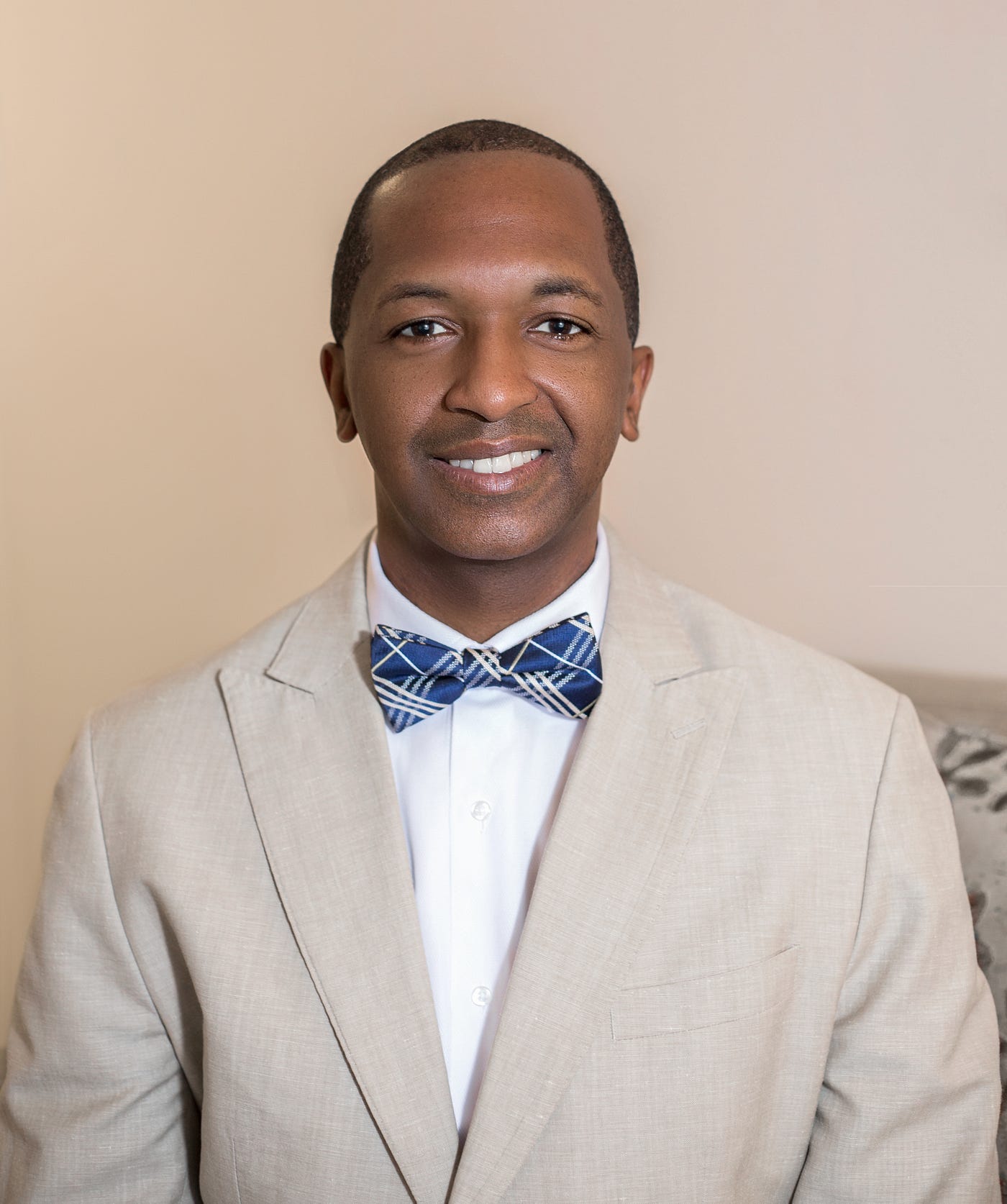
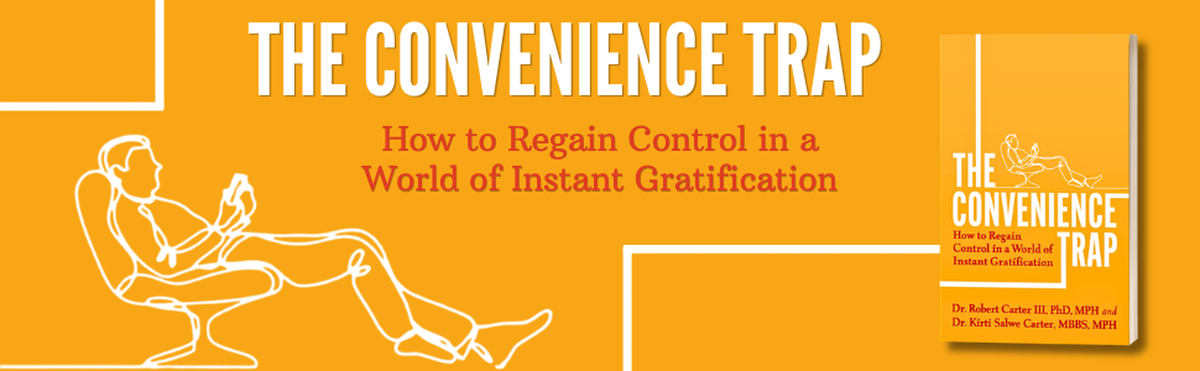
Robert Carter III, PhD, MPH, is a physiologist who studies what happens to the human body and brain when effort disappears, and what it takes to regain capability. He spent two decades as an Army research physiologist studying how people perform under extreme heat and stress, work that produced more than 100 peer-reviewed publications. A Harvard Yerby Fellow in epidemiology, a member of the inaugural class of Gates Millennium Scholars, and a Distinguished Graduate of the U.S. Army War College, he is a Fellow of the American College of Sports Medicine and the American Institute of Stress and holds adjunct appointments at the University of Texas Health at San Antonio, Azusa Pacific University Global and other universities. He co-authored The Morning Mind, named one of the best self-help books of 2019 by Forbes, and the forthcoming The Convenience Trap: How to Regain Control in a World of Instant Gratification (Diversion Books, December 1, 2026). He has spoken at Aspen Ideas: Health, created the free medication-safety tool RxSafeCheck and the AI education platform StackMaster AI, and is a four-time world champion in taekwondo, including extreme forms and weapons.
Thank you so much for joining us in this interview series! Before we start, our readers would love to “get to know you” a bit better. Can you tell us a bit about your childhood backstory?
I grew up in Lake Charles, Louisiana, and if you’ve never been, the first thing you’d notice is the air. It’s thick enough to lean on by nine in the morning. My childhood was cicadas, crawfish boils in the yard, fishing, oaks draped in moss, and, on the horizon, the refineries and chemical plants that ring the city, lit up at night like a second skyline. As a kid, you don’t think about that contrast. It’s just where you live.
Mine was a family defined by enterprise and service. My maternal grandmother ran her own beauty shop, and my grandfather owned several businesses, so I grew up watching people solve their own problems because no one else was going to. Most of my parents’ siblings, on both sides, served in the military, some in wartime and some in peace.
Then two of my uncles died of cancer before either turned 35. When you’re a boy, uncles are the fun ones: closer to your age than your parents, loud at the boil, the ones who take you fishing. I watched two strong young men get sick and disappear, and I watched my father and mother bury them, one in Louisiana and one in Mississippi. Nobody explained it to the children. What I absorbed instead was a question no one in the house could answer: why them, and why so young? Was it in our blood, or in the air we were breathing? I didn’t have words like epidemiology or environmental exposure yet, but that question is the reason I became a scientist, and it’s why, years later, I went to Harvard to train in environmental epidemiology, the field that studies exactly that: what the air, the water and the ground do to the people who live with them. Everything I’ve worked on since, from heat illness to medication safety to this book, is some version of asking why some people in the same environment stay strong, and others don’t.
The first real answer came the summer after 10th grade, when I was accepted into the first summer research program at the LSU School of Veterinary Medicine in Baton Rouge. I had never been in a laboratory, and a veterinarian named Dr. Dennis French took me under his wing. He taught me to perform liver biopsies, got me good enough to teach the technique to veterinary students, which was a strange experience for a 15-year-old, and put me on his research team studying how magnesium affects pregnancy in dairy cattle. I earned my first co-author credit on a scientific paper before I graduated high school.
Two things from that summer shaped everything since. I learned with my hands before I learned from a screen; a biopsy is a manual skill, and you get better at it only by doing it badly first. And I learned what one person’s attention can do. Dr. French had no reason to invest in a high school kid, and he did it anyway. I tell people to this day that you never know the impact you’re having on someone, so you want to be a hundred percent with every engagement.
Is there a particular book, podcast, or film that made a significant impact on you? Can you share a story or explain why it resonated with you so much?
Jared Diamond’s Guns, Germs, and Steel. I read it in 2010 while deployed to Afghanistan, where I earned a Combat Action Badge, and it has stayed with me for two reasons.
The first is that Diamond was a physiologist before he was anything else. He spent decades studying physiology at UCLA, then asked a question far outside his lane: why did some societies develop faster than others? His answer was the environment. The people who happened to inherit domesticable crops and animals, favorable geography and the right latitude got a head start that compounded over thousands of years. It had nothing to do with the people and everything to do with what surrounded them. Watching a physiologist think at that scale gave me permission to do the same.
The second reason has to do with where I was when I read it. I was living in an environment that demanded something of me every day, reading a book about how the environment shapes what people become. The contrast with life back home was hard to miss. The Convenience Trap is, in a sense, the sequel I didn’t know I was writing. We’re the first humans who get to design our own environment, and we’ve designed one that asks almost nothing of us. The same logic that explains why abundance built civilizations explains why engineered ease is now making us fragile. Diamond gave me the framework. The question I’m asking is what happens when the environment stops challenging us at all.
If I can add a podcast, it’s the Huberman Lab. What resonates is the premise: that ordinary people can handle the mechanism, not just the advice. Huberman proved there’s an enormous audience that wants the underlying biology and will change its behavior when it understands why. That’s the bet both of our books make: explain what convenience is doing to the body and brain, and people will choose the harder path on their own.
Let’s now talk about lifestyle habits that support cognitive well-being. Are there specific foods or diets that have been scientifically shown to enhance cognitive functions?
I’ll give you the honest answer, which is more useful than the hopeful one. The Mediterranean and MIND diets have the best evidence, but most of that evidence is observational. People who eat that way tend to decline more slowly, but they also tend to exercise more, sleep better and earn more. When researchers finally ran a rigorous randomized trial of the MIND diet, published in the New England Journal of Medicine in 2023, three years on the diet produced no cognitive advantage over a healthy control diet. Both groups improved slightly.
That doesn’t mean food is irrelevant. It means food works through plumbing. The 2024 Lancet Commission on dementia lists 14 modifiable risk factors, and four of them, high blood pressure, high LDL cholesterol, diabetes and obesity, are driven heavily by what we eat. That’s why the one pattern every brain-healthy diet shares is that it’s plant-rich. Leafy greens, berries, legumes, nuts, whole grains and olive oil, with fish alongside, deliver the fiber, polyphenols and healthy fats that keep blood vessels flexible and inflammation low. Plants protect the pipes that feed the brain. That’s the mechanism, and it’s a slow one, which is exactly why a three-year trial struggled to detect it.
My practical advice is to worry less about the perfect diet and more about the convenient one. Ultra-processed food is engineered to be effortless; a plant-rich diet asks something of you. I love to cook, and I’ve come to think of it as strategic inconvenience: you shop, chop, taste and clean up, and every one of those steps moves your body and engages your mind.
What are your thoughts on the importance of movement and exercise in the context of cognitive decline? How do different forms of exercise, such as aerobic vs. strength training, influence cognitive well-being?
If I could prescribe one thing for brain health, it would be movement, and the research supports being specific about it.
Aerobic exercise has the strongest evidence for the brain’s memory center. In a landmark trial at the University of Pittsburgh, older adults who walked briskly three times a week for a year grew their hippocampus by about 2%, while the stretching control group lost volume. The researchers described it as reversing one to two years of age-related shrinkage.
Strength training works on a different system. A University of British Columbia trial found that women aged 65 to 75 who lifted weights once or twice a week for a year improved their executive function, the mental skills behind planning, focus and self-control. Strength also keeps you upright, and a fall is one of the most preventable causes of brain injury late in life. Muscle is brain insurance.
There’s a third category I’d argue for, and I speak from inside it. I’m a black belt and four-time world champion in taekwondo, and I still train in other martial arts. Traditional, non-contact martial arts combine aerobic effort, balance and coordination with real-time decision-making: you’re learning a sequence, orienting in space and reacting to a partner all at once. That demand shows up in the data. In a study of middle-aged martial artists, both a martial arts class and an hour’s walk sharpened attention, but only the martial arts class improved executive function, the highest level of thinking.
You don’t need to start young, and you don’t need to compete. Tai chi, which is a martial art, has produced some of the strongest trial results of any activity for older adults with mild memory concerns, and most martial arts schools have beginners in their 60s and 70s. The brain doesn’t care whether you’ll ever earn a belt. It cares that you’re doing something hard, in motion, with your whole body and mind engaged.
Can mindfulness practices or meditation offer measurable benefits to cognitive health?
Yes, and the benefits are real but modest, so I’d rather set accurate expectations. A study at the University of California, Santa Barbara, gave undergraduates two weeks of mindfulness training and found improvements in working memory and reading comprehension scores, largely because their minds wandered less. That’s the honest size of the effect: measurable, not magical, and strongest in people who keep practicing.
I’ve also seen what a breath-based practice can do up close. In 2016 I spoke at Aspen Ideas: Health about breathing-based meditation for veterans with post-traumatic stress, alongside Project Welcome Home Troops, the nonprofit that teaches it. My wife and co-author, Dr. Kirti Salwe Carter, and I have studied the mechanism ourselves. In a 2016 paper, we proposed that daily breath-based meditation works by preserving the body’s compensatory reserves, the physiological and cognitive capacity that keeps us functioning under stress. Two years later, we tested it in the field, tracking a four-week community breathing program with wearable devices. After four weeks of daily practice, participants showed increased alpha brain activity, the EEG pattern associated with a calm, alert state, and scored higher on a standard mindfulness measure. In a month, the practice had measurably changed what the body was doing.
The way I think about it is that meditation is attention training. Every time you notice your mind has drifted and bring it back, you’ve done one repetition. The muscle you’re building is the ability to stay with something, and that’s exactly the ability our devices erode.
The hard part is that sitting still with your own thoughts is deeply inconvenient. There is always something easier to do. That’s exactly why it works. You don’t need an hour. 15 to 20 minutes of practicing attention, most days, is enough to notice a difference within weeks.
How does the quality and quantity of sleep correlate with cognitive performance and long-term brain health?
Sleep is the recovery half of the equation. I spent much of my research career studying how the body performs in extreme heat, and one pattern held up in everything we measured. The body adapts to stress only when the stress is followed by recovery. Heat acclimatization works that way. So does muscle. So does the brain. Skip the recovery and you don’t get stronger, you get sick. Sleep is when the brain recovers.
Short term, the effects are obvious. One bad night impairs attention, memory consolidation and judgment in ways that look a lot like mild intoxication. Long term, the evidence is sobering. In the Whitehall II study, which followed nearly 8,000 British civil servants for 25 years, people who consistently slept six hours or less in their 50s and 60s had about a 30% higher risk of dementia than those who slept seven.
The mechanism is still being worked out, but one leading line of research, first shown in mice in the journal Science, found that during deep sleep the brain’s clearance system becomes far more active, flushing out metabolic waste including the proteins linked to Alzheimer’s. Sleep, in other words, may be when the brain takes out the trash.
My advice is to treat sleep as a scheduled appointment, not as whatever time is left over. The most effective change most people can make is also the least convenient: the phone does not come to bed.
How do social connections and interpersonal relationships influence our cognitive well-being?
More than almost anything else on this list, and we’ve been slow to take it seriously. Social isolation is on the Lancet Commission’s list of modifiable dementia risk factors. A large meta-analysis led by Julianne Holt-Lunstad found that people with strong social relationships had a 50% greater likelihood of survival over the study periods than those with weak ones, an effect comparable to quitting smoking. In 2023, the U.S. Surgeon General issued a formal advisory calling loneliness an epidemic.
As a physiologist, I think conversation is the most demanding workout the brain gets on a normal day. You’re reading faces, interpreting tone, holding a thread, predicting what the other person will say, and adjusting in real time. No app replicates that.
Which is why I worry about the convenience of staying connected without ever being together. Texting is easier than calling. Calling is easier than showing up. Every step toward ease removes some of the cognitive work that made the connection valuable. The inconvenient version, in person, across a table, is the one that protects the brain.
What role do lifelong learning and continuous mental stimulation play in maintaining optimal cognitive health?
Education is the first risk factor on the Lancet list, and the reason is a concept called cognitive reserve. The more connections your brain builds over a lifetime, the more damage it can absorb before symptoms show. The good news is that reserve isn’t fixed in childhood. It keeps building at any age.
But the kind of stimulation matters. The brain changes in response to difficulty, not familiarity. Doing the same crossword for twenty years is comfortable, and comfort is the problem. The best evidence comes from navigation. London taxi drivers, who memorize 25,000 streets, have measurably larger memory centers than the rest of us. And a McGill University study found that the more people relied on GPS over their lifetime, the worse their spatial memory, with heavier GPS use predicting steeper decline over time.
That study is the heart of my book. We have outsourced the hard mental work to devices, and the brain, like any system, stops maintaining what it doesn’t use. Lifelong learning doesn’t require a classroom. It requires regularly doing something you’re not yet good at.
I try to practice what I preach. Recently I went back to school, in a sense, and completed professional certificates in artificial intelligence and machine learning through the University of Pennsylvania and IBM. The point wasn’t the credential. It was to think clearly about a technology that is reshaping every field I work in, rather than letting it think for me. Then I put the learning to use and built StackMaster AI, a platform that teaches people to use the leading AI tools deliberately instead of passively. It may sound strange for the author of The Convenience Trap to build an AI education platform, but the danger was never the tool. It’s using a powerful tool without understanding it.
Here is the central question of our discussion. What are your five favorite lifestyle habits that proactively support cognitive well-being? Please share a story or an example for each, if you can.
Every one of these is a form of strategic inconvenience: a small, deliberate friction that rebuilds a capability convenience has taken away.
1. Turn the GPS off on the way home.
Use the GPS to get somewhere new, then turn it off and find your own way back. I learned this living in Germany, where I didn’t speak the language and couldn’t always read the signs. In France, my French let me ask for directions. In Germany I had to pay attention. The first weeks were frustrating. By the third month I could walk from one end of the city to the other without thinking about it, and I knew which bakery was closest and which tram stop to avoid at rush hour. The city had become a map in my head. I’ve never recovered that feeling in a place I navigated by phone.
2. Carry your own weight, literally.
Walk briskly most days, lift something heavy twice a week, and refuse the conveniences that remove movement from your day: carry your own groceries, take the stairs, walk where you could drive. But the habit I’d single out trains body and brain at the same time. My wife, my daughter and I all earned black belts in taekwondo, and what sparring taught me applies to everything in this interview. Speed matters, but the fastest person never wins without timing, distance and continuous movement. Your opponent will put you off balance, and when you’re falling there’s a moment of uncertainty. If you’ve prepared for it, you recover. Practice losing your balance on purpose, so that when life knocks you over, your body and mind already know the way back up.
3. Protect sleep like an appointment you can’t cancel.
I keep a fixed wake time, seven days a week, and the phone stays in a drawer at the door, because if it’s within reach my hand will find it before my brain decides to. The first week felt like deprivation. By the third, I’d stopped reaching for something that wasn’t there. My wife and I wrote a whole book about this, The Morning Mind, on the physiology of the first hours of the day, when the brain is at its freshest, and on how to protect that window instead of handing it to a screen before your feet hit the floor.
4. Do one hard mental thing by hand every day.
Calculate the tip in your head. Write a note instead of typing it. Memorize a phone number. I still write by hand: meeting notes, first drafts, the outline of every chapter in our book. It’s slower, and that’s the point. When I type, my fingers move faster than my thinking; when I write, my thinking has to keep up with the pen. I learned to do science with my hands as a teenager, and I’ve never trusted a skill I couldn’t perform without a screen. Start embarrassingly small. The path back begins with a single manual task.
5. Show up in person, every week, without a phone.
Pick one standing commitment, a weekly dinner, a walk with a friend, a class you attend with family, and make it non-negotiable. For us, that commitment was the dojang: three people training together, no screens in sight, every week for years. The device stays home or in a pocket, because the point is the friction of full attention. A hundred percent with every engagement is a rule for mentoring, and it turns out to be a rule for brain health too.
Are there any proven techniques or habits that can help protect against age-related cognitive decline?
The ones with the best evidence come from a doctor’s office, not a gym. Researchers now estimate that close to half of dementia cases could be prevented or delayed by addressing a short list of modifiable risk factors, and most of them are things your physician can measure and correct: blood pressure, cholesterol, blood sugar, hearing and vision.
Two of them have been tested in rigorous trials. Older adults whose blood pressure was aggressively controlled developed meaningfully fewer cases of mild cognitive impairment than those treated to standard targets. And older adults at elevated risk who were fitted with hearing aids declined nearly 50% more slowly over three years than those who weren’t. A hearing aid is a brain intervention. One leading explanation is that a brain straining to hear has less capacity left for everything else.
As a physiologist, I’d put it this way. The brain is the most metabolically expensive organ you own, and it depends entirely on the quality of its supply lines and its inputs. Protect the blood vessels and protect the senses, and you protect the brain. Get your numbers checked and corrected, get your hearing and vision tested, and then build the five habits above on that foundation.
In your professional or personal experience, what can be done to delay cognitive decline if the genetic predisposition is there?
More than people fear. A 2019 study in JAMA followed nearly 200,000 adults and found that among those with the highest genetic risk, a healthy lifestyle was associated with a 32% lower chance of developing dementia than an unhealthy one. And the Finnish FINGER trial, which combined diet, exercise, cognitive training and vascular monitoring, found the benefits held for people carrying the APOE4 gene variant, the strongest common genetic risk factor for Alzheimer’s.
I’ll be candid that the evidence isn’t unanimous. Another large study, published in Nature Medicine, found lifestyle made less difference for APOE4 carriers, probably because the disease process begins decades before symptoms.
The personal part of my answer comes from my father. He didn’t have dementia. He had prostate cancer, and for more than nine years my family lived through changing diagnoses, new medications, new treatments and emergency room visits. What I saw up close was that the biggest threat to an aging body and brain is often not the diagnosis on the chart but everything that accumulates around it: a growing list of medications, each prescribed by a different specialist, interacting in ways no one person was tracking. The research backs that up. A 2019 study of nearly 300,000 older adults in JAMA Internal Medicine found that heavy exposure to anticholinergic drugs, a common class that includes some antidepressants, bladder medications and antihistamines, was associated with nearly 50% higher odds of dementia. By the time my father got sick, I was the second generation in my family to watch someone we loved go through a long illness, and the first with the training to read the chart and ask the right questions. When my uncles were dying, no one in the family had that. Most families still don’t. That’s why I built RxSafeCheck, a free, private tool that helps patients and caregivers see how their medicines, supplements and foods interact and know which questions to bring to their pharmacist. If there is a genetic predisposition in your family, make sure every pill an aging parent takes is one somebody understands.
The other half of my answer is the air. I asked as a boy whether what killed my uncles was in our blood or in what we were breathing, and the science has caught up with the question. Air pollution is now on the Lancet Commission’s list of modifiable dementia risk factors. A 2025 meta-analysis in The Lancet Planetary Health, covering more than 24 million people, found that long-term exposure to fine particulate pollution raises dementia risk by about 8% for every 5 micrograms per cubic meter, with the soot from traffic and combustion among the strongest signals. And a 2024 study of older adults found that living where industrial facilities release more toxic chemicals was associated with a higher risk of vascular dementia. This is Jared Diamond’s argument brought home: in places like the one I grew up in, the environment that shapes people includes what the plants put into the air. Genetic risk is the part you can’t change. Exposure is the part a community can, through monitoring, enforcement and the political will to insist on cleaner air. If dementia runs in your family, where you live and what you breathe deserves the same attention as what you eat.
Which brings me to the single most important point: genes load the gun, but environment and daily habits decide whether it fires. If you know your family history, that is not a verdict. It’s a reason to start in your 40s instead of your 70s, and to treat every one of these inconvenient habits as non-negotiable rather than optional.
Is there a person in the world whom you would love to have lunch with, and why? Maybe we can tag them and see what happens!
Jared Diamond. I’d want to tell him that a physiologist read his book in Afghanistan and spent the better part of two decades thinking about what happens when humans design their own environment, and then ask him whether he thinks we’re getting it right.
How can our readers follow you online?
I have a new book coming out December 1, The Convenience Trap: How to Regain Control in a World of Instant Gratification (Diversion Books).
Readers can visit theconveniencetrap.com to learn more about the book and take our free A.L.I.V.E. assessment, which helps identify where convenience may be shaping their daily habits and where they can begin making meaningful changes.
You can also connect with me on LinkedIn, where I share insights on human performance, cognitive health, resilience and the intentional use of technology.
My hope is that readers leave with one simple idea: The goal isn’t to make life harder. It’s to stop making ourselves weaker in the pursuit of making everything easier.
Thank you so much for taking the time to share with us and our readers. We know that it will make a tremendous difference and impact thousands of lives. We are excited to connect further and we wish you so much joy in your next success.