Our family unity was always stronger than our divisions, rooted in foundational values that transcended politics or denomination.
Social Impact
Rev. Dr. Camille Cook Howe Of Fourth Presbyterian Church of Chicago: The Principle Of Core Values That Bridges Deep Political And Religious Divides
Rev. Dr. Camille Cook Howe of Fourth Presbyterian Church of Chicago shares how anchoring communities in shared foundational values can help heal a polarized society.
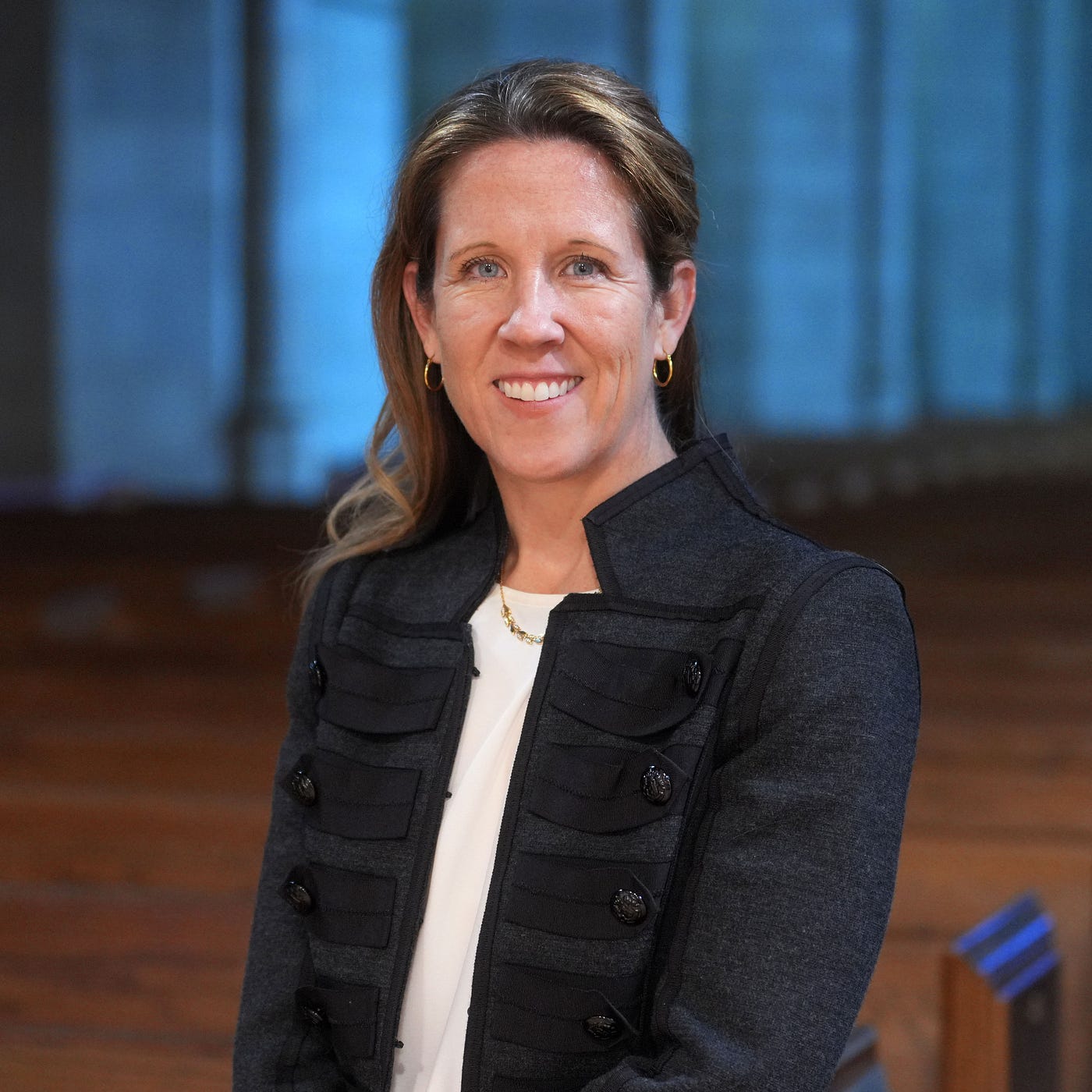
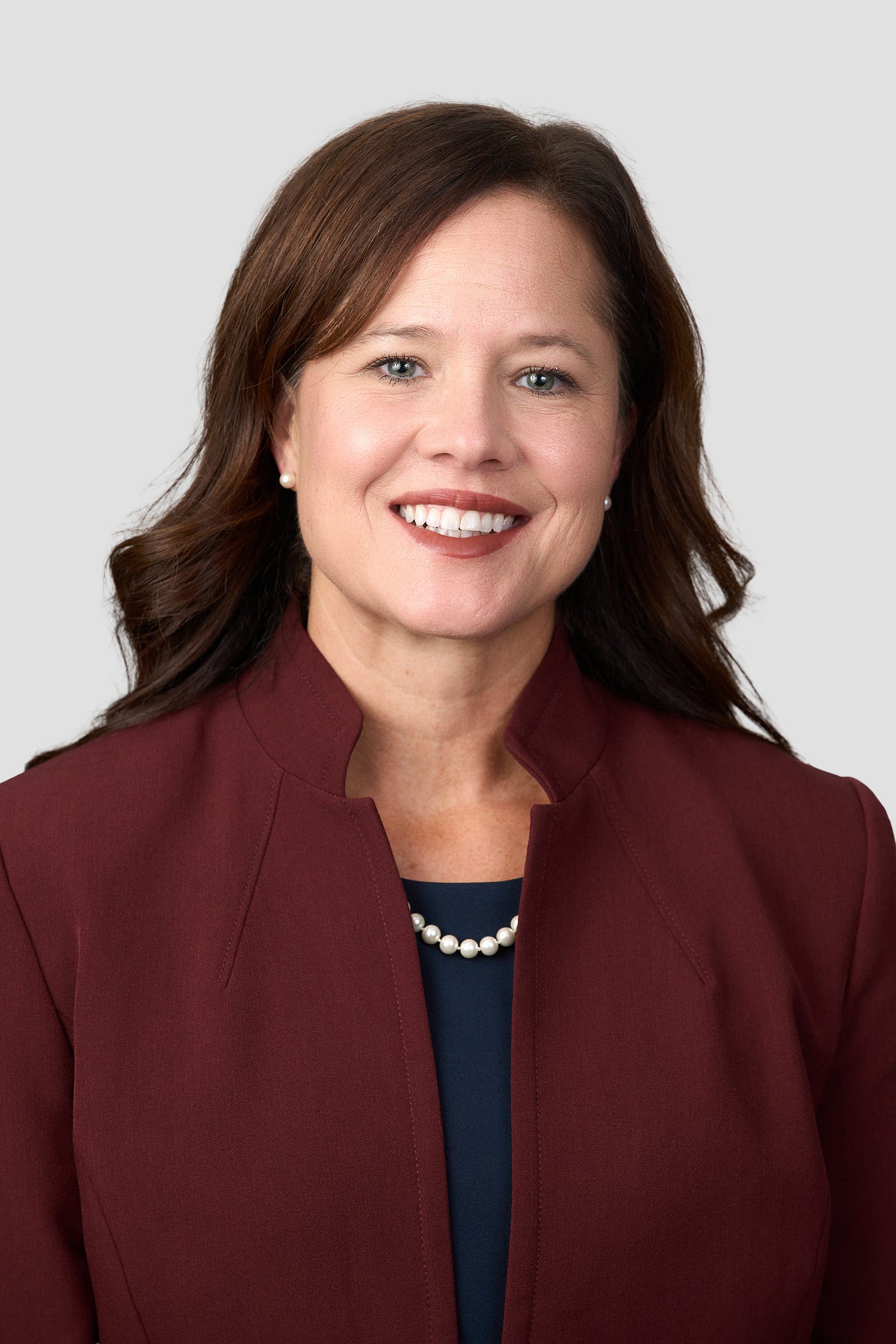
As a part of our series about “5 Things That Each Of Us Can Do To Help Unite Our Polarized Society”, we had the pleasure of interviewing Rev. Dr. Camille Cook Howe, Head Pastor at Fourth Presbyterian Church of Chicago.
Reverend Dr. Camille Cook Howe is Head Pastor at Fourth Presbyterian Church of Chicago, one of the largest Presbyterian Churches in the United States. With decades of ministry experience across continents and contexts, she is passionate about reclaiming the church’s role as a place that helps people find meaning and connection in a fragmented age.
Thank you so much for joining us! Can you tell us a bit about your childhood backstory?
I grew up in a household shaped by both religious and political diversity — my father, a devout Protestant Republican, and my mother, a devout Catholic Democrat. Our family would joke about canceling out each other’s votes, but my parents modeled how to disagree with respect and deep affection. It was modeled in the way they agreed on values that were very core and foundational, and yet were comfortable disagreeing on policies, viewpoints, and traditions. Our family unity was always stronger than our divisions, rooted in foundational values that transcended politics or denomination.
What or who inspired you to pursue your career? We’d love to hear the story.
I always wanted to work in a profession where I could care for people and originally aspired to work in medicine. But a college New Testament course at Vanderbilt University changed everything, awakening me to the deep intellectual and spiritual richness of theology. The influence of Rev. Linda Loving, a dynamic, intellectually vibrant minister in my home church, also expanded my sense of what was possible and gave me both encouragement and practical opportunities to learn. It was inspiring to me to see a woman in leadership who was highly capable, personable, charismatic, and emotive, who was also willing to invest her time to be a powerful role model.
What are some of the most interesting or exciting projects you are working on now? How do you think that might help people?
My focus now is helping Fourth Presbyterian Church reclaim its historic place as a Christian thought leader and builder of spiritual community in Chicago and on the national stage. We seek to create space for people at all levels of their faith journeys to come together and activate their intellectual curiosity about spirituality and religion. Fourth Church is a place where questions of faith and life are welcomed and taken seriously. Ultimately, we want people to wrestle with their faith so they can refine their beliefs and find a firm foundation for their lives. Young and old have questions of faith and life, some of those questions can be answered and some must be held as sacred mysteries. Regardless, our deepest questions need communities where they can be engaged and met with seriousness, compassion, and humility.
None of us can achieve success without some help along the way. Was there a particular person who you feel gave you the most help or encouragement to be who you are today? Can you share a story about that?
Rev. Dr. Fred R. Anderson, the former Senior Pastor at Madison Avenue Presbyterian Church in Manhattan was a key mentor to me. While I was in Seminary at Princeton, I served as an intern under Dr. Anderson. I saw up close the challenges faced by a large historic church in an urban area and how compassionate and inspirational leadership is such an essential element to success. His thoughtful approach to leadership, treating me as a trusted colleague and key participant during my internship was transformative. He believed in mentorship through shared work, accountability, and generous feedback. Fred was a larger-than-life figure but humanized the work of ministry and helped me to believe in my own gifts for congregational leadership.
Can you share the funniest or most interesting mistake that occurred to you in the course of your career? What lesson or take away did you learn from that?
While studying at Oxford, I was looking for a church to serve, and I found a tiny congregation of about forty retired Oxford professors who invited me in as their pastor. They were always so gracious and supportive of me. One Easter Sunday, I rode my bike to church and got drenched in a sudden rainstorm. When I arrived, my clerical robe was soaking wet, and my papers dripping and stuck together. I was discombobulated and embarrassed, but to my surprise no one seemed to care. They were joyful about the day regardless of the weather and welcomed me in with graciousness and warmth. That day, I understood the joy of gathering on these important occasions is less about the polished service and more about the act of being together around sacrament and mystery and beauty. It ended up being one of my favorite Easter mornings as a minister.
Is there a particular book that made a significant impact on you? Can you share a story or explain why it resonated with you so much?
As a young person contemplating what I was supposed to do with my life, John Irving’s book, “A Prayer for Owen Meany” spoke to me on a very personal level. It is the story of a young boy with incredibly strong Christian faith who struggles to understand why he has been put on the earth. Through friendship, tragedy, and some comical mishaps, Owen eventually impacts other people in life changing ways. I found the story deeply moving and encouraging to my own adolescent wrestling’s about life and service and finding meaning in the world.
Can you share your favorite “Life Lesson Quote”? Why does that resonate with you so much? Do you have a story about how that was relevant in your life or your work?
“What lies behind us and what lies ahead of us are tiny matters compared to what lies within us.” Attributed to Ralph Waldo Emmerson has always been a guiding line for me. I believe in the souls of humans and that we hold inner strength and beauty. Remembering this line, in times of real struggle, for me has been meaningful. I believe God is at work within all of us and remember God’s near presence is a source of deep solace and comfort.
How do you define “Leadership”? Can you explain what you mean or give an example?
Leadership is about clarity of purpose and great dedication to the work. In my line of work, the most inspiring and effective leaders are those who do not take themselves too seriously but take the work they do incredibly seriously. They lead with humility and grace, they can admit they don’t have all of the answers, and they can also point others to places of inspiration like scripture and worldly examples of goodness and strength.
The polarization in our country has become so extreme that families have been torn apart. Erstwhile close friends have not spoken to each other because of strong partisan differences. This is a huge topic, but briefly, can you share your view on how this evolved to the boiling point that it’s at now?
Sadly, political identity has become a central aspect of how many people identify these days, displacing more fundamental identities of faith and citizenship. Social media has also raised the voices of the extremes and causes division by amplifying our political and policy differences. Our basic human connections have been undermined and eroded as we fail to see what we have in common. The church must play an important role in countering this by refocusing our communities on things more important and fundamental than politics. When people start with shared beliefs then discussions about current events and politics can be navigated with grace and curiosity instead of judgement and animosity.
I have no pretensions about bridging the divide between politicians, or between partisan media outlets. But I’d love to discuss the divide that is occurring between families, co-workers, and friends. Do you feel comfortable sharing a story from your experience about how family or friends have become a bit alienated because of the partisan atmosphere?
Growing up, my family managed differences with humor and love, refusing to let political disagreement overshadow our relationships. But I have worked with countless families over the course of my ministry who have been torn apart by political disagreements and elections. In my last congregation, in Washington, D.C., there were countless stories of families who could no longer gather for holidays, speak on the phone, or even exchange birthday greetings. Political differences did not just cause friction but total fracture and the pain that caused was significant. A young woman admitted, through tears, that she had refused to speak to her parents since the day of the last election. How they voted, for her meant the relationship was over. This exemplifies the way politics has become primary in completely excessive ways. If politics is ruining our sleep, our mental health, or our relationships then we probably let it take too central a role in our lives.
In your opinion, what can be done to bridge the divide that has occurred in families? Can you please share a story or example?
I grew up cheering for the Nebraska Cornhuskers football team. Around the last Presidential election, my politically diverse family decided to attend a game together and introduce the youngest members of the family to a game day in Lincoln. This could have been a weekend riddled with controversy and divisiveness. But we did not let the political season overshadow or ruin our time together. The book of Ecclesiastes says, ‘For everything there is a season and a time for every matter under heaven: a time to be born and a time to die; a time to plant and a time to pluck up what is planted; a time to kill and a time to heal; a time to break down and a time to build up; a time to weep and a time to laugh; a time to mourn and a time to dance; a time to throw away stones and a time to gather stones together; a time to embrace and a time to refrain from embracing; a time to seek and a time to lose; a time to keep and a time to throw away; a time to tear and a time to sew; a time to keep silent and a time to speak; a time to love and a time to hate; a time for war and a time for peace. There is a time for politics, even within families. But there is also a time to set politics aside. There is a time to watch football and eat food and share stories. For everything there is a season but not every season and every encounter with people needs to be or should be political.
How about the workplace, what can be done to bridge the partisan divide that has fractured relationships there? Can you please share a story or example?
Curiosity is key. We are quick to shut down and shut other people out. Staying open and curious about their stories and perspectives can be difficult, but is helpful in finding common ground. If we can be curious about the perspectives people hold and find shared work to do together then usually, we discover points of connection along the way.
I think one of the causes of our divide comes from the fact that many of us see a political affiliation as the primary way to self-identify. But of course, there are many other ways to self-identify. What do you think can be done to address this?
The media is all about division and identity. Usually that doesn’t correlate to how people interact in the world. We do not all enter spaces and immediately divide ourselves into groups. The divisions we cling to in our online forums fall apart when we spend quality time with people across parties. Getting offline and into real, in person, communities is essential for repair.
Much ink has been spilled about how social media companies and partisan media companies continue to make money off creating a split in our society. Sadly the cat is out of the bag and at least in the near term there is no turning back. Social media and partisan media have a vested interest in maintaining the divide, but as individuals none of us benefit by continuing this conflict. What can we do moving forward to not let social media divide us?
Be intentional about what you consume and share in person and online. My mother always said, “garbage in, garbage out.” We need to balance the constant barrage of voices that confront us in the media and online with ancient sources of wisdom and words that have been around for generations and will outlive us all. Get into ancient texts, be out in nature, appreciate the arts, unplug intentionally and fuel yourself with mystery and beauty and faith.
What can we do moving forward to not let partisan media pundits divide us?
Actively seek out diverse perspectives and participate in communities that push you outside of echo chambers.
Can you please share your “5 Steps That Each Of Us Can Take To Proactively Help Unite Our Country”. Kindly share a brief story or example for each.
- Assume positive intent and practice curiosity: Approach conversations with genuine interest.
- Connect with a faith community: These are unique places for shared rituals and relationships of depth and meaning.
- Schedule time for spiritual or religious practice: Make room in your week for what nourishes your soul and faith.
- Practice grace and forgiveness: Let go of the myth of perfection and offer grace to yourself and others.
- Step outside your personal bubble: Intentionally seek out people, places and experiences different from what you are used to.
Simply put, is there anything else we can do to ‘just be nicer to each other’?
Absolutely. Small, daily choices like listening, giving someone a compliment, and stepping back before judging are powerful. Kindness is contagious.
We are going through a rough period now. Are you optimistic that this issue can eventually be resolved? Can you explain?
Yes. History teaches us that huge swings in our country will right themselves. There will be a corrective. We will reclaim our foundations and rebuild our communities. What is fractured can be healed. All is not lost!
If you could tell young people one thing about why they should consider making a positive impact on our society, like you, what would you tell them?
Their lives are beautiful, meaningful, and important. They have a calling within them and a way to serve in the world uniquely. Callings are not for the wealthy or the highly educated or those in power. Callings are for all of us. Finding your calling is how to stay grounded and make a difference in the world.
Is there a person in the world, or in the US, with whom you would like to have a private breakfast or lunch, and why? He or she might just see this, especially if we tag them.
Dolly Parton! Her life and work embody compassion, creativity, and the ability to recognize our shared humanity. Dolly lifts other people up with her kindness and her wit and her compassion. She has used her platform not only in music but also through philanthropy to bring joy and inspiration to others. Breakfast with Dolly would be a lesson in tenacity in the face of struggle, using personal gifts to God’s glory, and being a significant force for good in the world.
How can our readers follow you online?
Readers can visit FourthChurch.org and follow @FourthChurch on Instagram, Facebook and YouTube for news and opportunities to join our community. Individuals can also connect with me on LinkedIn.
Thank you so much for sharing your powerful insights with us, Rev. Dr. Howe. We wish you continued success in your impactful work!
AM
Written by
Authority Magazine Editorial Staff
Editorial Desk · Authority MagazineThe Authority Magazine Editorial Desk produces, verifies, and edits long-form primary-source interviews with executives, innovators, clinicians, creators, and social impact leaders across Business, Tech, Pop Culture, Wellness, and Social Impact.

Published inAuthority MagazineTop Lessons, Top Authorities · 42K Followers
Exclusive, curated interviews with the leaders and changemakers shaping tomorrow. Leadership lessons, industry deep dives, and executive profiles.