I asked the people I was traveling with why this was, and I was told it was “water sickness,” a very common problem in this region.
Tech
Ran Poliakine: The Mindset of Treating Entrepreneurship as a Medical Condition That Drives Radical Tech Innovation
The serial entrepreneur and founder discusses leveraging nanotechnology to disrupt traditional X-ray systems and building impactful technologies to solve real-world problems.

Serial Entrepreneur, Founder of Powermat, Illumigyn, Wellsense, nanoX Technologies, Tap
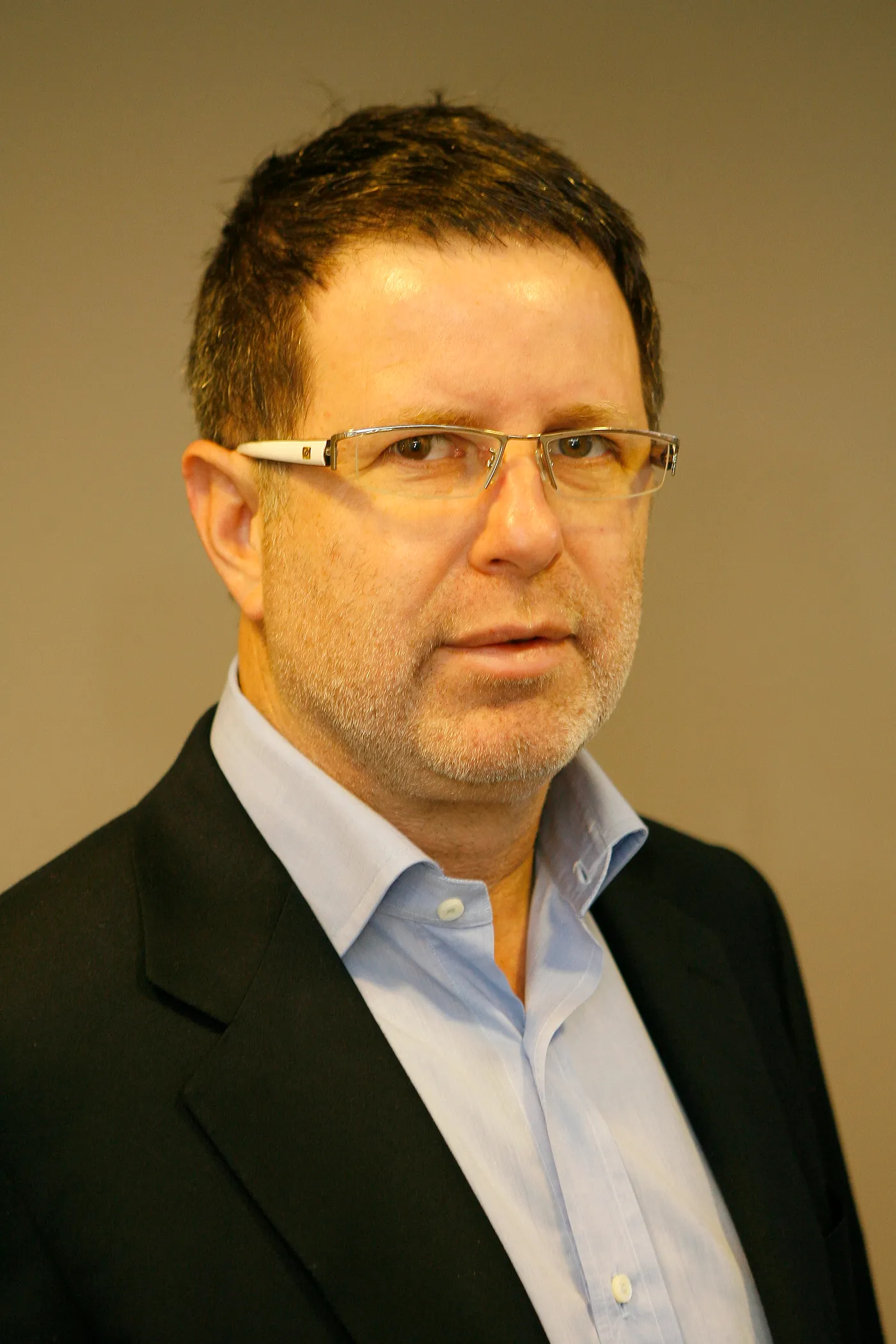
I had the pleasure of interviewing Ran Poliakine. Ran Poliakine has founded several successful companies, including Powermat Technologies; the original wireless charging company. He is passionate about “using technology for good.” From using technology to hydrate Africa, to devising a solution to eradicate bedsores, to inventing a new way for the visually impaired to communicate via written text, Poliakine’s entire career has been about innovating new technologies to solve real-world problems, alleviate suffering and improve people’s lives.
Can you tell us a story about what brought you to this specific career path?
For me, being an entrepreneur is like a medical condition. It’s not a career path that I necessarily chose, but rather I believe it chose me. It is just not in my DNA to work for a large corporation. I thrive when I am coming up with new business ideas and discovering new ways to apply technology to address serious problems. This is what drives me and what gives me purpose. I couldn’t imagine doing anything else with my time.
Can you share the most interesting story that happened to you since you began your career?
Several years ago, I was on a trip to Mexico City. This was my first trip to that country, and I was shocked at what I saw. There were people lying in the streets in obvious pain and distress. It was extremely disturbing to witness. I asked the people I was traveling with why this was, and I was told it was “water sickness,” a very common problem in this region. I was shocked to know that all of this pain and suffering came from a simple lack of access to clean drinking water. I knew I had to do something to address this, so after several years of research and development, I launched Years of Water, a company dedicated to bringing clean drinking water to the home. Our product — the Water Elephant — is a device that uses the ultraviolet waves commonly found in fluorescent lighting to kill bacteria. It’s a hand-operated UV water-purification system that can easily be used in the home. Today that solution is in use in third world nations around the globe, and it is delivering clean drinking water to thousands. To me, this visit to Mexico City was by far one of the most interesting experiences because it directly led to the launch of this company.
Can you tell us about the “Bleeding edge” technological breakthroughs that you are working on? How do you think that will help people?
One of my latest endeavors is a company called nanoX Technology. nanoX is using nanotechnology to develop the next generation of X-ray emitters to enable novel 3D imaging systems with unmatched performance, breakthrough functionalities, and reduced patient dose. nanoX is an interesting example of how technological innovation adopted from another industry can be utilized to solve problems in other areas.
At the heart of every contemporary X-ray imaging system, there is an analog tungsten filament that has become outdated, inefficient, slow and bulky. Since the invention of the hot cathode X-ray tube more than 100 years ago, the technology behind X-ray imaging has remained essentially unchanged — until now.
nanoX’s proprietary cold cathode technology greatly expands the capabilities of X-ray imaging, enabling a new generation of vacuum electronics. At the core of the high-powered cold cathode is a “chip” of nano-scale structures — created using proprietary nanofabrication techniques. The chip is designed to support various use cases of medical imaging and will be supported by peripheral technologies to translate their benefits into various real-world applications. nanoX’s cold cathode improves upon every aspect of hot cathodes, including power management, efficiency, functionality, and patient satisfaction. Just like LED changed the way we engage with light, nanoX transforms the way we engage with X-rays.
How do you think this might change the world?
nanoX is leveraging nanotechnology to disrupt the traditional X-ray industry, making it affordable, accessible, and applicable to a broad range of indications. The outcomes are smaller size machines, reduced examination times, and ultimately, reduced exposure to radiation. Hence, it is safer for patients and caregivers.
Keeping “Black Mirror” in mind, can you see any potential drawbacks about this technology that people should think more deeply about?
nanoX’s groundbreaking technology promises to become a key component in future advanced imaging systems. With efficient, fast and robust electron sources, engineers will overcome decades-old impediments to innovation, resulting in quantum leaps in medical imaging, security sciences, and telecommunications. I do not see any drawbacks.
Was there a “tipping point” that led you to this breakthrough? Can you tell us that story?
The tipping point was the actual moment of validation of an idea that had remained in the background for a long time. This technology was originally developed by Sony with a consumer purpose in mind — namely the next generation television. But now it can play a critical role in completely revolutionizing the way we perceive and rely on X-Ray imaging.
What do you need to lead this technology to widespread adoption?
My experience has shown me that technology on its own is not enough, even the most innovative. Creating an ecosystem and engaging in strong partnerships will ultimately drive adoption. With the right partner who shares the same vision and goals, a new standard will be set, and from there adoption by others will follow.
What have you been doing to publicize this idea? Have you been using any innovative marketing strategies?
For the last seven years, we have been bringing this idea to life. After confirming the technological feasibility and the business potential, we invested all our focus on R&D, IP and demonstrations. Now we are looking forward to the next stage of promoting this technological breakthrough. nanoX is ready for prime time.
None of us are able to achieve success without some help along the way. Is there a particular person who you are grateful towards who helped get you to where you are? Can you share a story about that?
There is one person who served as a mentor to me early in my career. He to this day doesn’t fully understand to what extent he influenced my life. He always inspired me to see a task through from start to finish. His Golden Rule was “touch paper once,” meaning don’t go back and forth with the task. Adopting this philosophy has helped me to be efficient with my time and ideas.
How have you used your success to bring goodness to the world?
In 2015, a deadly earthquake struck central Nepal. The impact of the quake was far reaching and devastating, with thousands of victims. As with any major natural disaster, the need for aid was extensive. For our part, one of my companies, QinFlow, donated our devices to the Israeli humanitarian delegation that was on the ground in Nepal helping with the relief efforts. QinFlow is the only field operated, blood and IV fluid warming solution in the world that is capable of bringing fluids from any input quickly up to the body’s normal temperature of 37°C (98.6°F). The Israeli humanitarian mission to Nepal reported very favorable experience with the QinFlow device. Due to its simplicity, robustness and high performance, it gradually became the ‘solution-of-choice’ by the medical team for warming blood and IV fluids. I am very proud that QinFlow helped in treating many patients and saving lives.
What are your “5 Things I Wish Someone Told Me Before I Started” and why. (Please share a story or example for each.)
- Don’t be blinded by big money
- Chose an idea that you relate to
- Work with people you trust who will be there for you in good times and in bad
- First focus on the things that are within your hands and not dependent on others- i.e., the technology/ product
- Enjoy the journey and your family
If you could inspire a movement that would bring the most amount of good to the most amount of people, what would that be?
I would inspire a clean drinking water movement across the globe. About eight years after that trip to Mexico that I mentioned previously, I met with a tribal king from Africa. I discussed with him my latest business endeavor — utilizing existing technology to charge an electronic device without cords. He laughed. “Our people are dying from bad drinking water, and you’re able to charge phones without cords,” he said.
He was making a joke, but a serious joke. I took this to heart and wanted to do something. We realized the issue is not only technology, it’s education. Most people don’t even realize that access to clean drinking water in third world countries is a problem. While there are many reputable charities and organizations attempting to cleanly hydrate developing nations, to me this is a movement that can never be overserved.
FG
Written by
Fotis Georgiadis
Editor & Journalist · Authority MagazineFotis Georgiadis is a senior columnist at Authority Magazine covering Tech and Business, conducting primary-source Q&A interviews with founders, executives, and industry leaders.

Published inAuthority MagazineTop Lessons, Top Authorities · 42K Followers
Exclusive, curated interviews with the leaders and changemakers shaping tomorrow. Leadership lessons, industry deep dives, and executive profiles.