What makes CharmHealth stand out is how we balance “value” and “cutting edge.” We do not reserve the most innovative or high-end features for those who pay the most or have the greatest name recognition.
Business
Pramila Srinivasan of CharmHealth: Why True Innovation Requires Democratizing Access Instead Of Reserving Cutting-Edge Features For The Highest Payers
The engineer and entrepreneur shares how personal caregiving experiences shaped her mission to revolutionize health tech accessibility and democratize patient care globally.
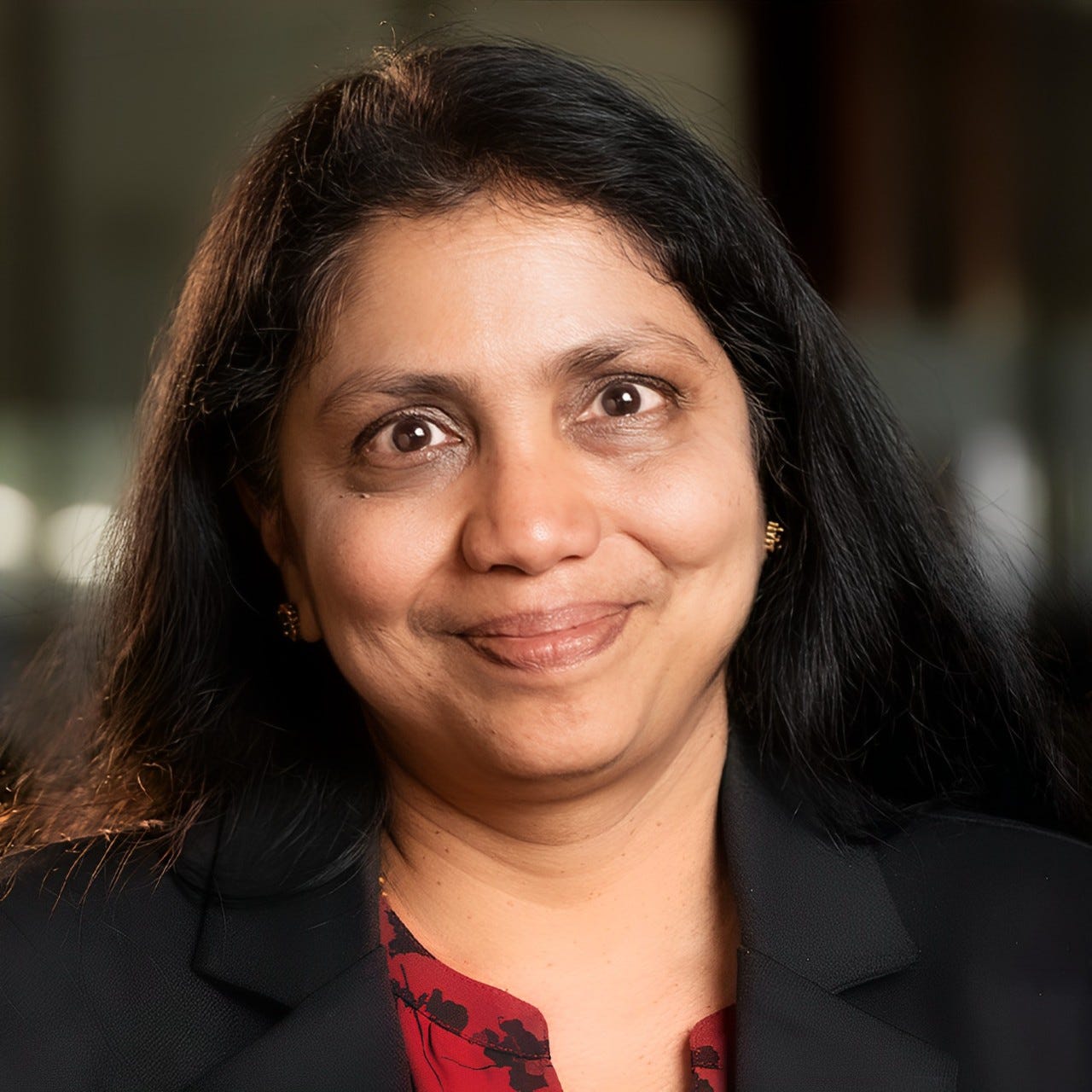
In today’s dynamic world, the concept of leadership is continuously evolving. While traditional leadership models have often been male-dominated, there is a growing recognition of the unique strengths and perspectives that women bring to these roles. This series aims to explore how women can become more effective leaders by authentically embracing their femininity and innate strengths, rather than conforming to traditional male leadership styles. In this series, we are talking to successful women leaders, coaches, authors and experts who can provide insights and personal stories on how embracing their inherent feminine qualities has enhanced their leadership abilities. As part of this series, we had the pleasure of interviewing Dr. Pramila Srinivasan.
Dr. Pramila Srinivasan, Ph.D., is an engineer, entrepreneur, philanthropist, mother and a lifelong advocate for improved outcomes in healthcare. When Dr. Srinivasan founded CharmHealth in 2007 as a patient portal, its aim was to help patients with multifactorial chronic conditions and their caregivers manage the complexity of their care. Today, CharmHealth is a leading health IT platform for healthcare establishments and verticals around the world.
Dr. Srinivasan seeks to democratize access to cutting-edge technology across clinical workflows, alleviate tedious tasks, increase accuracies and efficiencies, and restore the joy of practicing medicine and providing care. She hopes that the patient engagement solutions in CharmHealth enable patients to participate in their own health and wellness journey and improve outcomes for all.
In addition to CharmHealth, she founded The BRAIN Foundation, a nonprofit working to catalyze much-needed translational medical research that could lead to FDA-approved therapies for comorbidities affecting those with mental health and neurodevelopmental disorders.
Dr. Srinivasan received her Ph.D. in electrical and computer engineering from Purdue University, specializing in algorithms for multimedia and medical data analysis and classification.
Thank you so much for joining us in this interview series. Before we dive into our discussion about authentic, feminine leadership, our readers would love to “get to know you” a bit better. Can you share with us the backstory about what brought you to your specific career path?
Interestingly, I did not set out to work in health tech. I started my career working at a number of multimedia hardware startups, building multimedia algorithms and security/cryptographic software. At one point though, I needed to quit my job to become a caregiver for a family member, which is not an uncommon challenge for women in the workplace.
Those were the days when people used to discuss things on Yahoo Groups. There was no formal way to share information, no Facebook Groups. Anyone who has been in a similar situation, caring for a loved one, often finds the lack of available information and community enormously frustrating. So, when thinking about how I could still have a career but also do something positive that fit with my stage of life, I wanted to create a platform for parents and caregivers to share information about various drugs, their reviews, what worked, and what didn’t work. I wanted to put it all together in a more formal way, where people could actually put their data into a database and track therapeutics and improvements while sharing with others.
The product was well-received not only by caregivers and patients but also by the physicians with whom they shared those reports and visualizations. This reception by doctors is what provided the push that became CharmHealth.
You see, after I had enough people using my platform, I took it to a conference where I thought I would meet more caregivers who would be interested in joining. But then, some of the doctors who were at the event stopped by my booth, and they really wanted to use the platform in their practices because they had nothing like it — especially as they were not part of large hospital systems. So this group of doctors committed to helping build CharmHealth; they were our first customers.
Can you share the most interesting story that happened to you since you started your career?
I think understanding just how big of an impact we could have on people’s lives. For instance, every year, we run an Innovation Challenge where cutting-edge startups and leading innovators come to our event and present technologies around a particular theme. We do it because we want to help surface new ideas to improve care.
At our first Innovation Challenge, I visited the different booths and looked at all of the ideas. I talked to customers. It was very exciting and energizing. Then I found out about one participant in particular who had a solution that enabled the remote monitoring of a patient’s blood and vitals. It put all their health metrics together using a camera and sensors so the data could be shared with a physician. Imagine the impact that could have for someone quite ill who couldn’t make it in to see a doctor or someone who lived in a rural area where it was difficult to receive care! I was immediately struck, thinking how wonderful it was that the most cutting-edge products were coming to exhibit at our Challenge. We opened a door by presenting an opportunity, and very quickly, people walked through, rising up to influence healthcare. It was tremendous — and it was why we decided to form a whole ecosystem, rather than stopping with the electronic health record (EHR) system.
What do you think makes your company stand out? Can you share a story?
What makes CharmHealth stand out is how we balance “value” and “cutting edge.” We do not reserve the most innovative or high-end features for those who pay the most or have the greatest name recognition. Although we provide value to every user of our platform, we continue to deliver the latest innovations to all our users through initiatives like the Innovation Challenge that I mentioned or through our Marketplace. We continue to innovate and file patents on our key areas of intellectual property as well.
At CharmHealth, we truly want to democratize access to health technologies. For example, diabetes care is quite standard, but it remains difficult to get information and education to the people who need it. Now we can deliver potentially lifesaving diabetes education to so many locations through telehealth. We are bringing access to people in the Central Valley and all kinds of remote areas. That capability, to me, was another indicator that we could make a significant difference in people’s lives.
You are a successful business leader. Which three character traits do you think were most instrumental to your success? Can you please share a story or example for each?
I do my job: Every day when I walk into the office, I tell myself that while everyone here is playing their part in the success of the company, we each have a particular job to do and our success as a whole depends on individuals holding up their end. I am not exempt from that. My job is to strive for the growth and success of the company, and I must act responsibly to maximize the well-being of the enterprise and the people who work here.
This is a lesson I took with me from my early professional life. I dreaded the experience of my manager coming over to ask, “Is this done?” One day my manager told me, “This is my job — managing you — I have got to do it, so please help me.” This is not a question of anybody exerting their power or influence, but my job is to run this company and to make sure that it succeeds. So it’s nothing personal, it’s not about anybody’s ego. All of us have to do our jobs.
I believe in maintaining an even temperament: We try to bring poise and calm in the face of daily ups and downs. Like life itself, the company has its high and low tides. But in general, you will not find anyone at our office raising their voice or losing their cool. These traits percolate through the organization. No drama and no emotions. It helps us move forward effectively because we don’t get stuck living in an up or down moment.
Our products should speak for themselves: Even though we have a strong marketing team, in these days of social media and publicity campaigns, we choose to get most of our leads through referrals.
This may result in a slower sales process, but the products have their job to do as well. We take pride in them, and we choose to invest in their strength rather than celebrity endorsements and influencers. This will serve us best over the long haul. It’s not fleeting.
Leadership often entails making difficult decisions or hard choices between two apparently good paths. Can you share a story with us about a hard decision or choice you had to make as a leader? I’m curious to understand how these challenges have shaped your leadership.
I usually make decisions with the idea that it’s not final, which is perhaps antithetical to most CEOs. The way I view it is that most of the time we have the chance to reevaluate the choices we’ve made and then make corrections as we go.
In conversations with my teams, I evaluate all of the information, free of emotion, I hear everyone out. It may be a case where I say, “You think that way, but I believe something else. Please give me the benefit of the doubt, and let’s try this for a few months,” and then on a specific date, we regroup and evaluate. If I have not made the best choice, we’ll alter our course. Through this process, my team members feel heard, and they know it’s not personal. They know that I accept when I am wrong and give me the benefit of the doubt.
Because of that approach, people know that if they come to me with a suggestion or a change, if we don’t go with it today, maybe we will in the future. As a fast-paced company, we need a process to make decisions and move. It can’t be a democracy, but at the same time, people do need to feel heard. Otherwise, those who come up with excellent ideas may not feel free to share them, which is tragic.
An example of this dialogue occurred when we had to choose the location of our support center — should it be here or overseas? In the beginning, we had much debate about whether we should handle everything overseas, 24/7. Members of my team believed this would be easier and more cost-effective, but knowing that we would eventually grow into the enterprise, I believed we would need knowledgeable people here to support sales, and it was better to establish that setup from the beginning. I ultimately chose to go with hiring customer-facing representatives in the U.S. and then having a backend team overseas. It has worked out very well for us.
Ok, thank you for that. Let’s now jump to the primary focus of our interview. Can you share a personal experience where embracing your unique leadership style, which might not align with traditional expectations, led to a significant positive impact in your organization or team?
I recognize that people are different, as such we don’t take a cookie-cutter approach to interviewing, performance reviews, or any of the areas where you are evaluating people. We look at individuals. For example, if I sense that a candidate is not doing well in the job interview but would probably make a great employee — maybe speaking is not his or her forte — then we might take a chance on that person. We might bring people on as temporary employees or interns to try them out. Let’s see how they work within the framework of the company. If it goes well, we make them full-time employees.
We don’t always go for hiring the person whose resume looks best, and I think that has helped our company because we have a very diverse team. People help each other, which has positively impacted both our culture and our products.
Similarly, in our review processes, we consider what are the goals or areas for self-improvement? For instance in sales, has an individual improved his or her own targets year-over-year? At the same time, there are certain structures in place. Reviews occur on a schedule. However, what that review actually looks like might be a little bit different than at another company.
Also, my style is to lead by example. I made our first few sales myself before hiring our vice president of sales because I like to educate myself on the challenges of a task before delegating it to others.
In your journey as a leader, how have you balanced demonstrating resilience, often seen as a masculine trait, with showing vulnerability, which is equally powerful, but typically feminine? Can you give an example where this balance created a meaningful difference?
I believe that women are stronger and more resilient! Traditionally, women have borne (in silence) the injustice of being slotted to “feminine roles” irrespective of their talents and aspirations. In spite of that, women have risen to dizzying heights in various fields. Today, we are better off than previous generations in terms of women having a lot of opportunity, so from that point of view, we have persevered. I don’t think it’s a masculine trait.
Showing vulnerability is not something I am known for. Maybe my employees look at me as a sister or a mother figure in their life, so perhaps they talk with me more freely than they might have talked to a male manager, and that’s a good thing. But, I try to give any advice with a lot of data points to back up what I am saying. It’s more like compassion with reason, where I understand that someone has these things going on in life, and then this is how we can translate it in a productive way at work. So when people do reach out with anything that might require compassion, I acknowledge it, I listen, but then go back to do my job.
As a woman in leadership, how have you navigated and challenged gender stereotypes, especially in situations where traditional male-dominated approaches are the norm? What strategies have you employed to remain authentic to your style?
Honestly, I may be lucky, but I have not suffered the ill-effects of gender stereotypes.
Or maybe it’s that I don’t care. Small things happen all the time. If I’m with a male colleague, people may talk to him more than to me. I just ignore that. I don’t bother. What is important is to be comfortable in your own shoes and have self-confidence. And I’m a Ph.D. I tell girls all the time that for women, those credentials matter because it gives the first impression of who you are without having to talk much about it. It really helps.
But in general, I am not going to lose a deal because I’m a woman. The goal is to get stuff done for my company however it works because the mission is too important to get sidetracked by a personal slight.
How do you utilize emotional intelligence and active listening to create an inclusive environment in your team or organization? Could you share a specific instance where these qualities particularly enhanced team dynamics or performance?”
Yes, my favorite time in my workday is going around to chat with our employees. We talk not just about work but also about a number of things that influence our employees’ lives. Our talks may range from hobbies to vacations, sports, families, etc. I like to know what makes them tick, but I don’t pry. I am building relationships with my team members in hopes that they will stay with us for a long time.
So, is this person ambitious, a perfectionist or easy-going? Are they caregivers for parents? Are they going through a divorce or have a child struggling at school? What drives them? Having open communications helps bring up any deeper challenges faced by our employees, such as work stress, health, mental health, etc. Understanding people as humans, not as “resources,” often helps explain why people act the way they do.
For example, if someone has a learning disability, I can recognize that very quickly because I have that background, and I try to accommodate it to make CharmHealth more inclusive. I have been around people with special needs, so I have a positive view of the diversity in people. All kinds of people exist in this world, and I believe in respecting and cultivating their gifts.
What role has mentorship played in developing your authentic leadership style, and how do you communicate authentically to inspire and empower both your mentors and mentees?
I actually wouldn’t say that I have a specific mentor, but I learned a lot from people who worked as my advisors and professors in my academic days as well as from leaders and managers in my early career. I don’t see myself as a mentor, but I do try to lead by example and open my door to those who seek advice.
Based on your experience and research, can you please share “5 Ways Leading Authentically as a Woman Will Affect Your Leadership”?
I think these are themes and stories woven through the text above, but I would say:
- Understand the diversity in people and bend the rules if needed in order to give someone a chance. Don’t be influenced by how people look physically or on a resume. Watch how they perform and behave.
- Use empathy and listening to start a conversation but end with a logical decision without bias. Be consistent in this — and never bring politics or religion into the office. It only sows division, which can kill a company.
- Have high aspirations. Women don’t do this enough — probably because they don’t see enough women in powerful positions. It doesn’t hurt to take on the world. I believe that through my company I will change how healthcare is done, for example.
- Cultivate a low stress environment for yourself and your employees. People should be held to very high standards, but unnecessary stress due to unnecessary deadlines is not important. We are in this for the long haul. We want our employees to grow with us. It’s ok if we can’t get to every single task this year for whatever reason. Be sure we get to it next year and continue to strive for improvement.
- In the end, it is the product that has to sell. I do not believe in celebrity leadership. It is not a robust way to market a company, and whether the product provides honest value is all that counts.
Are there potential pitfalls or challenges associated with being an empathetic leader? How can these be addressed?
Occasionally, people may try to take advantage. How to address that is to have a very consistent, equitable approach where you show empathy but, at the same time, make decisions in a logical way. You can be empathic to the fact that someone’s got a situation at home, but that person doesn’t get a free pass. We try to ensure they do the work in some other way or make an accommodation, but the rules apply to everybody.
You are a person of great influence. If you could start a movement that would bring the most amount of good to the most amount of people, what would that be? You never know what your idea can trigger. :-)
I encourage people in the company to volunteer, to participate in the community, to find what is near and dear to their heart. For me, it is The BRAIN Foundation.
We also have a team of young tech professionals who are new grads. We are going to bring in low income and minority students from community colleges this summer for an internship program so that they see how an office runs, what work looks like, and to inspire the next generation — to enable them to have high aspirations.
But, if I could start any movement outside of work, it would be to help others recognize the diversity of the people around them. And if each person takes on that responsibility of understanding how people can be different, whether it is in their skills, talents, race, gender or whatever it may be, that could change the world. People would be kinder to each other and, at the same time, more productive. It would make everybody’s life more impactful.
How can our readers further follow you online?
LinkedIn: www.linkedin.com/in/pramila-srinivasan-88842b26/
CharmHealth: www.charmhealth.com/
www.linkedin.com/company/charmhealth/
https://twitter.com/charmhealth
The BRAIN Foundation: https://brainfoundation.org/
www.linkedin.com/company/the-brain-foundation/
Thank you for the time you spent sharing these fantastic insights. We wish you only continued success in your great work!
About The Interviewer: Pirie is a TEDx speaker, author and a life empowerment coach. She is a co-host of Own your Throne podcast, inspiring women in the second chapter of their lives. With over 20 years in front of the camera, Pirie Grossman understands the power of storytelling. After success in commercials and acting, she spent 10 years reporting for E! Entertainment Television, Entertainment Tonight, and also hosted ABC’s “Every Woman.” Her work off-camera capitalizes on her strength, producing, bringing people together for unique experiences. She produced a Children’s Day of Compassion during the Dalai Lama’s visit here in 2005; 10,000 children attended, sharing ideas about compassion with His Holiness. From 2006–2009, Pirie co-chaired the Special Olympics World Winter Games in Idaho, welcoming 3,000 athletes from over 150 countries. She founded Destiny Productions to create wellness festivals and is an advisory board member of the Sun Valley Wellness board. In February 2017, Pirie produced “Love is Louder,” a Brain Health Summit, bringing in Kevin Hines, noted suicide survivor, to Sun Valley who spoke to school kids about suicide. Sun Valley is in the top 5% highest suicide rate per capita in the Northwest, prompting a community initiative with St. Luke’s and other stake holders, to begin healing. She lives in Sun Valley with her two children and serves on the board of Community School. She has a master’s degree in spiritual psychology from the University of Santa Monica and is an executive life empowerment coach, where she helps people meet their dreams and goals! The difference between a dream and a goal is that a goal is a dream with a date on it!
PJ
Written by
Pirie Jones Grossman
Editor & Journalist · Authority MagazinePirie Jones Grossman is a senior columnist at Authority Magazine covering Tech and Business, conducting primary-source Q&A interviews with founders, executives, and industry leaders.

Published inAuthority MagazineTop Lessons, Top Authorities · 42K Followers
Exclusive, curated interviews with the leaders and changemakers shaping tomorrow. Leadership lessons, industry deep dives, and executive profiles.